After months of speculation, Apple and Google have finally announced what could become the most consequential partnership in the smartphone world. The next-generation Siri and Apple Intelligence will be powered by Gemini AI, potentially helping them catch up to and even beat the competition.
The deal includes both Gemini AI and Google’s cloud technology, which will power Apple’s Foundation Models and Apple Intelligence features. It is still unclear exactly how the partnership will work, but it will affect more than the iPhone, extending to the iPad, Mac, Apple Watch, and Vision Pro.
While the announcement was light on details, it revealed enough to make the future of Apple Intelligence sound more exciting than ever. As we’re talking about artificial intelligence, it also raises some significant questions.
It’s a broad partnership, focused on privacy
Ever since its launch, Apple Intelligence has been positioned as privacy-focused. | Image by Image credit — Apple
One of the mildly surprising parts of the deal is that the two companies went public about it. Earlier rumors indicated that Apple wanted to keep the partnership private and bear both the positives and the negatives of it. The scope of the deal is also much broader than expected. Instead of just bumping Siri, Gemini AI will power a larger part of Apple’s AI efforts.
In a joint statement, the companies said that “Apple Foundation Models will be based on Google's Gemini models and cloud technology.” This could mean that existing features, such as Writing Tools, Image Playground, and Notification Summaries, will be powered by Gemini AI. Such an update would certainly make them much better. Of course, it’s likely to also lead to various new features unique to Apple.
Recommended For You
Joint Statement: Apple and Google have entered into a multi-year collaboration under which the next generation of Apple Foundation Models will be based on Google's Gemini models and cloud technology. These models will help power future Apple Intelligence features, including a…
A key detail of the announcement is that Apple Intelligence will continue to be focused on user privacy. The AI models will run on Apple devices and Private Cloud Compute servers. On a surface level, that makes the partnership feel like a win for Apple, for Google, and for Apple users.
The unclear details
Of course, there are many unanswered questions that could turn out crucial. Is it a deal in which Google provides white-labeled technology that Apple will use to build its own AI tools with? Or is it a deeper partnership in which both companies work together to deliver Google-powered features and services?
The answer to those questions could determine the level of regulatory scrutiny this new partnership may face. It could also determine how well Apple users receive the partnership.
Considering the joint statement, Apple is likely to run Gemini on its own infrastructure without sharing user data with Google. That would be similar to how Apple’s partnership with OpenAI works. While ChatGPT is part of Siri, users need to give permission for their requests to be shared with OpenAI.
If that’s the case and Apple were to use Gemini to build its own customized services that don’t share data with Google, there could be less regulatory pressure. However, if the deal functions similarly to the one about Google’s placement as a default search engine in Safari, the two companies will certainly face regulatory scrutiny down the road.
Will it even work?
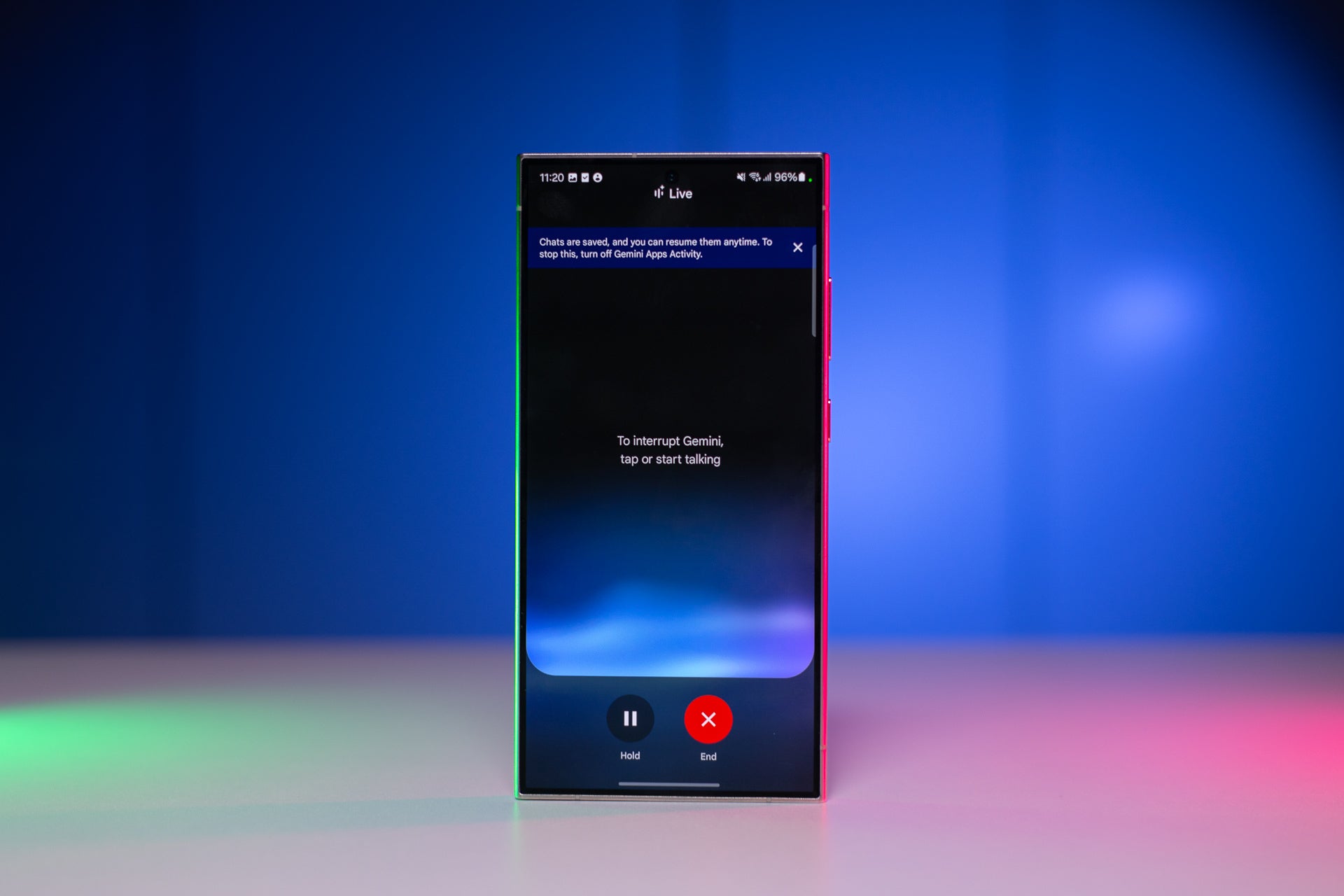
Gemini has been among the best mobile AI-powered assistant. | Image by Image credit — PhoneArena
An even more pressing question is what kind of features will be powered by Gemini AI and how well they will work. As exciting as AI is on paper, many consumer features powered by the technology are disappointing.
Google’s Gemini for Home and Amazon’s Alexa Plus are among the prime examples of AI’s issues. Both assistants struggle to reliably run basic tasks such as turning on lights, setting timers, playing music, or running routines and automations. Unlike their earlier versions, the AI-powered assistants may sometimes decide not to do what you ask them.
Those issues are based on how the large language model (LLM) technology works. Older technology recognizes basic commands and runs them reliably, while LLMs bring a lot of randomness to their outputs. Just like the chatbots that give different answers to the same prompt, those assistants can answer differently to your request to turn off a lamp.
Do you think Apple can keep its promises about the more personalized Siri?
33 Votes
Yes, thanks to Gemini AI it’s now possible
51.52%
Maybe, if they have significantly improved AI
18.18%
Not at first, but soon they will
6.06%
No, those are all impossible dreams
24.24%
That’s an important detail because it could mean that Apple will continue breaking its promises from WWDC24. Then, the company announced a personalized assistant that should be able to connect information and context from several apps to complete complicated tasks. If Apple bases those promises on the same technology that can’t reliably turn off a lamp, that might be a major issue.
The least we can expect is for Siri to match Samsung’s Galaxy AI and Google Gemini on Pixel smartphones. While that wouldn’t be very impressive, it would be a critical step for Apple. However, if that partnership helps the long-awaited personalized Siri feel like Apple’s promises, it could cement the iPhone’s market dominance and shake up the whole industry. I’ll be surprised if that’s the case, but I’m happy it’s within the realm of possibility.
MacBook Pro (M1 series) flash sale! Limited time offer!
Save $40 on MacBook Pro (M1 series) from Back Market. Discount automatically applied at checkout. Offer ends 25 October 2026 at 23:59.
Ilia, a tech journalist at PhoneArena, has been covering the mobile industry since 2011, with experience at outlets like Forbes Bulgaria. Passionate about smartphones, tablets, and consumer tech, he blends deep industry knowledge with a personal fascination that began with his first Nokia and Sony Ericsson devices. Originally from Bulgaria and now based in Lima, Peru, Ilia balances his tech obsessions with walking his dog, training at the gym, and slowly mastering Spanish.
A discussion is a place, where people can voice their opinion, no matter if it
is positive, neutral or negative. However, when posting, one must stay true to the topic, and not just share some
random thoughts, which are not directly related to the matter.
Things that are NOT allowed:
Off-topic talk - you must stick to the subject of discussion
Offensive, hate speech - if you want to say something, say it politely
Spam/Advertisements - these posts are deleted
Multiple accounts - one person can have only one account
Impersonations and offensive nicknames - these accounts get banned
To help keep our community safe and free from spam, we apply temporary limits to newly created accounts:
New accounts created within the last 24 hours may experience restrictions on how frequently they can
post or comment.
These limits are in place as a precaution and will automatically lift.
Moderation is done by humans. We try to be as objective as possible and moderate with zero bias. If you think a
post should be moderated - please, report it.
Have a question about the rules or why you have been moderated/limited/banned? Please,
contact us.














Things that are NOT allowed:
To help keep our community safe and free from spam, we apply temporary limits to newly created accounts: