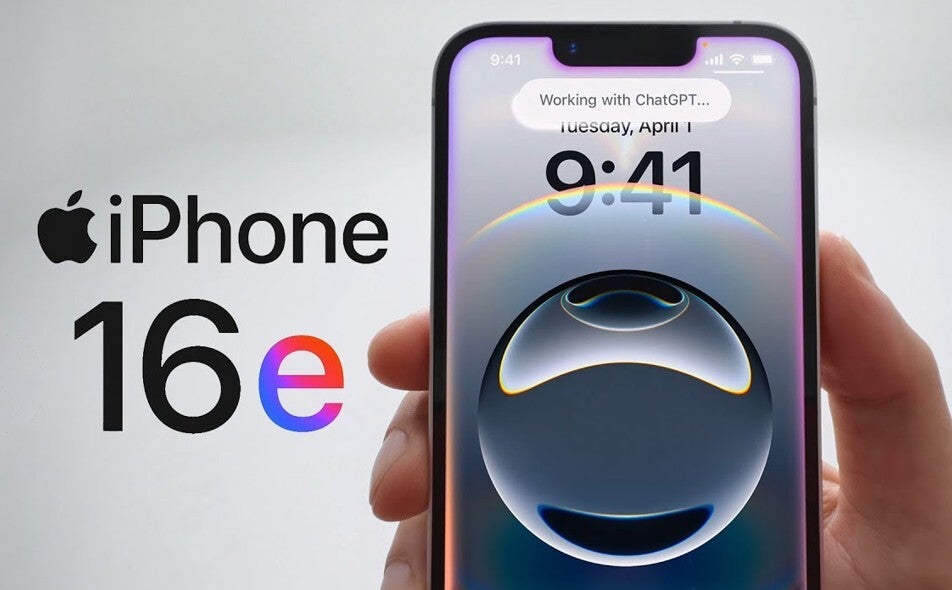
Kansas resident Patrick Roach is a Verizon customer. There's nothing strange about that. After all, until recently Verizon was the largest wireless carrier in the U.S. But what was strange was how Roach ended up suing the wireless firm in small claims court and there is an interesting story how this all came about. On February 28th, 2025, Patrick purchased a discounted iPhone 16e from Verizon's Straight Talk; it was a birthday gift for his wife.
The Verizon customer had a game plan that required the iPhone 16e to be unlocked by Verizon
Roach had a game plan. He wanted to pay for one month of service using Verizon's Straight Talk, cancel, and move the iPhone 16e to the family's U.S. Mobile plan. This should have been doable because of federal rules that Verizon must follow. Additionally, Verizon's own policy covering the unlocking of new phones that was in effect at the time that the phone was purchased. He should have been allowed to unlock the device 60 days after paid activation.
The plaintiff was trying to get Verizon to unlock an iPhone 16e bought through Straight Talk. | Image credit-Verizon
Since Straight Talk is a prepaid wireless provider, Verizon's policy at the time was to unlock the phone 60 days after paid activation. For postpaid purchases, the 60 days would have started from the date of purchase or activation. After the 60 days, the device would be unlocked automatically.
Verizon has different rules on unlocking its phones due to the acquisition of spectrum and Tracfone
Verizon has different rules for device unlocking than other carriers because in 2008 it purchased licenses covering 700 MHz airwaves in the C Block that came with open access requirements. Verizon would not be allowed to limit, deny, or restrict a customer from using the phone of his choice on the 700MHz spectrum. This forced Verizon to allow phones not purchased from the carrier to run on its network, starting the trend toward device unlocking.
Did the judge make the right ruling?
168 Votes
Yes. Verizon was wrong to retroactively change its policies.
94.64%
No. Verizon should be allowed to change the rules.
5.36%
To get FCC approval for its acquisition of Tracfone in 2021, Verizon agreed to reduce the period that Tracfone subscribers could unlock their phones from 12 months to 60 days for Tracfone phone purchases made after November 23, 2021 when the acquisition was completed. The bottom line is that Verizon is required to unlock phones after 60 days for the Verizon brand and Tracfone brands like Straight Talk.
Recommended For You
So, Roach should have been able to unlock his phone after 60 days. But Verizon disallowed it, refusing to unlock the iPhone 16e. Verizon claimed that it didn't have to unlock the phone because it had implemented a policy change that called for it unlocking phones after "60 days of paid active service." Roach had only paid for one month of service on the phone. To put it plainly, Roach bought the phone based on the unlocking policy that was in place at the time of his purchase only to see Verizon change its rules well after a month after the purchase was made.
Verizon was successfully sued in small claims court
The customer, Patrick Roach, successfully sued Verizon in small claims court. Magistrate Judge Elizabeth Henry in District Court of Sedgwick County, Kansas felt that Verizon should not be allowed to change the rules retroactively. "The fact that after plaintiff purchased the phone, the defendant changed the requirements for unlocking it so that plaintiff could go to a different network essentially altered the nature of the device purchased… With the change in defendant's unlocking policy, the phone was essentially useless for the purpose plaintiff intended when he purchased it," wrote the judge in her decision.
"Under the KCPA [Kansas Consumer Protection Act], a consumer is not required to prove intent to defraud. The fact that after plaintiff purchased the phone, the defendant changed the requirements for unlocking it so that plaintiff could go to a different network essentially altered the nature of the device purchased… With the change in defendant’s unlocking policy, the phone was essentially useless for the purpose plaintiff intended when he purchased it."
-Magistrate Judge Elizabeth Henry
Bottom line: Nothing has changed
Before taking Verizon to court, Roach fielded a settlement offer from Verizon for $600 plus court costs. Because taking the settlement would have forced him to stop speaking about the case publicly, he rejected it. At the end of the lawsuit, the judge ordered the carrier to pay back the plaintiff the $410.40 he paid for the device, plus court costs and service fees. After paying Straight Talk for a second month of service, Verizon unlocked the phone and Patrick's wife is now using it on U.S. Mobile, as planned.
Meanwhile, the FCC has not taken any action on a complaint made to it by Roach which alleges that Verizon failed to follow the conditions imposed on it by the FCC to unlock the phone after 60 days. For its part, last May, Verizon petitioned the FCC asking it to get rid of the 60-day requirement forced on it. After receiving the petition from Verizon, the FCC requested comments from the public and most let loose on Verizon for trying to lock down customers to its network longer.
After the legal battle, nothing has changed. Roach notes that the FCC hasn't made a decision on Verizon's petition to get rid of the 60-day requirement and the federal regulations "haven’t changed at all in regards to Verizon's obligation to unlock devices."
Mint Mobile's 6-month plans now cost $10/mo
$10
/mo
$35
$25 off (71%)
Mint Mobile is celebrating its 10-year anniversary with a special offer on its six-month subscription plans. For a limited time, you can get your preferred tier (6GB, 17GB, 23GB or unlimited) for just $10/mo. That saves you between 50% and 71% on the carrier's mobile plans, making it way easier to recommend.
Alan, an ardent smartphone enthusiast and a veteran writer at PhoneArena since 2009, has witnessed and chronicled the transformative years of mobile technology. Owning iconic phones from the original iPhone to the iPhone 15 Pro Max, he has seen smartphones evolve into a global phenomenon. Beyond smartphones, Alan has covered the emergence of tablets, smartwatches, and smart speakers.
A discussion is a place, where people can voice their opinion, no matter if it
is positive, neutral or negative. However, when posting, one must stay true to the topic, and not just share some
random thoughts, which are not directly related to the matter.
Things that are NOT allowed:
Off-topic talk - you must stick to the subject of discussion
Offensive, hate speech - if you want to say something, say it politely
Spam/Advertisements - these posts are deleted
Multiple accounts - one person can have only one account
Impersonations and offensive nicknames - these accounts get banned
To help keep our community safe and free from spam, we apply temporary limits to newly created accounts:
New accounts created within the last 24 hours may experience restrictions on how frequently they can
post or comment.
These limits are in place as a precaution and will automatically lift.
Moderation is done by humans. We try to be as objective as possible and moderate with zero bias. If you think a
post should be moderated - please, report it.
Have a question about the rules or why you have been moderated/limited/banned? Please,
contact us.





Things that are NOT allowed:
To help keep our community safe and free from spam, we apply temporary limits to newly created accounts: