Google AI glasses release date expectations, price estimates, and upgrades
The upcoming Google smart glasses will run Android XR. | Image by Google
Features:
- Jointly developed by Google and Samsung, first shown at Google I/O 2026 and made official at Galaxy Unpacked in London on July 22, 2026
- Two distinct products in the lineup: Audio Glasses and Display Glasses
- Gentle Monster and Warby Parker are the confirmed design partners, with more styles on the way this fall
- Android XR, with Gemini AI running the show
- Built to work in tandem with your phone and smartwatch rather than replace them
- Nano Banana for hands-free photo capture and voice-driven AI editing
- Turn-by-turn audio directions through Google Maps and Gemini Intelligence
- Up to nine hours of use on a single charge, with a charging case extending that further
- The audio glasses are arriving this fall. No official date has been set yet.
Expected price:
- Nothing confirmed on pricing – the headset is expected to land in the same ballpark as Meta's smart glasses.
Jump to:
Google and Samsung AI glasses release date
At Google I/O 2026, Google unveiled Intelligent Eyewear.
Samsung then officially introduced the same device at Galaxy Unpacked in London on July 22, 2026, confirming the joint nature of the product.
The first product that is going to be available for purchase is the audio-only model – not the display-equipped version. It is expected to arrive sometime this fall, though a specific date hasn't been announced yet.
Google and Samsung AI glasses price
No pricing has leaked and nothing official has been shared. Rumors suggest the glasses could be priced similarly to Meta's smart glasses, and potentially Apple's still-unannounced pair as well.
| Smart glasses model | Starting price |
|---|---|
| Google AI glasses | Unknown |
| Ray-Ban Meta glasses Gen 2 | $459 |
| Apple's smart glasses | $400-$800* |
*- anticipated prices
Google and Samsung AI glasses camera
Both the audio and display versions of Intelligent Eyewear will ship with a built-in camera.
A live demo at Google I/O 2026 showed the audio model capturing a photo of the audience and editing it in real time using Nano Banana – Google's AI photo tool.
Photography is just the starting point. The camera will power context-aware AI assistance throughout the day. The device is able to recognize what's in your line of sight, answer questions about your surroundings, capture hands-free moments, or share your live perspective during a call.
Specific camera specs haven't been published yet.
Google and Samsung AI glasses design
Gentle Monster and Warby Parker are the eyewear partners for the design aspect of the glasses.
The Gentle Monster edition comes with a fashion-forward look. We have a slim black frame with a straight upper edge and softly rounded lower corners, designed to pass as regular glasses rather than announce itself as a wearable gadget.
Meanwhile, the Warby Parker design takes a more traditional direction, with a gently upswept brow line in brown built for all-day wear.
More designs and colorways are said to be in the pipeline for later in the year, though specifics haven't been shared.
Intelligent Eyewear designs. | Images by Images by Google
Meanwhile, one of the focus points of the design is comfort. Samsung, Google and their eyewear partners spent time optimizing the contact points that matter most – forehead and ears – for wear across a full day, which is a more demanding standard for glasses than for almost any other category of wearable.
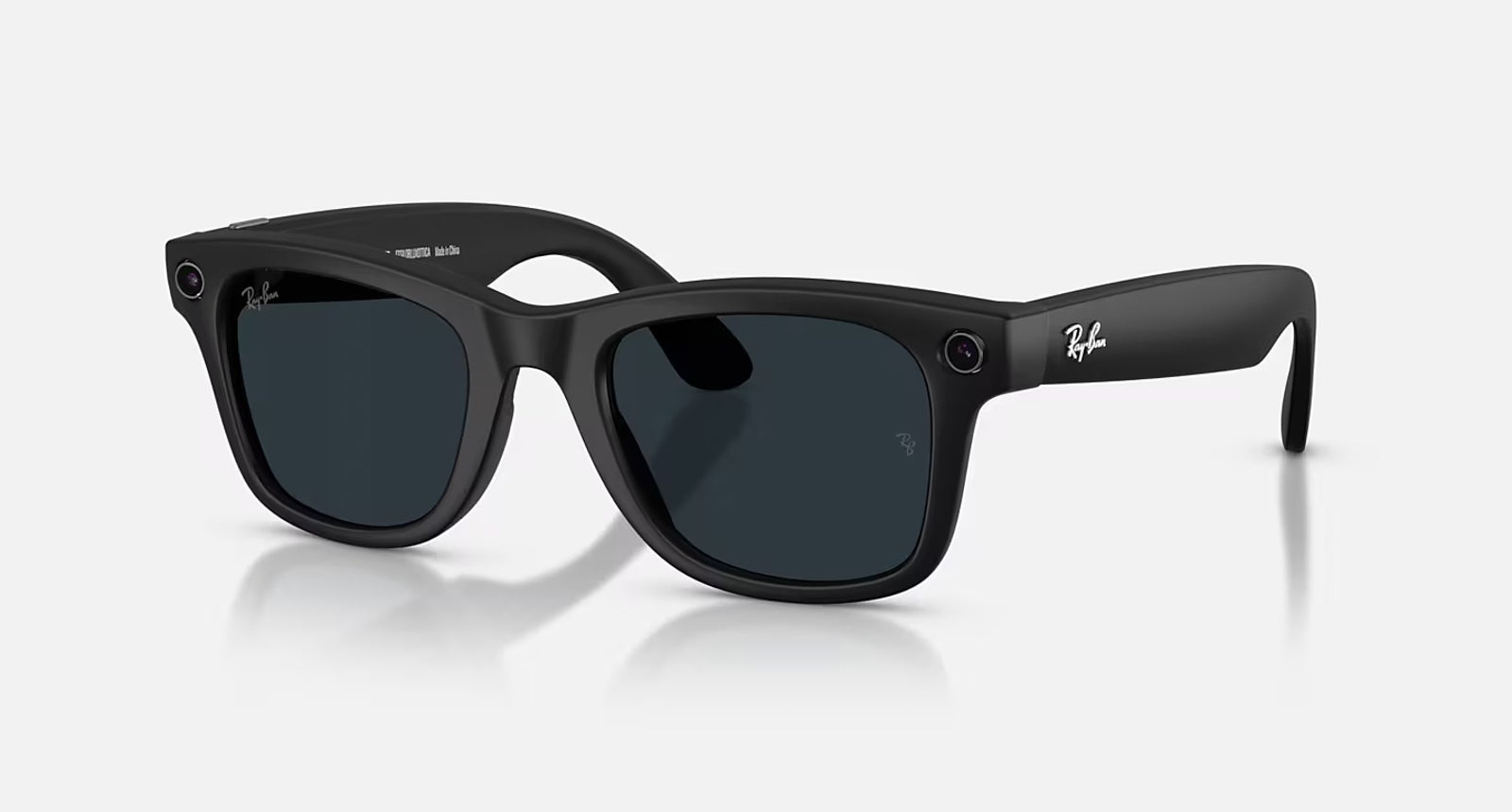
Ray-Ban Meta AI smart glasses Gen 2 for illustrative purposes. | Image by Ray-Ban
Google and Samsung AI glasses features and software
Gemini is the engine driving the Intelligent Eyewear experience. You can reach the assistant by saying "Hey Google" or tapping on the frame, and from there, you can handle everything by voice.
- Here's what you can do on Intelligent Eyewear with Gemini:
- Ask about what you see: Point your gaze at an object, place, or sign and ask Gemini about it – no phone needed
- Navigation: The glasses track your position and the direction you're facing, delivering natural turn-by-turn directions in your ear; Gemini can add new stops to your route mid-journey without breaking your stride
- Calls, texts: Take incoming calls, receive AI-generated summaries of missed notifications, and ask Gemini to play music suited to your current environment – all without reaching for your phone
- Capture and edit: Shoot a photo or video of whatever you're looking at, then use Nano Banana to edit or transform it using a voice prompt
- Translation: Get real-time spoken translations of conversations happening around you
- Tasks: Gemini Intelligence can take action on your phone on your behalf – placing a food order, for example – though it always asks for confirmation before going through with anything
- Apps: Direct Gemini to interact with apps on your connected phone
- Context-aware continuity: The glasses maintain context across tasks, so you can pick up where you left off without re-explaining your situation
- Live visual sharing: Share your point of view during a call or record what you're seeing while keeping both hands completely free
The glasses run on Android XR. Earlier reports suggested heavy reliance on cloud servers for AI processing – Google didn't address that directly at the announcement, so more clarity on that front is likely to come as the launch date gets closer.
Google and Samsung AI glasses hardware and specs
Intelligent Eyewear is powered by the Snapdragon AR1 Gen1 platform, confirmed in Samsung's official Unpacked presentation. The chip manages AI processing, touch input, connectivity, power delivery, and thermal control – all within the tight physical constraints of a glasses frame.
Earlier speculation had pointed to a proprietary Google Tensor chip powering the glasses. With Snapdragon AR1 Gen1 now confirmed, that appears not to have materialized.
Should I wait for Google and Samsung's Intelligent Eyewear?
- You should wait for Google's smart glasses if you want smart glasses that act as a genuinely proactive extension of your digital life rather than just a camera with audio playback bolted on. The real draw is Google's ecosystem – running on Android XR and tightly woven into Gemini Intelligence, the glasses can pull from your real-time Google Maps data, calendar, and search history to deliver assistance that feels natural rather than reactive.
- You should not wait for Google's smart glasses if you need a display right now or you're deep in Apple's ecosystem. This fall's launch is audio-only – no lens graphics, no AR overlays – so if that's what you're after, a future generation is where it lands, with no timeline from Google on when that might be. iPhone users can expect basic functionality given the Qualcomm and Samsung underpinnings, but the depth of native integration is built for Android. If Apple's ecosystem is where you live, waiting for Apple's own glasses is the more logical call.


Popular stories



Latest News