We asked, you voted, and the results paint a pretty clear picture of where you think the telecom industry is heading. It turns out, most of you believe the recent wave of layoffs at T-Mobile isn’t just standard corporate restructuring—it’s the robot revolution in action.
We asked, you answered
Last week, we reported on the quiet but steady stream of job cuts happening at T-Mobile and asked you a simple question: Why is this happening? We gave you a few options, including "Operational efficiency," the new "T-Life" app, and "AI."
The response was overwhelming. In our recent internal poll, nearly 40% of you (39.34% to be exact) pointed the finger squarely at AI. Coming in a close second was the T-Life app, with roughly 35% of the vote. Combined, that means essentially three out of every four readers believe that T-Mobile’s push toward "digitalization" is directly responsible for shrinking its workforce. Only about 26% of you bought the corporate line that this is just about general "operational efficiency."
This sentiment didn’t come out of nowhere. Over the last year, T-Mobile has been heavily promoting its "digital-first" strategy. We’ve seen the aggressive rollout of the T-Life app, which is designed to handle everything from bill payments to plan changes—tasks that used to require a visit to a store or a call to support. On top of that, T-Mobile has been loud and proud about its partnership with OpenAI to build "IntentCX," a customer service AI that they claim can proactively solve problems. When you combine a super-app that keeps you out of stores with an AI that keeps you off the phone, the math starts to look grim for human employees.
Recommended For You
Pivoting to become just another utility
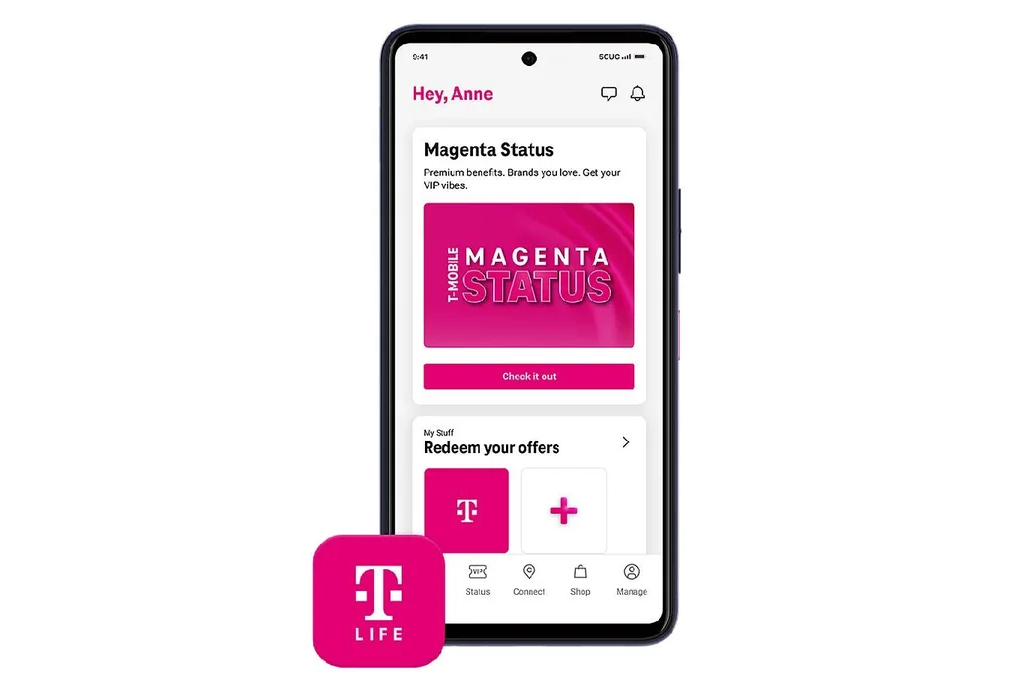
35% of you thought T-Life was responsible for T-Mobile cutting jobs. | Image credit — T-Mobile
This matters because it signals a potential end to the "Un-carrier" era. T-Mobile built its reputation on the "Team of Experts"—real, local humans you could talk to. That human connection was their secret sauce against competitors like Verizon and AT&T.
If your assessment is correct, T-Mobile is pivoting to become just another utility. The high vote count for the T-Life app is telling; it suggests you see these apps not as conveniences, but as "digital turnstiles" designed to block access to expensive human staff. If the app fails—and there are fewer humans left to catch the spillover—the customer experience nosedives. We are watching a real-time experiment: Can a carrier maintain high satisfaction scores while replacing its frontline workers with bots?
Why do you think T-Mobile is laying off employees?
1005 Votes
T-Life.
35.12%
Operational efficiency.
25.47%
AI.
39.4%
An AI workforce
Honestly, I’m with the majority of you on this one. It is hard to look at the timeline of events—the T-Life rebranding, the OpenAI partnership, and the subsequent layoffs—and not see a correlation.
I’ve used the T-Life app, and sure, it’s fine for grabbing a T-Mobile Tuesday deal. But would I trust it to handle a missing trade-in credit? Absolutely not. That is where the "Un-carrier" used to shine, and that is where they risk losing us.
There is a cold logic to it. AI is efficient and cheap for shareholders. But from a user perspective, it feels like we are being beta-tested on. If "digitalization" is just a fancy word for "you can't talk to a manager anymore," we have a problem. Automating the boring stuff is smart; automating the caring stuff is dangerous.
I’d love for T-Mobile to prove us wrong. But right now, with the layoff news piling up, it feels a lot more like the robots are clocking in, and the people are checking out.
T-Mobile changes blamed on digitalization
Even if T-Life gets perfect, the majority of you will still hate it: and here's the proof
Free Galaxy A17 5G with Straight Talk
Get a free Galaxy A17 with Straight Talk. To claim this deal, you need to pair the phone with activation on a Silver Unlimited Plan or higher. This tier costs $45 per month. Offer valid through 01/10/27 while supplies last online.
Johanna Romero is a Senior News Writer at PhoneArena, covering mobile technology news across Android, iOS, wearables, and the Google ecosystem she knows best. Drawing on 15 years in IT and tech support from 2007 to 2022, she brings a user-friendly eye for the practical features and lesser-known tricks readers care about. Google named her an official #TeamPixel member in 2022, and she also reviews the latest devices on her YouTube channel, JoJo the Techie.
A discussion is a place, where people can voice their opinion, no matter if it
is positive, neutral or negative. However, when posting, one must stay true to the topic, and not just share some
random thoughts, which are not directly related to the matter.
Things that are NOT allowed:
Off-topic talk - you must stick to the subject of discussion
Offensive, hate speech - if you want to say something, say it politely
Spam/Advertisements - these posts are deleted
Multiple accounts - one person can have only one account
Impersonations and offensive nicknames - these accounts get banned
To help keep our community safe and free from spam, we apply temporary limits to newly created accounts:
New accounts created within the last 24 hours may experience restrictions on how frequently they can
post or comment.
These limits are in place as a precaution and will automatically lift.
Moderation is done by humans. We try to be as objective as possible and moderate with zero bias. If you think a
post should be moderated - please, report it.
Have a question about the rules or why you have been moderated/limited/banned? Please,
contact us.









Things that are NOT allowed:
To help keep our community safe and free from spam, we apply temporary limits to newly created accounts: