Samsung's roadmap is what could change Galaxy phones forever
Samsung's roadmap is firmly set in place, and it could change everything.

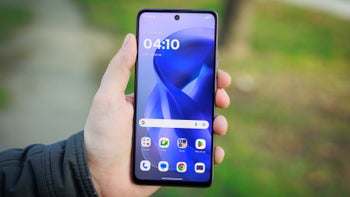
The Galaxy S26+ has Exynos in select markets. | Image by PhoneArena
Samsung isn't exactly known for creating supreme processors that overshadow every other manufacturer. However, continuous optimizations and improvements within Samsung Foundry are what led to the Exynos 2600 becoming a proper Qualcomm Snapdragon 8 Elite Gen 5 rival. Now, official confirmation suggests the next big thing, 1.4nm chips, is just a few years away.
Samsung goes head-to-head with the biggest players
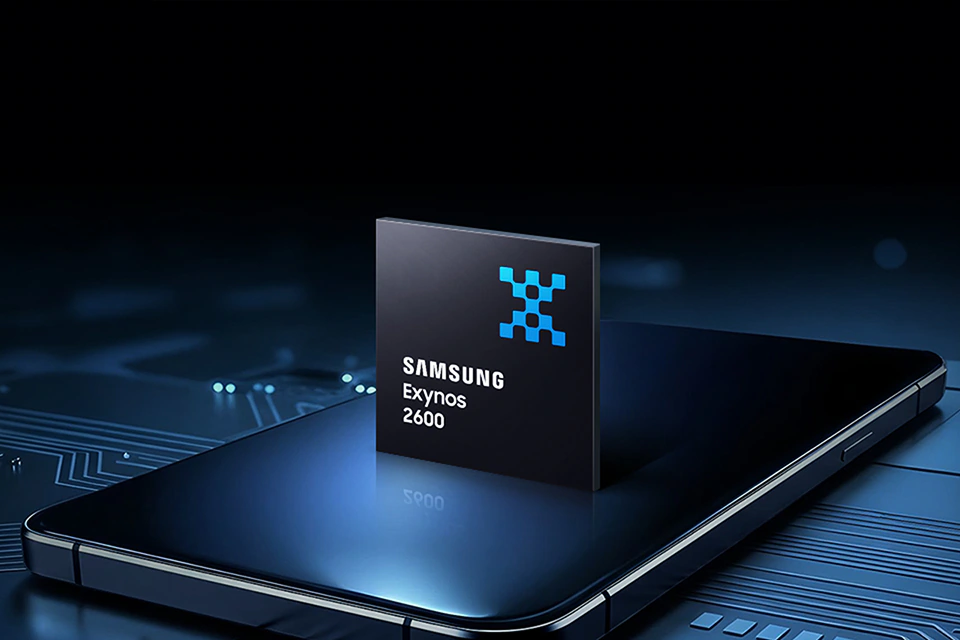
The Exynos 2600 is probably just Step 1 of Samsung's plans. | Image by Samsung
Samsung Electronics held its annual SAFE Forum event, explaining its plan to adopt the next-generation 1.4nm process is on track (machine translated). The ambition was first shared in 2022, with Samsung estimating mass production of 1.4nm chips would happen by 2027.
Those ambitions were later adjusted to 2029. During the SAFE Forum, Samsung exec Shin Jong-shin, Vice President of the Design Platform Development Office at Samsung Electronics' Foundry Business Division, noted that 1.4nm chip development is on schedule and should meet the company's deadline.
While 1.4nm chips seem like a thing of the future, Samsung Electronics isn't actually the first company to be working on this kind of tech. Insiders claim TSMC will likely be the first manufacturer to debut this new tech in 2028 with its 1.4nm-class A14 process.
Those ambitions were later adjusted to 2029. During the SAFE Forum, Samsung exec Shin Jong-shin, Vice President of the Design Platform Development Office at Samsung Electronics' Foundry Business Division, noted that 1.4nm chip development is on schedule and should meet the company's deadline.
SF1.4* is being developed smoothly with the goal of mass production in 2029, targeting the leading group. SF1.4+, based on SF1.4, is scheduled for mass production in 2030.
Shin Jong-shin, Vice President of the Design Platform Development Office at Samsung Electronics' Foundry Business Division at SAFE Forum held at Samsung Electronics' Seocho headquarters on July 1, 2026
*SF in SF1.4 stands for Samsung Foundry
How important is Snapdragon in a Galaxy phone to you?
33 Votes
I care more about performance than the Snapdragon brand
54.55%
It's the only reason I'd buy a Samsung phone!
15.15%
I'm actually OK with Exynos
21.21%
With or without Snapdragon, I would never buy a Galaxy phone
9.09%
Not done with 2nm yet
The SF2 process has already provided excellent results with the Exynos 2600 chip, putting it on par with the best Qualcomm and MediaTek SoCs. Moving forward, the upcoming Exynos 2700 is expected to run on the enhanced SF2P process.
Later, presumably in 2027 or 2028, the company will develop the SF2P+ method, with Shih explaining this should be a major improvement over existing technologies.
The Plus node improves yield and Performance, Power, and Area (PPA) through Semiconductor Design and Process Integration Optimization (DTCO) and feature additions while maintaining the existing IP infrastructure.
Shin Jong-shin, Vice President of the Design Platform Development Office at Samsung Electronics' Foundry Business Division at SAFE Forum held at Samsung Electronics' Seocho headquarters on July 1, 2026
Mind you, this marks a complete change for Samsung. Historically, the brand has been playing catch-up, but it's now gaining fast pace with the adoption of 2nm processes and their advancement. As a recent Counterpoint Research study shows, global shipments of advanced nodes are expected to surge by 60%, and Samsung will surely play a part in the process.
A Snapdragon-free Galaxy future?
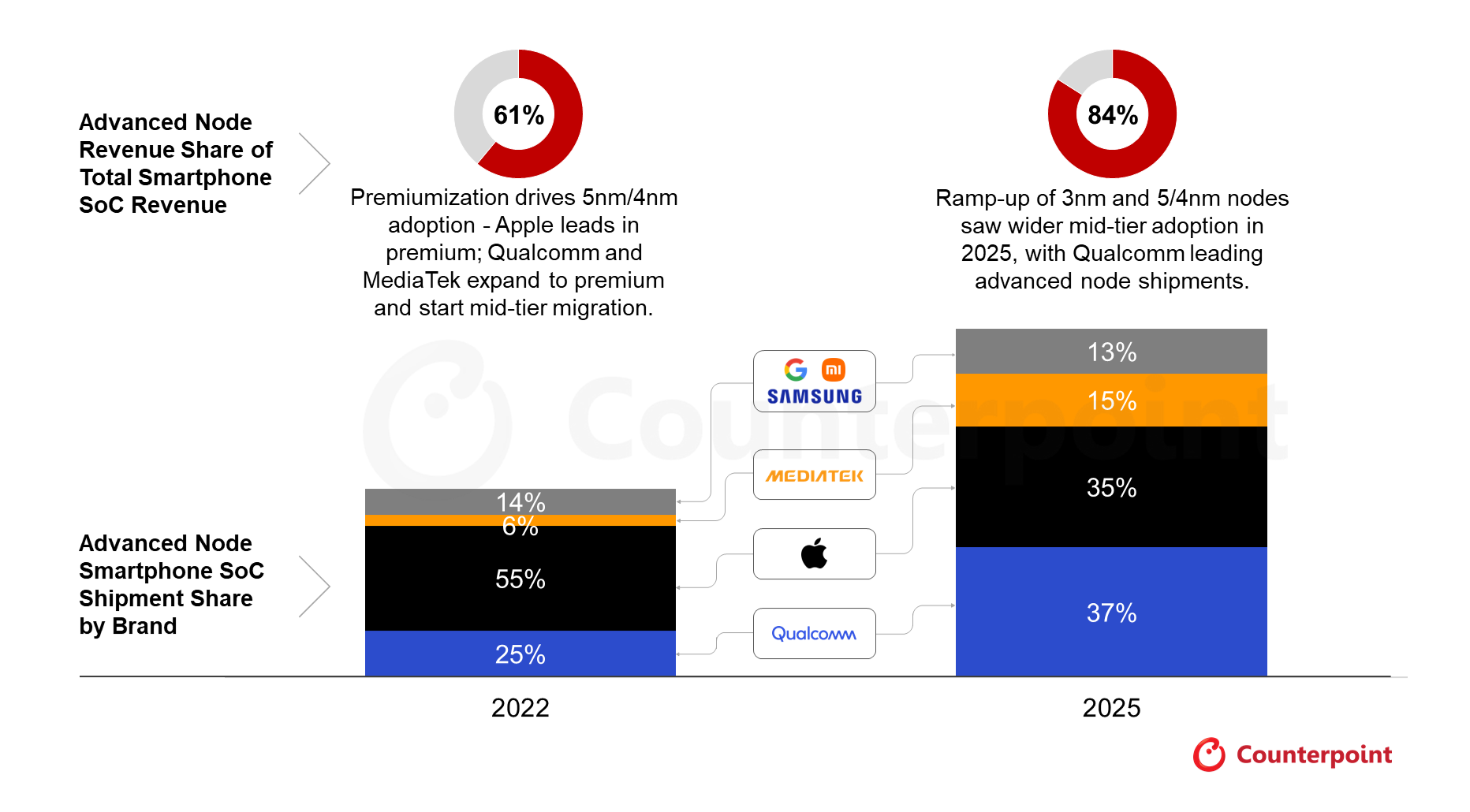
This graph could look drastically different in a few years. | Image by Counterpoint Research
Samsung's push for chip development could have serious consequences for Samsung phone fans. To me, it's entirely possible for Exynos processors to eventually take over the entire flagship lineup.
This has actually been implied not long ago, with some industry insiders suggesting that Samsung might significantly ramp up its Exynos distribution for the S27 series compared to the Galaxy S26 lineup.
This is all speculation for now, of course, but one critical question emerges nonetheless. If Samsung eventually closes the gap, will you continue to buy Galaxy phones that no longer feature Snapdragon under the hood?
Times have changed
Samsung is dreaming big, let's see what happens. | Image by PhoneArena


Popular stories





Latest News





Things that are NOT allowed:
To help keep our community safe and free from spam, we apply temporary limits to newly created accounts: