Just the other day we told you that AT&T had written a letter to FCC Chairman Brendan Carr that confirmed its decision to end its DEI policies. The carrier had originally announced its intention to remove DEI policies and "woke" programs in March getting on board with an executive order issued by President Donald J. Trump at the beginning of the year ordering the government to end all diversity, equity and inclusion (DEI) programs. At that time, President Trump asked the private sector to follow suit.
FCC makes ending DEI programs a requirement for getting approval to close a transaction
What many companies in the telecom and broadcasting industries learned was that if they had a transaction that needed approval from a regulatory agency, to get that approval, they had to play nice with the administration and the FCC. AT&T was looking to get FCC approval for a transaction it made in 2024 when it agreed to purchase 1,250 million MHz-Pops of 3.45 GHz spectrum and 331 million MHz-Pops of 700 MHz B/C block licenses from UScellular. AT&T agreed to pay $1.02 billion for the airwaves.
Did stopping DEI payoff for AT&T?
27 Votes
Obviously as it got the FCC approval it wanted.
77.78%
No. The FCC would have approved the deal anyway.
14.81%
It's hard to say.
7.41%
The FCC has made ending DEI programs a requirement for telecom carriers to get approval for transactions and today the regulatory agency gave AT&T the thumbs up for its spectrum buy from UScellular. Led by Brendan Carr, who was appointed Chairman by President Trump at the start of the year, the FCC said on Thursday that the deal will end up "enhancing AT&T's network coverage, capacity and performance resulting in a better customer experience."
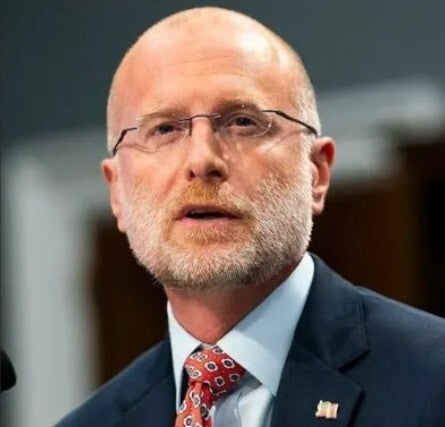
FCC Chairman Brendan Carr. | Image credit-FCC
Arguing against approval of the deal was the Rural Wireless Association (RWA). The latter is concerned that the transaction will lead to higher prices for wireless plans and that customers will have difficulty roaming. The RWA said that it opposed the FCC's approval fearing that it will continue a "trend of consolidation that harms competition and disserves the public interest, especially for members of the public living, working, and traveling in rural America."
T-Mobile and Verizon were in similar situations as AT&T was
Back in July, when T-Mobile was awaiting FCC approval on a couple of deals, including its $4.4 billion purchase of 4.5 million UScellular customers, UScellular's retail stores, and 30% of UScellular's spectrum licenses, the nation's largest carrier said that it would stop its DEI policies and remove any reference to it from its training program and on its website. T-Mobile received FCC approval last August. Verizon also had to shut down its DEI programs earlier this year to get FCC approval for its purchase of fiber-optic internet provider Frontier Communications. That approval was received in May.
Recommended For You
FCC Chairman Carr got the industry concerned in February when he told Comcast that he would start an investigation into the DEI policies of NBC News-parent company over its promotion of DEI programs. Carr also might have changed the face of the U.S. wireless industry this past summer when he threatened EchoStar, which owned the fourth facilities-based carrier Boost Mobile.
FCC Chairman Carr's actions lead to the end of Boost Mobile's hopes to be the nation's fourth facilities bnased carrier
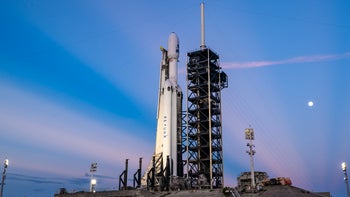
First, Carr was unhappy with EchoStar's past 5G buildout tests, which were supposed to show whether Boost's 5G network buildout was proceeding on schedule. The FCC Chairman also threatened to have his staff "investigate EchoStar’s compliance with its buildout milestones." Carr also called out EchoStar for hoarding some of its spectrum, especially its 2GHz airwaves which Elon Musk desperately wanted for SpaceX since the 2GHz spectrum delivers exceptional performance for SpaceX's satellite to cellphone service.
As it turned out, EchoStar sold off some of its spectrum to AT&T for $23 billion ending Boost's chances of being the nation's fourth largest major wireless firm. And the airwaves that SpaceX wanted from EchoStar, it eventually purchased from EchoStar for $17 billion. While Boost was working on building its own standalone 5G network, without the spectrum it sold, that was no longer possible so it shut down the network build out and will be a hybrid Mobile Network Operator (MNO). Boost's core network will now connect to AT&T's nationwide network. If you're a Boost subscriber and make a call or use data, your phone will connect with an AT&T cell tower.
Six-month unlimited plan is now 57% off
$90
$210
$120 off (57%)
Mint Mobile is now allowing you to get whichever plan you like for either three, six, or 12 months for just $15/mo. If you go for the six-month unlimited service, for instance, you'll now have to pay just $90 upfront instead of $210.
Alan, an ardent smartphone enthusiast and a veteran writer at PhoneArena since 2009, has witnessed and chronicled the transformative years of mobile technology. Owning iconic phones from the original iPhone to the iPhone 15 Pro Max, he has seen smartphones evolve into a global phenomenon. Beyond smartphones, Alan has covered the emergence of tablets, smartwatches, and smart speakers.
A discussion is a place, where people can voice their opinion, no matter if it
is positive, neutral or negative. However, when posting, one must stay true to the topic, and not just share some
random thoughts, which are not directly related to the matter.
Things that are NOT allowed:
Off-topic talk - you must stick to the subject of discussion
Offensive, hate speech - if you want to say something, say it politely
Spam/Advertisements - these posts are deleted
Multiple accounts - one person can have only one account
Impersonations and offensive nicknames - these accounts get banned
To help keep our community safe and free from spam, we apply temporary limits to newly created accounts:
New accounts created within the last 24 hours may experience restrictions on how frequently they can
post or comment.
These limits are in place as a precaution and will automatically lift.
Moderation is done by humans. We try to be as objective as possible and moderate with zero bias. If you think a
post should be moderated - please, report it.
Have a question about the rules or why you have been moderated/limited/banned? Please,
contact us.






Things that are NOT allowed:
To help keep our community safe and free from spam, we apply temporary limits to newly created accounts: