Apple seems to be planning to change its silicon production company for some lower-end iPhones in 2028. At least, that's one rumor that's been circulating online and is now reportedly being repeated by GF Securities analyst Jeff Pu.
Apple may switch to Intel for some chips for iPhones
Jeff Pu seems to believe that Apple may use Intel's 14A process in 2028 for some of its upcoming iPhone processors. However, the analyst believes that the Cupertino tech giant will still mostly depend on TSMC for chip production.
Apparently, the analyst believes that Intel could only act as a foundry and manufacture chips that are still entirely designed by Apple. Apple would continue controlling the chip's architecture, targets for performance, and feature integration.
This is said to happen starting in 2028. According to the analyst, Intel-manufactured processors may be used in non-Pro iPhones. It appears that the Cupertino giant won't use Intel for its higher-end processors.
If Apple uses Intel-made chips in future non-Pro iPhones, how would you feel?
39 Votes
Totally fine, as long as quality stays the same
46.15%
Cautiously optimistic, but I'd wait and see
15.38%
Not a fan, I trust TSMC more
15.38%
I don't care who makes the chip
23.08%
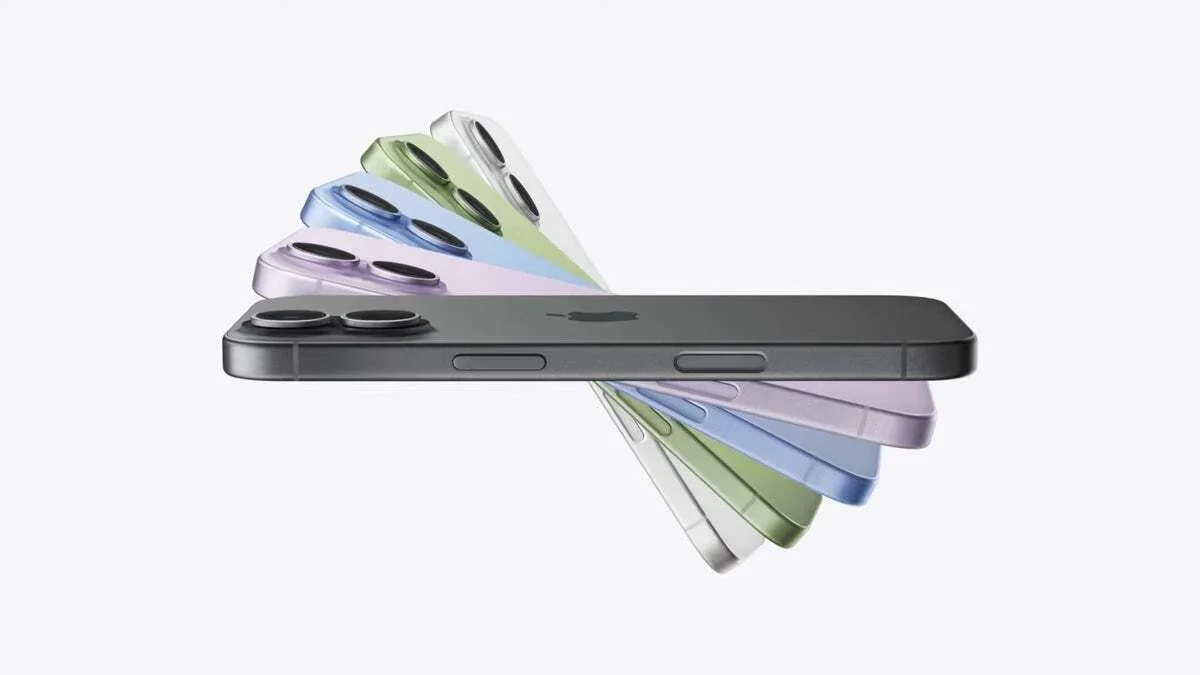
iPhone processors and their manufacturing
Image Credit – Apple
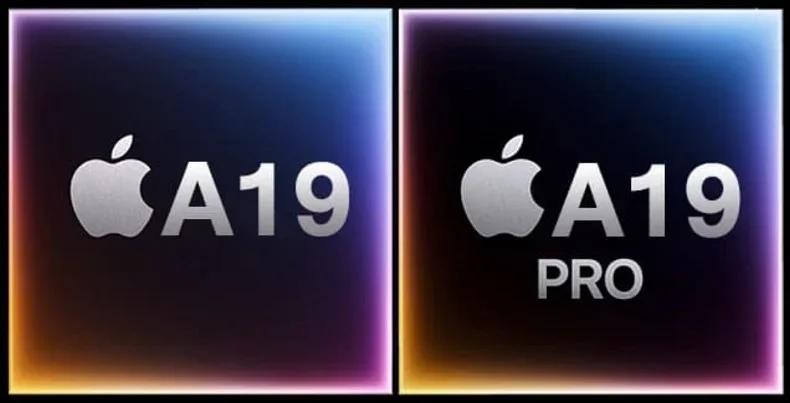
Making processors for iPhones is a very difficult task, as with any mobile processor. For example, for iPhones, performance per watt matters more than peak speed. This is because even small losses in efficiency would translate into reduced battery life, design compromises, or even thermal throttling.
Of course, phone processors are also tricky because of the size. For one, something that could be okay in a Mac would be more obvious for an iPhone, including heat.
Moreover, iPhones sell in considerable quantities. This makes it absolutely necessary to mitigate yield problems.
Recommended For You
So basically, a secondary foundry will be helpful for the Cupertino tech giant if it can perform predictably enough so that it can integrate into the running system. Potentially, that's why Intel will be joining by making the somewhat lower-end processors at the moment. Apple wants to limit the risks that could be related to variability and operations.
Meanwhile, TSMC has already proven itself to Apple with tooling, technologies for packaging, and discipline with production.
Currently, rumor has it that Intel may manufacture entry-level M7 chips as well (to be used in select Macs or iPads) with its 18A-class process. These processors don't have as many thermal and battery constraints and also ship in smaller volumes.
However, Pu's claims aren't met without any skepticism. The analyst doesn't talk about any signed contracts or production commitments. Rather, he seems focused on Apple's plans to diversify its manufacturing strategy.
Basically, diversification is important for a company like Apple. It would help it better navigate shortages, geopolitics, and what have you. And it would also offer the company more flexibility.
We haven't had reports just yet about the Cupertino tech giant reserving Intel capacity, though. So this means nothing is set in stone just yet, and we're just talking about an analyst's expectations and forecasts at the moment.
Nevertheless, these forecasts seem reasonable at this point. Intel would still have to prove itself to Apple that it could offer efficiency, yield, and quality up to Apple's standards. For now, TSMC is the only confirmed manufacturer that was able to do that.
Diversification is good, but quality should remain
I don't really mind if Intel takes over some chip manufacturing for Apple. I'm generally a fan of diversification because this way you can better prevent instability in supplies. However, Apple's iPhones are known for being of excellent quality. The integration between hardware and software is one of their strongest points.
I wouldn't want any manufacturer to result in a drop in quality or less powerful and reliable iPhones. That's the iPhone's strong point, and if that gets shaken, Apple, in my opinion, would be in serious trouble. But let's wait and see before reaching conclusions just yet. After all, 2028 is… still somewhat far away for concrete conclusions.
Trade in your old phone for cash at ecoATM!
Recycle your used phone and get instant cash. Find out how at ecoATM!
Iskra Petrova is a news writer at PhoneArena, where she covers mobile tech news and maintains the site’s device hubs with the latest leaked specs, rumors, and official details for upcoming phones. She joined PhoneArena in 2020 after three years in technical support for Microsoft Exchange, giving her practical experience with software infrastructure and troubleshooting. Iskra holds a Master’s Degree in Literature, which helps her translate complex tech details into clear, reader-friendly coverage. She is a daily Apple ecosystem user, while also closely following Sony Xperia’s camera-focused phones and Samsung’s Galaxy Z Flip series.
A discussion is a place, where people can voice their opinion, no matter if it
is positive, neutral or negative. However, when posting, one must stay true to the topic, and not just share some
random thoughts, which are not directly related to the matter.
Things that are NOT allowed:
Off-topic talk - you must stick to the subject of discussion
Offensive, hate speech - if you want to say something, say it politely
Spam/Advertisements - these posts are deleted
Multiple accounts - one person can have only one account
Impersonations and offensive nicknames - these accounts get banned
To help keep our community safe and free from spam, we apply temporary limits to newly created accounts:
New accounts created within the last 24 hours may experience restrictions on how frequently they can
post or comment.
These limits are in place as a precaution and will automatically lift.
Moderation is done by humans. We try to be as objective as possible and moderate with zero bias. If you think a
post should be moderated - please, report it.
Have a question about the rules or why you have been moderated/limited/banned? Please,
contact us.












Things that are NOT allowed:
To help keep our community safe and free from spam, we apply temporary limits to newly created accounts: