Apple's 'biggest ever' iPad mini update highlights everything that's wrong with tablets today
I never had very high expectations for the eight-gen iPad mini, especially in terms of value for money, but somehow, Apple still managed to disappoint me.
While it's not exactly unusual for a new iPad launch to generate way less buzz than Apple's latest handsets among the company's hardcore fans (especially when it happens mere days after the global release of a product as groundbreaking and problematic as the iPhone Duo foldable), this week's iPad mini (A20 Pro) announcement went almost completely unnoticed.
Although I don't have any hard data to support my theory, I feel like more people paid attention to the AirPods 5, Apple Watch Series 12, and Apple Watch Ultra 4 introductions that took place at the same time that the iPhone 18 Pro, 18 Pro Max, and Duo saw daylight last month, which wouldn't have been a big issue if the iPad mini (2026) wasn't designed to revolutionize the diminutive tablet line.
This is by no means a derivative 2026 iPad Air-style upgrade, mind you, actually bringing to the table a number of major improvements over its 2024 predecessor, including one expected for the better part of a decade. So why does no one seem to care about the "biggest ever" iPad mini update?
The simple answer
$699. For a compact slate with 128 gigs of internal storage space, no Face ID technology, no traditional stereo speakers, no big battery endurance claims, and most annoyingly, no 120Hz display refresh rate support.
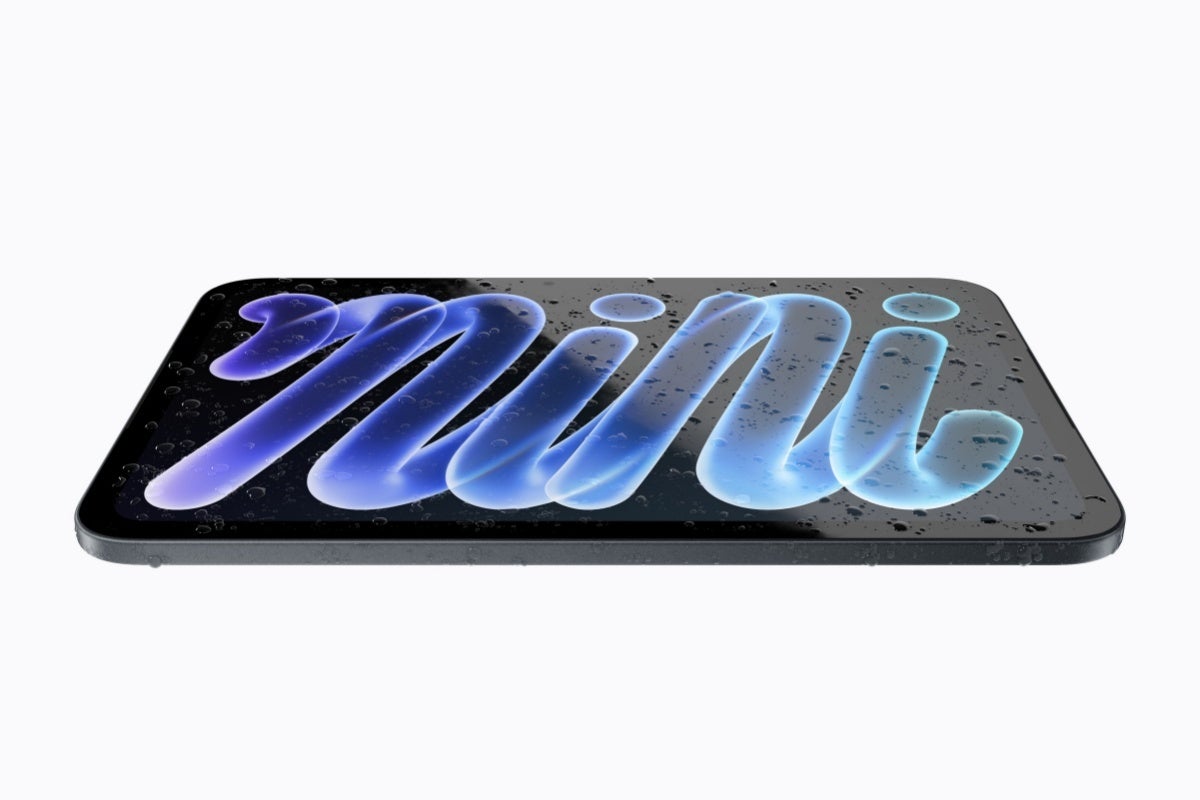
The OLED screen is cool, but it could have been a lot cooler. | Image by Apple
No matter how you look at it, this seems like a mediocre (at best) value proposition, even before you compare it to some of its top Android-based rivals and even if you factor in the industry-wide component costs issues of the last year or so. Yes, all the best tablets (and smartphones) out there have gotten pricier and pricier of late, but even by those standards, charging seven Benjamins for a device with this many compromises is a... bold move on Apple's part that's almost guaranteed to backfire in a big way.
Recommended For You
Am I intrigued to see how the "innovative" Acoustic Display will perform in terms of real-life audio quality next to something like the nine speaker-packing Lenovo Tab Plus Gen 2? Absolutely. Do I think the Apple A20 Pro processor will match or exceed the MediaTek Dimensity 9500 inside the state-of-the-art Samsung Galaxy Tab S12 Ultra as far as raw speed is concerned? Also yes. Is the 8.5-inch OLED screen a major step forward for the iPad mini family despite retaining outdated 60Hz refresh rate capabilities? Of course.
What's the new iPad mini's biggest problem?
5 Votes
But none of those things can make up for the fact that the latest and greatest 11-inch iPad Air starts at only $50 more than the iPad mini (2026) with all that extra screen real estate and a vastly superior Apple M4 chipset.
The slightly more complicated answer
Tablets are going through a major identity crisis. I'm not the one saying that, the global sales numbers are very clearly painting a bleak picture that can't entirely be attributed to the "RAMageddon" phenomenon pushing prices higher and higher for essentially all brands.
Yes, the market managed to expand in both 2025 and 2024, but that followed two consecutive years of worldwide declines and a general state of uncertainty surrounding the purpose of these products in our post-pandemic society.
The iPad mini's purpose is less and less clear. | Image by Apple
Tablets are likely to lose even more of their mainstream appeal as foldables continue to grow in popularity and fall in prices in the next few years, and in this context, I believe only two categories currently have potential for growth (both in the short and long term). Specifically, ultra-high-end models like the iPad Pros that will probably remain more productive than the iPhone Duos and Galaxy Z Folds of the world, as well as significantly lower-cost slates than the newest iPad mini edition.
Now, I'm not saying Apple should give up on the iPad mini line... just yet, but that's definitely something the tech giant will eventually need to consider if that $699 starting price can't go down for... various reasons.
Is there still hope?
Assuming I'm right (which I always do), Apple only has one realistic option to resuscitate its compact tablet portfolio down the line. Because there's no way an iPad mini Pro of sorts with state-of-the-art specs and a fitting price point could ever become a hit, I'm left dreaming with my eyes open of a budget-friendly iPad mini SE or iPad mini e version of some kind... even if that means reversing the upgrade from LCD to OLED screen technology.
The new iPad mini is water-resistant, but that still doesn't justify its starting price. | Image by Apple
Of course, such a product isn't developed overnight, and even if the idea exists, it will probably take years to come to fruition. In the meantime, Apple needs to do the only thing it can to try to save the current "standard" iPad mini from instant irrelevance and drop that starting price to no more than $599. Unfortunately, the odds of that happening are roughly equal to the chances the New York Knicks have to go back-to-back and win this season's NBA title.
Here are more articles about iPads and other tablets that you might find interesting:
Adrian, a mobile technology enthusiast since the Nokia 3310 era, has been a dynamic presence in the tech journalism field, contributing to Android Authority, Digital Trends, and Pocketnow before joining PhoneArena in 2018. His expertise spans across various platforms, with a particular fondness for the diversity of the Android ecosystem. Despite the challenges of balancing full-time parenthood with his work, Adrian's passion for tech trends, running, and movies keeps him energized. His commitment to mid-range smartphones has led to an eclectic collection of devices, saved from personal bankruptcy by his preference for 'adequate' over 'overpriced'.
A discussion is a place, where people can voice their opinion, no matter if it
is positive, neutral or negative. However, when posting, one must stay true to the topic, and not just share some
random thoughts, which are not directly related to the matter.
Things that are NOT allowed:
Off-topic talk - you must stick to the subject of discussion
Offensive, hate speech - if you want to say something, say it politely
Spam/Advertisements - these posts are deleted
Multiple accounts - one person can have only one account
Impersonations and offensive nicknames - these accounts get banned
To help keep our community safe and free from spam, we apply temporary limits to newly created accounts:
New accounts created within the last 24 hours may experience restrictions on how frequently they can
post or comment.
These limits are in place as a precaution and will automatically lift.
Moderation is done by humans. We try to be as objective as possible and moderate with zero bias. If you think a
post should be moderated - please, report it.
Have a question about the rules or why you have been moderated/limited/banned? Please,
contact us.













Things that are NOT allowed:
To help keep our community safe and free from spam, we apply temporary limits to newly created accounts: