Say what you want about Apple’s iPhones, but for over a decade, there was always a constant — Apple had the fastest chips. Every autumn, a new A-series chip would land, showing the Android flagships that were still trying to beat last year’s model that they still have a long way to go.
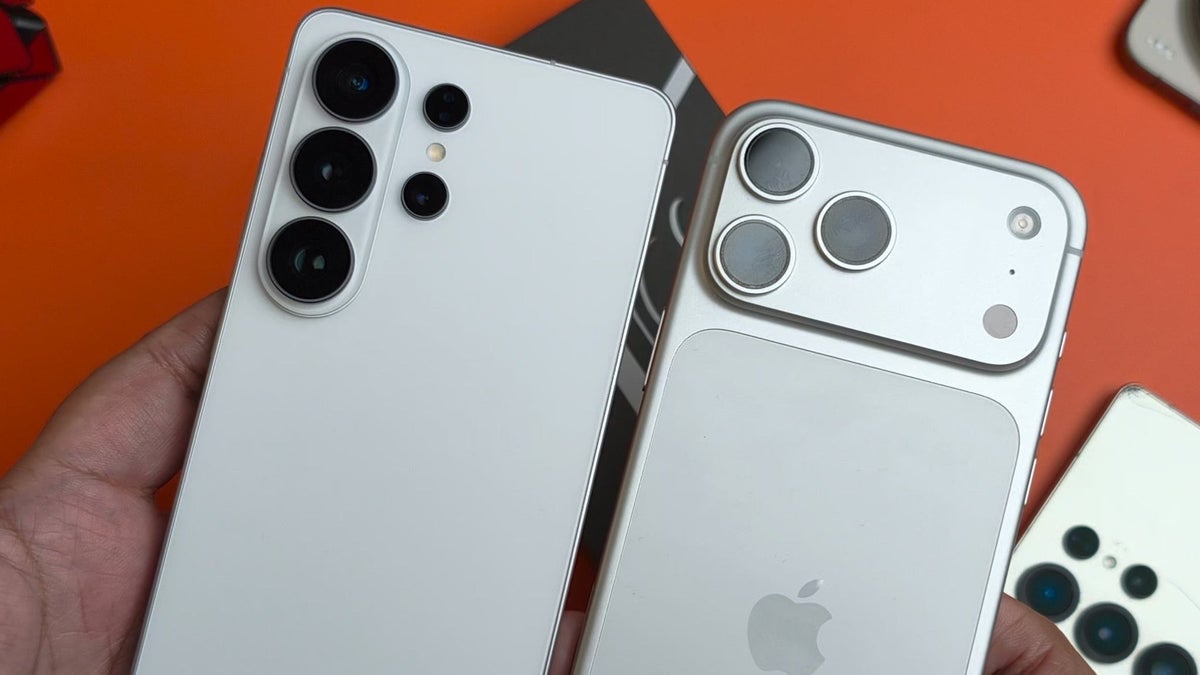
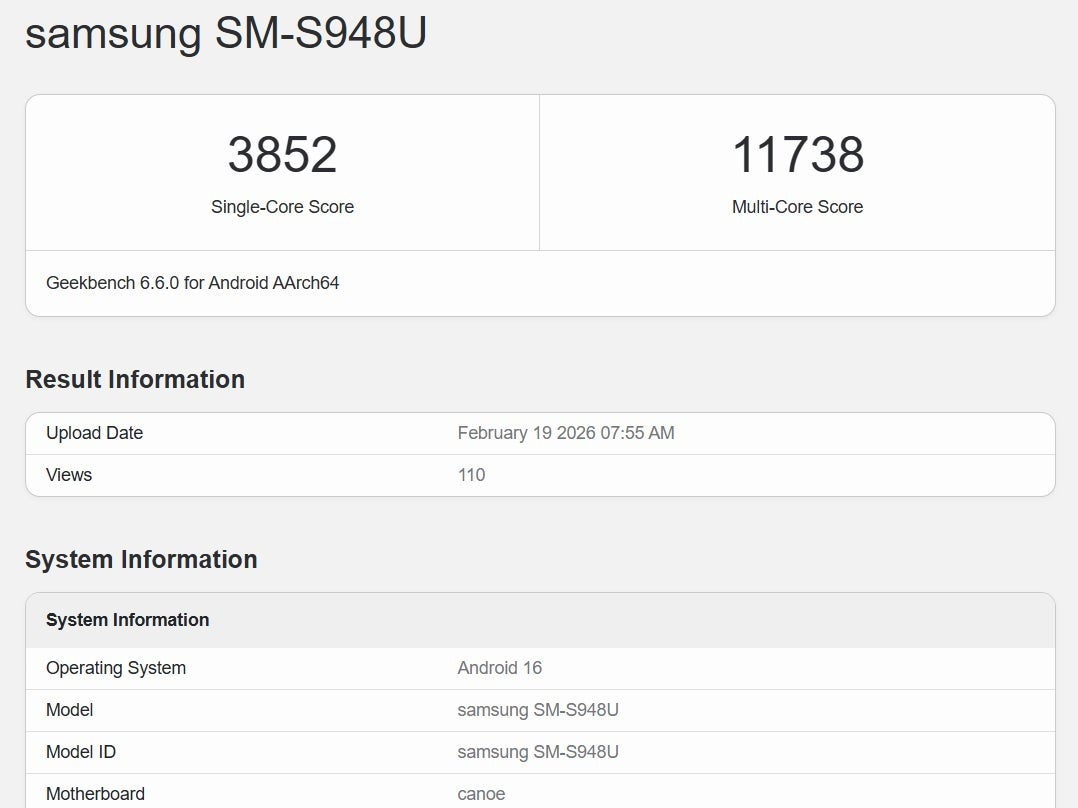
But the gap has been closing steadily over the recent years, as Qualcomm has upped its game over and over again. As we head into the 2026 flagship season, leaks show us that the impossible has happened: the Samsung Galaxy S26 Ultra Geekbench 6 scores popped up and showed us it is faster than the iPhone 17 Pro Max.
To be precise, the Snapdragon 8 Elite Gen 5 (for Galaxy) powering the S26 Ultra appears to have surpassed Apple’s A19 Pro in multi-core performance by a staggering 18%.
This is not new
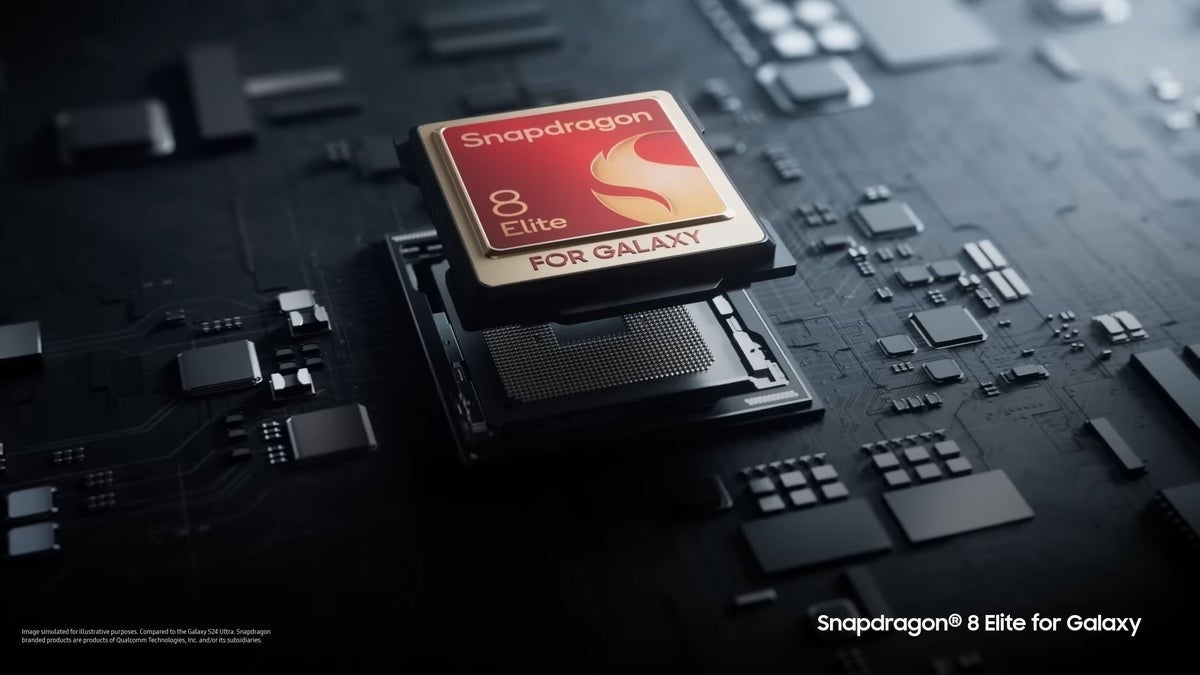
Snapdragon 8 Elite was a multi-core speed demon | Image by Samsung
To be clear, the Galaxy S25 Ultra was also 19.5% faster than the iPhone 16 Pro Max in multi-core score, but still lagged behind in single-core by about 7.5%.
The reason why this benchmark leak is making the rounds and being called “the first time” Samsung’s chips are one-upping Apple is because of the miniscule single-core score difference. Apple’s A19 Pro typically hits around 3,800-3,900. The leaked test of the Galaxy S26 Ultra sits right in the middle of that range!
Recommended For You
Wait, so what’s important - single-core or multi-core?
For most of the tasks you perform on your phone, powerful single-core performance directly translates to how snappy and responsive the phone feels.
Opening an app, scrolling through a social media feed, tapping a notification — these all engage the a high-speed “Prime” core to do the initial burst of calculations. Remember shutter lag? Yeah, that’d happen with a slow single core, because a fast shutter response needs a burst from a strong Prime core.
Additionally, if you are using older apps or just ones that haven’t been optimized — these are usually not coded to engage multi-core chips, but rely on one or two cores for their tasks. Thus, a low single-core score means those particular apps feel sluggish.
The leaked score that ignited celebrations | Image by Geekbench
For reference — iPhone 17 Pro Max scores range Single-core - 3,800-3,900; Multi-core - 9,700-10,000.
Apple has prioritized single-core speed for years specifically because of how an iPhone is meant to run and be used. We all know that while Android was putting split-screen and floating windows in its UI, iPhones were (and still are, mostly) a “one app at a time” deal. This has both its good and bad sides, but the general truth of the matter is that even older iPhones still feel snappy and responsive (compared to today’s midrange Androids) exactly because of this approach.
Multi-core score is still important — very important — for stability. While gaming, editing photos and video and rendering them, or for managing multiple active apps at a time.
Essentially, every app or game needs a strong Prime core to handle the main tasks — user input, raw calculations, sending data to the GPU crunch. Secondary tasks, like calculating the HDR for a recent photo, fetching textures to be loaded while you game, managing Wi-Fi and 5G in the background, getting and managing your notifications and other hidden tasks while you are busy with on-screen content.
So, now we get it
While Android was praised for years for having native multi-tasking, there was always the “stutter” we couldn’t get rid of. Freezing animations, apps taking a bit longer to load, or HDR photos taking their sweet time to go from “preview” to “finalized picture” right in front of our eyes.
Many users didn’t care for it — they enjoyed the tradeoff of having an operating system that feels more open. I, myself, have become more or less unreceptive to micro stutters, though some colleagues still notice and hate them.
The truth is, phones run fine now, so what is a couple of freeze frames here and there?
Which actually led me to another question:
A leap in performance or just a collective shrug?
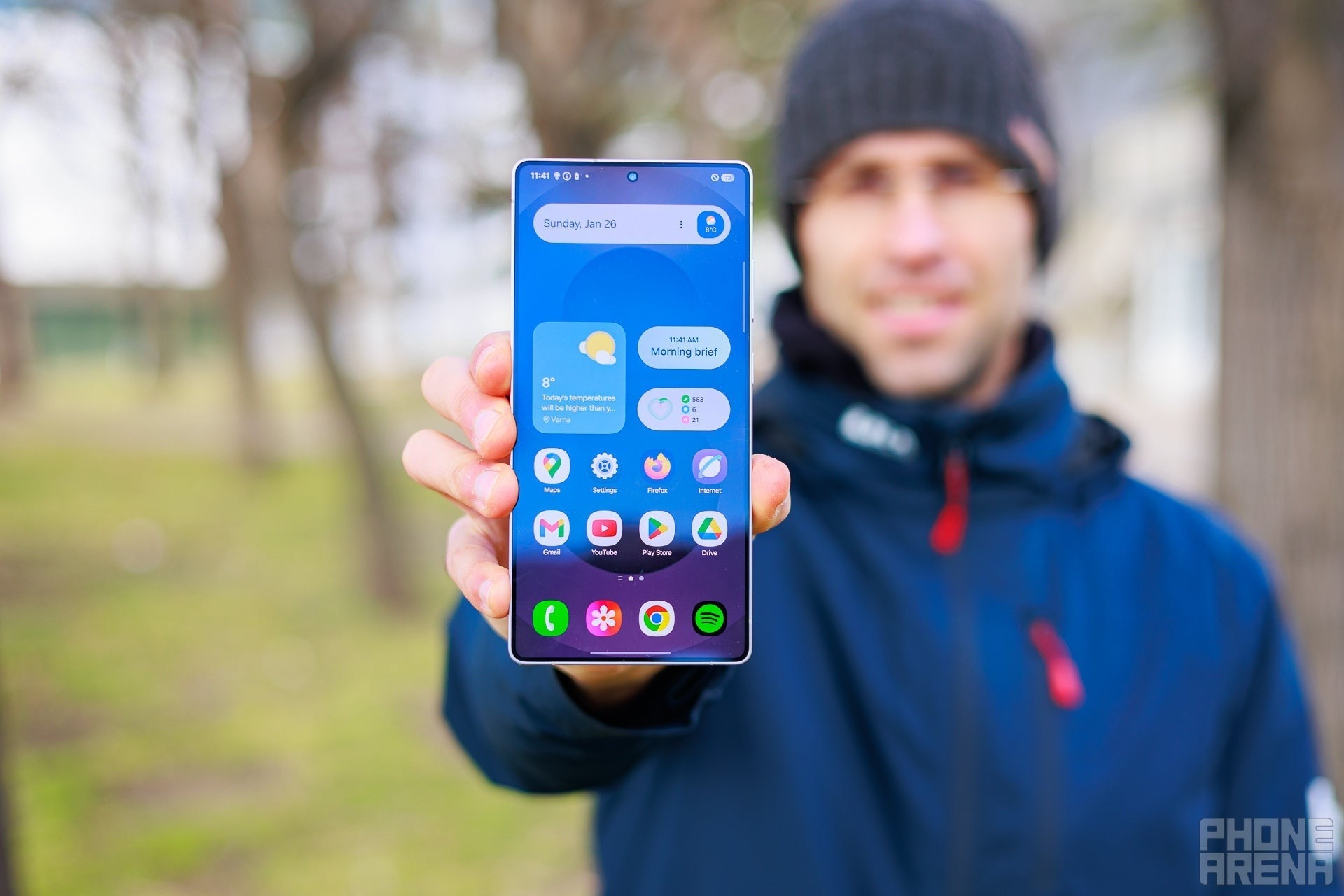
The Galaxy S25 Ultra was and is still a beast | Image by PhoneArena
Just last week, I wrote an article about how we are currently in the “post-performance” era. As smartphone tech has matured and basically become “good enough” across the board, the focus is more about unique experiences, designs, tactile feel, and accessory aesthetic now.
Since AI is the hot trend right now, I do have to give an example with it. Samsung’s lead in NPU (Neural Processing Unit) performance means the Galaxy S26 will process Live Translate and generative video locally, while the iPhone 17 Pro Max is reportedly still offloading heavy AI tasks to the cloud.
And that is on top of closing that single-core performance gap, so Samsung fans will have a lot to brag about.
But, when the Galaxy S26 series is announced a couple of days from now, I do hope to see more innovation in the user experience field. Stuff that can answer the question “OK, it’s fast, but what will it do for me?”.
If this benchmark flip had happened in 2016, it would have shifted the entire market. In 2026, it faces three major hurdles:
We’ve hit the "Good Enough" ceiling. Most users would trade a 20% speed boost for an extra two hours of battery life, or timely software updates, or a feature that actually boosts their productivity (DeX is good, but maybe we can see a focus on developing it further, pretty please?).
The Ecosystem Trap: Performance is no longer the primary reason people buy iPhones and it hasn’t been for a while. It’s iMessage, iCloud, and the Apple Watch. The good news is that Samsung has been hard at work at developing its own ecosystem, the bad news is that just releasing a Galaxy Watch Ultra didn’t cut it.
The AI Paywall: Now that Samsung has its super-fast hardware… it’s moving its more powerful AI features behind a paywall? (This support page states that “Any Samsung enhanced AI features and all third party AI features are subject to different terms and may be subject to fees.”)
A Pyrrhic victory?
On one hand — OK, having that powerful of hardware means you will at least be getting a high-quality experience when actually paying for the locked features. On the other, I am not sure how a recurring payment plan will fly with a community that is already exhausted by semi-useful AI features, rising prices, stale hardware, and now — subscription fatigue.
I have no doubt that the S26 Ultra will, again, be a legitimate engineering marvel. A leap in performance will definitely guarantee it more than a few headlines (See that? I’ve already started!). But we seem to be entering a tech rebel era, where consumers are thinking about minimalism and downshifting more and more.
I am quite happy that Samsung and Qualcomm seem to have managed to build their drag racing champion. But that car needs to be steered in a way that reignites users’ passion. I don’t think that, in 2026, dropping a product and excitedly exclaiming “We can’t wait to see what the developers do with it!” is going to cut it.
What would you like to see from the Galaxy S26 Ultra going forward?
Free Galaxy A17 5G with Straight Talk
Get a free Galaxy A17 with Straight Talk. To claim this deal, you need to pair the phone with activation on a Silver Unlimited Plan or higher. This tier costs $45 per month. Offer valid through 01/10/27 while supplies last online.
Preslav, a member of the PhoneArena team since 2014, is a mobile technology enthusiast with a penchant for integrating tech into his hobbies and work. Whether it's writing articles on an iPad Pro, recording band rehearsals with multiple phones, or exploring the potential of mobile gaming through services like GeForce Now and Steam Link, Preslav's approach is hands-on and innovative. His balanced perspective allows him to appreciate both Android and iOS ecosystems, focusing on performance, camera quality, and user experience over brand loyalty.
A discussion is a place, where people can voice their opinion, no matter if it
is positive, neutral or negative. However, when posting, one must stay true to the topic, and not just share some
random thoughts, which are not directly related to the matter.
Things that are NOT allowed:
Off-topic talk - you must stick to the subject of discussion
Offensive, hate speech - if you want to say something, say it politely
Spam/Advertisements - these posts are deleted
Multiple accounts - one person can have only one account
Impersonations and offensive nicknames - these accounts get banned
To help keep our community safe and free from spam, we apply temporary limits to newly created accounts:
New accounts created within the last 24 hours may experience restrictions on how frequently they can
post or comment.
These limits are in place as a precaution and will automatically lift.
Moderation is done by humans. We try to be as objective as possible and moderate with zero bias. If you think a
post should be moderated - please, report it.
Have a question about the rules or why you have been moderated/limited/banned? Please,
contact us.










Things that are NOT allowed:
To help keep our community safe and free from spam, we apply temporary limits to newly created accounts: