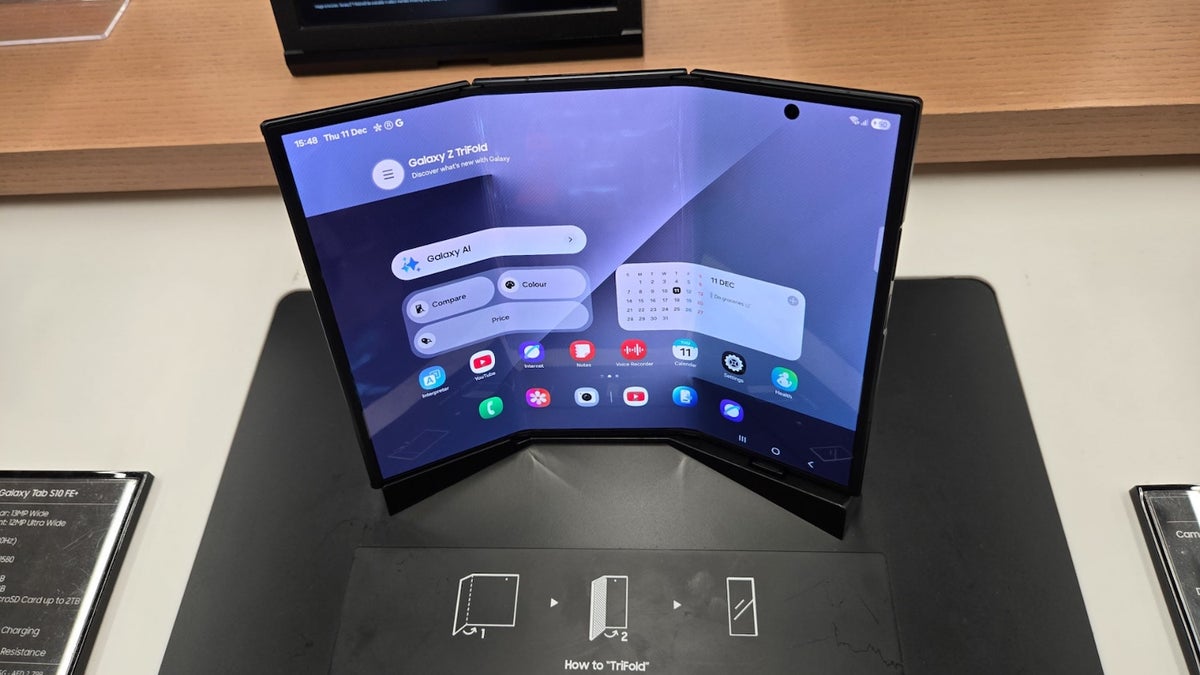
This time, it has a phone that folds not once, but twice. The Galaxy Z TriFold is a wild piece of tech: open it up and you've got a massive 10-inch tablet that fits in your pocket. Sounds like sci-fi, right?
But while that's undeniably cool, I can't help but wonder if this thing is going to be more "wow, check this out" than "wow, I actually need this."
With a sky-high price, quirky design compromises, and limited software support, I worry whether this ambitious device will truly catch on, or end up as a luxury gadget for the most hardcore Samsung fans.
Can such a wild phone find its place, or will it remain an expensive experiment?
Price and Value
The TriFold starts at about $2,400 in South Korea, only $400 more than a standard Galaxy Z Fold 7. That’s undeniably high, and it puts the phone firmly in the luxury segment. Replacement screens are also pricey, with Samsung quoting roughly $1,122 — although a one-time 50% discount brings the first repair down to around $500.
That said, history shows us that Samsung’s foldables drop in price relatively quickly. The Galaxy Z Fold 7, for example, saw significant price cuts within months of launch. We can reasonably expect the TriFold to follow a similar trajectory, meaning that within the first year, early adopters may be able to pick it up for under $2,000. Still expensive, yes, but slightly more accessible.
Recommended For You
Design and Long-term durability
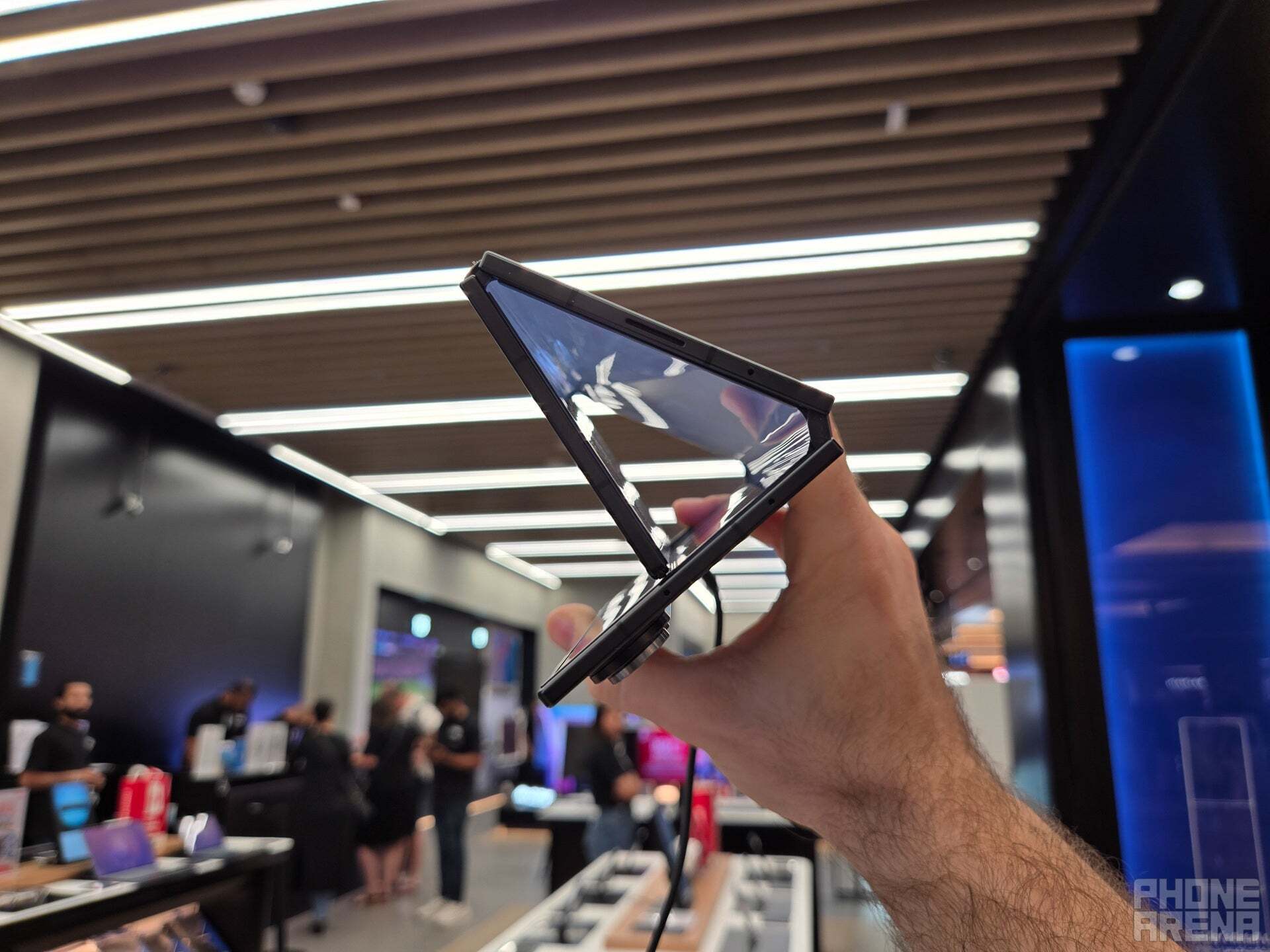
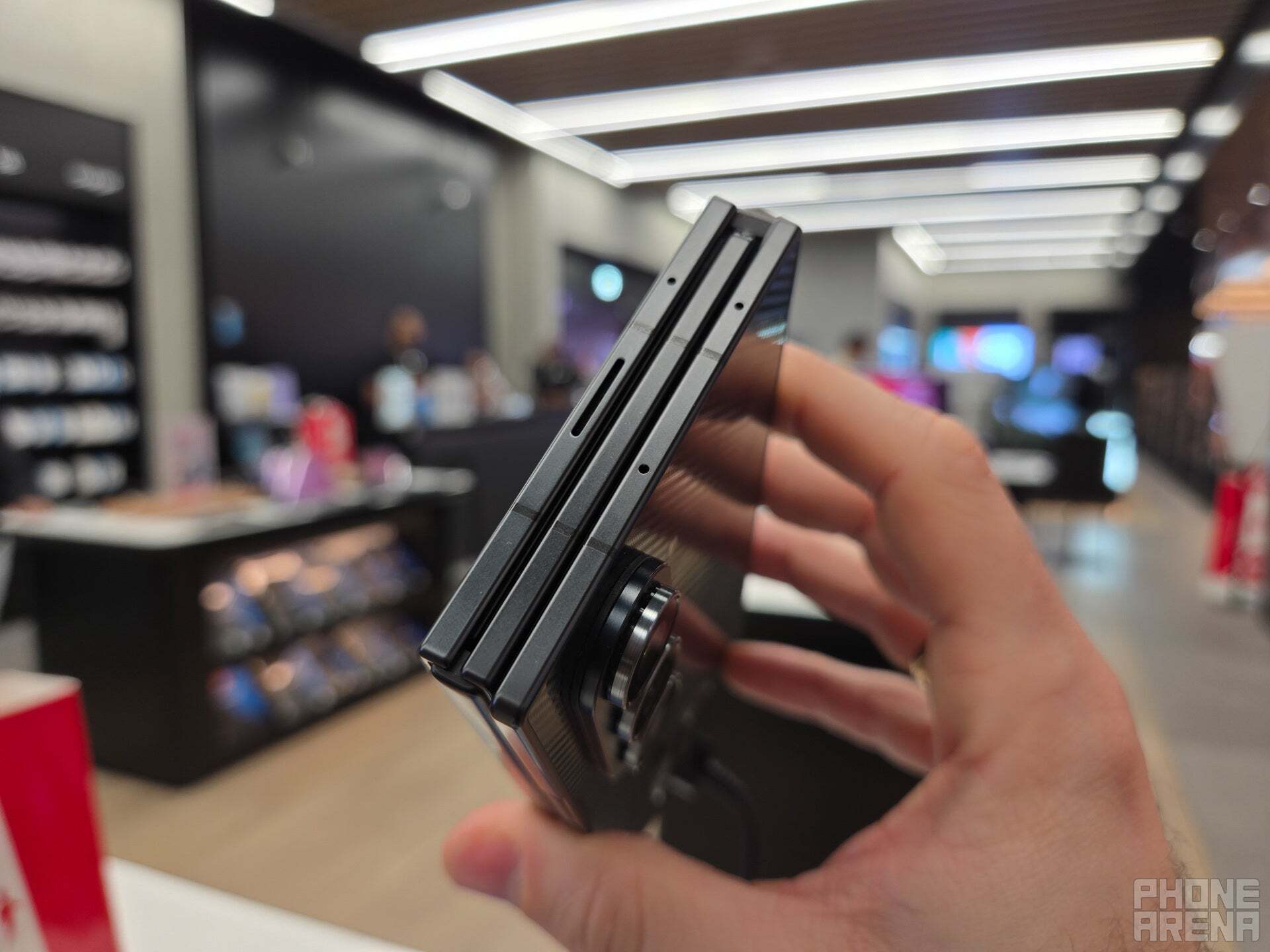
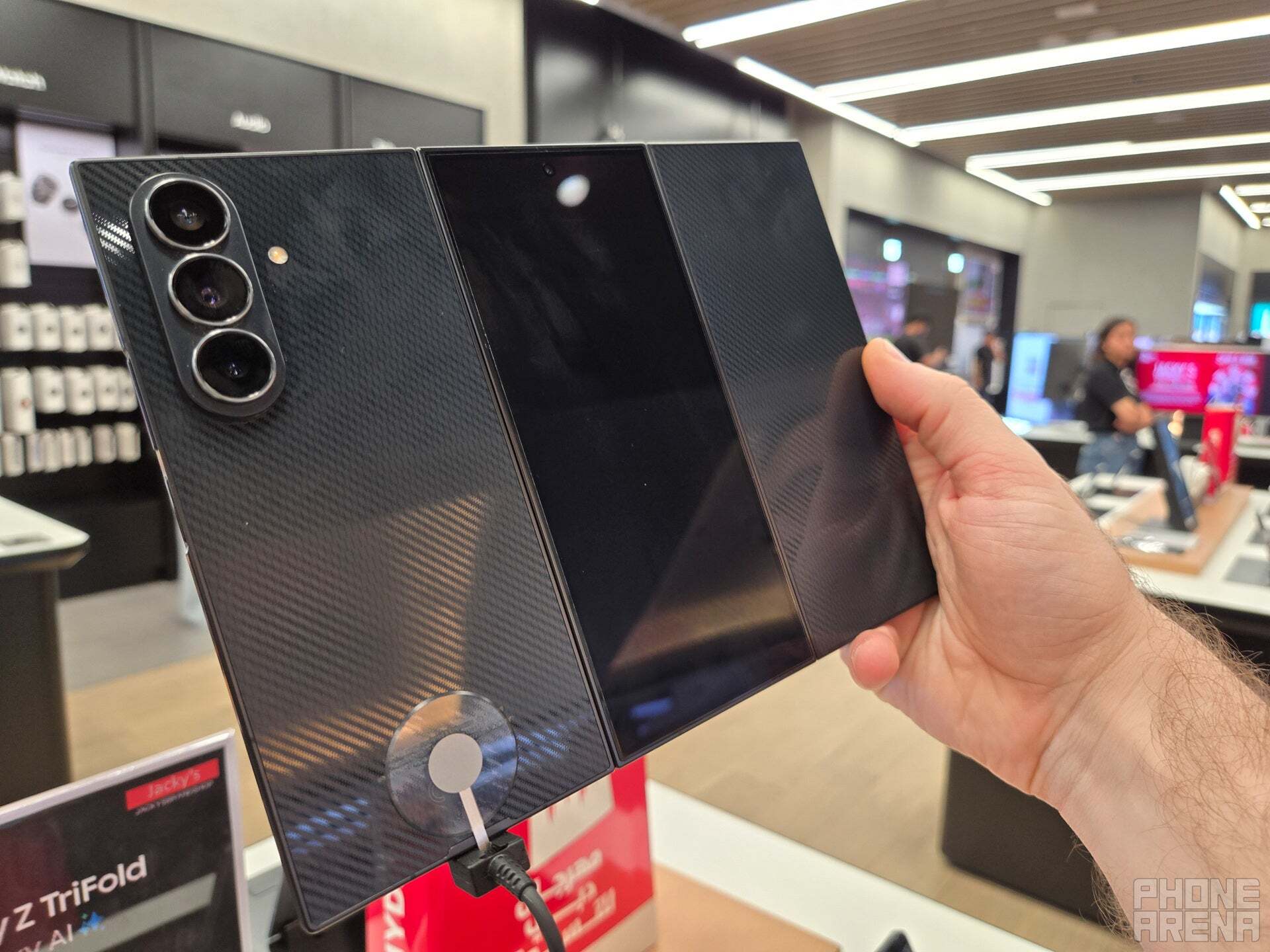
The TriFold has some quirks. You need to fold the left panel first, then the right, otherwise the touch layer disables itself. The cover panel also occasionally gets in the way of the main display. On the plus side, the device is solidly built, the hinges are smooth, and unfolding it gives you a near-tablet experience.
The panels themselves are 120Hz and impressively bright, making media consumption a joy. Samsung has clearly focused on durability as well, and the phone handles like a premium device in hand.
When comparing the Galaxy Z TriFold to the Huawei Mate XT, there are some differences.
What the Mate XT did exceptionally well is to actually survive a full year in the hands of so many reviewers. That shows a level of durability we typically don't see on a first-generation product, especially a foldable one.
The Mate XT tri-folding design was also surprisingly approachable, with fewer quirks in multi-panel interaction. While Samsung has refined the build quality and added IP48 protection, the Mate XT proved that multiple configurations (dual AND triple screen modes) are possible. However, Huawei's device never made it to Western markets, leaving Samsung with an opportunity to set the standard.
Specs and Features
The TriFold comes with the Snapdragon 8 Elite, not the Gen 5 variant, and there is no S Pen. While it’s not the absolute latest hardware, it’s still flagship-level in performance, more than capable of handling day-to-day tasks, multitasking, and media.
Productivity Potential
With a 10-inch tri-folding screen, it’s tempting to think of this as a laptop replacement. In reality, however, serious productivity still requires a keyboard and touchpad, which a foldable phone cannot fully replicate. App scaling, multitasking limitations, and ergonomics mean that while the TriFold is excellent for browsing, video, or light productivity tasks, it is still primarily a device for media consumption.
Hype and Actual Market Appeal
Samsung reported that initial pre-orders "sold out" quickly in South Korea, but with no actual numbers that means very little.
Did Samsung sell dozens, hundreds, thousands, or a million? My bet would be on thousands, but that's too vast a range. So I would not read too much into these early news. Put this phone on shelves and let's see if it flies off of them or not.
Final Words
Samsung's TriFold is a bold experiment: smooth hinges, large 120Hz panels, and robust build quality show what's possible when engineers stop worrying about "safe bets."
But innovation doesn't automatically equal mass appeal or adoption. The premium price, pricey repairs and ergonomic quirks make the TriFold feel like an intriguing proof of concept than most people's next phone.
Even the idea of replacing a laptop with a 10‑inch tri‑fold screen falls short in daily life: without a keyboard and consistent app optimization, this phone is more about media than productivity.
Free Galaxy A17 5G with Straight Talk
Get a free Galaxy A17 with Straight Talk. To claim this deal, you need to pair the phone with activation on a Silver Unlimited Plan or higher. This tier costs $45 per month. Offer valid through 01/10/27 while supplies last online.
Victor, a seasoned mobile technology expert, has spent over a decade at PhoneArena, exploring the depths of mobile photography and reviewing hundreds of smartphones across Android and iOS ecosystems. His passion for technology, coupled with his extensive knowledge of smartphone cameras and battery life, has positioned him as a leading voice in the mobile tech industry.
A discussion is a place, where people can voice their opinion, no matter if it
is positive, neutral or negative. However, when posting, one must stay true to the topic, and not just share some
random thoughts, which are not directly related to the matter.
Things that are NOT allowed:
Off-topic talk - you must stick to the subject of discussion
Offensive, hate speech - if you want to say something, say it politely
Spam/Advertisements - these posts are deleted
Multiple accounts - one person can have only one account
Impersonations and offensive nicknames - these accounts get banned
To help keep our community safe and free from spam, we apply temporary limits to newly created accounts:
New accounts created within the last 24 hours may experience restrictions on how frequently they can
post or comment.
These limits are in place as a precaution and will automatically lift.
Moderation is done by humans. We try to be as objective as possible and moderate with zero bias. If you think a
post should be moderated - please, report it.
Have a question about the rules or why you have been moderated/limited/banned? Please,
contact us.






Things that are NOT allowed:
To help keep our community safe and free from spam, we apply temporary limits to newly created accounts: