HTC 10 vs Samsung Galaxy S7 edge
Introduction
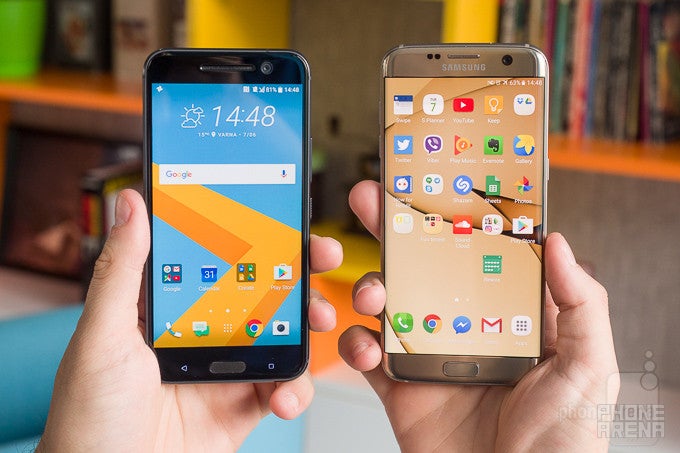
We've come to know the HTC 10 and the Samsung Galaxy S7 edge pretty well, and it's been our pleasure pretty much every step of the way. These are two of our favorite Android phones right now.
Design
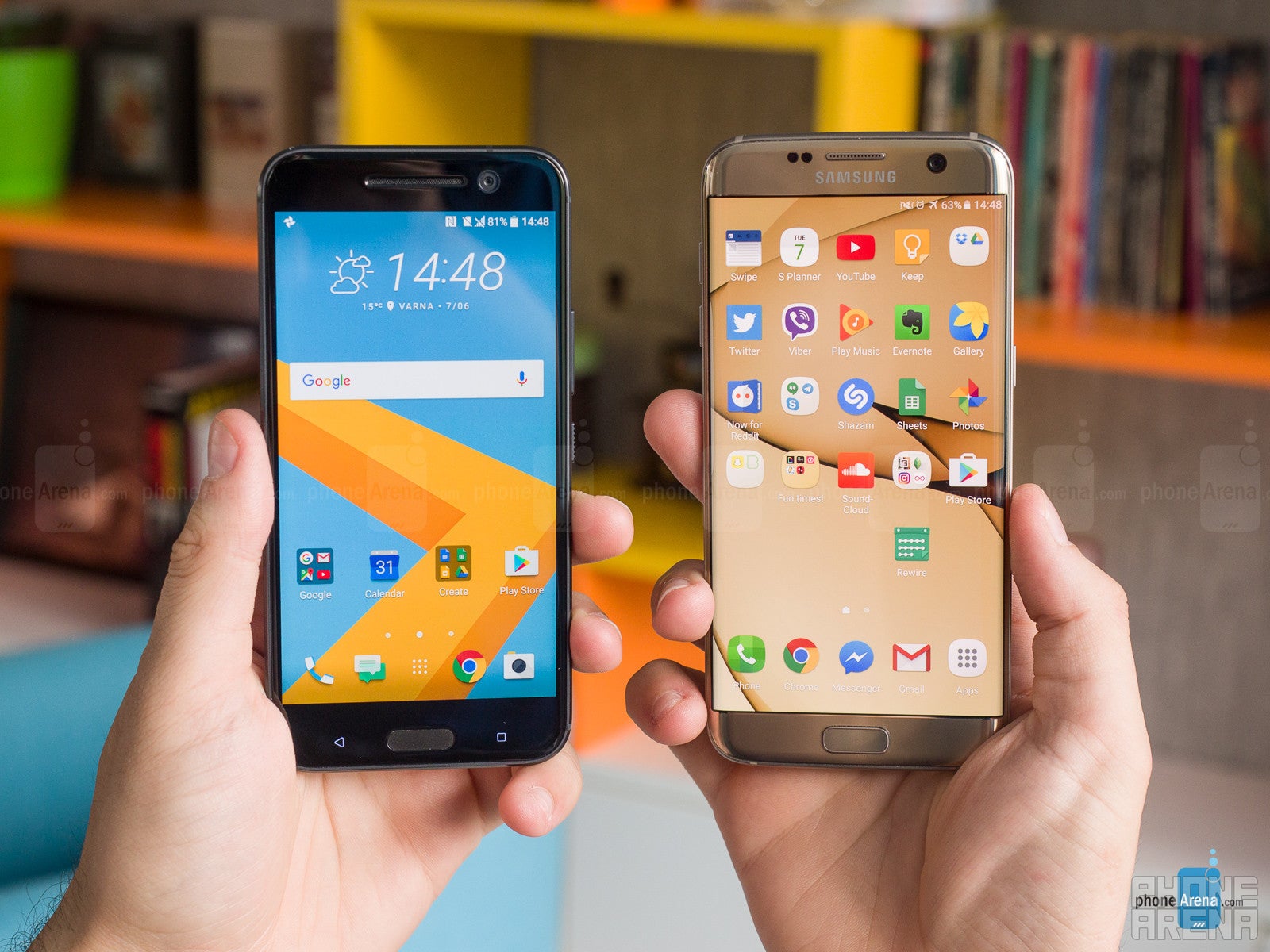
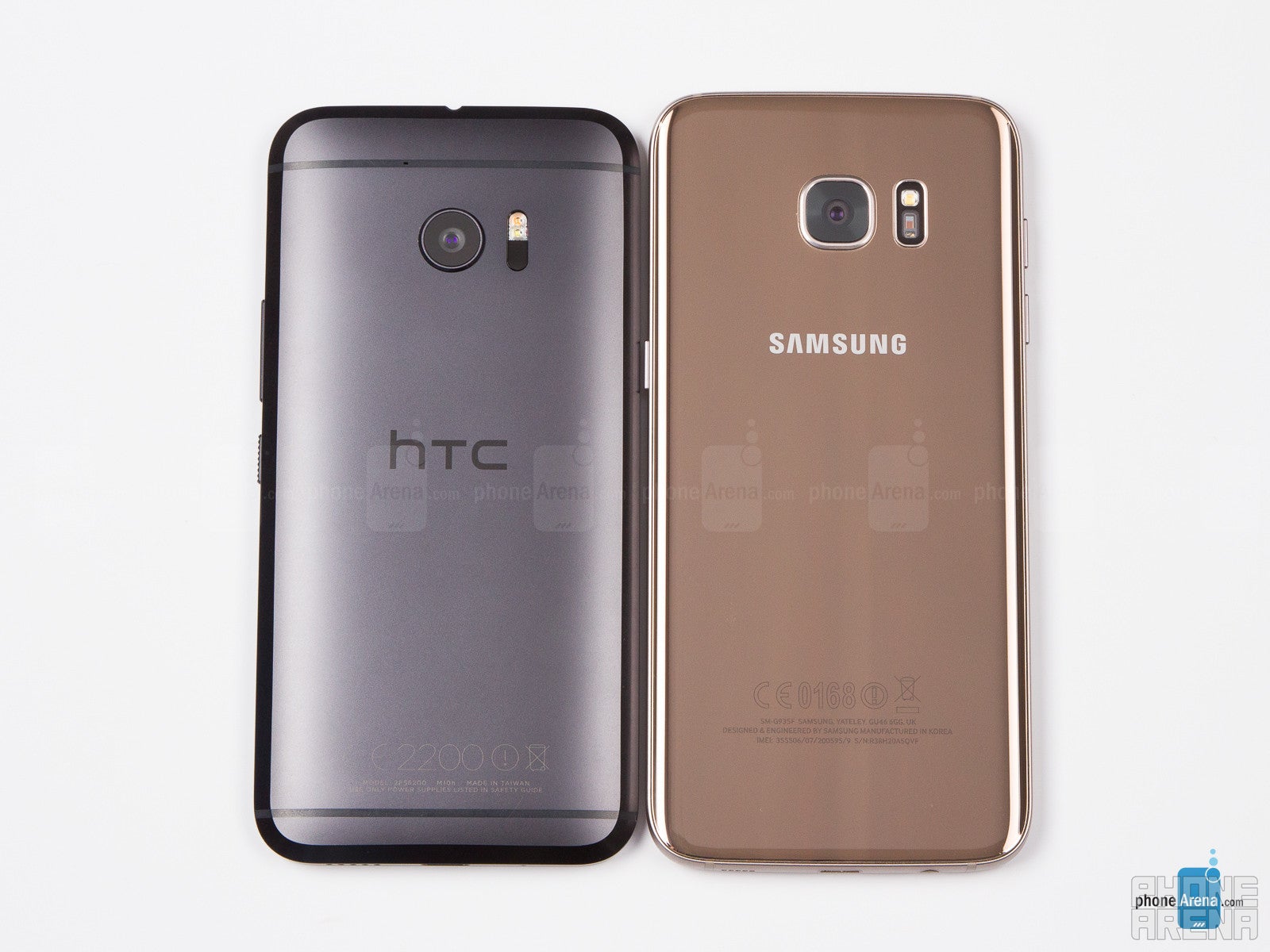
Featuring an aluminum body, the HTC 10 is a sight to behold in a rather mannish type of way. It honestly feels like a man's tool, not a toy. It's also different from its predecessors, with capacitive navigation keys, and none of them front-firing BoomSound speakers.
If we were to extend the macho metaphor a little bit further, we could say that while the HTC 10 feels like your typical, American muscle-type car, while the Samsung Galaxy S7 edge is the slick, electrical BMW i8 that has a more futuristic, but also unisex appeal. A blend between glass and metal, the S7 edge is thinner and a bit lighter, but also bigger and offering perks such as IP68-certification, meaning it's dust-tight and water-resistant. While not as protected, the HTC 10 is at least splash-resistant.

5.74 x 2.83 x 0.35 inches
145.9 x 71.9. x 9 mm
5.68 oz (161 g)

5.94 x 2.86 x 0.3 inches
150.9 x 72.6 x 7.7 mm
5.54 oz (157 g)

5.74 x 2.83 x 0.35 inches
145.9 x 71.9. x 9 mm
5.68 oz (161 g)

5.94 x 2.86 x 0.3 inches
150.9 x 72.6 x 7.7 mm
5.54 oz (157 g)
See the full HTC 10 vs Samsung Galaxy S7 edge size comparison or compare them to other phones using our Size Comparison tool.
Display
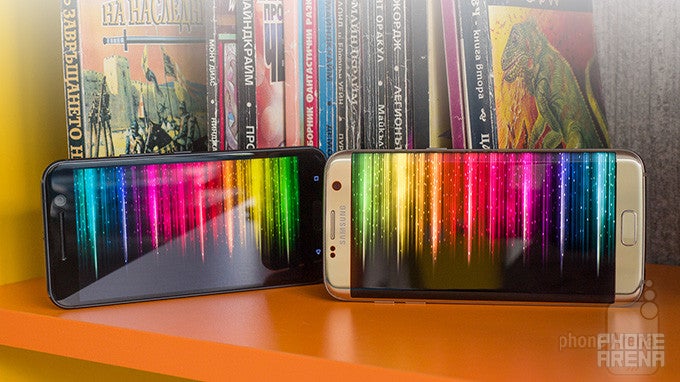
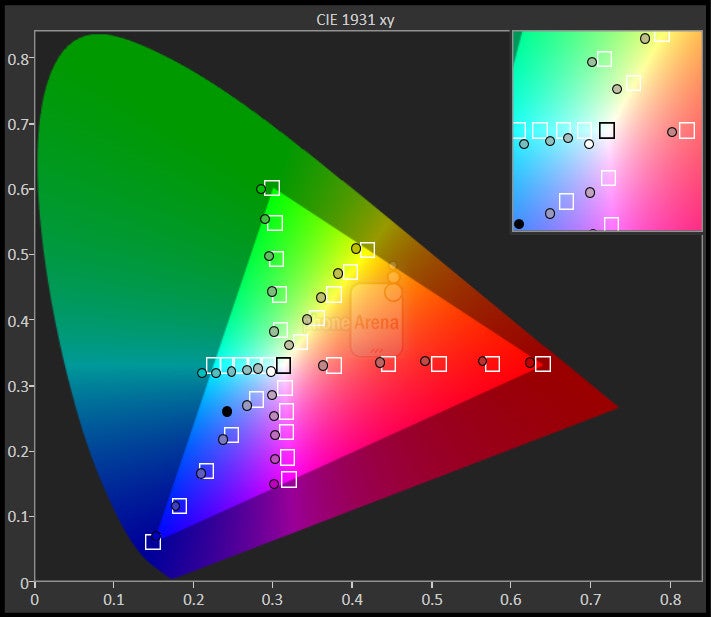
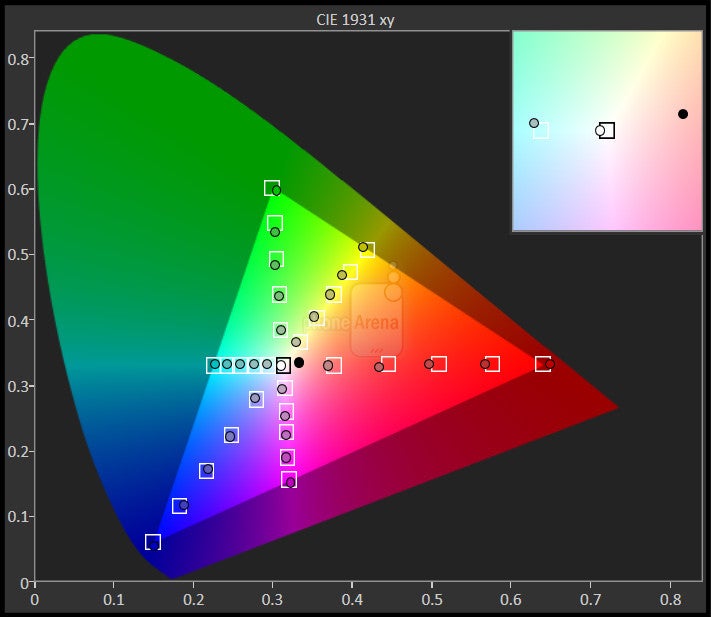
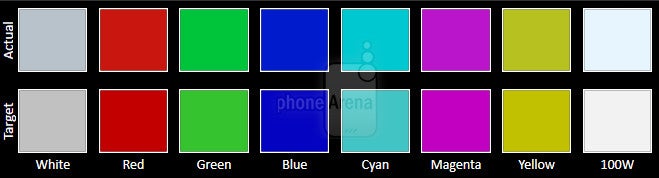
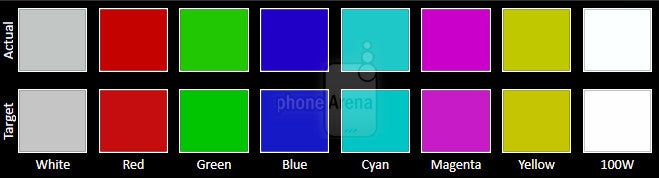
After years of sticking to smaller displays with lower resolutions than its rivals—which wasn't necessarily a bad thing—HTC is finally beefing up on the specs with the 10. Packing a 5.2-inch LCD display with a Quad HD (1440 x 2560) resolution, the HTC 10 nevertheless doesn't offer as much screen real estate as the the Galaxy S7 edge and its spacious, 5.5-inch AMOLED panel with the same pixel count. Rest assured that both provide an incredible level of detail – more so, in fact, than needed.
Finally, it ought to be mentioned that the Galaxy S7 edge has an Always-On display feature, meaning it will display information even when the phone is sleeping—information such as the time and date, or your calendar. However, since this drains the battery and is of questionable use, we're unwilling to shoot some extra points over to Samsung's camp over this one.


Interface
If you're trying to decide between the HTC 10 and the Samsung Galaxy S7 edge, their respective Android Marshmallow-based interfaces might just settle the dilemma for you. While built on top of the same Android base, the two veteran companies took distinctly different approaches to user experience.
Sense 8 based on Android Marshmallow on the HTC 10
It's not that Samsung necessarily lacks taste or that its UI looks bad—or anything like that. But it's clear that the South Koreans are chasing after a different kind of customer. A customer that wants their device to have more tricks up its sleeve than the next. And while one will certainly get that with the Galaxy S7 edge, there's a price. TouchWiz is heavier, a good chunk of the included features are dangerously unpopular, and it just strikes us as a bit unfocused and needlessly bloated in comparison. But if being a power user is a point of pride with you, and you like the idea of the extra functionality presented by the various edge screens, then it might be just what you're looking for.
TouchWiz is running on top of Android 6.0.1 Marshmallow on the S7 edge
Fingerprint scanners
Unlike Samsung, HTC didn't rush into a fingerprint scanner before a decent one was available, and saved itself the embarrassment that was the Galaxy S5's swipe-type unpleasantness. Thankfully, when it moved in, it had something much superior, but by then so did Samsung.
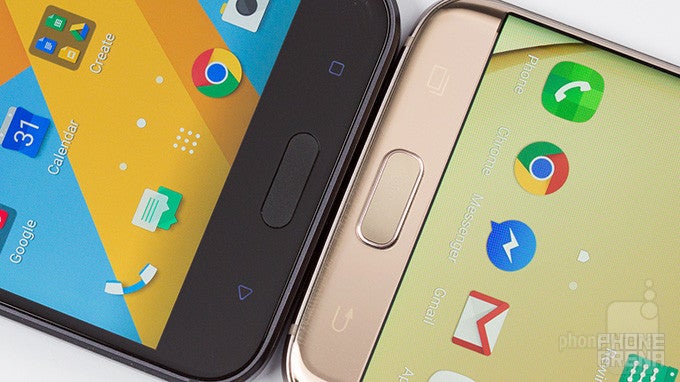
Both the HTC 10 and the Galaxy S7 edge feature touch scanners located up front, and integrated into the Home button. In our experience with both, we tend to favor the HTC 10's unit, as it feels more consistent in the long run.
With the HTC 10, you can also lock specific apps in case you're feeling paranoid that someone might access your more sensitive files.
System performance
Benchmarks be damned, we have no issue giving this one to the HTC 10. Sure, the Exynos-powered model of the Galaxy S7 edge is a force to be reckoned with, but even in terms of synthetic tests, it isn't significantly ahead of the Snapdragon 820 propelling the HTC 10.
The reality is that despite the many optimizations we've seen become part of Samsung's TouchWiz interface, it's still a little jerky in everyday operation, and even more so when compared to the smooth-running Sense 8 UI on the HTC 10.
Finally, on storage, we have an identical setup. Both devices come with 32GB of integrated storage, with the option to expand through microSD. Moreover, with the HTC 10, you're getting 100GB of Google Drive storage for two years, while with the Galaxy S7 edge you get the same deal, but with Microsoft's OneDrive service.
Camera
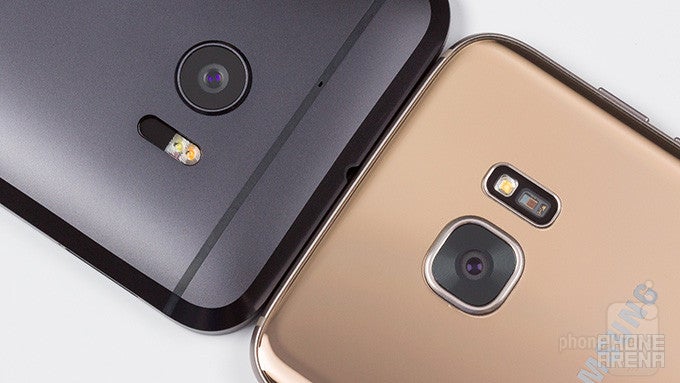
With the 10, HTC has finally moved to a more sensible, 12-megapixel unit with large, 1.55μm pixels and wide, f/1.8 lens. And while the Galaxy S7 edge has a slight advantage in terms of aperture width (f/1.7), its 12-megapixel sensor is smaller (1/2.5” for the S7 vs 1/2.3” for the 10), and so are the pixels on it (1.4μm vs 1.55μm). Both are optically stabilized, though the 5-megapixel selfie snapper of the HTC 10 also is, while the Galaxy S7 edge's 5-megapixel unit isn't.
Camera interface of the HTC 10
Camera UI of the Samsung Galaxy S7 edge
Indoors, we've got a similar give-and-take, but we tend to like the Galaxy S7 edge better overall. Sure, both phones are not without error when it comes to setting the proper white balance, but we've got to give it to Samsung for being slightly ahead in terms of natural representation.
HTC 10 vs Samsung Galaxy S7 edge sample images
Onto video, the two phones' repertoires are highly similar once again. We've got capture at 30 frames at both 1080p and 4K, along with perks such as slow motion video, and timelapse and hyperlapse modes.
Thanks to their optically stabilized sensors, footage from both phones is smooth, though the jell-o effect with the S7 edge is still hard to stomach. Samsung's flagship makes up for this, however, with its notably superior auto focus. In comparison, the laser-assisted AF of the HTC 10 is slow and easily confused.
HTC 10 vs Samsung Galaxy S7 edge sample videos
Multimedia
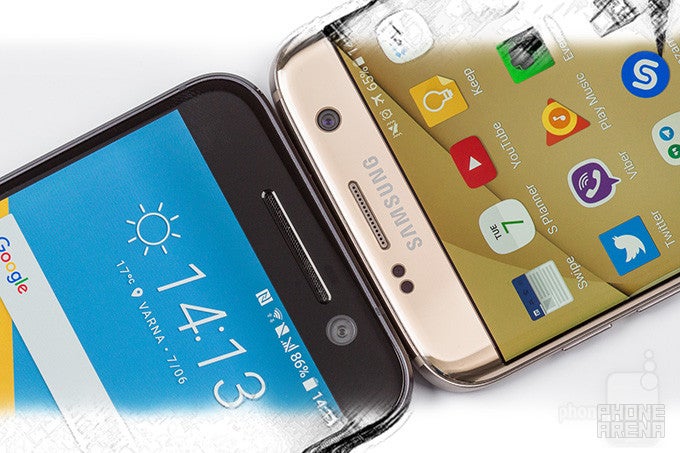
Giving up on front-firing stereo speakers, HTC nevertheless had a peculiar idea when it came to audio on the 10. Instead of the BoomSound configuration of old, this time around the company has integrated a mid- and high-frequency speaker into the earpice up top, while a secondary speaker on the bottom acts as a sort of woofer and takes care of lower frequencies during playback.
Music players
Over at Samsung's camp, we've got something far more pedestrian, not that that's necessarily a bad thing. In fact, the S7 edge's speaker is pretty decent overall, matching the quality produced by the HTC 10. That said, it is undeniably louder, which can be advantageous at times.
Call quality
In this particular area, we're often merely okay with what manufacturers offer, and this case is no different. That said, the HTC 10 does lag behind the Galaxy S7 edge, with a bit nasal voices coming through the earpiece, occasionally accompanied by minor sound artifacts. The S7 edge, on the other hand, offers clearer audio, with as strong of a volume as with the HTC 10.
Battery life
Conclusion
Were this any other year, we'd have an easy time calling this one and giving it to Samsung. But HTC is back, and the 10 is rock-solid.
This makes the question of “which?” a rather personal affair. We tend to like the way the HTC 10 handles better, but once you slap on a case, it quickly turns into a win for the slimmer S7 edge. With the displays, however, the S7 edge has the clear... well, edge. While the HTC 10 isn't terrible in this regard, its rival is brighter and better suited for the summer.
In the end, and as much as we'd love to call it straight, there's simply no objective winner here. It's two excellent devices that come across as meant for different types of people. Hopefully, we were able to help you find your match.
HTC 10
Pros
- Sturdy, mannish design
- Leading system performance
- No-nonsense interface
- Extremely reliable fingerprint scanner
Samsung Galaxy S7 edge
Pros
- Compelling, unisex design
- Water-resistant and dust-proof
- Better outdoor visibility
- Incredible, fast camera


Popular stories









Latest News

Things that are NOT allowed:
To help keep our community safe and free from spam, we apply temporary limits to newly created accounts: