Apple iPhone Duo vs Samsung Galaxy Z Fold 8: Main differences
It's foldable season for Apple and Samsung, as the iPhone Duo and the Galaxy Z Fold 8 are breathing new life in the wallet-style foldable niche.
We may earn a commission if you make a purchase from the links on this page.
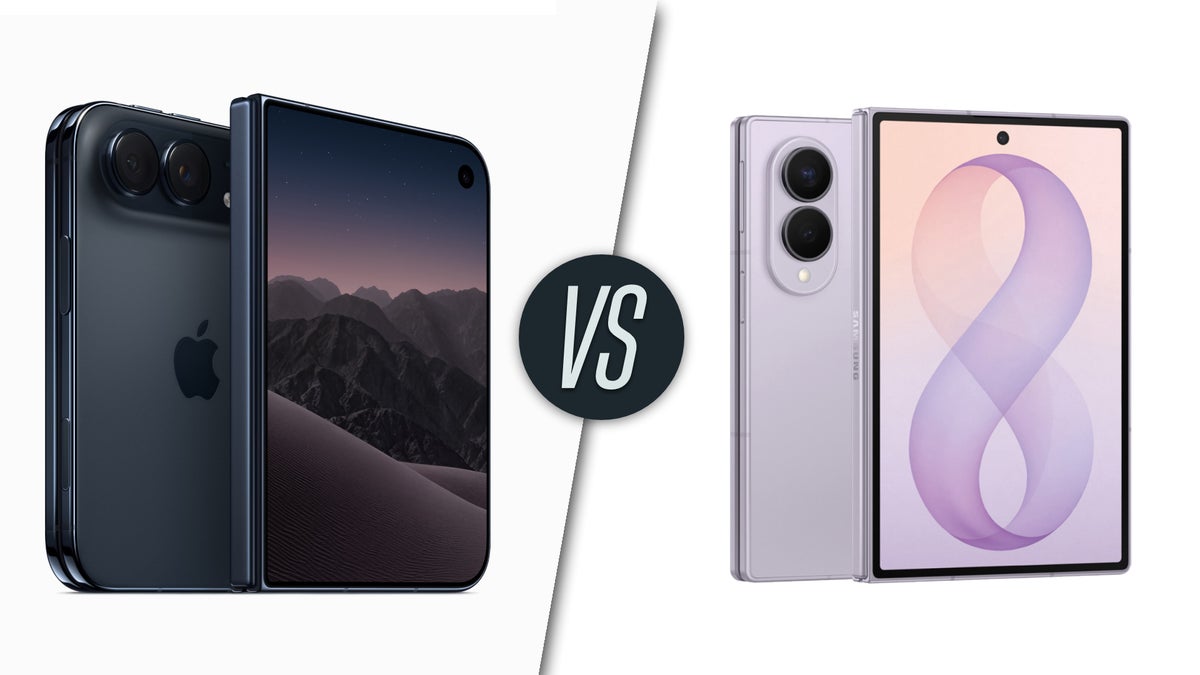
iPhone Duo and the Galaxy Z Fold 8 will be among the hottest foldable commodities this year.
While Tim Cook did make a very brief Easter egg cameo at the iPhone 18 Pro event on September 9, it was new CEO John Ternus who had the pleasure of announcing Apple's foray onto the foldable scene with the iPhone Duo.
Apple's first foldable phone is here, and it's quite different from any other iPhone that Apple fans have cherished over the years. Definitely the pretty impressive start of a new device category that Apple will enrich for years to come.
The wide foldable comes with two displays with identical 14:10 aspect ratios, the fastest Apple chip around (the A20 Pro), a no-crease inner screen, and the return of the beloved Touch ID fingerprint module.
But that's merely Apple's first foldable phone, whereas Samsung has had a pretty large headstart and is now currently at the eighth generation of its mainline Galaxy Z Fold series. This deep know-how and acumen in the niche has helped it perfect its foldables over the years, culminating with the Galaxy Z Fold 8 Ultra and the Galaxy Z Fold 8 this summer.
The Galaxy Z Fold 8 employs the same wide style as the iPhone Duo but beats it in terms of size, weight, and pricing.
How will the two foldables compare? We find a definitive answer in this comparison.
Apple iPhone Duo vs Galaxy Z Fold 8 expected differences:
| Apple iPhone Duo | Galaxy Z Fold 8 |
|---|---|
| A wide wallet-style foldable | Also a wide-style foldable |
| IP68 water and dust resistance | IP48 water and dust resistance |
| A 7.6-inch internal screen with rounded corners | Same-sized 7.6-inch inner screen with symmetric corners |
| 5.4-inch outer screen with asymmetric bezels | 5.5-inch outer screen with symmetric bezels |
| 3,000-nit peak brightness | Also 3,000-nit peak brightness |
| 12GB RAM in the base model | 12GB RAM in the base model |
| Apple A20 Pro chip, built on a 2nm node | Snapdragon 8 Elite Gen 5 for Galaxy on board |
| Dual camera system (48MP main + 48 MP ultrawide) | Dual camera system as well (50 MP wide + 50 MP ultrawide) |
| 4K120fps video-recording | 8K30fps video-recording |
| Touch ID fingerprint sensor | A capacitive fingerprint as well |
| 60W wired charging, 25W MagSafe 2 | 45W wired charging, 20W Qi wireless charging |
Table of Contents:
Read more:
- Apple's iPhone Duo: release date expectations, price estimates and upgrades
- Galaxy Z Fold 8 release date expectations, price estimates and upgrades
- iPhone Duo vs Pixel 11 Pro Fold
Design and Size
Apple versus Samsung in the foldable space
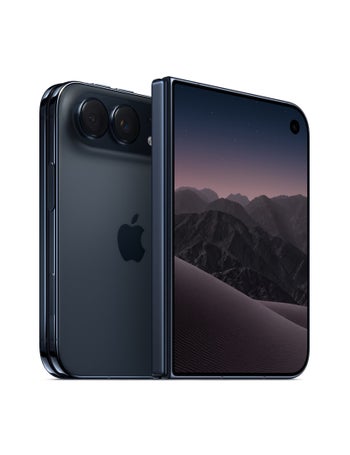
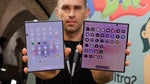
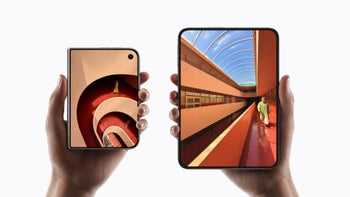
The iPhone Duo is Apple's first foldable phone, and as such, it's starting from a clean slate in terms of design language. Not impressed with the book-style foldables in existence, Apple relies on the stumpy passport-style foldable, which became trendy in 2026 mostly due to the anticipation for the company's first foldable. Which means that the public is now properly amped up for the novel form factor all thanks to Apple's rivals who desired to steal some of its thunder.
If we can describe the iPhone Duo in one sentence, it would likely be "a peculiar mix of an iPhone and a Pixel 11 Pro Fold". That's because the iPhone Duo employs asymmetric bezels on the front: right-angled towards the hinge and curved to the right side, just like Google's foldable, which will definitely be an acquired taste for many (including me).
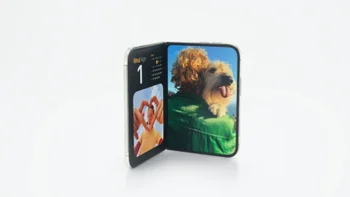
On the inside, the screen opens to an uninterrupted 7.6 inches of glory with rounded corners and no display crease thanks to Apple's seven-layer display stack that moves like the pages of the book and prevents long-term deformation.
The iPhone Duo boasts a titanium hinge and frame, Ceramic Shield glass back and Ceramic Shield 2-covered outer screen. The device is IP68-rated for water and dust protection, which is a rarity these days only matched by the Google Pixel 11 Pro Fold.
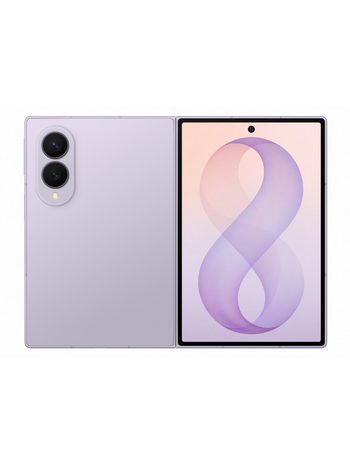
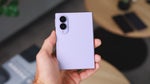
In the other corner, the Galaxy Z Fold 8 looks quite similar to Samsung's other foldables, with a stumpy design that looks like a squished down Galaxy Z Fold 7, so shorter but wider. The frame utilizes Armor Aluminum as well as Gorilla Glass Victus 2 at the back and on top of the external screen.
|
|
| Apple iPhone Duo | Samsung Galaxy Z Fold 8 |
| Dimensions | |
|---|---|
| 117.8 x 164.6 x 5.2 mm (~10.40 mm with camera bump) | 123.9 x 161.4 x 4.5 mm (~8.75 mm with camera bump) |
| Weight | |
| 254.0 g | 201.0 g |
See the full
Apple iPhone Duo vs Samsung Galaxy Z Fold 8 specs comparison
or compare them to other phones using our
Phone Comparison tool
The Galaxy Z Fold 8 definitely wins me over in the size and dimensions section, though. It's narrower and thinner when folded, but the big shock is the weight discrepancy: the Samsung device is nearly 50 grams lighter than the iPhone Duo, which weighs 254 grams. That's a difference you'd notice, and I can't lie, the ergonomics of the Galaxy Z Fold 8 are difficult to beat. Maybe next year, Apple?
The iPhone Duo arrives in two colors, Star White and Night Sky, which is a conservative selection if I've seen any. The Samsung foldable is available in Lavender, Cream, Graphite, and Pistachio, which is exclusively available online. Certainly a bit more in the way of choice here.
Display Differences
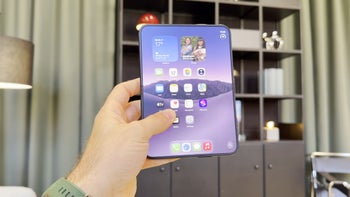
The iPhone Duo boasts a 7.6-inch inner screen,a Super Retina XDR OLED one with ProMotion and a 14:10 aspect ratio, which is very close to 4:3. The outer screen measures 5.4 inches across and also has the same 14:10 aspect ratio. This ensures a neat synergy between the two displays, ensuring that whatever you're looking at on the inner screen will look similar on the outer one, and vice versa. Both screens boast 3,000 nits of brightness.
The iPhone Duo inner screen is uninterrupted, as the inner FaceTime camera has been hidden under the screen.
The Galaxy Z Fold 8, on the other hand, comes with a 7.6-inch internal display with a 4:3 aspect ratio and a 5.5-inch cover screen with a 16:10 aspect ratio, both of which are Dynamic AMOLED ones with up to a 120 Hz refresh rate. The inner screen boasts 3,000 nits of peak brightness, which is slightly higher than what previous Galaxy Z Fold units achieved.
Apple has employed a stacked seven-layer under display assembly headlined by a titanium foundation that ensures the screen won't develop a crease over time, which is a common issue with many foldables after the honeymoon period is over.
Samsung has also put an ultra-thin titanium alloy inside the display that's more than 30% thinner than the width of a human hair. The reason for that is further making the crease even shallower and less pronounced, and it definitely is.
|
|
|
| Apple iPhone Duo | Samsung Galaxy Z Fold 8 |
| Size | |
|---|---|
| 7.6-inch | 7.6-inch |
| Type | |
| OLED, 120Hz | Dynamic AMOLED, 120Hz |
See the full
Apple iPhone Duo vs Samsung Galaxy Z Fold 8 specs comparison
or compare them to other phones using our
Phone Comparison tool
The iPhone Ultra doesn't come with a Dynamic Island notch, as Apple has returned to its roots with a Touch ID fingerprint scanner embedded right into the power button, like on the company's iPad lineup. The same applies to the Galaxy Z Fold 8 –– it has scored a touch fingerprint sensor in the power button, too.
Performance and Software
More power for the iPhone
Apple has equipped the iPhone Duo with its top-notch 2 nm Apple A20 Pro, the fastest mobile chip it has developed thus far. As usual, this next chapter in the Apple Silicon series will surely cause many headaches for the top Android rivals.
The Galaxy Z Fold 8 relies on Qualcomm power, more specifically the Snapdragon 8 Elite Gen 5 for Galaxy, the fastest variety of the chip that has a slightly higher clock than the regular Elite Gen 5 chip. It was used on the Galaxy S26 Ultra globally and on Galaxy S26/S26 Plus units in the US. The same chip is used on the Galaxy Z Fold 8 Ultra, so you get the best of the best on the Android side of things right now.
Which one will come up on top?
Needless to say, the iPhone will surely have an advantage thanks to the denser manufacturing process and Apple's tight integration of the hardware, but let's see how those benchmark tests pan out. Our benchmarks are pending.
|
|
|
| Apple iPhone Duo | Samsung Galaxy Z Fold 8 |
| System chip | |
|---|---|
| Apple A20 Pro (2 nm) | Snapdragon 8 Elite Gen 5 for Galaxy SM8850-1-AD (3 nm) |
| Memory | |
| 12GB (LPDDR5X)/256GB (UFS 4.1) 12GB/512GB 12GB/1TB 12GB/2TB |
12GB (LPDDR5X)/256GB (UFS 4.0) 12GB/512GB 16GB/1TB |
| OS | |
| iOS (27.x) | Android (17), up to 7 OS updates |
See the full
Apple iPhone Duo vs Samsung Galaxy Z Fold 8 specs comparison
or compare them to other phones using our
Phone Comparison tool
The Galaxy Z Fold 8 comes with 12 GB of RAM and 256 or 512 GB of storage, while the 1 TB model arrives with 16 GB of RAM. This makes it fairly future-proof. The iPhone Duo is also expected to arrive with at least 12 GB of RAM for smooth Apple Intelligence processing, and is available in 256 GB, 512 GB, 1 TB, and 2 TB storage versions.
The iPhone Duo arrives with iOS 27 with a host of exclusive features and changes over the mainline iPhone version to facilitate the new form factor. The Galaxy Z Fold 8 arrives with One UI 9, which is based on Android 17. The latter has a few intriguing features that will improve the foldable experience, like app bubbles, and Samsung has further tailored the Galaxy AI experience.
Camera
Don't look for camera champs here
Let's get one thing out of the way: nobody's buying foldables for their cameras, so manufacturers aren't really trying. And because the latter are hardly trying, nobody's buying foldables for their cameras. It's a vicious cycle that leads to foldables with unimpressive camera setups, and both the iPhone Duo and Galaxy Z Fold 8 continue that trend.
Don't get me wrong, either phone will absolutely cover the basics of photography and videography and then some, but don't expect either the iPhone Duo or the Z Fold 8 to come up on top the camera ranking lists.
The Z Fold 8 gets a 50 MP main and ultrawide cameras, whereas the iPhone Duo relies on a 48 MP main Fusion camera and a 48 MP ultrawide.
|
|
|
| Apple iPhone Duo | Samsung Galaxy Z Fold 8 |
| Main camera | |
|---|---|
| 48 MP (OIS, PDAF) Sensor name: Sony IMX905 Aperture size: F1.6 Focal length: 24 mm Sensor size: 1/1.28" Pixel size: 1.22 μm |
50 MP (OIS, PDAF) Sensor name: Samsung ISOCELL GN3 Aperture size: F1.8 Focal length: 24 mm Sensor size: 1/1.56" Pixel size: 1.0 μm |
| Second camera | |
| 48 MP (Ultra-wide) Sensor name: Sony IMX972 Aperture size: F2.2 Focal Length: 13 mm Sensor size: 1/2.55" Pixel size: 0.7 μm | 50 MP (Ultra-wide) Sensor name: Samsung ISOCELL JN3 Aperture size: F1.9 Focal Length: 13 mm Sensor size: 1/2.5" Pixel size: 0.7 μm |
| Front | |
| 12 MP (Under-screen) | 10 MP (HDR) |
See the full
Apple iPhone Duo vs Samsung Galaxy Z Fold 8 specs comparison
or compare them to other phones using our
Phone Comparison tool
Battery Life and Charging
Hopefully, greatness
Battery capacities are some of the last parts of any iPhone's spec sheet that become clear, and this will be the case with the iPhone Duo as well.
We just don't know how large that battery is. The only thing we know is it's a lithium-ion one and Apple promises 31 hours of video playback with the inner screen and up to 44 hours of battery life when watching videos on the outer screen.
Meanwhile, the Galaxy Z Fold 8 arrives with a 4,800 mAh battery, which achieves a battery life estimate of six hours and 25 minutes in our tests. It ran for 17 hours and nine minutes in our web browsing test, seven hours and 44 minutes in our video test, and nine hours and 18 minutes in our 3D gaming test.
The iPhone Ultra will potentially have better battery life due to the more efficient chipset it will carry, and there's also the possibility of a larger battery. This hints at an iPhone with excellent battery backup.
|
|
|
| Apple iPhone Duo | Samsung Galaxy Z Fold 8 |
| Type | |
|---|---|
| 4883 mAh | 4800 mAh |
| Charge speed | |
| Wired: 60.0W Wireless: 25.0W |
Wired: 45.0W Wireless: 20.0W |
See the full
Apple iPhone Duo vs Samsung Galaxy Z Fold 8 specs comparison
or compare them to other phones using our
Phone Comparison tool
Charging-wise, Apple surprises by equipping the iPhone Duo with 60 W wired charging, which is the fastest charging on an iPhone so far. There's MagSafe as well, as is tradition with the iPhone.
The Galaxy Z Fold 8 comes with 45 W wired and 20 W wireless charging, but no magnets. You will have to get a magnet case if you wish to slap it on a MagSafe or a Qi2 charger.
Specs Comparison
Here's how the iPhone Duo and the Galaxy Z Fold 8 specs compare.
|
|
|
| Apple iPhone Duo | Samsung Galaxy Z Fold 8 |
| Dimensions | |
|---|---|
| 117.8 x 164.6 x 5.2 mm (~10.40 mm with camera bump) | 123.9 x 161.4 x 4.5 mm (~8.75 mm with camera bump) |
| Weight | |
| 254.0 g | 201.0 g |
| Size | |
|---|---|
| 7.6-inch | 7.6-inch |
| Type | |
| OLED, 120Hz | Dynamic AMOLED, 120Hz |
| System chip | |
|---|---|
| Apple A20 Pro (2 nm) | Snapdragon 8 Elite Gen 5 for Galaxy SM8850-1-AD (3 nm) |
| Memory | |
| 12GB (LPDDR5X)/256GB (UFS 4.1) 12GB/512GB 12GB/1TB 12GB/2TB |
12GB (LPDDR5X)/256GB (UFS 4.0) 12GB/512GB 16GB/1TB |
| OS | |
| iOS (27.x) | Android (17), up to 7 OS updates |
| Type | |
|---|---|
| 4883 mAh | 4800 mAh |
| Charge speed | |
| Wired: 60.0W Wireless: 25.0W |
Wired: 45.0W Wireless: 20.0W |
| Main camera | |
|---|---|
| 48 MP (OIS, PDAF) Sensor name: Sony IMX905 Aperture size: F1.6 Focal length: 24 mm Sensor size: 1/1.28" Pixel size: 1.22 μm |
50 MP (OIS, PDAF) Sensor name: Samsung ISOCELL GN3 Aperture size: F1.8 Focal length: 24 mm Sensor size: 1/1.56" Pixel size: 1.0 μm |
| Second camera | |
| 48 MP (Ultra-wide) Sensor name: Sony IMX972 Aperture size: F2.2 Focal Length: 13 mm Sensor size: 1/2.55" Pixel size: 0.7 μm | 50 MP (Ultra-wide) Sensor name: Samsung ISOCELL JN3 Aperture size: F1.9 Focal Length: 13 mm Sensor size: 1/2.5" Pixel size: 0.7 μm |
| Front | |
| 12 MP (Under-screen) | 10 MP (HDR) |
See the full
Apple iPhone Duo vs Samsung Galaxy Z Fold 8 specs comparison
or compare them to other phones using our
Phone Comparison tool
Summary
This year, it's foldable season for both Samsung and Apple. The iPhone Duo is a first-gen device, but it is already a pretty mature-looking foldable that seemingly does a lot of essentials excellently.
Meanwhile, Samsung has been one of the pioneers in the foldable niche and has more than half a decade of experience in the genre, but in 2026, the Galaxy Z Fold 8 that's positioned as a direct rival to the iPhone Ultra wouldn't even be Samsung's best foldable device. This honor belongs to the Z Fold 8 Ultra, and yet, the standard Galaxy Z Fold 8 actually sounds like a pretty decent device that could put a stick in Apple's wheels.



Popular stories


Latest News


Things that are NOT allowed:
To help keep our community safe and free from spam, we apply temporary limits to newly created accounts: