Apple iPhone 14 review


The iPhone 14 is an iterative upgrade to the well-received iPhone 13. With the iPhone 14 series, Apple has dropped the mini from the lineup, the iPhone 14 is the new base model and there is a new Plus model instead.
In this review, I focus on the vanilla iPhone 14. Apple has kept the familiar 6.1-inch compact form factor and is even keeping the same chipset, just adding one extra GPU core. There are a few new features, though, and now the iPhone 14 comes with 6GB of RAM and a larger sensor for the main camera.
New iPhone 14 features
- New 12MP ƒ/1.9 front-facing camera with autofocus
- New 12MP ultrawide camera
- New main camera with larger, 1/1.65" sensor, and 1.9 micron pixels
- 4K Cinematic mode at 30fps
- Better low-light photos with Photonic engine
- Faster, more energy-efficient 6nm Qualcomm 5G modem made by TSMC
- Bluetooth 5.3
- 6GB RAM
- Satellite connectivity for SOS messages
- Penta-core GPU
- New blue color
- Larger battery
- HDR gyro and high-g accelerometer for the new Crash Detection service
- Much easier and cheaper to repair than the iPhone 13 or the 14 Pro
As you can see above, the iPhone 14 total score is now lower than one might expect. That is not because of some new iPhone flaw, but because we have implemented a new rating system at PhoneArena that gives readers a better idea of the performance of a phone across different categories. Remember to look at the scores and compare them to the average for the class, and we believe you will find these scores tremendously useful. Learn more about the PhoneArena Review Scoring system here.
Table of Contents:
iPhone 14 Specs
Apple has improved the iPhone 14 in a few key areas:

|

|
| Apple iPhone 14 | Apple iPhone 13 |
| Dimensions | |
|---|---|
| 146.7 x 71.5 x 7.80 mm (~11.14 mm with camera bump) | 146.7 x 71.5 x 7.65 mm (~10.17 mm with camera bump) |
| Weight | |
| 172.0 g | 174.0 g |
| Size | |
|---|---|
| 6.1-inch | 6.1-inch |
| Type | |
| OLED, 60Hz | OLED, 60Hz |
| System chip | |
|---|---|
| Apple 15 Bionic (5 nm) | Apple A15 Bionic (5 nm) |
| Memory | |
| 6GB (LPDDR4X)/128GB (NVMe) 6GB/256GB 6GB/512GB |
4GB (LPDDR4X)/128GB (NVMe) 4GB/256GB 4GB/512GB |
| OS | |
| iOS (18.x, 17.x, 16.x) | iOS (18.x, 17.x, 16.x, 15.x) |
| Type | |
|---|---|
| 3279 mAh | 3227 mAh |
| Charge speed | |
| Wired: 20.0W Wireless: 15.0W | Wired: 20.0W Wireless: 15.0W |
| Main camera | |
|---|---|
| 12 MP (Sensor-shift OIS, PDAF) Aperture size: F1.5 Focal length: 26 mm Sensor size: 1/1.7" Pixel size: 1.9 μm |
12 MP (Sensor-shift OIS, PDAF) Aperture size: F1.6 Focal length: 26 mm Sensor size: 1/1.9'' Pixel size: 1.7 μm |
| Second camera | |
| 12 MP (Ultra-wide) Aperture size: F2.4 Focal Length: 13 mm | 12 MP (Ultra-wide) Aperture size: F2.4 Focal Length: 13 mm Sensor size: 1/3.4" |
| Front | |
| 12 MP (Time-of-Flight (ToF), Autofocus, HDR) | 12 MP (Time-of-Flight (ToF), Autofocus, HDR) |
See the full
Apple iPhone 14 vs Apple iPhone 13 specs comparison
or compare them to other phones using our
Phone Comparison tool
iPhone 14 Models
The iPhone 14 is the cheapest in Apple's 2022 iPhone series of four new phones:
- 6.1" iPhone 14 - 60Hz 6.1" screen, A15 chip
- 6.7" iPhone 14 Plus - larger 60Hz screen, same A15 chip, bigger battery
- 6.1" iPhone 14 Pro - 120Hz display, telephoto camera, A16 chipset
- 6.7" iPhone 14 Pro Max - 120Hz screen, triple camera, A16 chip, bigger battery
iPhone 14 Design & Colors
Apple is keeping the same iPhone 14 design it has used for the past couple of years. It inherits the narrower notch from its predecessor, though, plus it sports a slightly more refined screen bezel and a bit taller aspect ratio. You also have an aluminum frame sandwiching a Ceramic Shield glass front and back.
The new purple Apple iPhone 14 (image credit - PhoneArena)
Same old buttons setup and an aging Lightning connector that doesn't allow very fast charging, too, so you'd have to wait for the iPhone 15 to upgrade on that front. The two rear cameras sitting on an oversized "stove top" are a go, too, but at least a new color is in store. The iPhone 14 colors include a new blue shade-shifting hue:
- Midnight
- Starlight
- Blue
- Project (RED)
- Purple
Repairs
Easiest, cheapest-to-repair modern iPhone
The first iPhone 14 teardowns showed that what it lacks in exterior redesign has translated into a case of the "beauty is on the inside" axiom. The folks from iFixit gave it their highest repairability score of 7/10 since the iPhone 7. The culprit? Apple's complete internal redesign to make the iPhone 14 assembly more modular in nature and with much easier access to the separate components.
Above all, however, is the fact that you can now remove the glass backplate as easy as replacing the screen panel and Apple will no longer charge you for nearly a whole iPhone when you crack its glass back. The new "Back glass replacement" category brings with it a $169 rear panel replacement, rather than the $449 that the same operation commands on the iPhone 13 out of pocket.

The iPhone 14 marks a watershed moment in repairability
iPhone 14 Display
No Always-on display mode, color mishaps
The iPhone 14 sports the same 6.1-inch 1170p OLED display as previously. Apple keeps extras like the Always-on Display mode reserved for the more expensive Pro models. It's been a staple on Android phones for a good while, particularly Samsung ones, but Apple is just getting around to it.
At the fixed 60Hz refresh rate on the iPhone 14, however, it could be a battery hog, so Apple isn't taking any chances, though a larger battery pack and more frugal connectivity chips.
Тhe rumors for a new, taller 20:9 aspect ratio didn't materialize, so Apple's notch at the top of the iPhone 14's display doesn't lose the visible gains from narrowing it in the previous iPhone 13 generation.
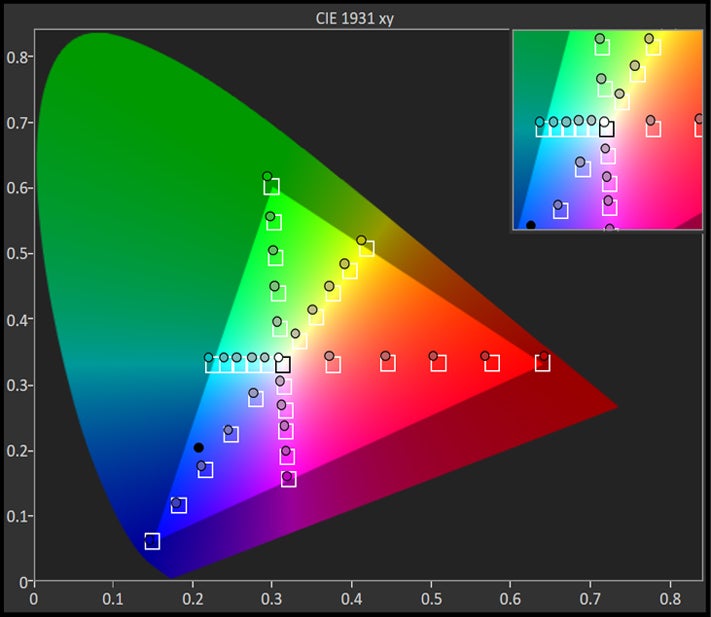
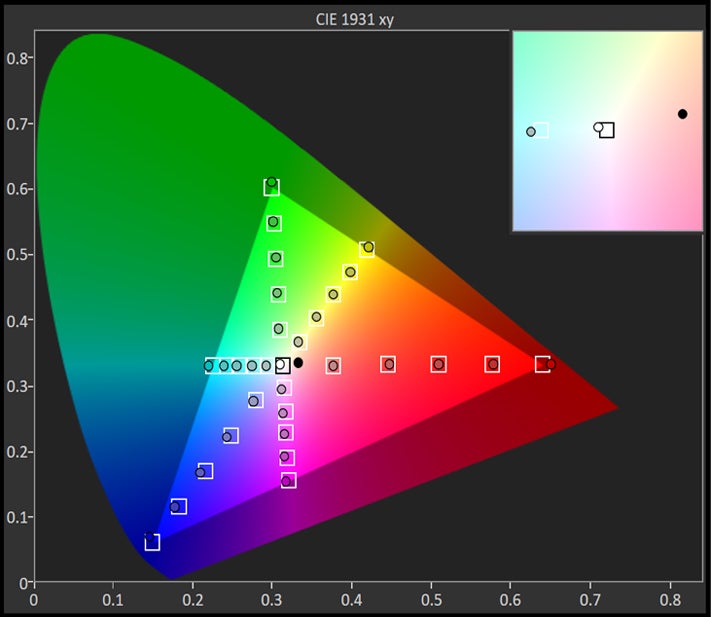
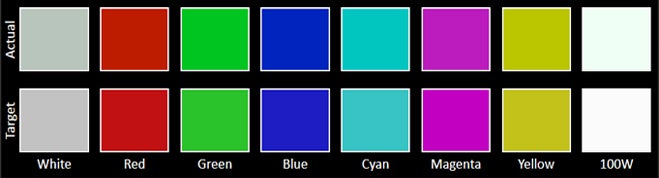
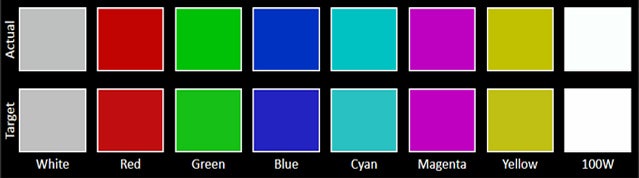
While we expected the usual stellar display benchmarks from Apple, this time around factory calibration looks worse with lower color gamut accuracy than the iPhone 13.
It still offers 800 nits of typical brightness and 1200 nits of peak, but the lack of a higher refresh rate on an $800 phone, and the color credibility misses, make the iPhone 14 display an actual downgrade from its predecessor's.








iPhone 14 Camera
Same old, same iPhone 13 Pro gold

We have rigorously tested the camera on the Apple iPhone 14 and above you can see the results of those tests. We carefully measure the performance of all cameras in various test scenes, ranking the performance across important metrics like exposure, subject exposure, color accuracy, detail, artifacts and more. We do these tests for both photos and videos.
You can learn more about our PhoneArena Camera Score testing protocol here.
The iPhone 13 has a pretty good all-rounder for a camera, but, even though some Android phones at its price level sport telephoto zoom lenses, Apple keeps issuing $800 phones without one, and the iPhone 14 camera is no exception.
That last component should be music to the ears of anybody considering an iPhone 14 purchase, as it is in fact the only meaningful hardware upgrade on the phone, considering how important it is to TikTok or be Reel-ing it in style is these days.
The ultrawide and the main camera seem to be directly borrowed from the iPhone 13 Pro, meaning larger sensors and wider apertures letting more light in, so, all in all, the iPhone 14 is a decent photography upgrade.
In fact, with the iPhone 14 Apple introduces a new Photonic Engine for enhanced performance of all cameras when the light starts to go down. It says that low-light photography is better by "up to 2x on the Ultra Wide camera, 2x on the TrueDepth camera, and an impressive 2.5x on the new Main camera," though it isn't clear what are these numbers benchmarked again, and how. Does the iPhone 14 deliver?
Actually, yes, as you can see from our sample shots below. The images from the iPhone 14 are low-key better than those from the iPhone 13. There is a slightly wider dynamic range, especially pronounced in the night shots as exemplified by the decreased halo around bright lamps in the entertainment park below, and the brighter shadows.
The iPhone 14 captures more details, too, visible from the very first photo here, but, above all, its white balance is, well, more balanced now, with warm, but not to the point of yellow overcast in photos.
iPhone 14 vs iPhone 13 camera day, low-light, and selfie camera samples
The higher-res selfie camera with autofocus delivers better results in terms of detail and color credibility as well. All in all, the iPhone 14's camera set is slightly better in all aspects than what's on the iPhone 13.
Other than that, you have the same amazing 4K video capture that has become Apple's trademark with iPhones lately, as well as the photography staples like Cinematic Mode and Styles that got introduced with the iPhone 14's predecessor. Videos are with warm colors, full of detail, fast continuous autofocus and, above all, excellent stabilization.


iPhone 14 Performance & Benchmarks
Old A15 chip, but new for the non-Pro series
Unfortunately, one of the biggest added values of new iPhones - a faster chipset every time - isn't be available on the new iPhone 14. Apple has assumed that the A15 is fast enough for its iOS 16-powering, 4K video recording, or 3D-gaming duties on the lower refresh rate of the iPhone 14's display, so it stayed last year's course for the first time.
As if to offset the pain of the old chipset, the Apple A15 Bionic for the iPhone 14 family is taken directly from the iPhone 13 Pro, with an extra graphics processing core unleashed when compared to the iPhone 13 and this really shows in our graphics benchmarks below that are significantly higher than those on the iPhone 13.
iPhone 14 Benchmarks
Moreover, Apple has bumped the operating memory paired with the A15 chipset to 6GB of RAM, a third more than the iPhone 13, and the same as on last year's Pro models. Just don't expect it to be of the faster LPDDR5 generation, yet you'd be able to keep more apps and services open in the background at the same time. There is again 128GB of base storage, followed by a mid 256GB tier, and a big 512GB upgrade for $1099.
iPhone 14 Connectivity
Some real upgrade from the iPhone 13
The only big hardware upgrade area on the iPhone 14, besides the front-facing camera, would be its connectivity chippery that now includes satellite support, the latest Bluetooth 5.3, and a new 5G modem. The iPhone 14 series is using a custom low-power 5G modem with up to 10Gbps download speeds, based on Qualcomm's current Snapdragon X65 model, as the 4nm X70 isn't coming before far into Q4.
Apple ran into trouble with the development of its own 5G modem, as Qualcomm's expertise in band filtering and power draw is unsurpassed. That is why Qualcomm reportedly raked in a 100% of the iPhone 14 5G modem orders and will be supplying it with a smaller, more energy-efficient cellular connectivity chip that will help increase the iPhone 14 battery life and free up some space for a larger pack.
In addition, the iPhone 14 ships with the newest Bluetooth 5.3 connectivity standard as well as support for the n53 satellite connectivity band of Globalstar - Apple's partner for the Emergency SOS service that now works without cellular coverage.
Last but not least, in the US the iPhone 14 models ship without a SIM card tray as Apple moves to e-SIM completely, a watershed moment in its carrier relationships. "Not compatible with physical SIM cards" seems to be Apple's official name for the feature and it is a good one.
SOS emergency satellite connectivity on the iPhone 14
The big surprise, however, is the presence of satellite connectivity on the iPhone 14. It can be used for emergency SOS messages which can be sent in less than 15 seconds if you have clear skies when you are out in the boondocks and completely off the grid and cellular connectivity.
Staring in November, the satellite connectivity of the iPhone 14 series will hit the US and Canada and it will be free for two years. Apple uses Globalstar and the X65 modem support for its n53 frequency band for the satellite SOS services. It will be fronting Globalstar millions for new satellites and is hogging 85% of its current network with eyes on the future expansion of its extraterrestrial connectivity.
iPhone 14 and iOS 16: new features
Update: In modern times, the iPhone 14 has received a number of updates, currently running on the latest iOS 27. It does not support Apple Intelligence, though, as it does not meet the minimum RAM requirements for it.
The iOS experience on the iPhone 14 is mostly a familiar affair with all the typical Apple ecosystem features like support for the Apple Watch, AirDrop, and so on.
A big advantage of iPhones is that they get updates for many years and four years after its 2022 release, the iPhone 14 now runs on the latest software.
iPhone 14 Battery life and Charging speeds

The shrunk modem chip and a new cooling design for the internals have allowed Apple to place a larger, 3279 mAh battery in the iPhone 14, compared to the 3227 mAh piece in the iPhone 13.
Its predecessor already has great endurance, and the iPhone 14 battery life is no exception thanks to the frugal connectivity chips and the efficient iOS 16 task distributor. According to Apple, it can last an hour more of local video playback or streaming video, or five hours longer during audio playback sessions.
PhoneArena Battery Test Results:
In our YouTube video streaming run, we didn't find as much of a difference between the 2021 and 2022 iPhones, but the browser test showed more significant gains. The more powerful and more energy-consuming graphics subsystem, however, didn't fare well in terms of battery life while gaming compared to the iPhone 13.
As for the iPhone 14 charging speeds, you get the same slow two-hour pumping of electrons through the aging Lightning port and the puny 20W charger that Apple asks you to buy separately if you don't have one lying around.
iPhone 14 Competitors
The only real iPhone 14 competitor is the... iPhone 14 Pro. The display, camera, and performance gap is even bigger this year, and definitely worth the two Benjamins or so extra for the Pro model.
At the $799 iPhone 14 price point, there are a lot more phones with better specs to consider if you venture outside Apple's iOS ecosphere. You can, for instance, get a Galaxy S22 deal for less than $700, with faster 120Hz display and telephoto zoom lens. Alternatively, you might want to wait for the Pixel 7, as it will sport better camera hardware and a cooler design.
If Apple has locked you into its walled garden, however, simply keep your iPhone 13 as there is barely an upgrade worth switching to in the iPhone 14 in case you are coming from its predecessor, or even from the iPhone 12.
iPhone 14 Summary

The iPhone 14 has a package virtue going for it - a compact 6.1" design coupled with the fastest mobile processor this side of the iPhone 14 Pro models. You can, however, use any Apple A15 or even A14-powered vessel to carry all your new iOS 16 features.
In fact, a switch to the iPhone 14 would be worth it only if you are coming from something like the 5G-deprived iPhone 11, otherwise you'd better score a pretty good iPhone 14 deal if you are mulling over an upgrade. Slightly faster chipset and connectivity options, a tad better low-light camera performance, autofocus in the selfie snapper, and a bit longer battery life in some scenarios... really, Apple?
All in all, for newcomers to the iOS universe the iPhone 14 would be enticing as the cheapest 2022 iPhone model with the new Crash Detection feature that may be helpful during accidents, but that's about it. For all other intents, better get the iPhone 14 Pro as Apple made a deliberate effort to offer way more value than the $200 price difference commands.
*Disclaimer: You may notice review scores have changed on PhoneArena. Since September 20th, we have started using a new scoring system. Learn more about the new PhoneArena Smartphone Review Rating system here.

Popular stories
Latest News

Things that are NOT allowed:
To help keep our community safe and free from spam, we apply temporary limits to newly created accounts: