What is essential is invisible to the eye, and Verizon is taking the Little Prince's words seriously.
That's the philosophy of Joe Russo, too. He's Verizon's Executive Vice President and President of Network and Technology, who says the best network is an "invisible" one.
And if everything is working as it should, you probably shouldn't be thinking about Verizon at all.
We're noticing the bad stuff only
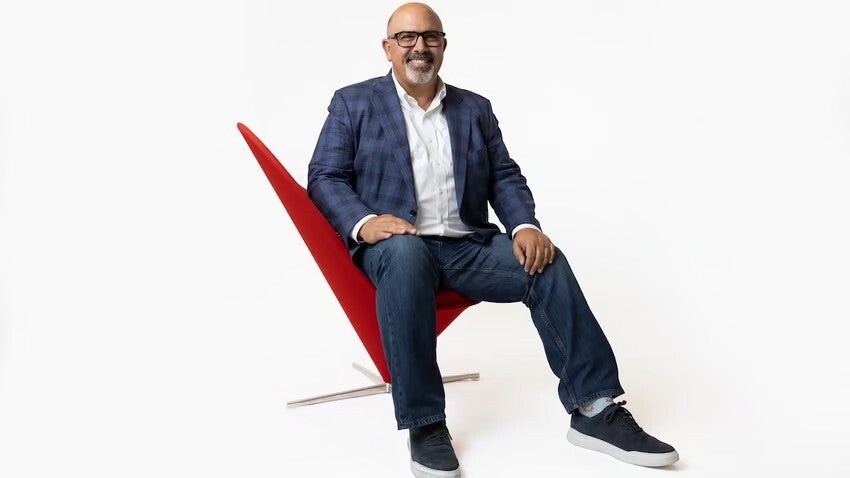
Joe Russo will be retiring soon. | Image by Verizon
And naturally so. More often than not, when subscribers notice their carrier, it's usually because something has gone wrong and the network's down, for example. If nobody is talking about it, that's often a sign the network is doing exactly what it was built to do.
Joe Russo will be walking away from Verizon soon and enjoying his retirement, but ironically, he almost wasn't going to make it in telecom at all.
To ex-Verizon subscribers: what would make you return?
1317 Votes
Better network with higher speeds.
12.07%
Better coverage.
9.19%
A bit cheaper plans.
58.24%
Nothing, I'll never return.
20.5%
Who is Joe Russo?
His first experience came decades ago during a summer internship at Bell Atlantic, one of the regional "Baby Bell" companies created after the breakup of the original AT&T. Instead of climbing cell towers or designing networks, he spent the summer in the basement of a customer repair center creating Lotus 1-2-3 spreadsheets because he happened to know how to use a computer.
Recommended For You
When he graduated from James Madison University in 1995 with a business administration degree, Bell Atlantic wanted him back. Russo wasn't particularly excited about returning to a basement office while the internet boom was just beginning. Companies like Netscape and Microsoft were making headlines, and the World Wide Web seemed like a far more exciting place to build a career.
Bell Atlantic, however, convinced him to interview for a different position and eventually offered him a job supervising a Network Operations Center. More than three decades later, he's preparing to retire after helping oversee one of the biggest periods of technological change in the telecom industry.
Witnessing the digital revolution
During his career, Russo watched the network evolve from copper infrastructure to digital systems through technologies like SONET, DSL, frame relay, ATM, packet switching and software-defined networking before eventually reaching the 3G, 4G and now 5G era.
His time at the company also overlapped with major corporate milestones. Bell Atlantic merged with NYNEX in 1997 before acquiring GTE in 2000, adopting the Verizon name as it expanded nationally. Later acquisitions, including MCI Communications and its internet backbone business UUNET, helped shape much of Verizon's current infrastructure. According to Russo, parts of those legacy networks are still operating today.
5G and 6G ideas
Looking back, Russo believes 5G remains the industry's biggest long-term opportunity despite criticism that it hasn't generated the financial returns many expected.
He argues the biggest mistake wasn't building 5G but expecting miraculous, immediate results. Unlike 4G, which quickly fueled the smartphone app economy, 5G is developing more gradually and he expects new applications to continue appearing for years.
That slower rollout is also making the telecom industry more cautious about 6G. Before another massive investment cycle begins, operators want clearer answers about what problems the next generation of wireless technology will actually solve and how it can generate revenue.
AI and plans for the future
Russo also expects telecom companies to rethink what they're selling altogether. Instead of simply charging for voice calls or mobile data, future services could revolve around AI processing, edge computing and low-latency network connections that support increasingly complex (and demanding) applications.
After more than 30 years in telecom, Russo plans to hand leadership over to former Deutsche Telekom executive Abdu Mudesir in early 2027 before retiring to spend more time with his family and on his boat.
Free Galaxy A17 5G with Straight Talk
Get a free Galaxy A17 with Straight Talk. To claim this deal, you need to pair the phone with activation on a Silver Unlimited Plan or higher. This tier costs $45 per month. Offer valid through 01/10/27 while supplies last online.
Sebastian is one of PhoneArena’s senior opinionators. A veteran news writer with almost 20 years of experience in media and technology, he not only covers all the hot news about Galaxies and iPhones, but often provides hot takes on industry trends. He’s fascinated with camera-focused flagships from the likes of Oppo and Vivo, as well as foldable phones.
A discussion is a place, where people can voice their opinion, no matter if it
is positive, neutral or negative. However, when posting, one must stay true to the topic, and not just share some
random thoughts, which are not directly related to the matter.
Things that are NOT allowed:
Off-topic talk - you must stick to the subject of discussion
Offensive, hate speech - if you want to say something, say it politely
Spam/Advertisements - these posts are deleted
Multiple accounts - one person can have only one account
Impersonations and offensive nicknames - these accounts get banned
To help keep our community safe and free from spam, we apply temporary limits to newly created accounts:
New accounts created within the last 24 hours may experience restrictions on how frequently they can
post or comment.
These limits are in place as a precaution and will automatically lift.
Moderation is done by humans. We try to be as objective as possible and moderate with zero bias. If you think a
post should be moderated - please, report it.
Have a question about the rules or why you have been moderated/limited/banned? Please,
contact us.













Things that are NOT allowed:
To help keep our community safe and free from spam, we apply temporary limits to newly created accounts: