Eyeing the success and performance leadership of Apple's in-house application processors (APs) like the A-Series and M-series SoCs, Samsung is reportedly creating a "Custom SoC Development Team" that will operate within the company's Device Solutions division. The goal for Samsung is to build optimized APs from scratch. This could allow Samsung to have better control over the battery life and performance of its phones.
Samsung owns its own foundry giving it an advantage over fabless chip designers
Since Samsung owns its own foundry, it would have more control over the whole creation of an SoC from design to manufacturing. As the saying goes, when it comes to its APs, Samsung would have control of the entire process from soup to nuts. Apple, on the other hand, relies on TSMC to build its chipsets although there is speculation that Apple might turn to Intel to manufacture some future iPhone SoCs.
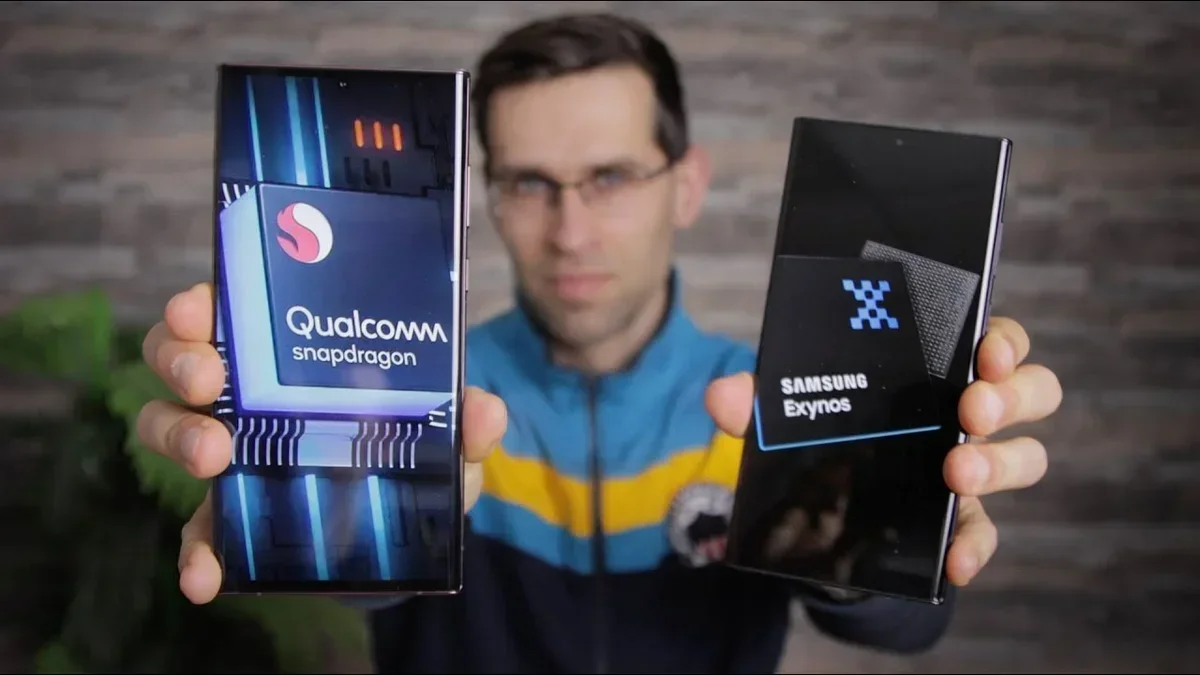
While Samsung has designed and built its Exynos chips, they typically have had issues with overheating and efficiency, which has forced the company to turn to Qualcomm to provide its flagship APs for Sammy's flagship Galaxy phone series in markets like the U.S. and China. Last year, Samsung designed a more capable Exynos 2500 chipset, but it was the company's foundry that let Samsung down.
The Exynos 2600 could be the first 2nm AP to power a smartphone
Samsung Foundry has been having yield issues dating back to 2022, which cost it the business of building Qualcomm's Snapdragon chipsets. The yield problem prevented Samsung from building enough Exynos 2500 APs for the Galaxy S25 and Galaxy S25+ forcing all Galaxy S25 series models to be powered by the Snapdragon 8 Elite AP. One report claimed that the yield issues forced Samsung to pay $400 million extra to have enough Snapdragon chips to use on the units that were originally earmarked to be powered by the Exynos 2500 AP.
Will Samsung succeed in building an in-house AP for Galaxy phones?
61 Votes
Sure. Things are looking up at Samsung Foundry.
75.41%
No. It's too hard a task for Samsung and Samsung Foundry.
24.59%
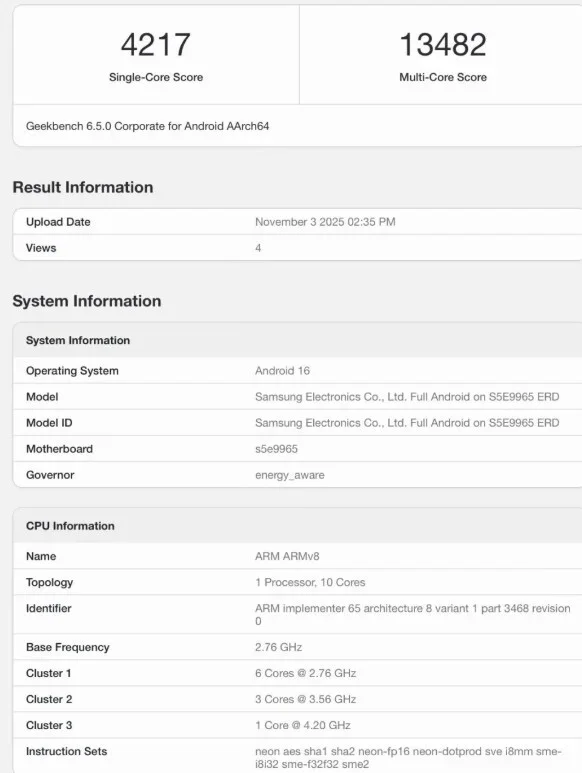
This year, as Samsung Foundry has improved its yield, the Exynos 2600 AP has performed extremely well on benchmark tests as the chipset could be the first 2nm AP to power a smartphone. The 2nm process means smaller features including transistors. That allows more transistors to fit inside a given area of a chip resulting in a higher transistor density. The higher the transistor density, the more powerful and energy efficient a chip is.
Recommended For You
The Exynos 2600 had a strong benchmark test result. | Image credit-Wccftech
Typically measured in millions of transistors per square millimeter, TSMC’s 2nm transistor density is expected to reach 400 million transistors per square millimeter. Samsung Foundry's 2nm GAA transistor density could be in the range of 300-320 million per square millimeter.
A customized in-house chip could allow more AI tasks to be performed on-device
Samsung Foundry's 2nm chips will also feature Gate-All-Around (GAA) transistors. These use horizontal nanosheets placed vertically so that the gate covers the channel on all four sides reducing current leaks and improving the drive current. Using Gate-All-Around, chips have better performance and power efficiency.
Samsung is hoping that by customizing the APs used to power its phones, the company can perform more AI tasks on-device without relying on the cloud. A positive for Galaxy fans, using its own in-house chipsets could allow Samsung to lower its costs for application processors and thus reduce the price of some of its handsets without dealing with a drop in profit margins.
If Samsung succeeds, it could end up powering more devices using its in-house SoCs
Industry insiders believe that if Samsung can succeed with this initiative for its smartphones, the company will be able to copy Apple by designing and then manufacturing its own in-house chips for other products such as wearables and PCs. Additionally, keeping Samsung Foundry humming by manufacturing more in-house silicon could possibly help the foundry improve its yield and possibly take business away from TSMC. For the second quarter of this year, TSMC had a market share between 70% and 71% compared to a relatively small 8% for Samsung Foundry.
Samsung has had success producing DRAM memory chips and image processing chips so there is no reason to believe that it couldn't ultimately succeed with application processors and supply its own Galaxy handsets. There is plenty of hard work ahead and Samsung is going to have to make sure that it can put together a team capable of building SoCs capable of powering an extremely popular flagship phone line.
Six-month unlimited plan is now 57% off
$90
$210
$120 off (57%)
Mint Mobile is now allowing you to get whichever plan you like for either three, six, or 12 months for just $15/mo. If you go for the six-month unlimited service, for instance, you'll now have to pay just $90 upfront instead of $210.
Alan, an ardent smartphone enthusiast and a veteran writer at PhoneArena since 2009, has witnessed and chronicled the transformative years of mobile technology. Owning iconic phones from the original iPhone to the iPhone 15 Pro Max, he has seen smartphones evolve into a global phenomenon. Beyond smartphones, Alan has covered the emergence of tablets, smartwatches, and smart speakers.
A discussion is a place, where people can voice their opinion, no matter if it
is positive, neutral or negative. However, when posting, one must stay true to the topic, and not just share some
random thoughts, which are not directly related to the matter.
Things that are NOT allowed:
Off-topic talk - you must stick to the subject of discussion
Offensive, hate speech - if you want to say something, say it politely
Spam/Advertisements - these posts are deleted
Multiple accounts - one person can have only one account
Impersonations and offensive nicknames - these accounts get banned
To help keep our community safe and free from spam, we apply temporary limits to newly created accounts:
New accounts created within the last 24 hours may experience restrictions on how frequently they can
post or comment.
These limits are in place as a precaution and will automatically lift.
Moderation is done by humans. We try to be as objective as possible and moderate with zero bias. If you think a
post should be moderated - please, report it.
Have a question about the rules or why you have been moderated/limited/banned? Please,
contact us.















Things that are NOT allowed:
To help keep our community safe and free from spam, we apply temporary limits to newly created accounts: