When the U.S. put Huawei on the Entity list in May 2019, it meant that the Chinese manufacturer could no longer do business with its U.S. based suppliers such as Google. As a result, Huawei was not allowed to install the Google Mobile Service (GMS) version of Android on its phones since Google would have to sign a contract with Huawei to allow the
Chinese manufacturer to use that build of the operating system.
Its placement on the U.S. Entity list forced Huawei to use the AOSP open-source version of Android
Thanks to its placement on the Entity list, Huawei was forced to use the open-source version of Android (AOSP) on new Huawei phones released after the company was placed on the Entity list. That meant that these devices had to launch without the Google Play Store, Gmail, YouTube, and Google Maps. All of these are key Android apps pre-installed on the GMS version of Android.
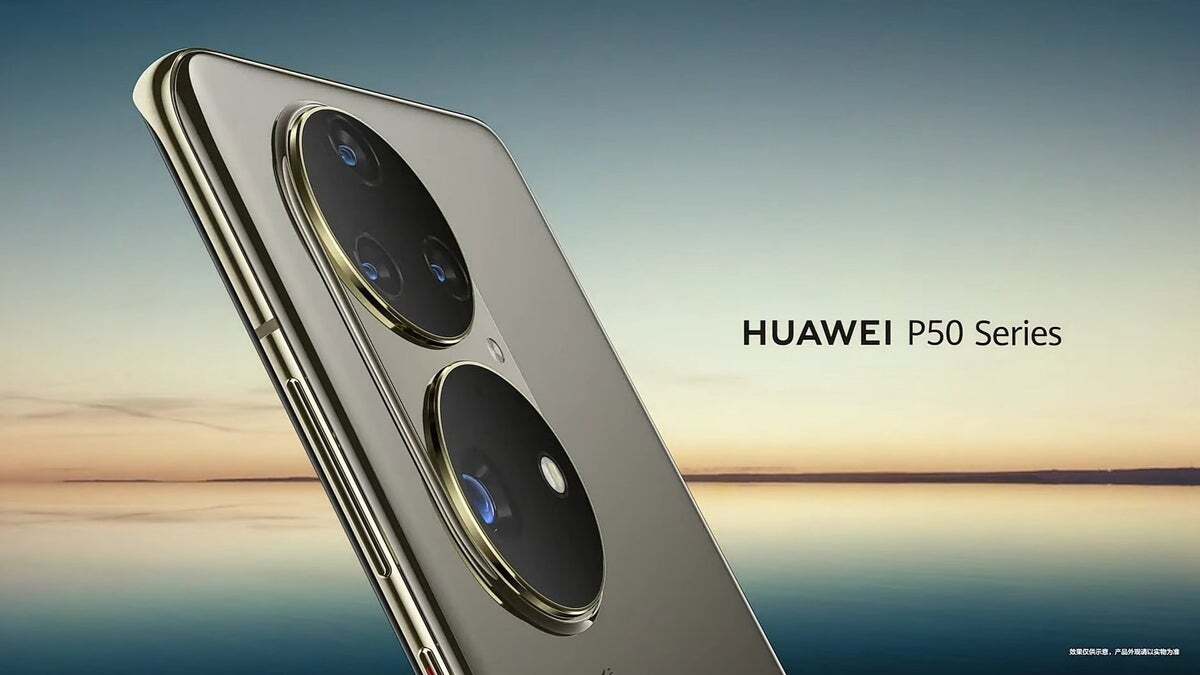
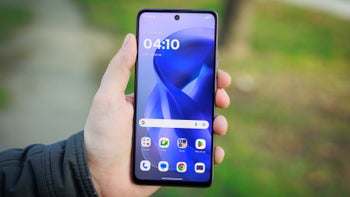
Huawei's P50 series in 2021 was the first powered by HarmonyOS. | Image credit-Huawei
By September 2019, new Huawei phones were being released with the AOSP open-source version of Android, which featured basic phone capabilities, SMS, and a Calendar app. Being open-source, the U.S. government could not block Huawei from using it. But the AOSP experience is mostly a dull one compared to all of the features that Android users get with the GMS variant of the operating system. It seemed that the only choice Huawei had was to develop its own operating system, and thus HarmonyOS was born.
With 27 million combined users, HarmonyOS 5 and HarmonyOS 6 are well beyond "niche" releases
The first phones powered by HarmonyOS were the photography-focused P50 and P50 Pro which were released in mid-2021. A report in the English-written South China Morning Post says that there are 27 million users of the last two versions of HarmonyOS, HarmonyOS 5 and HarmonyOS 6, combined. That figure shows that HarmonyOS is well on its way to becoming a legitimate competitor to Apple's iOS and Google's Android platforms, which is one of Huawei's goals.
Huawei referred to the 27 million users as a "survival line" hinting that HarmonyOS has crossed the number of users that suggest the platform is viable and continues to grow. With more than 100,000 new device activations daily and growing developer support, HarmonyOS has moved past the "niche" category. Huawei says that HarmonyOS is hosting more than 88 million app downloads and updates daily. The ecosystem includes 10 million developers.
Recommended For You
The latest iteration of HarmonyOS is HarmonyOS 6 which was made available to developers this past June and released to Chinese consumers in October. That was about a year after HarmonyOS 5 launched in 2024. HarmonyOS 6 includes a feature similar to Apple's AirDrop that allows files to be transferred wirelessly between Huawei and Apple devices.
Huawei's Mate 80 series returns the company to the top of China's smartphone manufacturers
During the second quarter of the year, HarmonyOS accounted for 17% of the operating systems used on smartphones in China slightly topping the 16% slice of the Chinese smartphone pie owned by the iPhone's iOS. That was the sixth consecutive quarter that Harmony's domestic market share topped the share of iOS in China. Overall, HarmonyOS was China's second largest mobile operating system during Q2, according to Counterpoint. Ahead of HarmonyOS by a wide margin was Android with a whopping 66% second quarter share.
Will Huawei ever develop its own advanced lithography equipment?
209 Votes
Yes. They've achieved everything else, so why not this?
91.87%
No. This is a very complicated task.
5.26%
I don't know.
2.87%
Helping to drive the increasing use of HarmonyOS in China is Huawei's growing strength in device sales. Research firm BCI says that Huawei is the top smartphone vendor in China, a position it reclaimed during the last week of November and first week in December surpassing Apple thanks to the release of Huawei's Mate 80 series. The models in that line include the base Mate 80 model, Mate 80 Pro, Mate 80 Pro Max and Mate 80 RS, as well as the foldable Mate X7.
Huawei's next battle is to develop its own extreme ultraviolet lithography machines
Huawei's next battle is to develop its own lithography system for advanced process nodes. While Samsung Foundry and TSMC are shipping chips made with their 2nm process nodes this year, the inability of China's leading foundry, SMIC, to build any chip beyond the 5nm class means that Huawei's Kirin application processors (AP) are not as powerful or energy efficient as Apple's A-series APs used to power the iPhone, and Qualcomm's Snapdragon 8 Elite Gen 5 AP, which will power the Galaxy S26 in China.
Only one company in the world, Dutch firm ASML, makes the Extreme Ultraviolet (EUV) lithography needed to transfer circuitry patterns to silicon wafers using the extremely fine lines needed to build chips using a process under 7nm. The Dutch have teamed up witht he U.S. to prevent shipments of EUV lithography machines to China.
Mint Mobile's 6-month plans now cost $10/mo
$10
/mo
$35
$25 off (71%)
Mint Mobile is celebrating its 10-year anniversary with a special offer on its six-month subscription plans. For a limited time, you can get your preferred tier (6GB, 17GB, 23GB or unlimited) for just $10/mo. That saves you between 50% and 71% on the carrier's mobile plans, making it way easier to recommend.
Alan, an ardent smartphone enthusiast and a veteran writer at PhoneArena since 2009, has witnessed and chronicled the transformative years of mobile technology. Owning iconic phones from the original iPhone to the iPhone 15 Pro Max, he has seen smartphones evolve into a global phenomenon. Beyond smartphones, Alan has covered the emergence of tablets, smartwatches, and smart speakers.
A discussion is a place, where people can voice their opinion, no matter if it
is positive, neutral or negative. However, when posting, one must stay true to the topic, and not just share some
random thoughts, which are not directly related to the matter.
Things that are NOT allowed:
Off-topic talk - you must stick to the subject of discussion
Offensive, hate speech - if you want to say something, say it politely
Spam/Advertisements - these posts are deleted
Multiple accounts - one person can have only one account
Impersonations and offensive nicknames - these accounts get banned
To help keep our community safe and free from spam, we apply temporary limits to newly created accounts:
New accounts created within the last 24 hours may experience restrictions on how frequently they can
post or comment.
These limits are in place as a precaution and will automatically lift.
Moderation is done by humans. We try to be as objective as possible and moderate with zero bias. If you think a
post should be moderated - please, report it.
Have a question about the rules or why you have been moderated/limited/banned? Please,
contact us.






Things that are NOT allowed:
To help keep our community safe and free from spam, we apply temporary limits to newly created accounts: