Have you ever noticed that a large percentage of scam and spam calls you receive come from the same area code as your personal phone number? Sometimes the bogus call will also be from a number that closely resembles your number. This is done on purpose as the scammers believe that you're more apt to pick up a call if it appears to be coming from an area you're familiar with. Similarly, you are more likely to pick up a call if it shows that it is coming from a U.S. area code as opposed to one from a foreign country.
FCC needs your help by commenting on a proposed new rule to stop overseas scammers and spammers
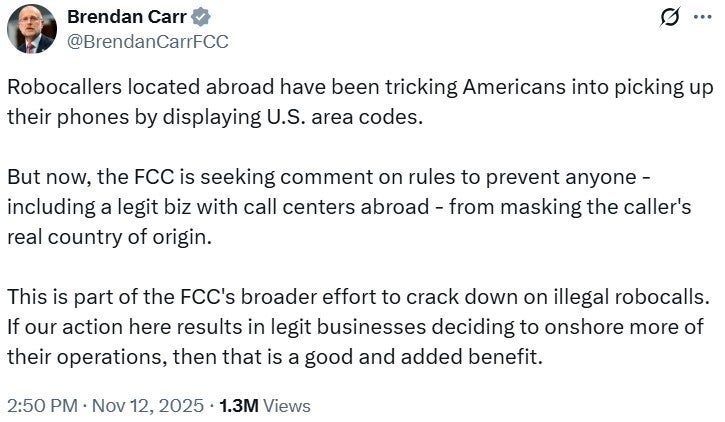
This issue has caught the eye of FCC Chairman Brendan Carr who wrote a tweet noting that "Robocallers located abroad have been tricking Americans into picking up their phones by displaying U.S. area codes." But Carr is taking action by floating new FCC rules that would prevent anyone from "masking" the real origin of a phone call. This could be a very useful and productive rule change from the FCC and Carr wants the rules to cover legitimate businesses that use overseas call centers.
Is this important for the FCC to do?
62 Votes
Absolutely. Spam and scam calls rip off Americans.
91.94%
It's a waste. Americans will still answer these calls.
0%
I see it both ways.
8.06%
Carr goes on to write, "This is part of the FCC's broader effort to crack down on illegal robocalls. If our action here results in legit businesses deciding to onshore more of their operations, then that is a good and added benefit." If that is the end result of the new FCC rules, this could help the U.S. economy by finding many Americans a job (albeit a low paying one). For the FCC Chairman this would be like killing two birds with one stone as he could make more Americans safer and gainfully employed.
Tweet from FCC Chairman Brendan Carr. | Image credit-X
With the FCC proposal, calls originating from outside the U.S. will have to show verifiable geographic information showing the country that the call is coming from. The reason why this is an important matter is that last year an estimated 4.2 billion robocalls were received by U.S. consumers with a large percentage of these calls being made outside of the U.S. Such calls can be used to sell fake tech support, and scam Americans into believing that they owe the IRS or some other entity some money. A large percentage of victims are senior citizens who are more likely to fall for such a scam.
The FCC has a 45-day comment period with a vote expected this spring
Consumer protection organizations love the idea, and the FCC has a 45-day comment period during which it wants to hear from those with a stake in getting rid of robocalls. That would include telecommunications providers, businesses that have overseas operations, organizations working on behalf of consumers, and you. Next spring is the earliest when a vote could be taken on the final rule. If passed, the FCC could allow implementation to be phased in over 18 months so that wireless providers can upgrade their systems to be in line with the rule change.
Recommended For You
The FCC continues to work hard on staying ahead of the scammers and spammers who have taken advantage of overseas call centers to rip off Americans. Judging from the replies to Carr's tweet, there are many Americans who are fed up having to deal with such calls. Both iOS and Android have ways to stop scam and spam calls before they reach you. On iOS, you can enable Silence Unknown Callers by going to Settings > Apps > Phone. Scroll down to Screen Unknown Callers. You'll have three options to choose from:
Never-Calls from unsaved numbers will ring and missed calls will appear on the Recents list. Ask Reason for Calling-Calls from unsaved numbers will be asked for more information before iPhone rings. Silence-Calls from unsaved numbers will be silenced, sent to voicemail, and displayed on the Recents list.
While both iOS and Android have ways to intercept spam and scam calls, the platforms use different methods to do so
While iOS prioritizes known contacts, Android prioritizes known spam databases and AI screening.
Those with an Android phone using the Google Phone app can have calls silently identified as spam; they won't ring and are sent to your call history/voicemail. Open the Phone app, tap the hamburger menu icon on the left of the search bar on top. Tap on Caller ID & spam and make sure the top toggle in on.
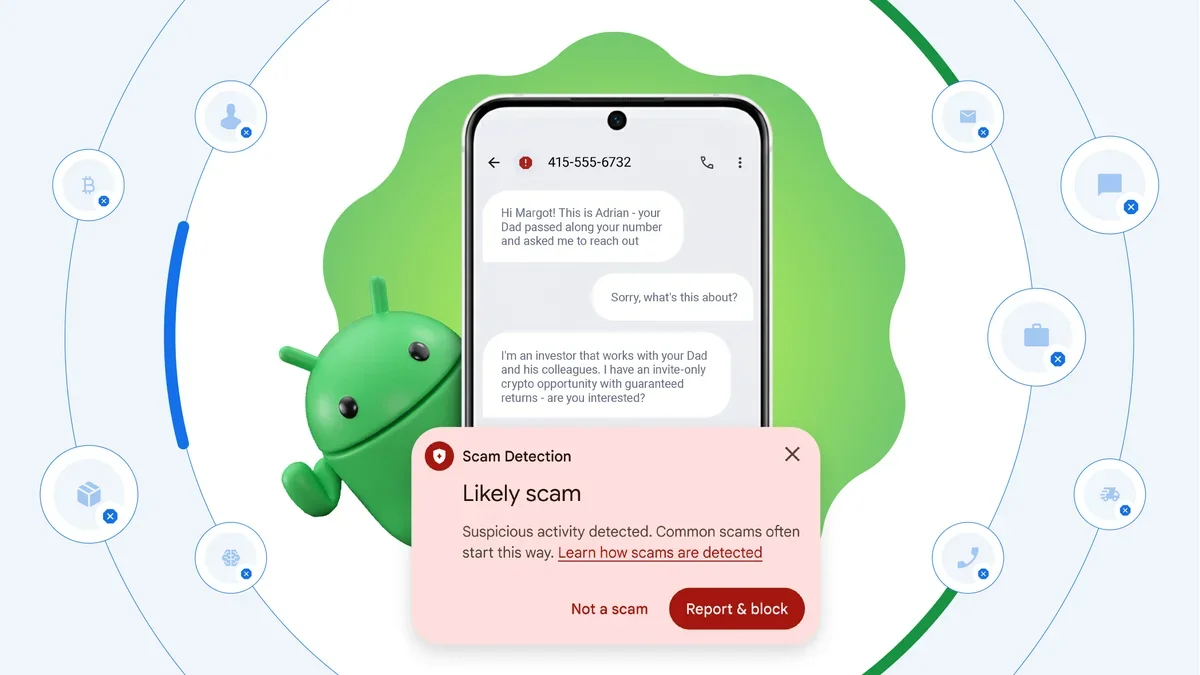
If you have a Pixel, you can use Scam Detection. From the same menu found in the Settings option of the Google Phone app, tap on Scam Detection and make sure it is toggled on. This feature looks for patterns in phone calls that indicate that the call is a scam and alerts you to it. Pixel users can also, from the same Google Phone app settings menu, tap on Call Screen. Once again, there are three options to consider:
Maximum protection-Screen unknown numbers and decline spam. Medium Protection-Screen suspicious calls & decline spam. Basic protection-Decline only known spam.
Call Screen is like having someone screening your calls to find out why a specific caller dialed your number.
Between the FCC and the features found on smartphones, we could see American consumers start feeling like more s being done to end scam and spam calls.
Alan, an ardent smartphone enthusiast and a veteran writer at PhoneArena since 2009, has witnessed and chronicled the transformative years of mobile technology. Owning iconic phones from the original iPhone to the iPhone 15 Pro Max, he has seen smartphones evolve into a global phenomenon. Beyond smartphones, Alan has covered the emergence of tablets, smartwatches, and smart speakers.
A discussion is a place, where people can voice their opinion, no matter if it
is positive, neutral or negative. However, when posting, one must stay true to the topic, and not just share some
random thoughts, which are not directly related to the matter.
Things that are NOT allowed:
Off-topic talk - you must stick to the subject of discussion
Offensive, hate speech - if you want to say something, say it politely
Spam/Advertisements - these posts are deleted
Multiple accounts - one person can have only one account
Impersonations and offensive nicknames - these accounts get banned
To help keep our community safe and free from spam, we apply temporary limits to newly created accounts:
New accounts created within the last 24 hours may experience restrictions on how frequently they can
post or comment.
These limits are in place as a precaution and will automatically lift.
Moderation is done by humans. We try to be as objective as possible and moderate with zero bias. If you think a
post should be moderated - please, report it.
Have a question about the rules or why you have been moderated/limited/banned? Please,
contact us.







![Another batch of Galaxy S26 series users in the US are getting a nice surprise today [UPDATED]](https://m-cdn.phonearena.com/images/article/183643-wide-two_350/Another-batch-of-Galaxy-S26-series-users-in-the-US-are-getting-a-nice-surprise-today-UPDATED.webp)
Things that are NOT allowed:
To help keep our community safe and free from spam, we apply temporary limits to newly created accounts: