Editorials · Reviewer Insight
I should be hyped for the Z Trifold as a reviewer, but it still feels wrong to buy
$3,000 for the Galaxy Z Trifold? There is a much smarter way to spend your money.
This article may contain personal views and opinion from the author.
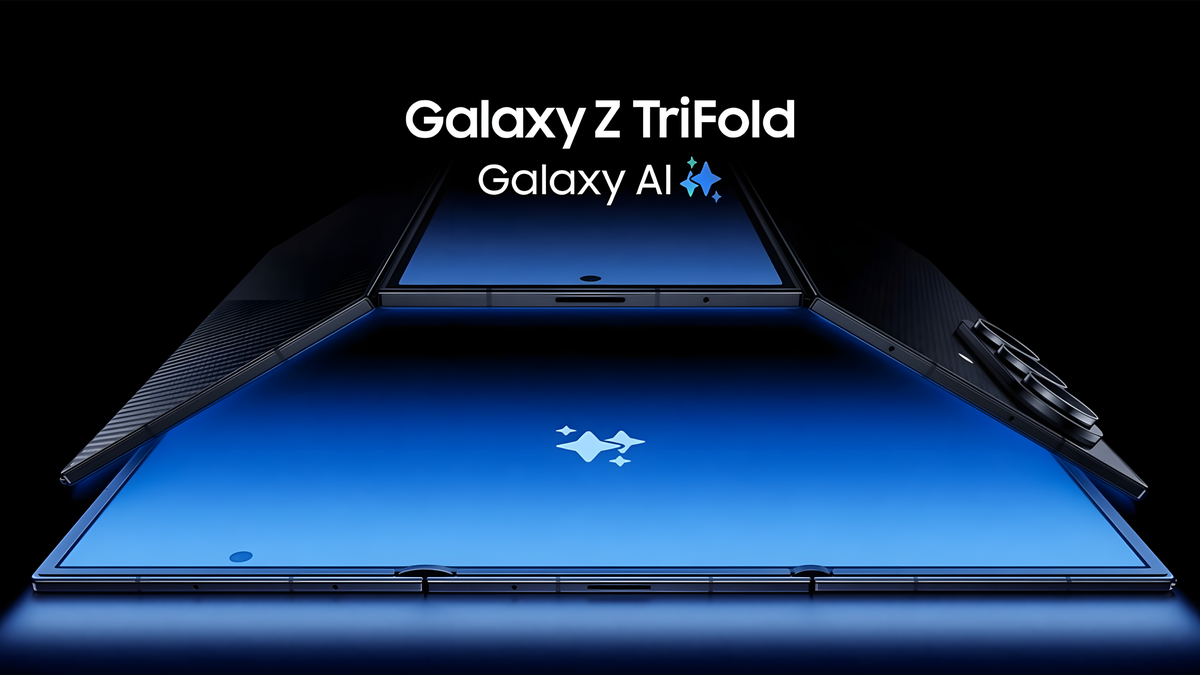
The Samsung Galaxy TriFold is all the talk right now, and for all the right reasons. Despite missing on the honors of being the first foldable phone that folds three ways and expands to a tablet-size device (the Huawei Mate XT was the first one), this Samsung handset will be the pioneering triple-folding phone on the US market.
As a phone reviewer, I know I should be ecstatic with the idea of the TriFold. After all, it's a device that fits in your pocket and extends to be something much bigger. Essentially, that's something taken straight out of a 90s science fiction TV show, the type of magical device that we used to daydream about when we were kids.
Yet, in the real life of late 2025, the TriFold fails to make a very strong case for itself aside from the novelty of having one extra hinge that folds.
To me, a combination of a regular phone and a tablet still feels like the superior and more sensible choice.
It makes no financial sense to get the TriFold
Let's look at it from the obvious financial angle first.
There's no official US pricing for the Samsung Galaxy TriFold yet, but the phone is largely expected to start at $3,000. Yes, the price is steep, but with zero rivals in this emerging foldable segment, Samsung has no pressure to keep it down. When you’re the only one playing the game, you also get to write the rules.
Now, $3,000 is a lot of money. For that price, you could build an entire tech setup. For example, to me, it makes way more sense to buy a "regular" Galaxy phone and a Galaxy tablet that will cost you much less.
Speaking from within the confines of the Samsung ecosystem, a Galaxy S25 Ultra would cost you $1,300 before any cost-reducing promotions are applied, while an 11-inch tablet like the Galaxy Tab S11 will set you back another $800.
Let's not forget you will get a wall adapter with the TriFold, so let's add one of those to our shopping list ($50), and we end up with a grand total of $2,150, which gets us a properly decent Android flagship, a very good tablet, and a charger to keep their batteries full and juiced up.
Well, no matter how you look at it, $2,150 is easier to stomach than $3,000. There's a whole Galaxy S25 lurking in this price difference, essentially one extra phone to gift to a loved one. I'm still finding it challenging to recommend a foldable phone to friends and family, and a triple-folding device that is so expensive seems like a much harder sell already.
An entry-level foldable, they might swallow up, but a $3,000 example of tech decadence would be a tad too much.
Less is more is not always welcome
Well, sure, $3,000 might be next to nothing to the well-off tech enthusiasts who have been falling asleep to the thought of fitting a tablet in their jeans pocket. The added value of having a regular, albeit slightly thicker, Galaxy phone AND a compact tablet in the same 2-in-1 form factor could be indispensable to some, and I see the general appeal of it all.
However, there's one major issue with foldable phones that still prevents them from becoming great: the constrained hardware space doesn't allow manufacturers to put the best cameras or the largest batteries inside, which is something that standard candy bar phones still excel at.
It's no surprise that it's only regular phones that have those mighty 1-inch camera sensors at the back or those crazy good 200MP zooms, there's just no way to fit that much hardware inside such a thin enclosure yet, which leaves foldables severely lacking in comparison with the best camera phones out there.
The same applies to batteries: despite the advances of silicon-carbon batteries, even foldables from China struggle to break the 6,000 mAh capacity. If you want the very best battery life, a foldable and especially a triple-foldable are not your best bet.
Finally, there's the durability of it all. We've only recently started seeing IP68 creep up to foldable phones, while regular smartphones and tablets are enjoying even stronger IP69/K certifications that ensure they are as durable as it gets.
So, skip the TriFold, get a Galaxy phone and a tablet, or pick any other ecosystem combo, and you'd be much better off.


Popular stories


Latest News


Things that are NOT allowed:
To help keep our community safe and free from spam, we apply temporary limits to newly created accounts: