We finally reached a point where foldable phones feel mature. Hinges used to be fragile but are now reliable, creases are tolerable in the worst-case scenario, the software is seamlessly adapted for the foldable form factor, and the designs are thin enough to rival regular phones. It’s safe to say that in 2025, foldables are well-rounded consumer devices.
But now manufacturers will have a harder time pushing the envelope, because each next step will be smaller, with higher required cost and effort.
One of the first bottlenecks manufacturers face with foldable phones is the limited space for larger batteries.
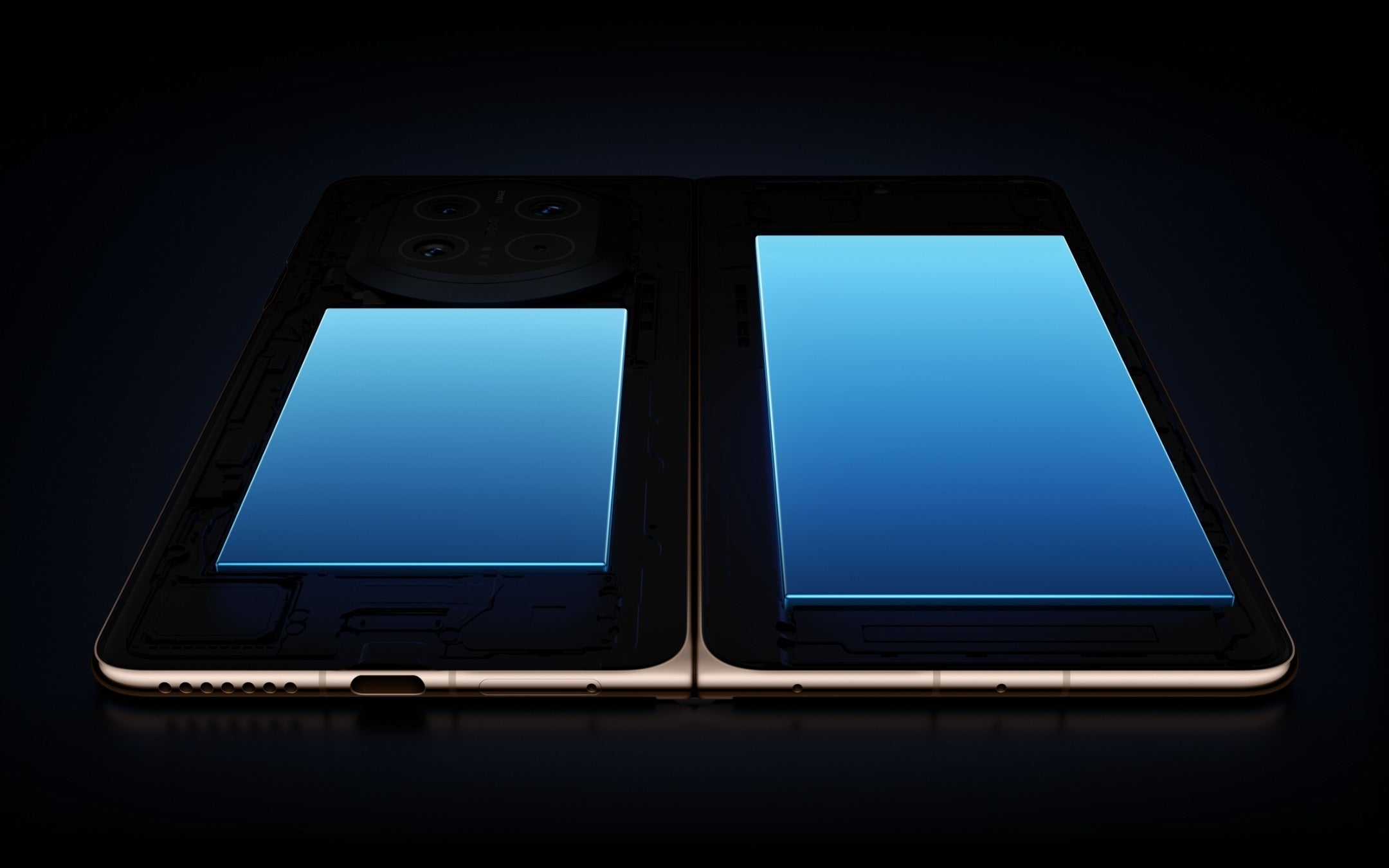
Looking at our battery test results from every foldable launched in 2025, I immediately notice a pattern. Most of the foldable phones don’t go past 6 hours and 30 minutes, which is kind of the bare minimum with regular phones. The best performers were the Huawei Mate X7 and Mate XT Ultimate, both of which use silicon-carbon batteries that have a higher capacity in a smaller footprint.
Flip phones, on the other hand, have smaller screens, which means they don’t use as much energy. The best of them consistently reach over 7 hours of battery life in our tests, with the Honor Magic V Flip 2 taking first place in just over 8 hours. So, switching from a regular phone to a flip foldable is definitely less of a sacrifice.
Recommended For You
However, this clustering I see in our test results tells me something else. It shows me that devices with wildly different designs, chipsets, and battery sizes all land in roughly the same window, which is a sign that we’ve hit a wall — companies will need to introduce other innovations if they want to improve the battery life of foldables.
Bigger batteries are not the answer
Image credit — Huawei
In 2025, most foldables crossed the 5,600 mAh mark, but that didn’t seem to improve their battery life that much.
The Huawei Mate XT packs 5,600 mAh and still lands at 7 hours. The Honor Magic V5 goes even further with a 5,820 mAh battery and ends up below many smaller flip phones. Meanwhile, the Galaxy Z Fold 7 sticks to 4,400 mAh and predictably sits near the bottom of the chart at 5 hours and 31 minutes.
Capacity alone is no longer the lever it once was. Foldables come with large battery capacities, but they also have larger screens with more pixels, and on top of that, they are still quite bad at dissipating heat, which accelerates the battery’s degradation.
Screens are the real enemy
Image credit — PhoneArena
It’s not just the size of the displays that’s an issue with foldable phones. It is hard to optimize for multiple displays, complex software utilizing all of them, and the unconventional aspect ratios they come with.
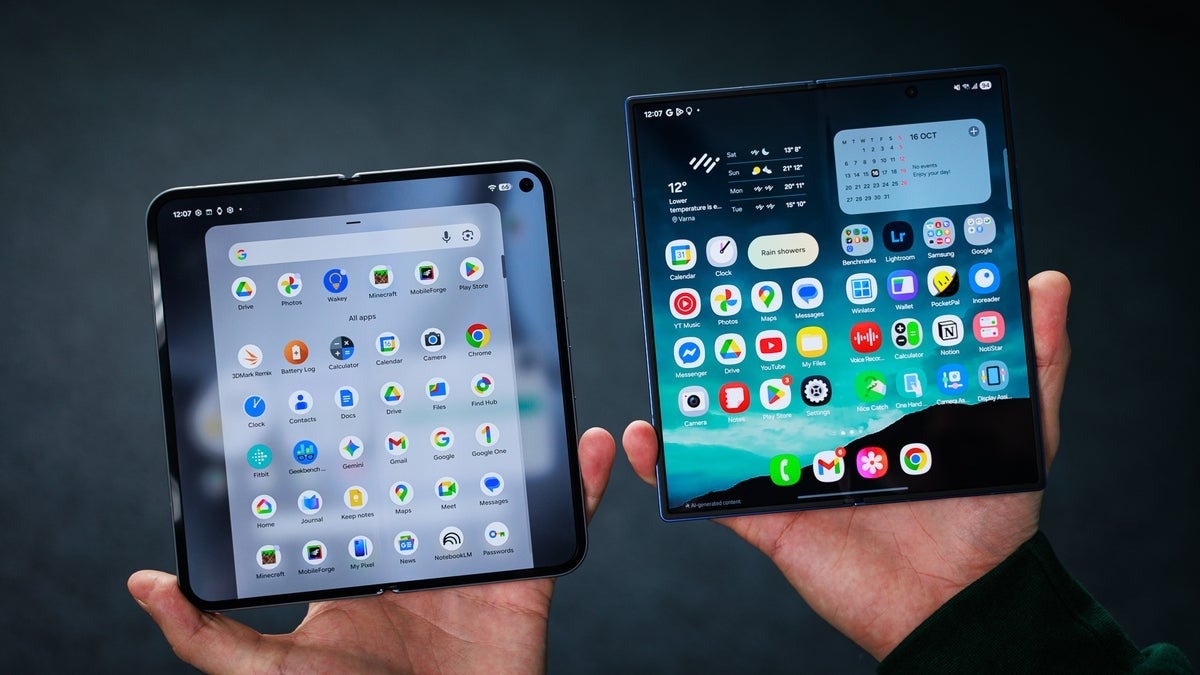
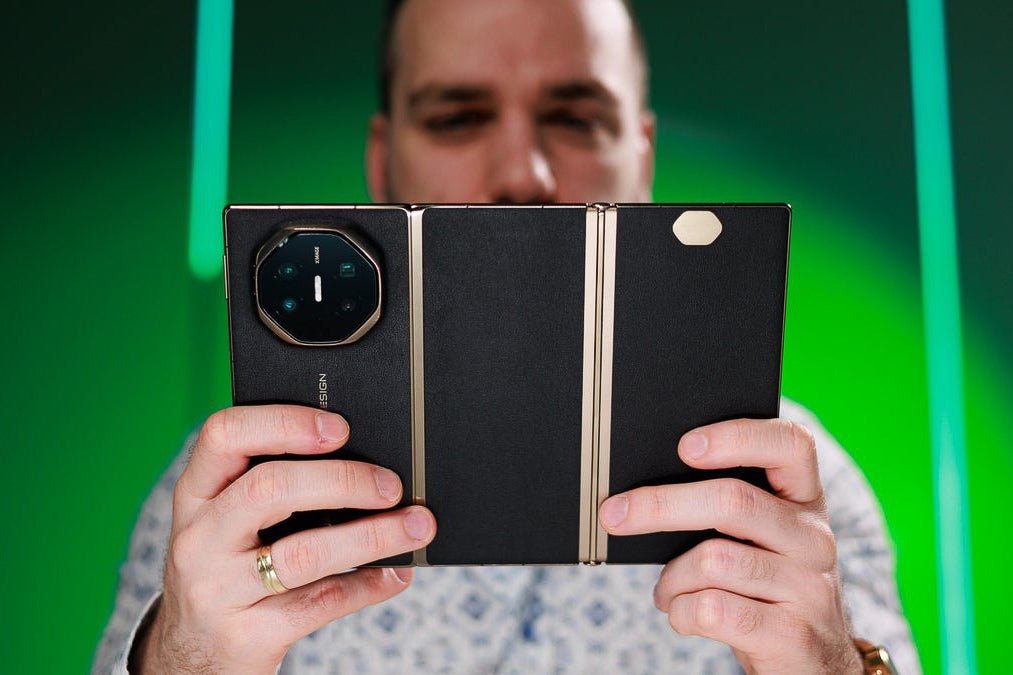
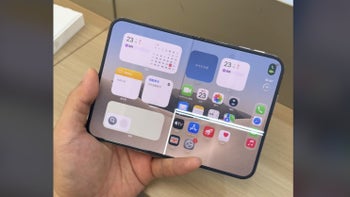
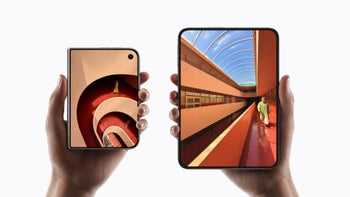
A book-style foldable like the Galaxy Z Fold 7 pushes a large (inner) OLED display with high brightness and an adaptive refresh rate. A tri-fold like the Huawei Mate XT pushes an even larger canvas that approaches tablet territory. Every additional fold increases the complexity of the display system itself, requiring more drivers, layers, and active components, all of which contribute to the overall power consumption of the phone.
Thinness has become the trap
The irony is that foldables are victims of their own success.
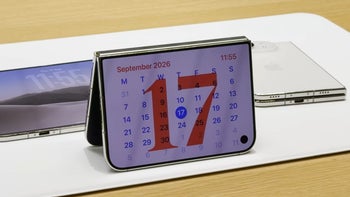
Manufacturers spent years making these devices thinner, lighter, and more elegant — it was the number one priority. In 2025, one can say that they’ve achieved this goal. The clearest example of this is the Galaxy Z Fold 7, which is almost as thin as the Galaxy S24 Ultra when it is folded (8.9 mm vs 8.6 mm).
But there is a cost to making such thin phones, and that’s the restricted space for the components inside, the battery being among the first affected areas. Foldables cannot continue to grow taller or thicker without losing their defining appeal. Unlike regular phones, they have no easy direction to expand into.
You might think that tri-folds are an answer to this issue because they are larger, but you would be wrong. The Mate XT Ultimate (the first tri-fold) uses multiple battery cells spread across the chassis, but the total volume is still constrained by how thin the device must remain when folded. Plus, with the extra size comes with an extra layer of display that needs to be powered, which cancels out the added space for more battery.
This is no longer an optimization problem
Image credit — PhoneArena
It would be easy to say that this battery life bottleneck is fixable with software optimization or chip efficiency. Yes, both of these solutions are viable, but neither can massively contribute to increased battery life.
Software optimization can only go so far, especially in an era where phone manufacturers are relying more on new software features to market their products instead of hardware. As for newer, more efficient chips — the truth is we are nearing the physical limit of how much smaller and more efficient chips can get. Once we reach 2nm chips, we’ve essentially plateaued, at least in the traditional sense.
So, what I’m trying to say is that foldables are bumping into a physical limit imposed by their form factor.
Chemistry is the only real escape
Manufacturers have already thinned hinges, shrunk components, and packed batteries into every usable cavity inside the chassis. There simply isn’t much empty space left to work with. You can redesign the internals only so many times before you are eventually met with the same roadblock.
Current lithium-ion batteries have mostly hit their practical limits. Silicon-carbon batteries are a step forward because they store more energy in the same volume. But even those gains are incremental. They help you squeeze out an extra hour, but that’s about it.
Solid-state batteries, which promise major jumps in energy density and safety, are still years away from being ready for entering the phone market.
So, until battery chemistry makes a meaningful leap forward, every foldable will hit that battery wall sooner or later. The good news is that battery life on foldables is currently not terrible (well, the Galaxy Z Fold 7 could be better), so they are perfectly usable daily drivers. However, hardware and software will only get more demanding, which means the phone will need more battery, so manufacturers will be forced to figure a way around this issue.
Tello Halloween Promo: $10GB for $10/mo
Don’t miss this scary-good deal: 10 GB for $10/mo. Save $5/mo for your first 3 months. Offer valid now through November 9, 2026.
Aleksandar is a tech enthusiast with a broad range of interests, from smartphones to space exploration. His curiosity extends to hands-on DIY experiments with his gadgets, and he enjoys switching between different brands to experience the latest innovations. Prior to joining PhoneArena, Aleksandar worked on the Google Art Project, digitizing valuable artworks and gaining diverse perspectives on technology. When he's not immersed in tech, Aleksandar is an outdoorsman who enjoys mountain hikes, wildlife photography, and nature conservation. His interests also extend to martial arts, running, and snowboarding, reflecting his dynamic approach to life and technology.
COMMENTS (9)
COMMENTS (9)
All comments need to comply with our
Community Guidelines
PhoneArena Community Rules
A discussion is a place, where people can voice their opinion, no matter if it
is positive, neutral or negative. However, when posting, one must stay true to the topic, and not just share some
random thoughts, which are not directly related to the matter.
Things that are NOT allowed:
Off-topic talk - you must stick to the subject of discussion
Offensive, hate speech - if you want to say something, say it politely
Spam/Advertisements - these posts are deleted
Multiple accounts - one person can have only one account
Impersonations and offensive nicknames - these accounts get banned
To help keep our community safe and free from spam, we apply temporary limits to newly created accounts:
New accounts created within the last 24 hours may experience restrictions on how frequently they can
post or comment.
These limits are in place as a precaution and will automatically lift.
Moderation is done by humans. We try to be as objective as possible and moderate with zero bias. If you think a
post should be moderated - please, report it.
Have a question about the rules or why you have been moderated/limited/banned? Please,
contact us.









Things that are NOT allowed:
To help keep our community safe and free from spam, we apply temporary limits to newly created accounts: