SpaceX cautioned against buying T-Mobile
SpaceX will only be dragged down by T-Mobile.
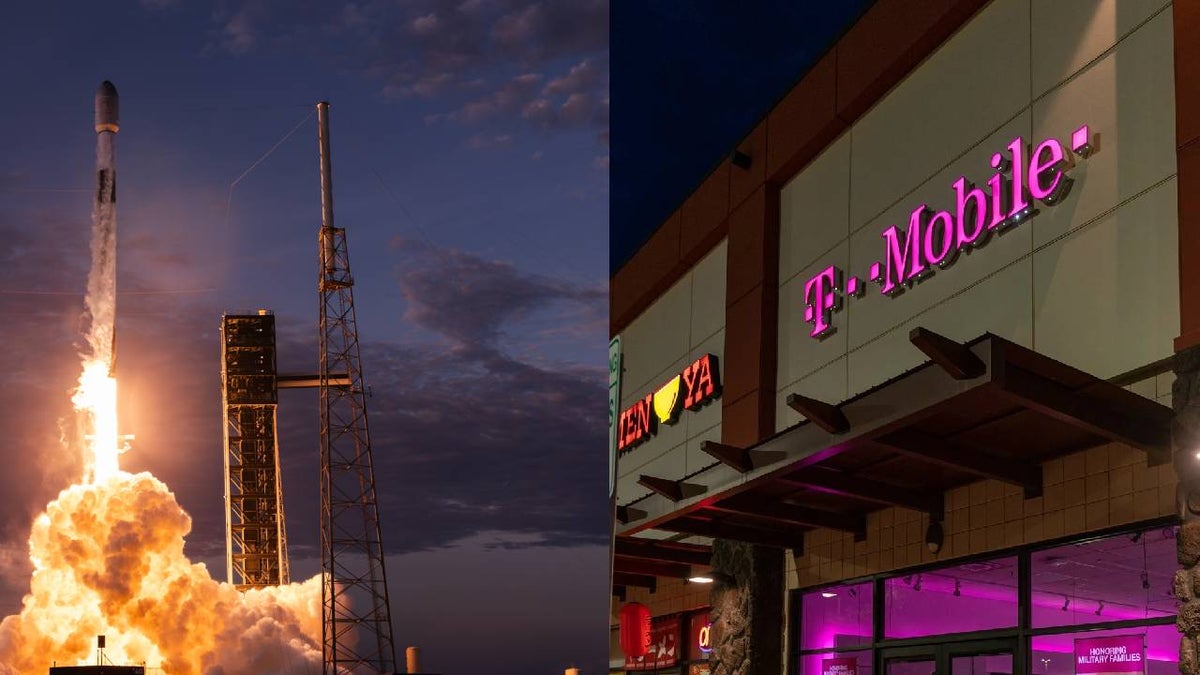
A lose-lose proposition. | Image by PhoneArena
The telecom industry is going through... something. While traditional carriers have stopped innovating, space companies are getting creative. Cellular growth is cooling off, but SpaceX wants in anyway. While President and Chief Operating Officer Gwynne Shotwell has floated the idea of building a terrestrial network, the cost and time constraints make that a long shot. A quicker entry point would be scooping up T-Mobile, but that might just be inviting more problems.
SpaceX and T-Mobile already collaborate on direct-to-device (D2D) and broadband, so the synergy is there.
With current satellite tech and SpaceX's modest share of just 6% of the aggregate FCC-licensed spectrum, the rocket company's growth prospects are limited. Satellite connectivity doesn't offer the bandwidth, capacity, and speed of 5G networks, and service will degrade as more people join.
SpaceX's broadband customers are mostly rural, and many would bolt the second a better option pops up.
SpaceX already has its fingers in many pies: its Starlink connectivity business, its rocket operations, artificial intelligence ambitions, and a possible merger with car company Tesla, which also happens to make robots. It might even make its own smartphone!
Stepping into cellular territory could muddy the company's focus, although if there's anyone who knows how to juggle multiple businesses, it's CEO Elon Musk. But that's just the tip of the iceberg.
SpaceX would have to fork over upward of $180 billion for T-Mobile, straining its finances just to limit its own reach.
That's because buying T-Mobile closes the door on potential partnerships with AT&T and Verizon. Sure, those two have inked deals with AST SpaceMobile, but with AST stumbling, they will likely look to team up with SpaceX when its exclusivity with T-Mobile expires. By outright owning T-Mobile, SpaceX locks itself out of two-thirds of the mobile market.
Spectrum superiority
SpaceX and T-Mobile already collaborate on direct-to-device (D2D) and broadband, so the synergy is there.
SpaceX's broadband customers are mostly rural, and many would bolt the second a better option pops up.
By acquiring T-Mobile, SpaceX could surmount these challenges. T-Mobile, on the other hand, doesn't gain much from the deal. This imbalance could give T-Mobile more negotiating power, potentially forcing SpaceX to pay a premium above market value.
Sacrificing reach
SpaceX already has its fingers in many pies: its Starlink connectivity business, its rocket operations, artificial intelligence ambitions, and a possible merger with car company Tesla, which also happens to make robots. It might even make its own smartphone!
SpaceX would have to fork over upward of $180 billion for T-Mobile, straining its finances just to limit its own reach.
That's because buying T-Mobile closes the door on potential partnerships with AT&T and Verizon. Sure, those two have inked deals with AST SpaceMobile, but with AST stumbling, they will likely look to team up with SpaceX when its exclusivity with T-Mobile expires. By outright owning T-Mobile, SpaceX locks itself out of two-thirds of the mobile market.
Lastly, the deal will have to clear regulatory roadblocks, which could go either way. This would require time, money, and resources.
Who has the most to gain from a SpaceX and T-Mobile merger?
350 Votes
T-Mobile
29.14%
SpaceX
43.43%
Consumers
27.43%
To merge or not to merge
As The Motley Fool notes, stranger mergers have worked out pretty well, so we shouldn't completely write it off. The two companies are by no means incompatible.
But whether they should pull the trigger is another question. SpaceX will probably be better off remaining a neutral party and sticking to its current structure of partnering with carriers rather than becoming one.
The cellular market is brutally competitive, and SpaceX already has too much on its hands to experiment with it. The company already boasts 12 million direct-to-device customers and doesn't need T-Mobile to drive organic growth.
Other options
SpaceX is actively hunting for alternatives, including a rumored deal with Charter to tap into its nationwide Wi-Fi hotspot network.
However, BNP Paribas notes that while Charter's ground-based internet infrastructure would expand SpaceX's footprint, a coverage gap would persist. A deal with Charter doesn't automatically give SpaceX access to Verizon's network.
While that number may sound insignificant, it represents areas that can't be served by satellites, hotspots, or small cells, but still account for a substantial amount of traffic.
For now, SpaceX's strategy is a bit up in the air. What's clear is that SpaceX plans to enter the terrestrial market sooner rather than later, and it isn't picky about how to get there.
Without a full network, SpaceX won't be a lethal rival to AT&T, T-Mobile, and Verizon, but it would still be something to fear.
While Charter’s network of urban hotspots and small cells could help Starlink Mobile to narrow the structural coverage gap associated with a direct-to-cell satellite network, Charter can’t offer a solution that entirely closes the gap because it can’t provide Starlink Mobile subscribers with access to Verizon’s wireless network
Sam McHugh, BNP Paribas Equity Research senior analyst, June 2026


Popular stories
Latest News
Things that are NOT allowed:
To help keep our community safe and free from spam, we apply temporary limits to newly created accounts: