AT&T, T-Mobile, and Verizon's worst fear confirmed by SpaceX
SpaceX has officially announced that it's considering building a terrestrial network.
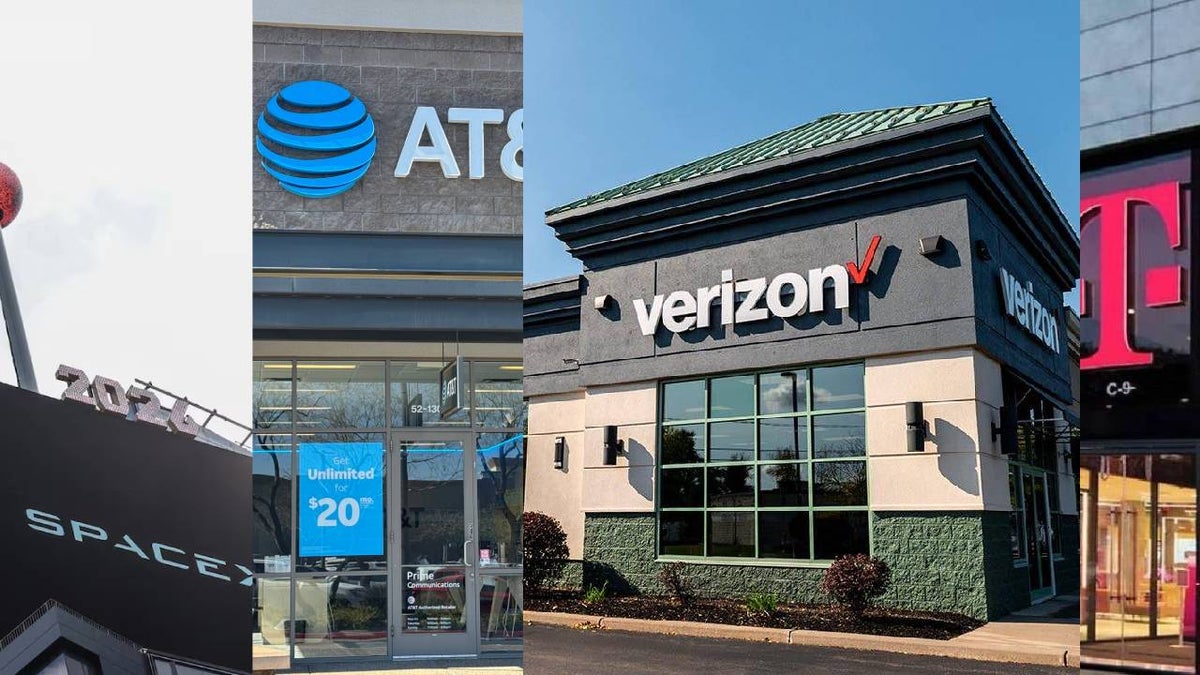
Is SpaceX going to be the fourth carrier? | Image by PhoneArena
Turns out, the rumors were true. Elon Musk's SpaceX Starlink had a concrete purpose behind its spectrum shopping spree. The company is officially eyeing the market dominated by AT&T, T-Mobile, and Verizon.
SpaceX President and Chief Operating Officer Gwynne Shotwell confirmed during a recent IPO roadshow that the company is considering building its own land-based cellular network in the US, per Financial Times.
This would entail launching a consumer-facing Starlink wireless service and offering mobile contracts just like AT&T, Verizon, and T-Mobile.
It's a much loftier ambition than SpaceX's current approach of partnering with carriers such as T-Mobile to connect customers to its satellites in dead zones.
A SpaceX-branded mobile network would be one of the company's most important expansions since launching Starlink, its most profitable unit. It would allow the company to reach far beyond the rural customer base typically suited for satellite internet alone.
The ambition comes to light just days after SpaceX went public, with investors expecting it to sustain growth momentum and unlock new revenue streams.
Some analysts believe that the announcement may simply be a bluff to extract better terms from telecom companies. After all, the Big Three have all denied entering into a Mobile Virtual Network Operator (MVNO) deal with SpaceX, and they have already allied to keep the company's market ambitions in check.
SpaceX would have to incur billions of dollars in construction costs and spectrum purchases to create its own mobile network.
The company has a paltry 65MHz of spectrum, which it picked up from EchoStar, while the Big Three have a combined total of 1,020MHz.
Besides, as New Street Research's partner David Barden points out, deploying a wireless network in competitive markets is very hard. However, a threat to do so might be enough to secure favorable partnership terms with carriers.
SpaceX may have scooped up more spectrum at the AWS-3 auction and could buy even more at next year's Upper C-Band auction.
With satellite capability limited by the laws of physics, a full-scale terrestrial network is what SpaceX needs to reach more customers.
The fourth carrier everyone has been waiting for
SpaceX President and Chief Operating Officer Gwynne Shotwell confirmed during a recent IPO roadshow that the company is considering building its own land-based cellular network in the US, per Financial Times.
It's a much loftier ambition than SpaceX's current approach of partnering with carriers such as T-Mobile to connect customers to its satellites in dead zones.
A massive expansion
A SpaceX-branded mobile network would be one of the company's most important expansions since launching Starlink, its most profitable unit. It would allow the company to reach far beyond the rural customer base typically suited for satellite internet alone.
Owning the network would also reduce SpaceX's dependence on carriers and avoid the kind of tussles it's reportedly having with T-Mobile over the revenue cut.
The ambition comes to light just days after SpaceX went public, with investors expecting it to sustain growth momentum and unlock new revenue streams.
Which route should SpaceX choose?
5612 Votes
Build its own network.
63.11%
Buy AT&T, T-Mobile, or Verizon.
11.26%
Stay out of the cellular industry.
17.53%
MVNO.
8.09%
Easier said than done
Some analysts believe that the announcement may simply be a bluff to extract better terms from telecom companies. After all, the Big Three have all denied entering into a Mobile Virtual Network Operator (MVNO) deal with SpaceX, and they have already allied to keep the company's market ambitions in check.
Besides, as New Street Research's partner David Barden points out, deploying a wireless network in competitive markets is very hard. However, a threat to do so might be enough to secure favorable partnership terms with carriers.
... as a starting point for negotiating the best possible revenue-sharing deal with mobile network operator partners? It makes tremendous sense
David Barden, partner at New Street Research, June 2026
Exciting times
In the last two weeks, SpaceX has been recommended twice to buy T-Mobile. Apparently, a possible takeover bid from SpaceX is why Deutsche Telekom has decided to assert full control over its US subsidiary.SpaceX may have scooped up more spectrum at the AWS-3 auction and could buy even more at next year's Upper C-Band auction.
With satellite capability limited by the laws of physics, a full-scale terrestrial network is what SpaceX needs to reach more customers.


Popular stories

Latest News


Things that are NOT allowed:
To help keep our community safe and free from spam, we apply temporary limits to newly created accounts: