It's already been a few weeks since the release of the Pixel 11 lineup, and now we should be focusing on what Google is going to offer in the Pixel 12 series. In fact, we recently held a poll asking you guys about the biggest improvement you want to see in the upcoming Pixel family. The results are in, and unsurprisingly, the upgrade I personally want to see in Google phones received the maximum number of votes.
Almost everyone wants Google to deliver this upgrade
Pixel phones are definitely not known for offering the best battery life, and the main reason behind this is that they come with a mediocre battery capacity. For instance, the Pixel 11 Pro XL, which is advertised as the model with the biggest battery, comes with only a 5,115 mAh cell. This number would definitely look great on a mid-range or an entry-level device, but not on a flagship phone from 2026.
In fact, if you compare it with what you get in top phones from Chinese manufacturers, you would feel that you are getting an unfair deal. The OnePlus 15, for instance, comes with a 7,300 mAh cell, and its successor is rumored to feature a battery capacity of around 9,000 mAh. The Xiaomi 17 is another worth-mentioning phone that comes with a 6,330 mAh battery.
Recommended For You
The thing that's allowing Chinese manufacturers to offer such massive batteries in their devices is the use of silicon-carbon technology. Compared to the traditional lithium-ion batteries that the Big G currently uses in its phones, Si-C can store more energy in the same physical space. Pixel fans apparently know the importance of this battery technology, as our poll results indicate that adopting silicon-carbon technology is the number one thing Google should do in the Pixel 12 lineup.
What's one improvement you really want to see in Pixel 12 lineup?
549 Votes
Adoption of Silicon-carbon tech.
45.17%
Switch to Qualcomm processor.
24.95%
Improved cameras, specially in videography.
12.75%
I've lost all faith in Pixel phones.
17.12%
The sentiment is the same on online forums as well
Not only do our poll results, but also the comments and posts on online community forums like Reddit also suggest that Pixel fans really want Google to adopt silicon-carbon technology. A user commented under a related post that the Big Three, which include Apple, Samsung, and Google, would only be able to offer bigger batteries in their smartphones by switching to silicon-carbon technology.
I was able to spot another comment that was made almost four months ago, basically saying that it would be really awesome if the Pixel 11 lineup came with a silicon-carbon battery. Unfortunately, this user's wish hasn't been fulfilled, as the latest Google phones continue to use lithium-ion cells.
There's now another reason to not like the Pixel 11 Pro HiLight capablity.
Thanks to this free app, the underwhelming Pixel 11 Pro finally feels worthy of its $1,100 price tag
Google could eventually fulfill the wish of Pixel fans
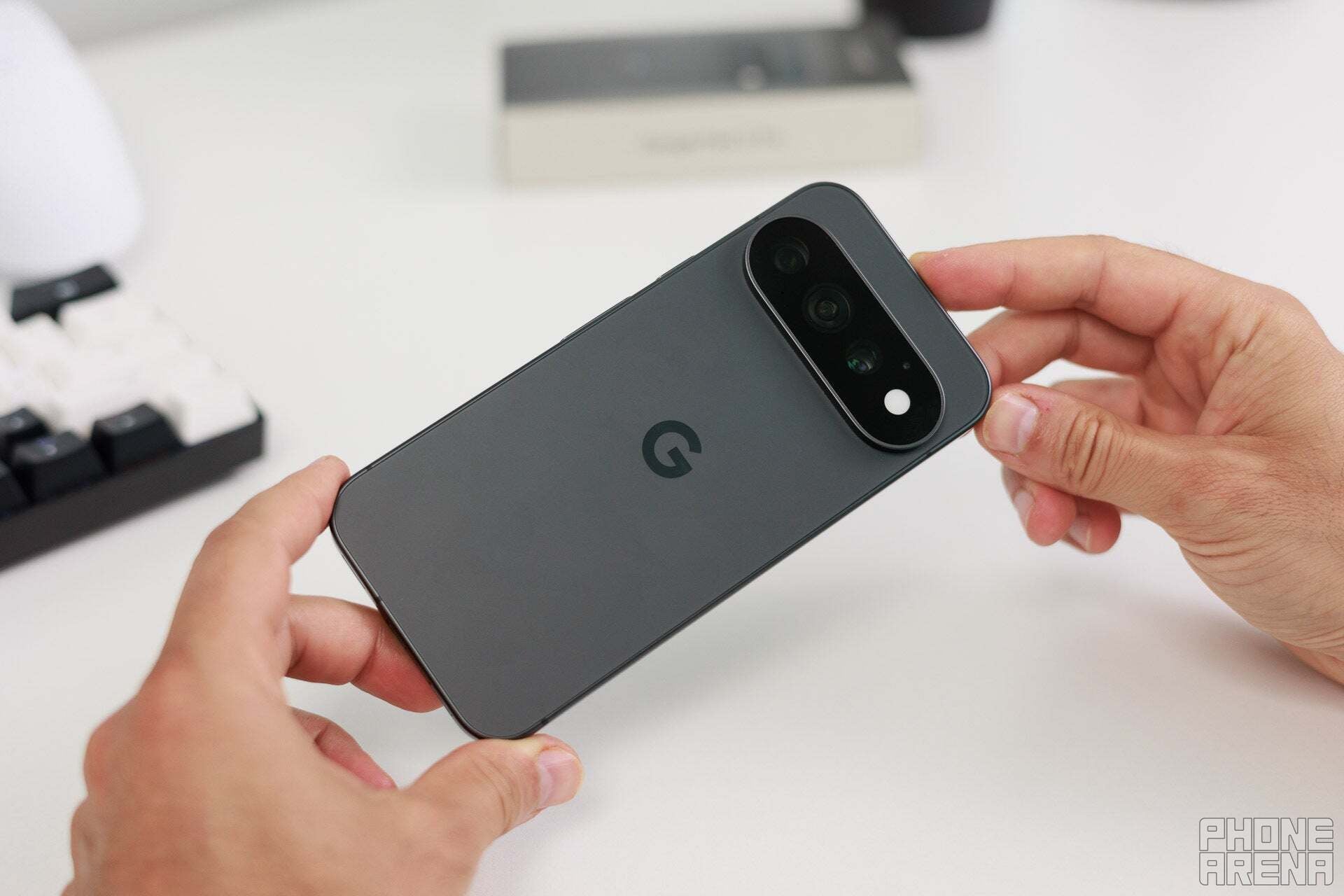
Back side of Pixel 11 Pro. | Image by PhoneArena
It's certainly very early to comment on the development of the Pixel 12 lineup, but it might actually use a silicon-carbon battery. A Google product manager who doesn't want to reveal their name recently gave a statement that the company is looking at silicon-carbon batteries. This definitely increases the chances that the Big G might eventually adopt the new battery tech in its upcoming flagship series.
Google might have no choice left
I really believe that Google now has no choice other than to seriously start thinking about the new battery technology, especially after learning that one of its biggest Android competitors, Samsung, has already embraced it in its phones. In case you are not aware, the recently released Z lineup devices feature silicon-carbon batteries. In fact, there are multiple reports suggesting that the S27 devices would also use the latest battery technology.
The bigger battery, combined with the software optimization and efficiency for which Pixel phones are famous, could eventually help Google devices offer incredible battery life. So, let's keep our fingers crossed that the tech giant doesn't waste a couple more years in adopting the latest technology.
Follow me on social media, where I regularly share Pixel-related stuff:
Mint Mobile is celebrating its 10-year anniversary with a special offer on its six-month subscription plans. For a limited time, you can get your preferred tier (6GB, 17GB, 23GB or unlimited) for just $10/mo. That saves you between 50% and 71% on the carrier's mobile plans, making it way easier to recommend.
Aman Kumar is a news writer at PhoneArena covering Google Pixel phones, Android features, AI-powered smartphone tools, and mobile tech news. Before joining PhoneArena, he spent over five years writing about consumer technology for publications like MakeUseOf, How-To Geek, and Guiding Tech. His current daily drivers are the Pixel 10 and Samsung Galaxy S26 Plus, while his red iPhone SE (2nd gen) remains a personal favorite. Aman also appreciates bold smartphone experiments and still considers the Nokia N-Gage one of the industry’s most iconic designs.
A discussion is a place, where people can voice their opinion, no matter if it
is positive, neutral or negative. However, when posting, one must stay true to the topic, and not just share some
random thoughts, which are not directly related to the matter.
Things that are NOT allowed:
Off-topic talk - you must stick to the subject of discussion
Offensive, hate speech - if you want to say something, say it politely
Spam/Advertisements - these posts are deleted
Multiple accounts - one person can have only one account
Impersonations and offensive nicknames - these accounts get banned
To help keep our community safe and free from spam, we apply temporary limits to newly created accounts:
New accounts created within the last 24 hours may experience restrictions on how frequently they can
post or comment.
These limits are in place as a precaution and will automatically lift.
Moderation is done by humans. We try to be as objective as possible and moderate with zero bias. If you think a
post should be moderated - please, report it.
Have a question about the rules or why you have been moderated/limited/banned? Please,
contact us.












Things that are NOT allowed:
To help keep our community safe and free from spam, we apply temporary limits to newly created accounts: