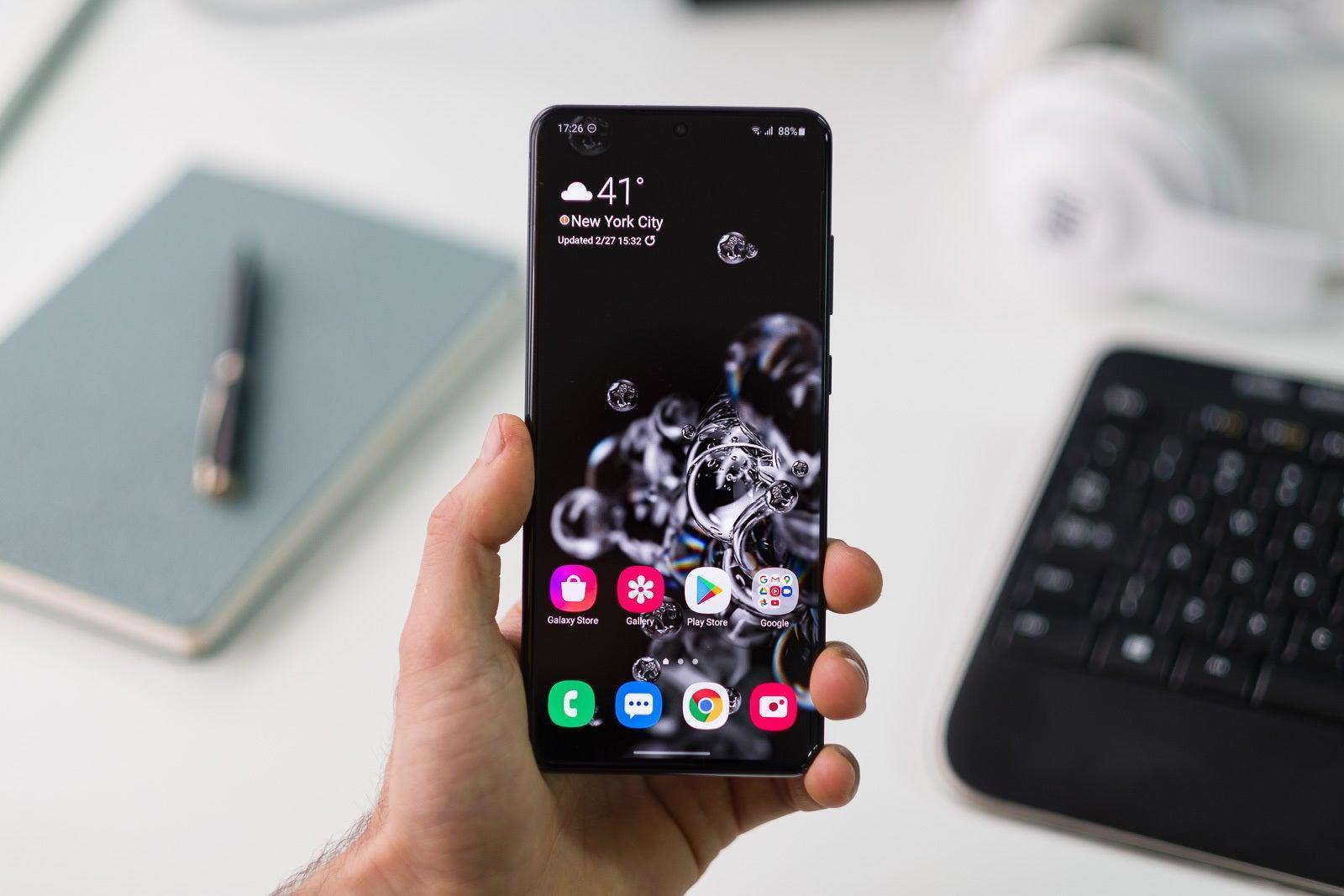
I remember the first time I held the Galaxy S20 Ultra. It was such a massive change from previous Galaxy flagships that focused on a more compact size. This model was unapologetically big and powerful. It had a much larger screen, a massive camera bump and a much bigger battery.
To this day, the Ultra remains Samsung’s no-compromise phone series. But it has not stood still.
Samsung has experimented and refined, and with the latest S26 Ultra, we have the most elaborate design so far. Yet, this new phone is thinner and more understated. Here is how that came to be.
Galaxy S26 Ultra 12/512GB: Get it now over at Samsung!
$1299
$1499
$200 off (13%)
Samsung is letting you save up on the Galaxy S26 Ultra with an eligible trade-in. Get up to $720 instant trade-in credit or $200 off without trade-in. This is Samsung's latest and greatest phone, and the first phone in the world with Privacy Display, so don't miss out!
Quick Summary of the Galaxy Ultra design evolution:
Model
Design Philosophy
Key Material
Thickness
Weight
S20 Ultra
The Ultra “Beta”
Aluminum
8.8mm
222g
S21 Ultra
The Contour Cut
Armor Aluminum
8.9mm
227g
S22 Ultra
The Note Rebirth
Armor Aluminum
8.9mm
228g
S23 Ultra
Refinement
Armor Aluminum
8.9mm
233g
S24 Ultra
The Flat Screen Era
Titanium
8.6mm
232g
S25 Ultra
The Ergonomic Pivot
Titanium
8.2mm
218g
S26 Ultra
The Ultra-Slim Age
Enhanced Armor Aluminum
7.9mm
214g
1. The first Ultra (S20 Ultra)
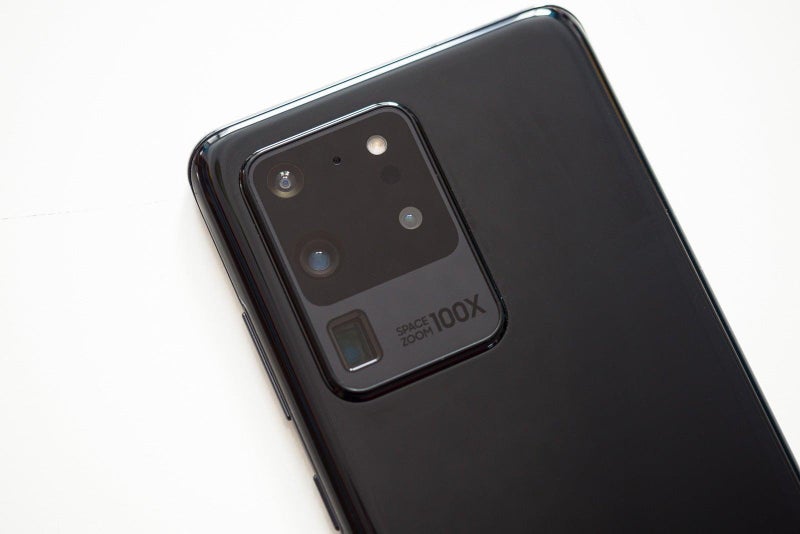
Images by PhoneArena
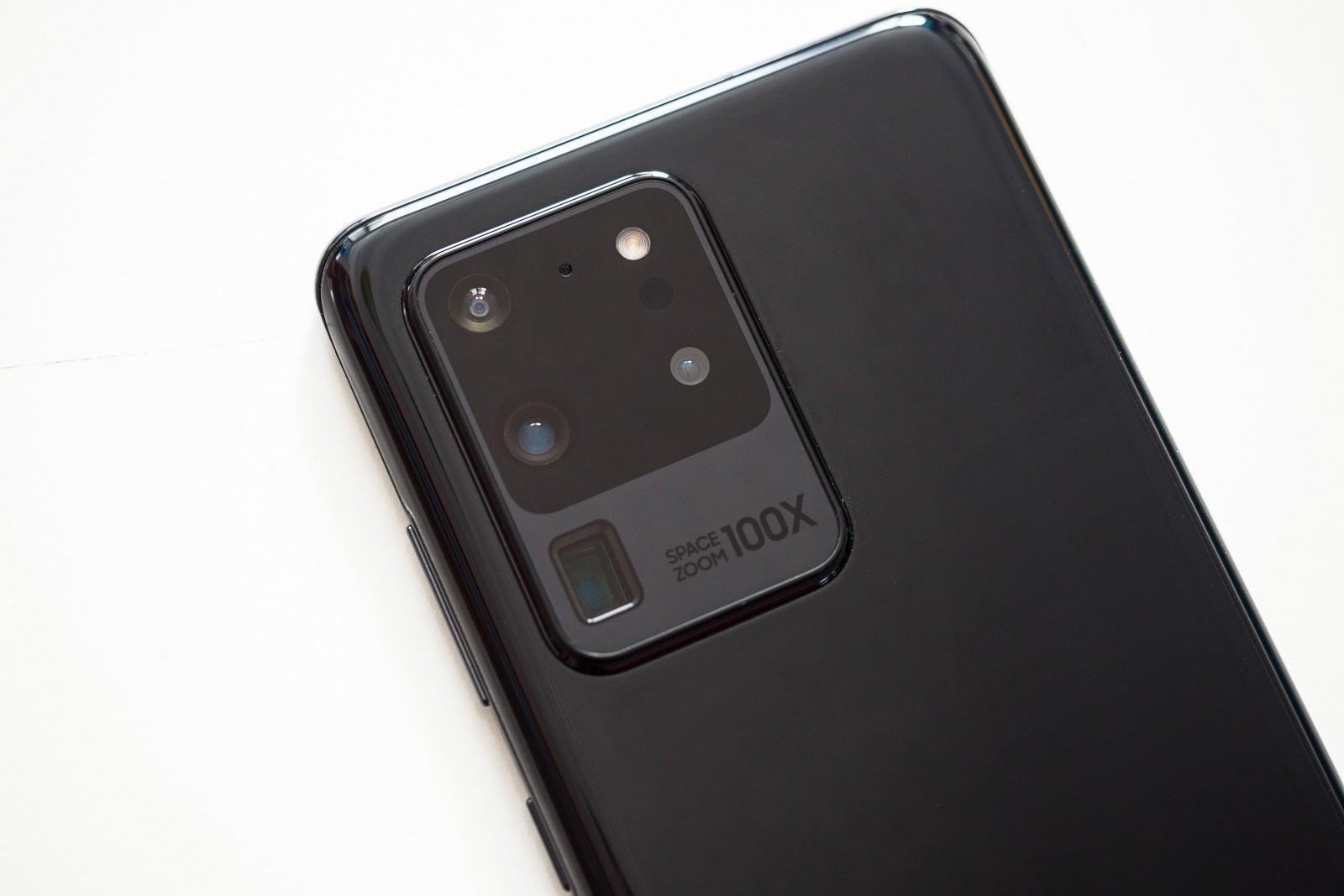
The Galaxy S20 Ultra was a massive change from previous Samsung flagships. It was the first Ultra, and it came as a statement.
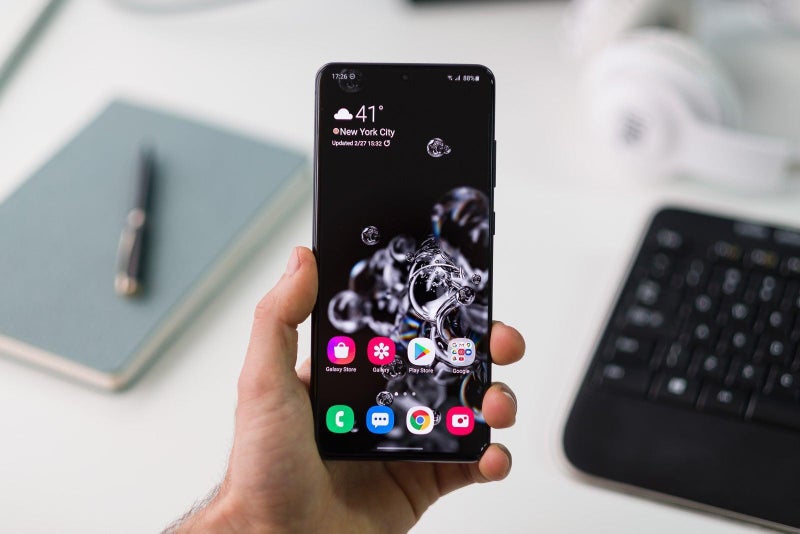
I had also reviewed the S10 series from the previous year, and then seeing the S20 Ultra was definitely a shock. It was a much bigger phone with an unapologetically massive camera system on the back (the first 108MP sensor in a time when rivals all used 12MP cameras), a game-changing 120Hz display and an insane “Space Zoom” technology. And it was among the first phones to have 5G connectivity.
Recommended For You
The price was also just as shocking as the rest of it — starting at $1,400, up from $1,000 for the previous S10 Plus.
Despite all the innovations, the S20 Ultra was a very rocky launch for Samsung, right in the midst of the 2020 Covid pandemic, but it set the tone for all the Ultras that followed.
Early Ultra DNA
Despite its experimental nature, several themes introduced here would persist:
Samsung’s focus on camera quality with large sensors above having the most compact design
The camera as a visual centerpiece
Bold sizes over conservative ergonomics
Premium materials
2. The starting point (S21 Ultra)
While the S20 Ultra introduced the category, the S21 Ultra established the first truly recognizable Ultra design language. It was what really got the Ultra lineup going.
The phone arrived at a more sensible $1,200 price, it fixed the focusing issues we saw on the S20 Ultra, and it was a much bigger commercial success.
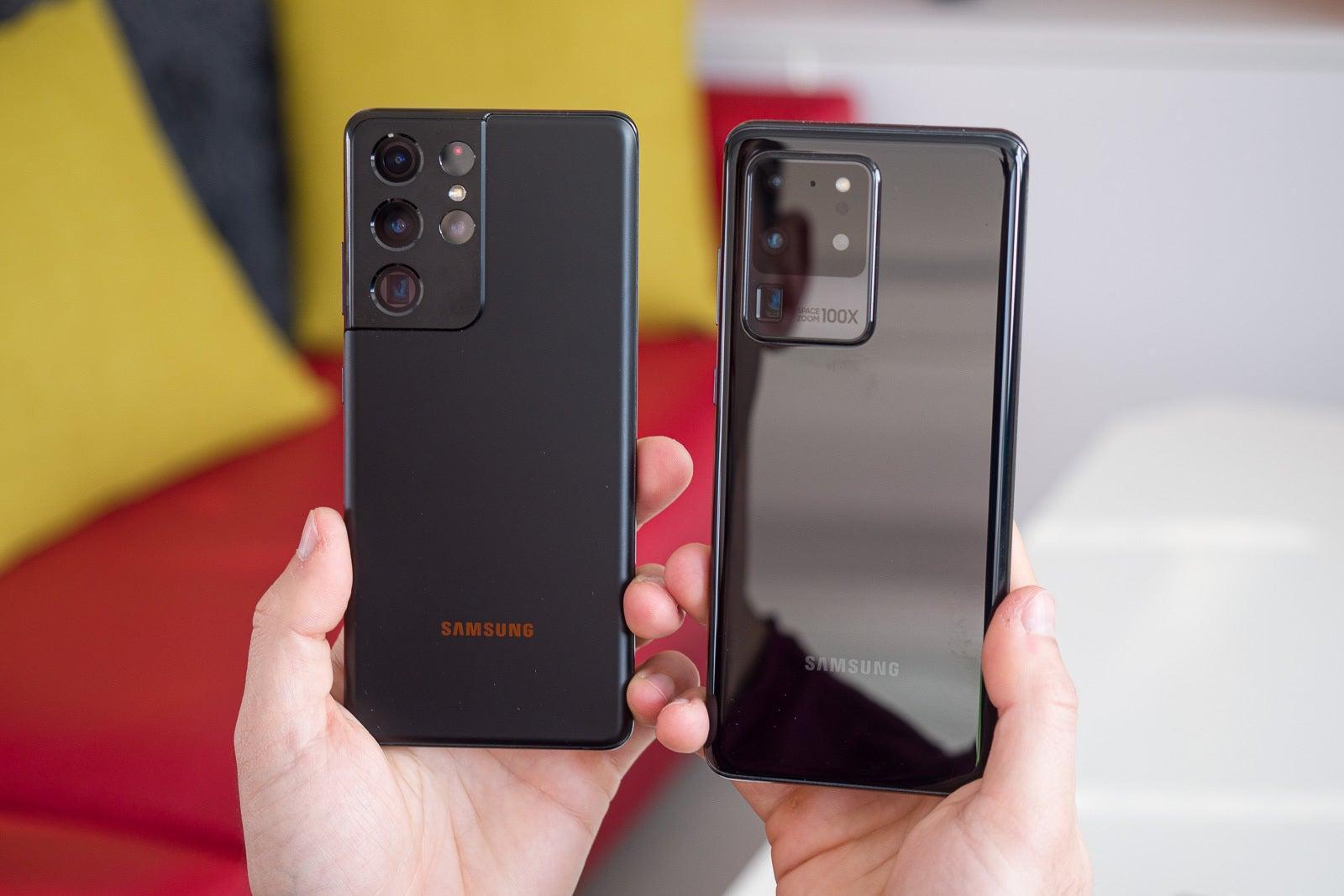
The defining design feature was the Contour Cut camera. It was the first of its kind, where the camera module merged into the device.
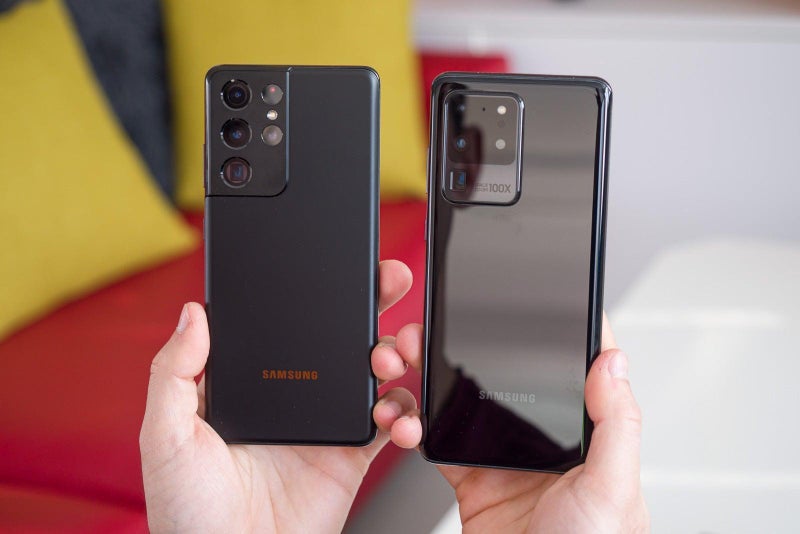
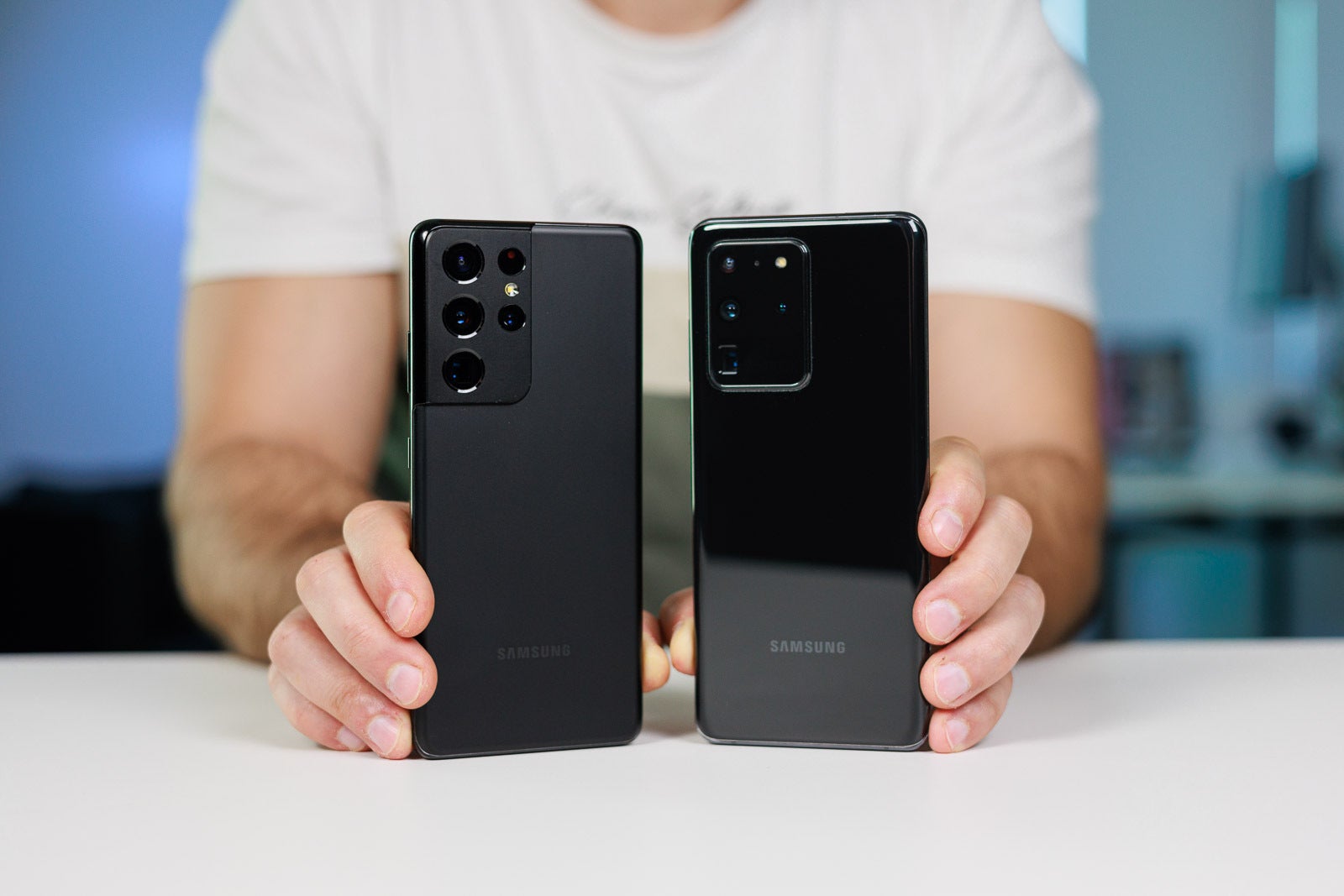
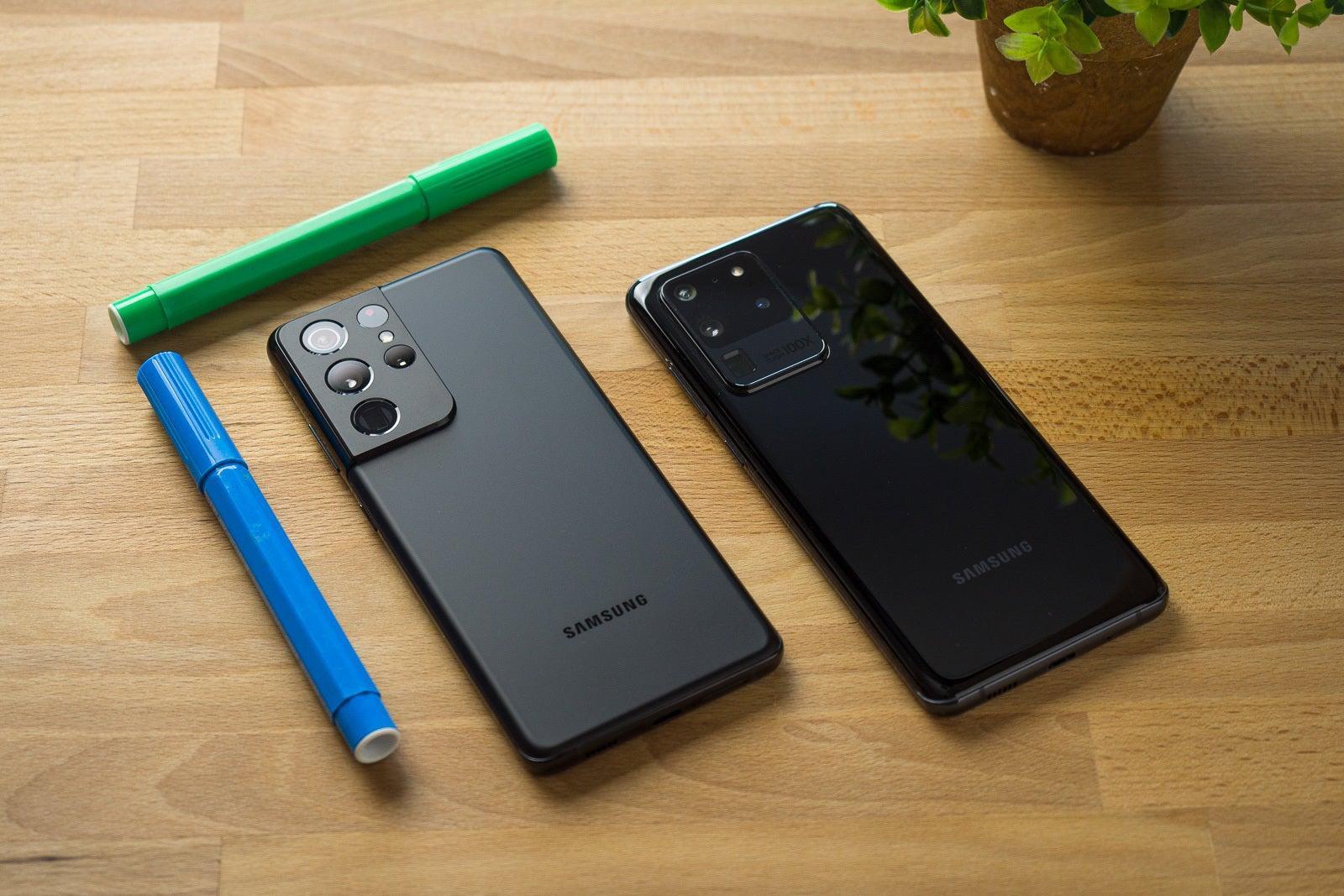
The S21 Ultra also introduced a matte “haze” glass that resisted fingerprint smudges much better compared to the previous glossy Ultra. This textured finish also became a signature trait of modern Galaxy Ultras, differentiating them from the standard S models.
The S21 Ultra switched to a haze finish vs the glossy one on the S20 Ultra | Images by PhoneArena
Here are the key characteristics of the S21 Ultra design:
Sculptural camera housing integrated into the frame
Curved display edges emphasizing its premium nature
Thick profile driven by large camera hardware and battery
Visually aggressive proportions
The device felt unapologetically flagship-grade: heavy, solid, and unmistakably distinct from competitors.
3. Absorbing the “Note” Line (S22–S24 Ultra)
In early 2022, at Mobile World Congress, Samsung mobile chief TM Roh announced that the company is discontinuing its popular Note series. It was the end of an era. Samsung had introduced the last Note phone, the Note 20 series, two years prior and skipped 2021, so it wasn’t a surprise.
Galaxy Note lovers, however, had good news: the S22 Ultra became the spiritual successor, with a built-in S Pen and a heavily Note-inspired design with sharp corners.
This new design language became the defining feature of next Ultras too. The S23 Ultra and later, the S24 Ultra, both had a similar Note-inspired esthetic.
Shape evolution
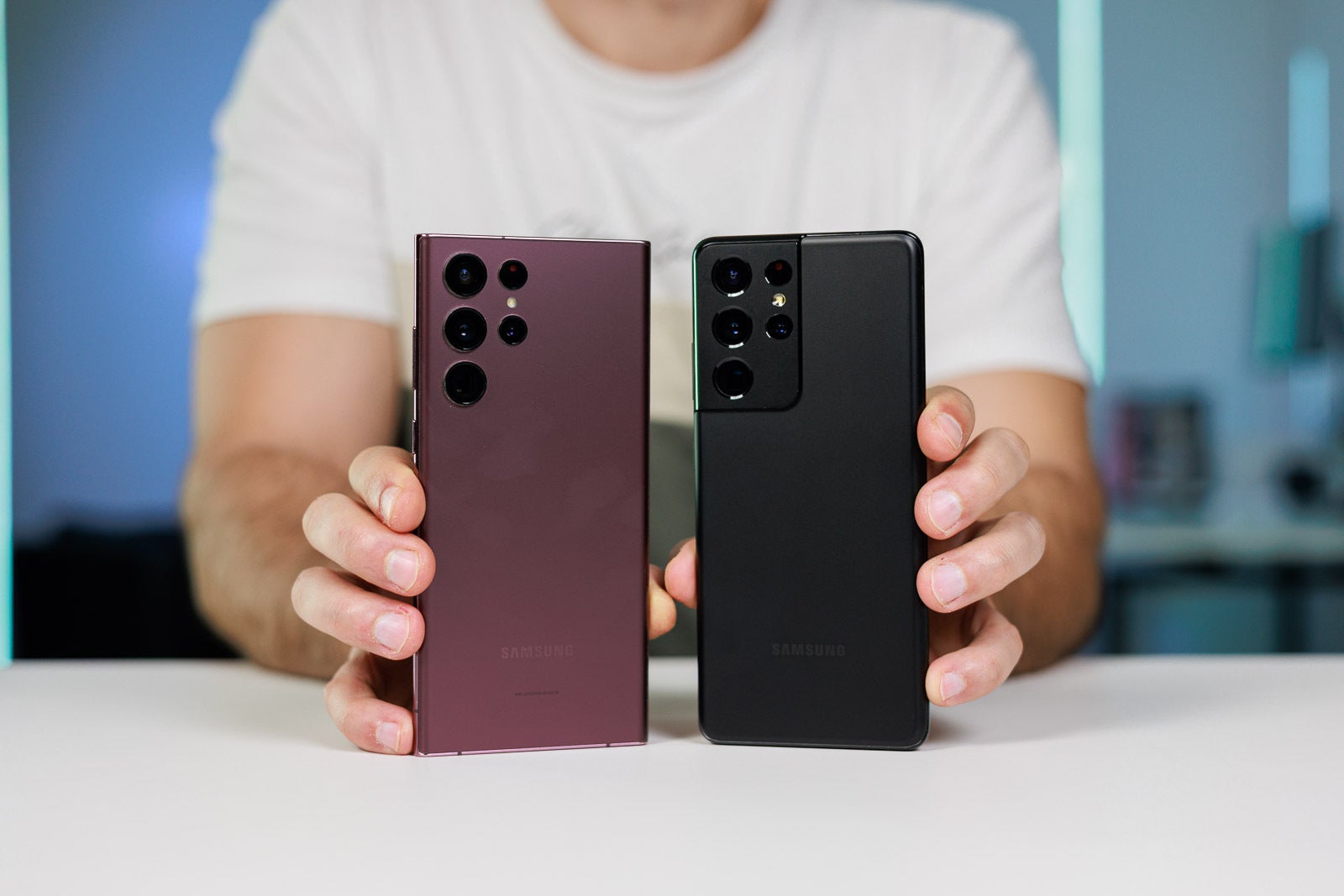
S22 Ultra on the left, S21 Ultra on the right | Image by PhoneArena
The rounded and somewhat bulky S21 Ultra gave way to a more architectural silhouette inspired by the Note series. Corners became sharper and the whole perception of the phone was more professional.
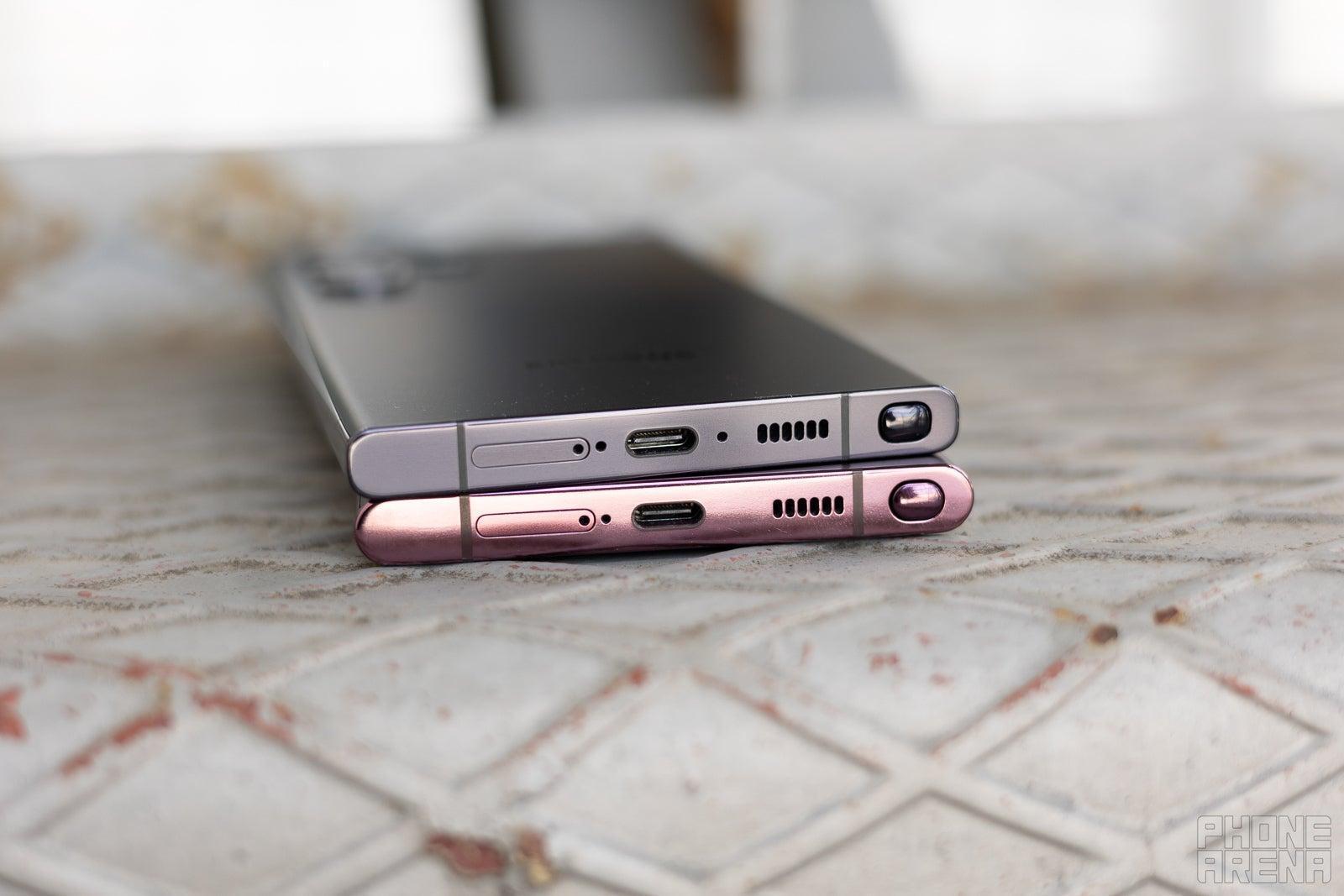
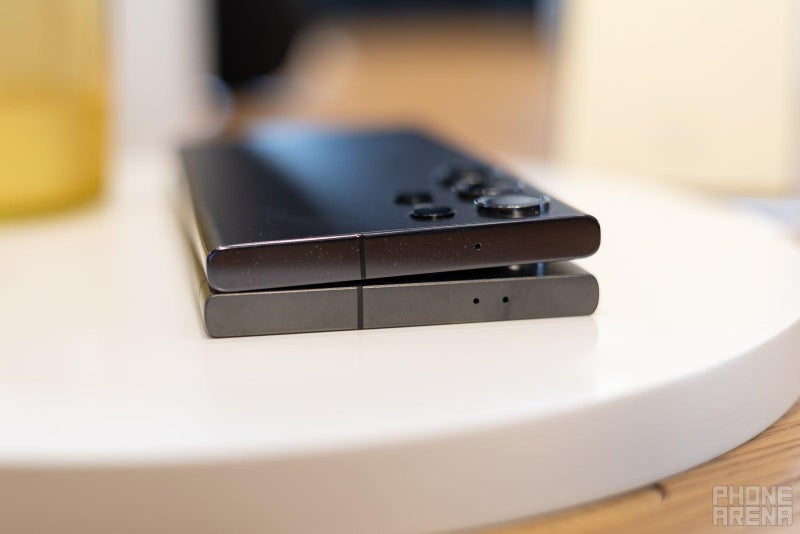
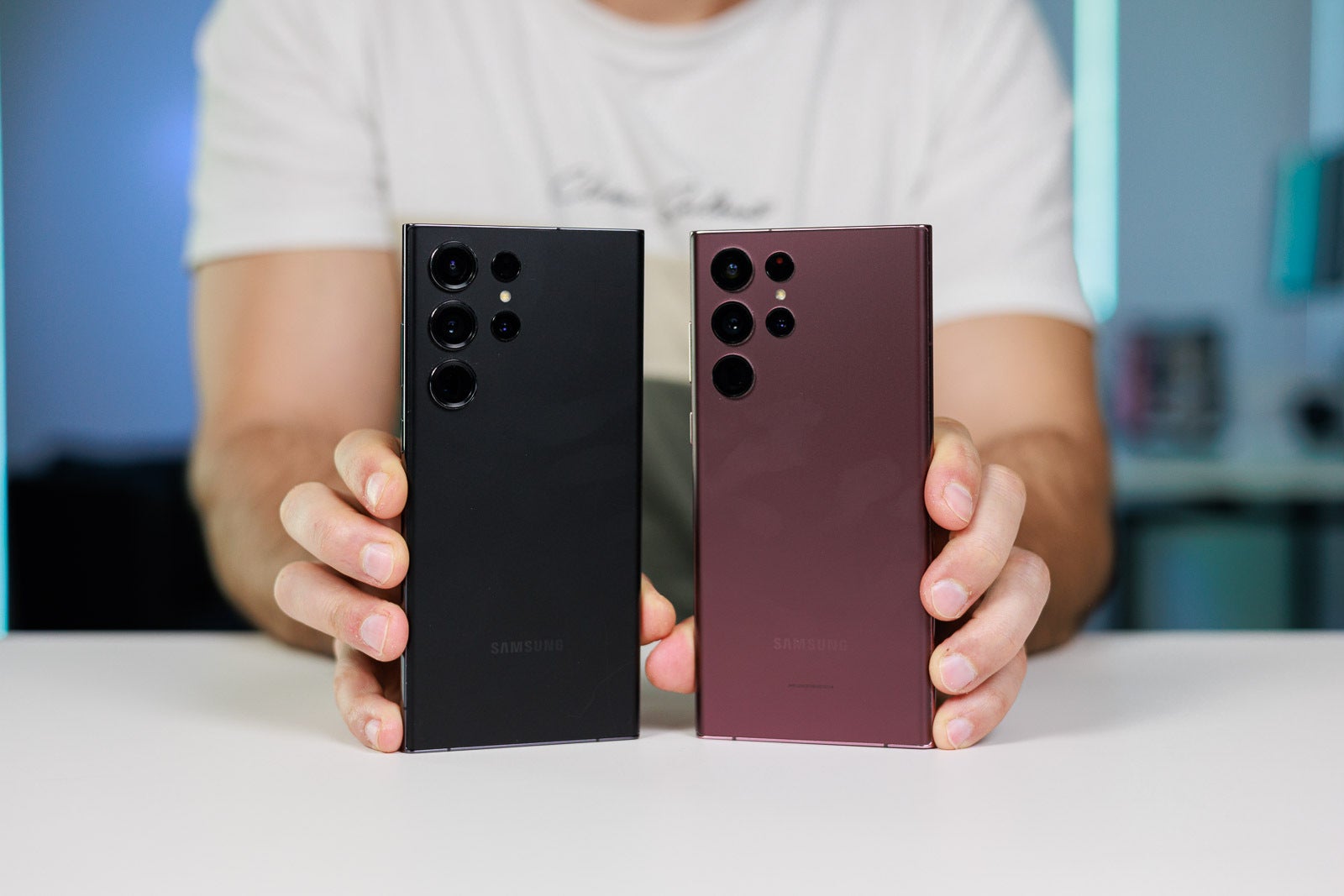
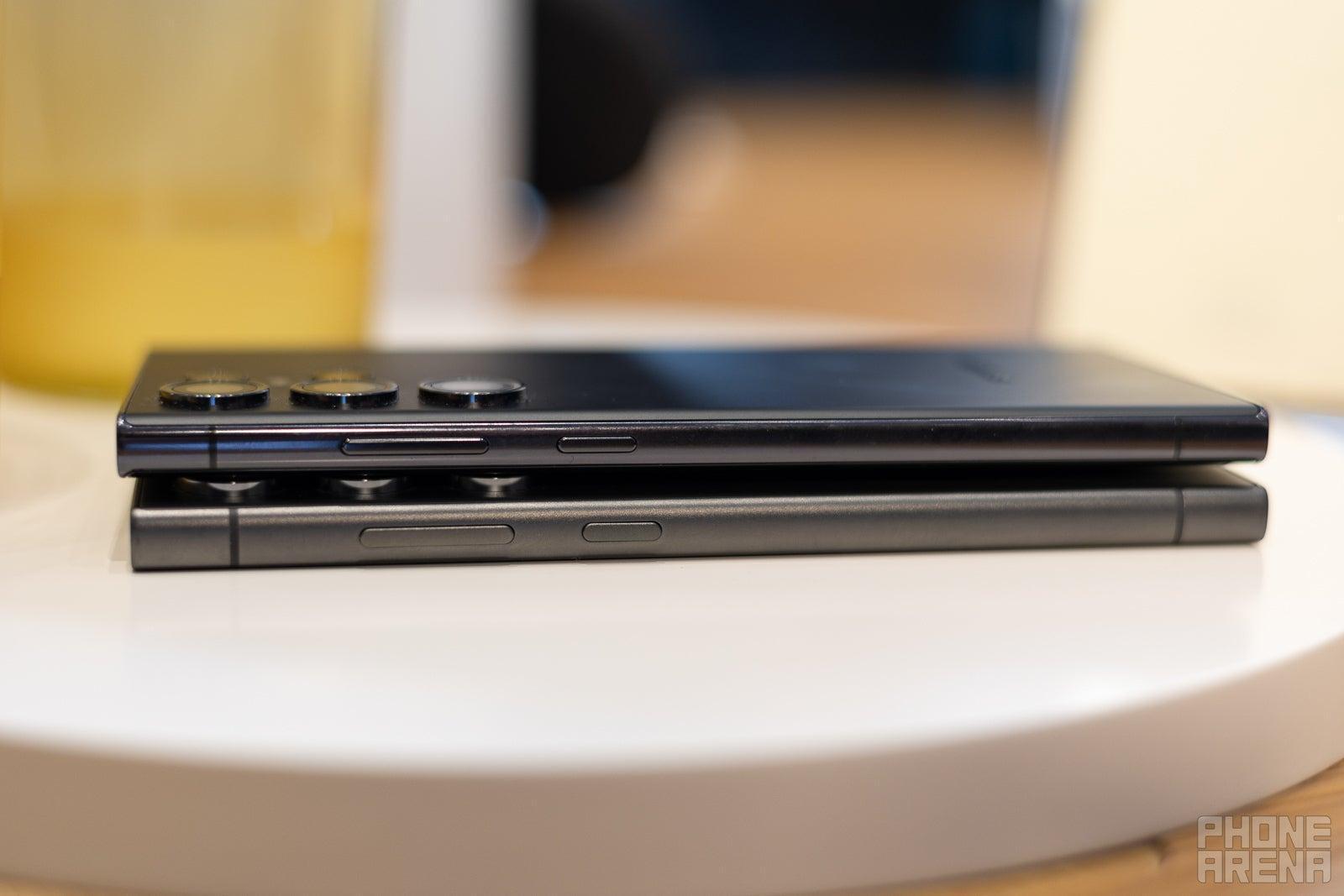
S23 Ultra on top, S22 Ultra on the bottom | Image by PhoneArena
Next year, with the S23 Ultra, Samsung stuck with the same design idea and only slightly tweaked it, going for a less aggressive taper on the sides of the screen.
The S23 Ultra felt more refined, but it was also the heaviest Galaxy flagship to date, measuring 233 grams.
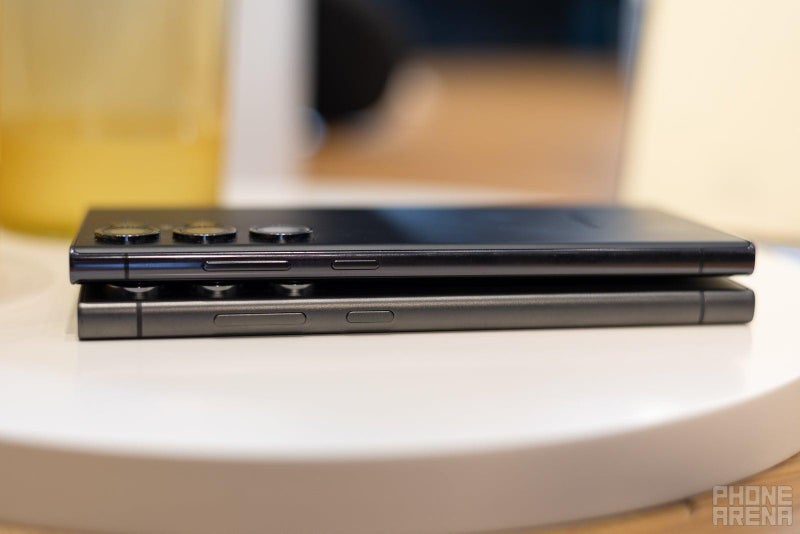
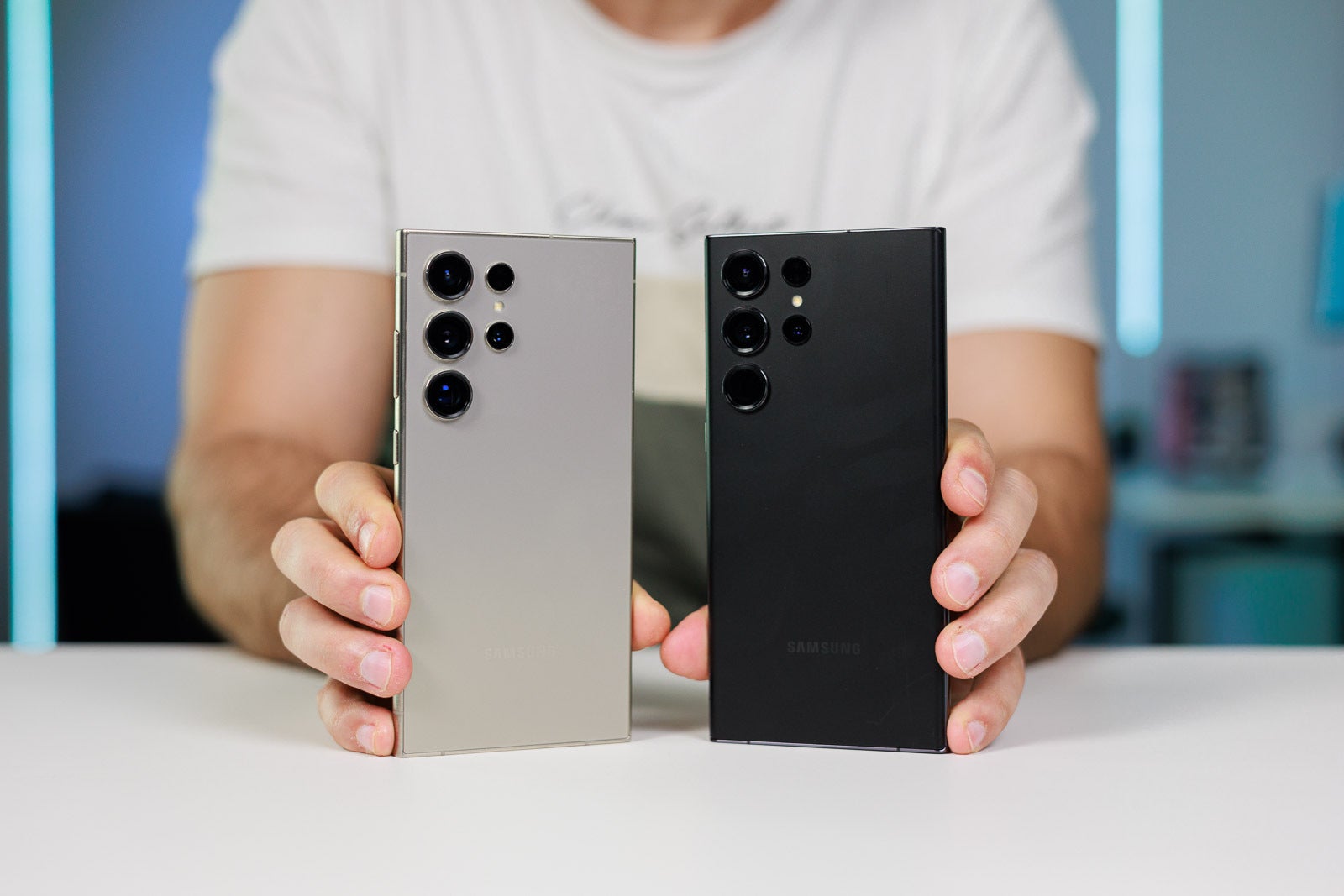
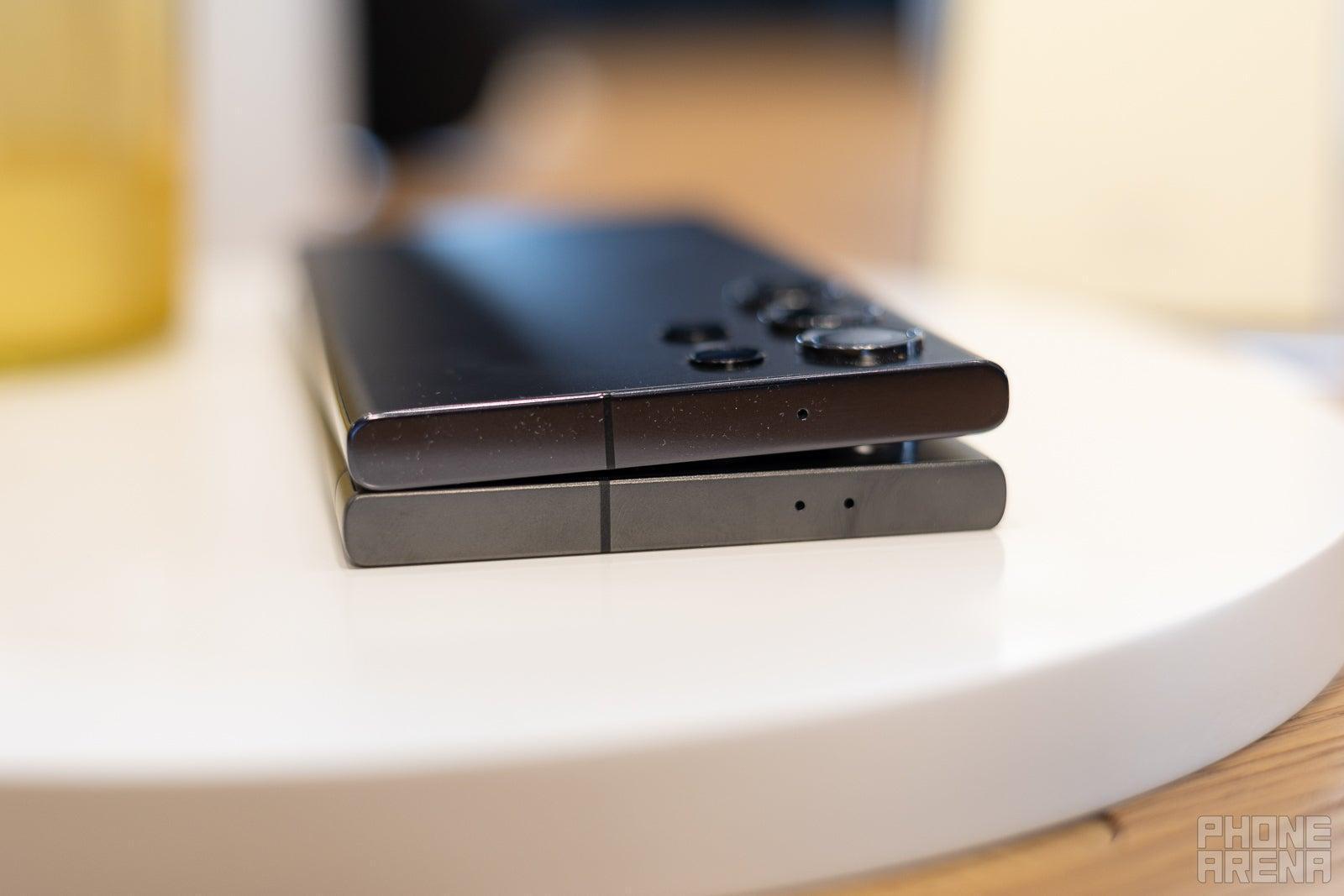
S24 Ultra on the bottom, S23 Ultra on top | Images by PhoneArena
With the S24 Ultra, Samsung made a bigger pivot. With curved sides going out of fashion, Samsung straightened them further, stopping just a bit short of a fully flat design.
But the big change was a fully flat display. The S24 Ultra also introduced something unique to this day — the Gorilla Armor anti-reflective coating. While not exactly a design feature, it was such a brilliant addition that made using the phone outdoors much easier.
But it wasn’t just about anti-reflectivity. Gorilla Armor was also much harder to scratch, and this was the first time you could realistically use your phone without a screen protector.
Samsung also switched to a titanium frame, a change from the Armor Aluminum one in the previous generation. It was clearly a move inspired by Apple, who had just switched its iPhone 15 Pro series to a titanium body as well. Despite the change to titanium, the weight of the S24 Ultra remained almost the same.
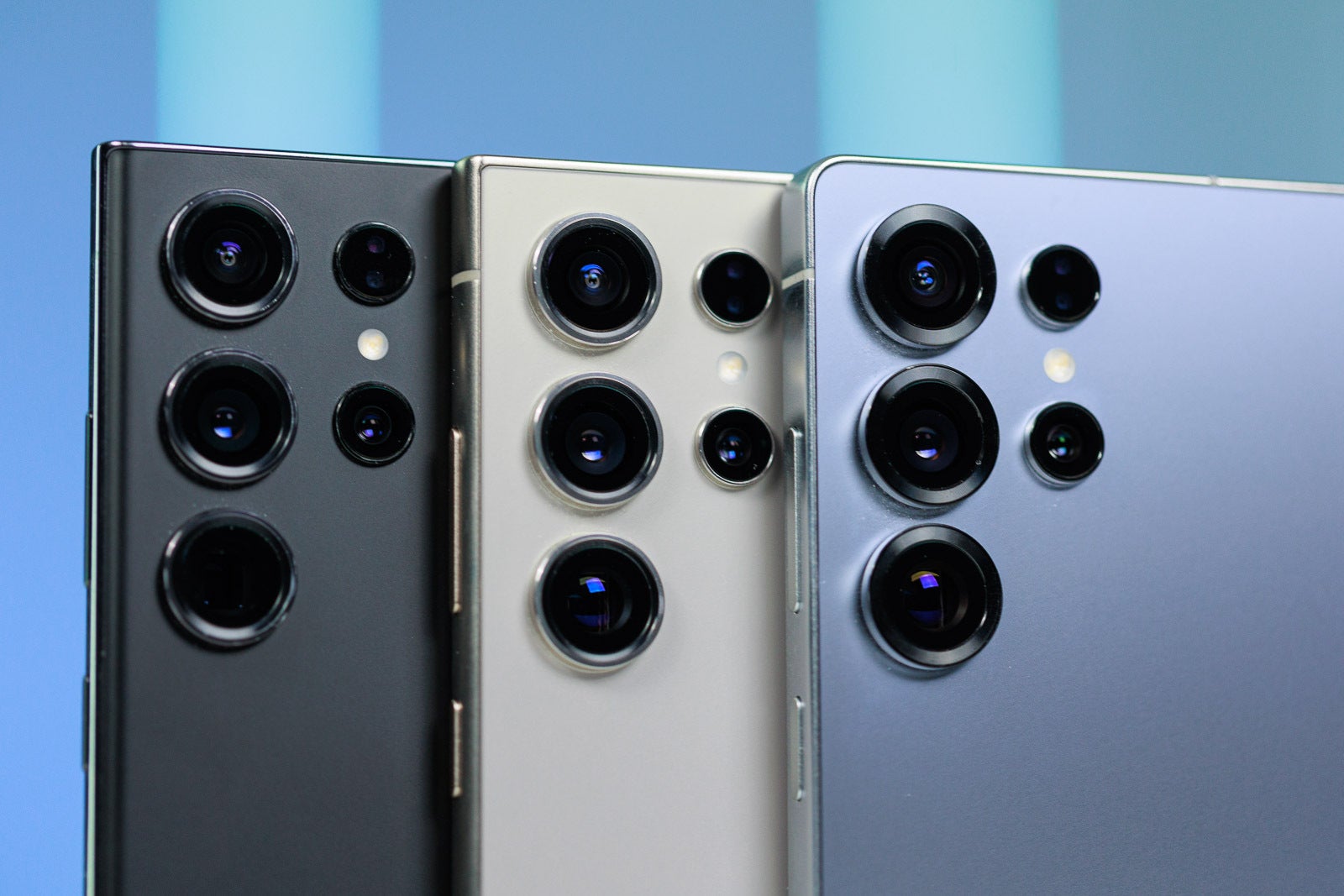
I should also note that apart from the switch to sharp corners, the other big visible change for the S22-S24 Ultra era was the removal of the Contour Cut camera in favor of separated camera lenses, the “floating lens” look.
Each sensor now stood on its own, for a more simplified look and less visual clutter. This design became synonymous with Samsung for these years.
Camera close-up | Image by PhoneArena
While there were many pros to the S24 Ultra look, it was also criticized for being "hand-stabbing" during long use with those sharp corners. And after these three years of the same design, change felt inevitable.
Overall, these three Ultra generations show how Samsung settled from bold experimentation to more deliberate iteration.
4. Design maturity (S25 Ultra)
The S25 Ultra was the first real "course correction" after the similar-looking previous three generations. Samsung realized that while users wanted the S Pen, they didn't necessarily want a brick in their pocket.
It introduced slightly rounded corners and shaved the weight down to 218g, a big drop. It also shaved the thickness from 8.6mm to 8.2mm.
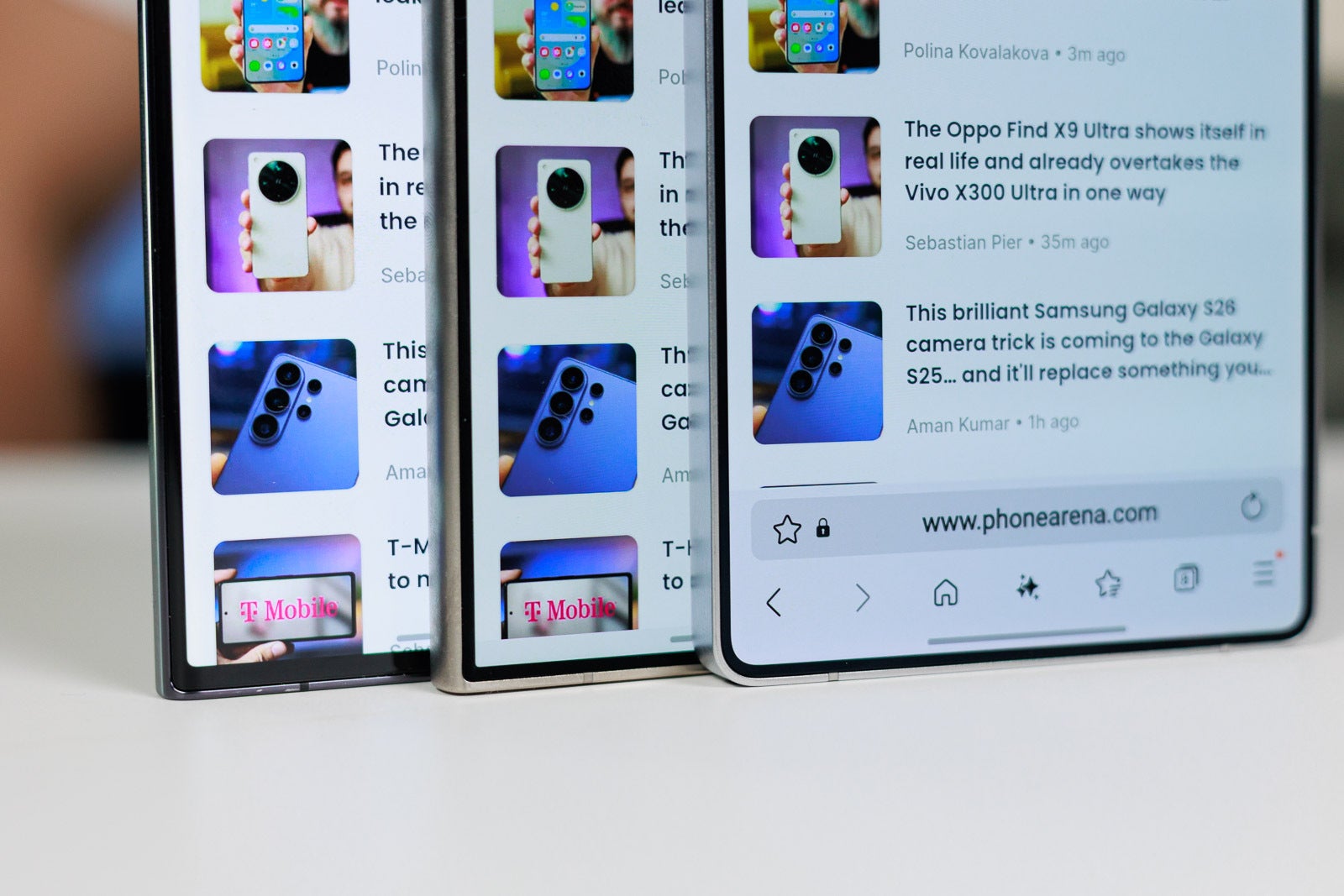
To fix the S24's "chunky" look, Samsung implemented a new bezel reduction structure. This allowed the copper wiring at the bottom of the display to be folded more tightly. Bezel size dropped down significantly. Samsung finally created a truly symmetrical "all-screen" feel on a flat display, reaching a peak screen-to-body ratio of over 92%.
Bezel changes from S23 Ultra (left) to S24 Ultra (middle) to S25 Ultra (right) | Image by PhoneArena
The S25 Ultra also wants you to notice its cameras immediately.
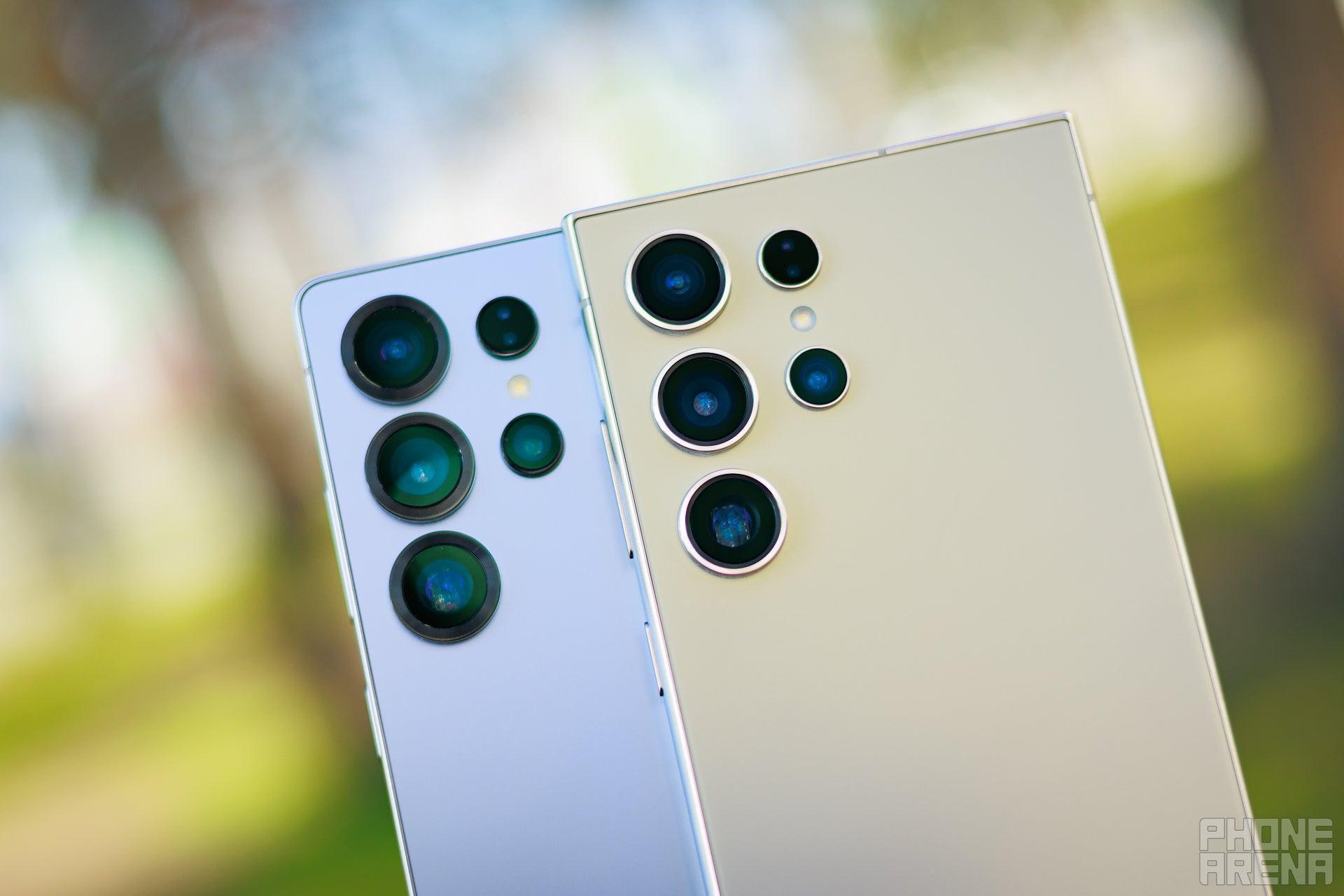
From the relatively flat and thin camera rings on the S24 Ultra, the S25 Ultra jumps to thicker, black concentric rings around every lens, a design borrowed from the Galaxy Z Fold 6.
This is mostly for optics, though, as the actual glass optics haven't changed much in size.
One side effect of the new design is that the lenses protrude more. Since the S25 Ultra is also thinner, the lenses now stick out more and the phone "wobbles" more when you type on it while its lying flat on a desk.
Image by PhoneArena
With all the changes in the S25 Ultra, the result was a device that felt complete.
Samsung had finally “locked in” a new Ultra identity:
Clean rear layout
Balanced proportions between screen size and usability
Mature colors
5. The Ultra-Slim Era (S26 Ultra)
The S26 Ultra continued refining the successful formula of the previous model.
After two generations, Samsung gave up on the titanium frame and switched back to aluminum, again following industry trends. Aluminum is a softer metal, so it may dent easier, but it has better heat dissipation, which is great for gamers.
And while competitors still have bulky devices, the S26 Ultra doubles down on the slim and light feel. It is the first Ultra to go below 8mm in thickness, impressive for a device with S Pen. And the weight also drops further to just 214 grams.
The corners on the S26 Ultra are even more rounded now, but still not quite as rounded as on an iPhone or a Pixel, so some of that Galaxy Note DNA lives on.
Samsung also introduced a new pill-shaped “camera plateau.” This Galaxy Fold-inspired design landed not just on the Ultra, but also on the S26 and S26 Plus.
A small but curious detail is that the S26 Ultra's bezels now house tiny light-directing layers. With only microscopically bigger bezels, the screen-to-body ratio dipped slightly to 90.7%. The extra fraction of a millimeter was required to stabilize the edges of the new Privacy Display panel, which prevents "shoulder surfing."
6. Side-by-side evolution
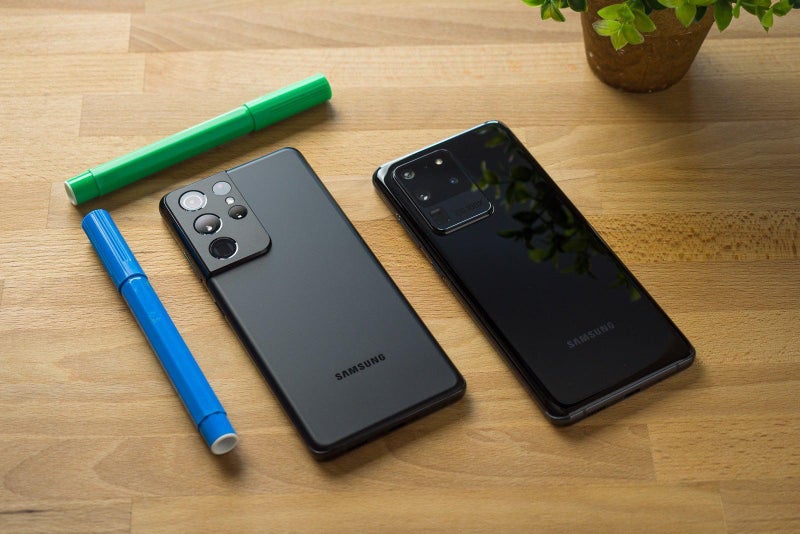
S21 Ultra (left) vs S20 Ultra (right) | Image by Imge by PhoneArena
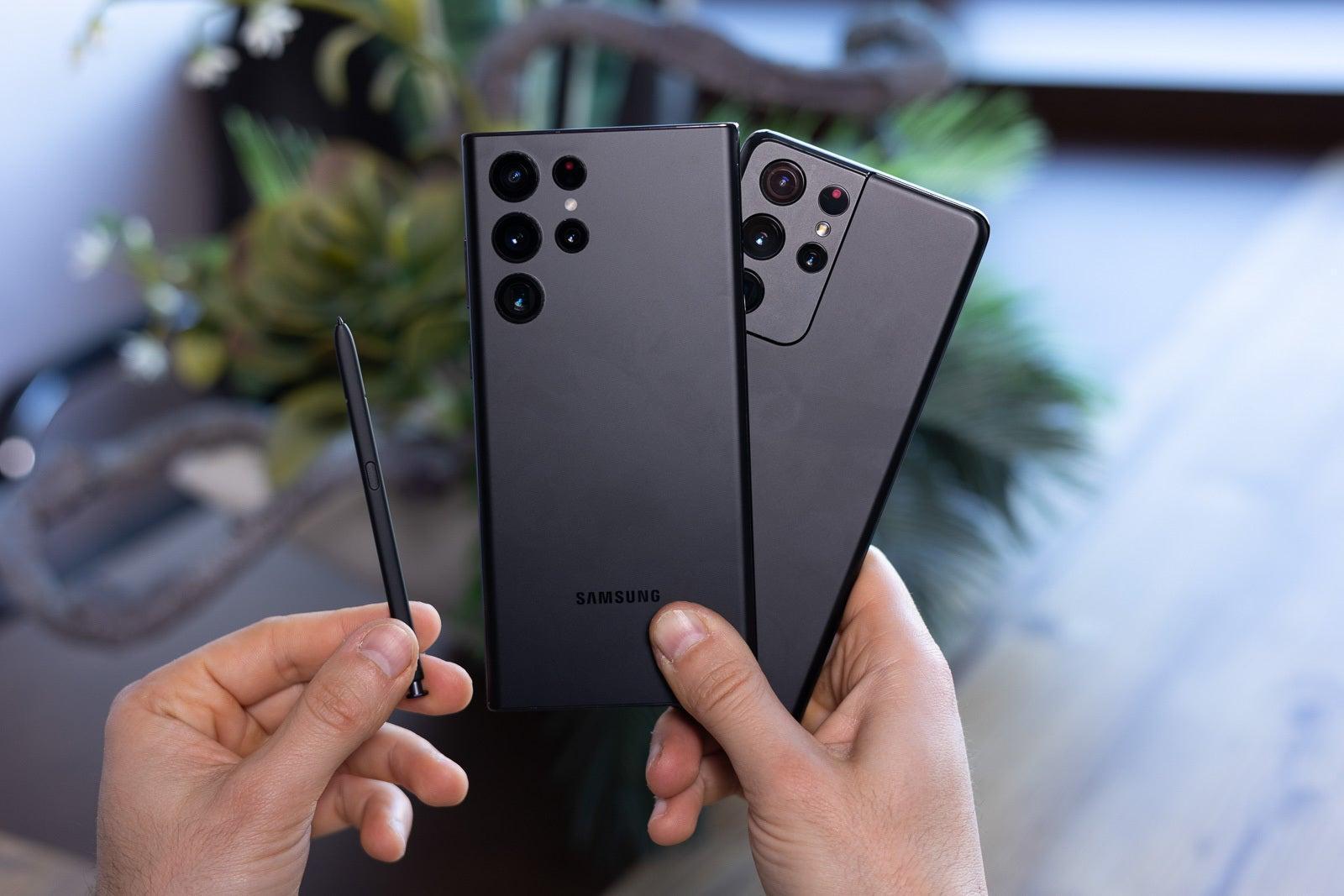
S22 Ultra (left) vs S21 Ultra (right) | Image by Imge by PhoneArena
S23 Ultra (left) vs S22 Ultra (right) | Image by Imge by PhoneArena
S24 Ultra (left) vs S23 Ultra (right) | Image by Imge by PhoneArena
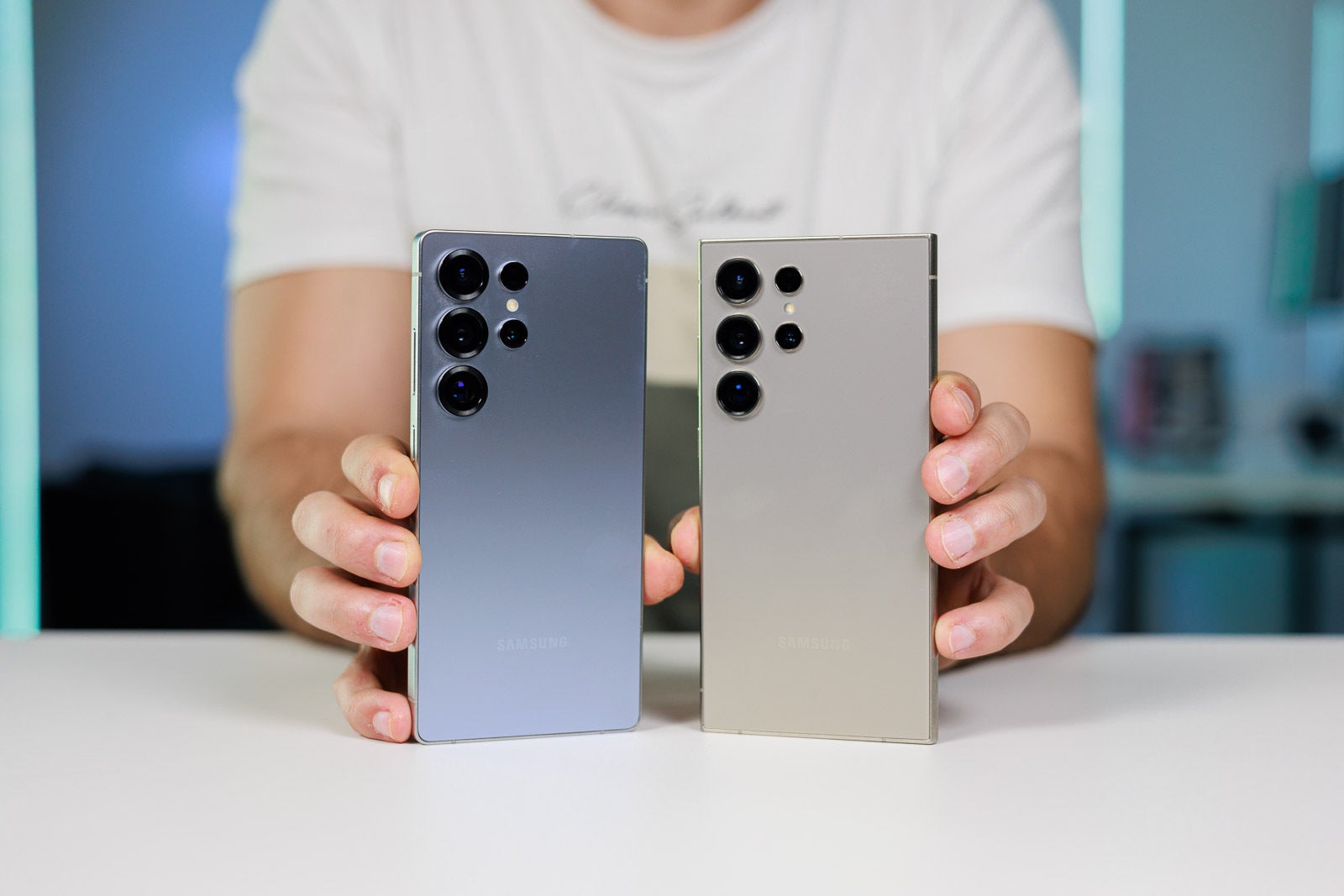
S25 Ultra (left) vs S24 Ultra (right) | Image by Imge by PhoneArena
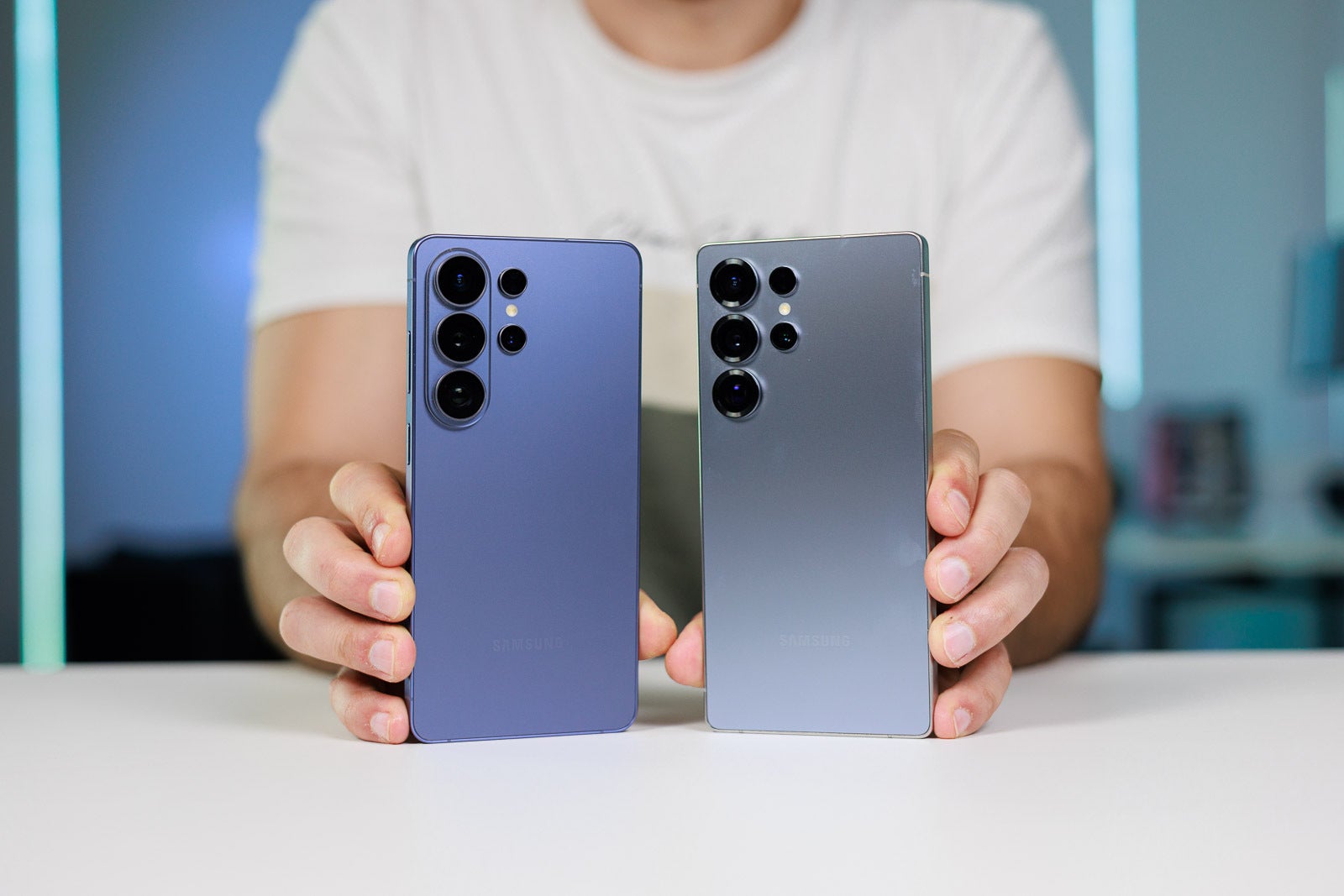
S26 Ultra (left) vs S25 Ultra (right) | Image by Imge by PhoneArena
7. Conclusion — what actually changed
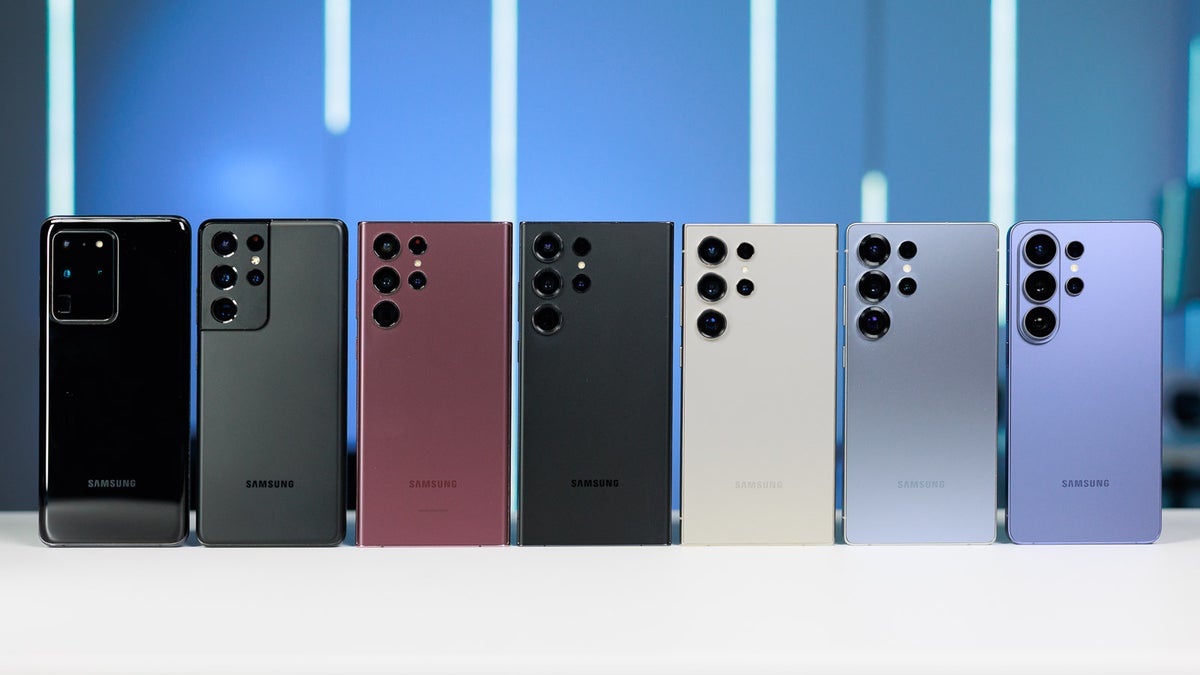
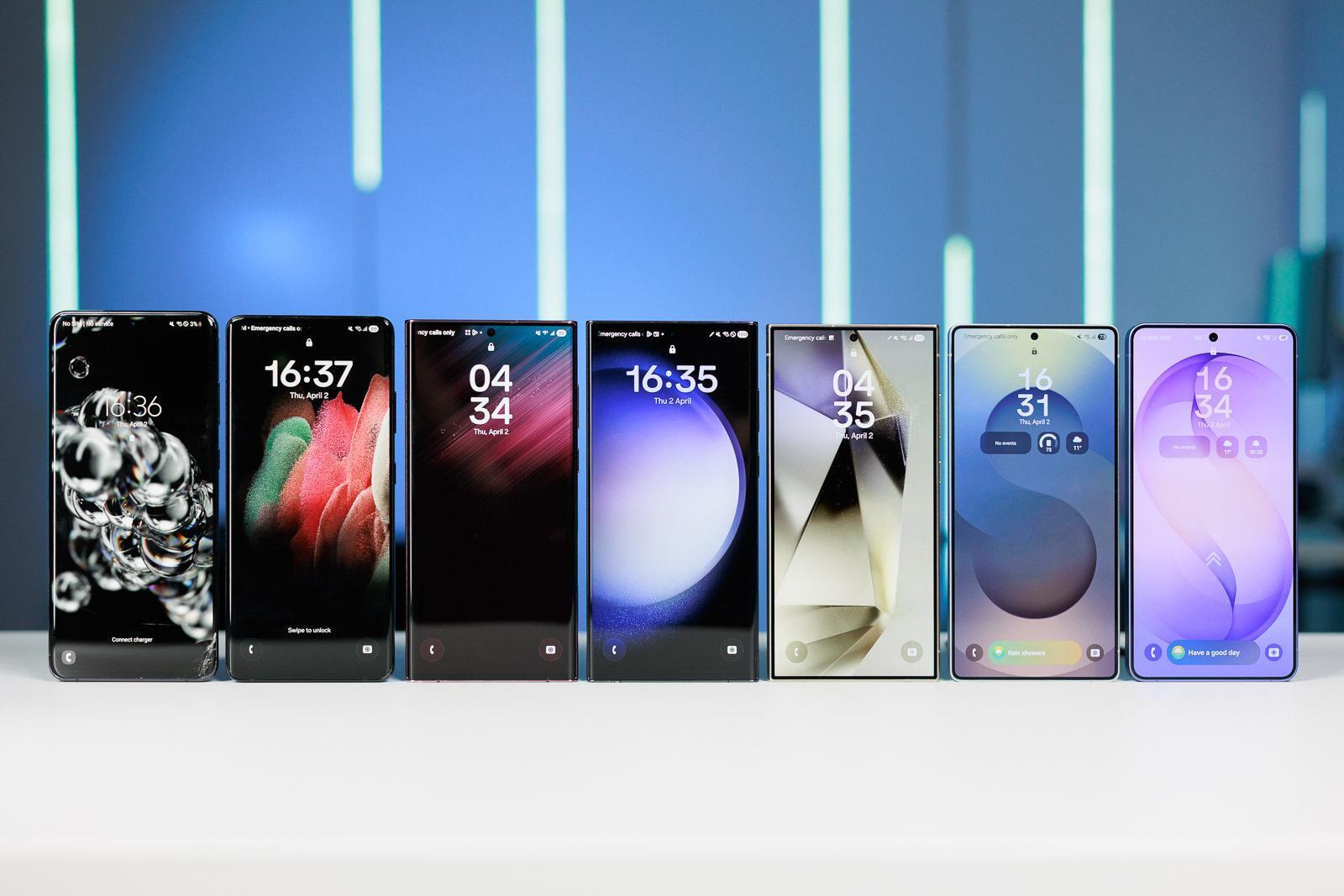
Seven generations of Galaxy Ultra phones | Image by PhoneArena
Seven years is a long time in the smartphone age.
The first model, the Galaxy S20 Ultra arrived like a sledgehammer. It was oversized, overambitious, with some occasional flaws, but it needed to make a statement, and it did.
From there it was a long process of figuring out what Ultra actually means. Samsung started with curved displays and went to a flat screen. It transformed from heavier phones with sharp corners to lighter and thinner devices with rounded corners.
The latest S26 Ultra isn't trying to shock anyone anymore, but it has acquired a sort of quiet confidence. Samsung has made a phone that is not only powerful but also exceptionally airy and stylish, while others chase hardware specs. And I, for once, appreciate that.
Victor, a seasoned mobile technology expert, has spent over a decade at PhoneArena, exploring the depths of mobile photography and reviewing hundreds of smartphones across Android and iOS ecosystems. His passion for technology, coupled with his extensive knowledge of smartphone cameras and battery life, has positioned him as a leading voice in the mobile tech industry.
A discussion is a place, where people can voice their opinion, no matter if it
is positive, neutral or negative. However, when posting, one must stay true to the topic, and not just share some
random thoughts, which are not directly related to the matter.
Things that are NOT allowed:
Off-topic talk - you must stick to the subject of discussion
Offensive, hate speech - if you want to say something, say it politely
Spam/Advertisements - these posts are deleted
Multiple accounts - one person can have only one account
Impersonations and offensive nicknames - these accounts get banned
To help keep our community safe and free from spam, we apply temporary limits to newly created accounts:
New accounts created within the last 24 hours may experience restrictions on how frequently they can
post or comment.
These limits are in place as a precaution and will automatically lift.
Moderation is done by humans. We try to be as objective as possible and moderate with zero bias. If you think a
post should be moderated - please, report it.
Have a question about the rules or why you have been moderated/limited/banned? Please,
contact us.





Things that are NOT allowed:
To help keep our community safe and free from spam, we apply temporary limits to newly created accounts: