After two timid years, 2024 and 2025, when the smartphone market rebounded from the horrible 2020–2023 period, it looks like 2026 will be another bad year for the industry.
It's not just smartphone growth that's expected to go south this year; because of the imminent price hikes – and you know why these are happening – users might buy fewer computers and fewer gaming consoles.
The new reality
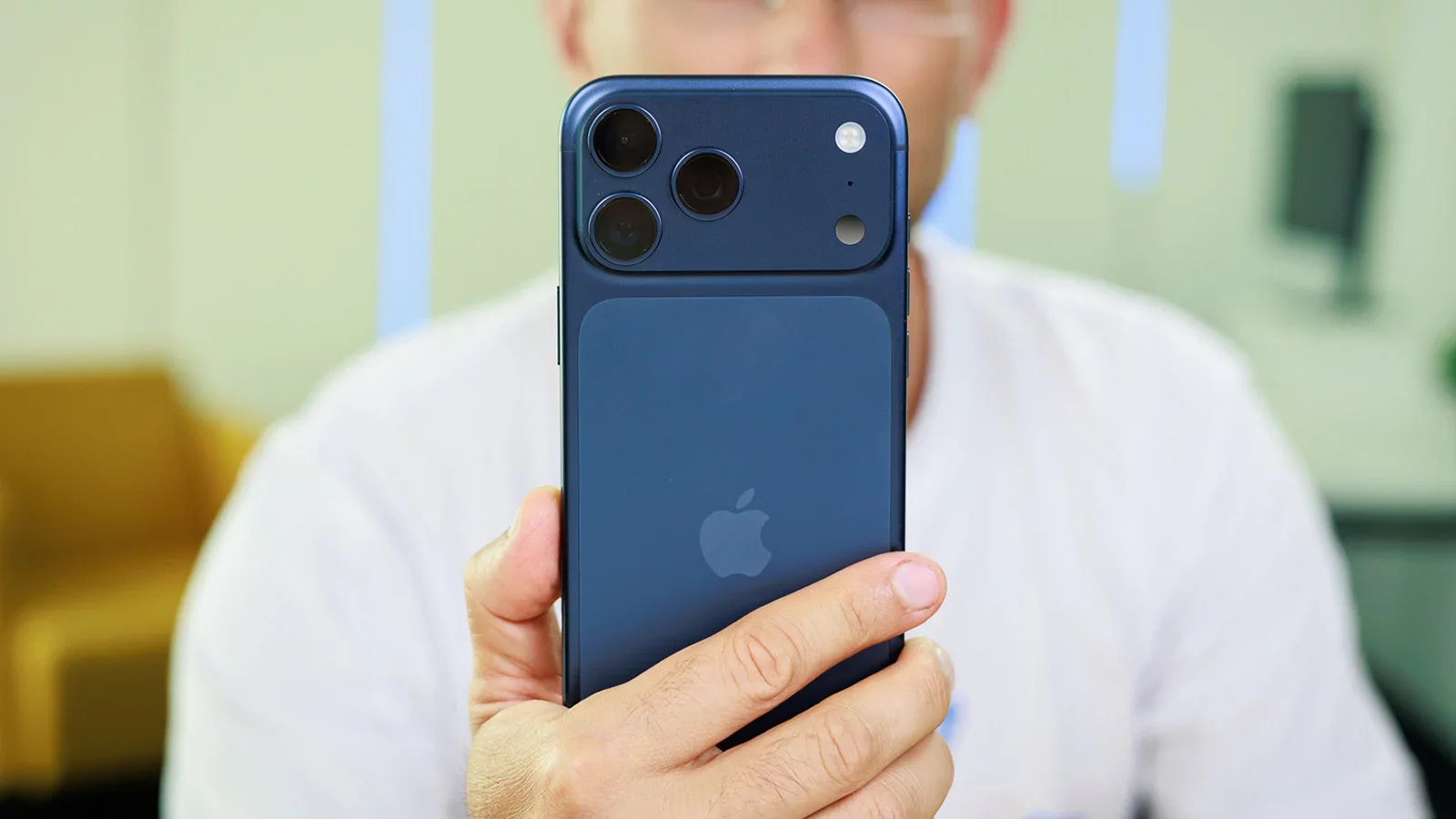
The iPhone 17 Pro jumped a solid $100 to $1,099 from the previous $999, will the iPhone 18 Pro get another price hike? | Image by PhoneArena
As Reuters reports, electronics giants are about to introduce price hikes on their products (some have already done that) to compensate for the skyrocketing memory chip prices.
Behind the unnatural RAM demand are companies like Google, Microsoft and OpenAI, which are buying so much memory chips for their data centers and overall AI infrastructure that everyday consumer gadgets are literally left behind.
Memory chip makers like Samsung, SK Hynix and Micron are surely happy about it all (and I'm sure bonuses will be pretty solid this time around), but it's you and me who'll absorb the price hike.
2026 could be more like 2023
As the report states, research companies like Counterpoint and IDC now project that global smartphone shipments will fall by at least 2% this year, reversing the growth expectations they outlined just months earlier.
Recommended For You
If this happens, this would represent the first year-over-year decline in smartphone shipments since 2023.
As you may remember, global smartphone shipments fell sharply in 2022 to about 1.20 billion units as post-pandemic demand weakened and supply chain pressures took hold. The market remained under strain in 2023, with shipments slipping further to roughly 1.17 billion units, marking a period of stabilization but little real recovery.
In 2024, shipments rebounded to around 1.22–1.24 billion units. Growth continued into 2025, though at a slower pace, with shipments estimated at roughly 1.25–1.26 billion units.
2026 might be a weak year for the PC market (with a projected 4.9% drop) and the gaming console market (4.4% drop) as well.
Which gadget should NOT get a price hike in 2026?
47 Votes
Phones, as they're too expensive as it is.
78.72%
Gaming consoles.
4.26%
PC and laptops.
17.02%
Who'll get hit?
Several major tech companies, including Apple and Dell, are facing a difficult decision amid rising memory chip costs: absorb the extra expenses and reduce profit margins or pass them to consumers. That, as you can correctly guess, means a potential weaker demand (duh!).
analysts expect some costs to be absorbed, but much of the burden will likely show up as higher prices for devices. That's my personal prediction, too.
Memory prices are projected to climb 40% to 50% in early 2026, following a 50% jump last year, with some products experiencing 1,000% price increases in the past two quarters, according to Tobey Gonnerman of Fusion Worldwide.
The impact will likely hit low- and mid-range device manufacturers hardest, including Xiaomi, TCL Technology, and Lenovo. TrendForce reported that Dell and Lenovo planned price hikes of up to 20% early in 2026.
HP and Raspberry Pi have announced price increases in response to surging memory costs, while retailers like Best Buy warn that higher prices could suppress sales.
Analysts say Apple is in a stronger position to handle rising costs because of its size, pricing power, and long-term supplier contracts, but it might still need to raise prices. In the past, Apple has absorbed extra costs like tariffs for its iPhones instead of passing them on to customers. However, even with these advantages, Apple is not completely protected from higher memory chip prices.
Six-month unlimited plan is now 57% off
$90
$210
$120 off (57%)
Mint Mobile is now allowing you to get whichever plan you like for either three, six, or 12 months for just $15/mo. If you go for the six-month unlimited service, for instance, you'll now have to pay just $90 upfront instead of $210.
Sebastian is one of PhoneArena’s senior opinionators. A veteran news writer with almost 20 years of experience in media and technology, he not only covers all the hot news about Galaxies and iPhones, but often provides hot takes on industry trends. He’s fascinated with camera-focused flagships from the likes of Oppo and Vivo, as well as foldable phones.
A discussion is a place, where people can voice their opinion, no matter if it
is positive, neutral or negative. However, when posting, one must stay true to the topic, and not just share some
random thoughts, which are not directly related to the matter.
Things that are NOT allowed:
Off-topic talk - you must stick to the subject of discussion
Offensive, hate speech - if you want to say something, say it politely
Spam/Advertisements - these posts are deleted
Multiple accounts - one person can have only one account
Impersonations and offensive nicknames - these accounts get banned
To help keep our community safe and free from spam, we apply temporary limits to newly created accounts:
New accounts created within the last 24 hours may experience restrictions on how frequently they can
post or comment.
These limits are in place as a precaution and will automatically lift.
Moderation is done by humans. We try to be as objective as possible and moderate with zero bias. If you think a
post should be moderated - please, report it.
Have a question about the rules or why you have been moderated/limited/banned? Please,
contact us.














Things that are NOT allowed:
To help keep our community safe and free from spam, we apply temporary limits to newly created accounts: