Motorola Razr Plus 2026 Review
Motorola tries to balance the mid-tier model between a super expensive Ultra and a good-enough base model.

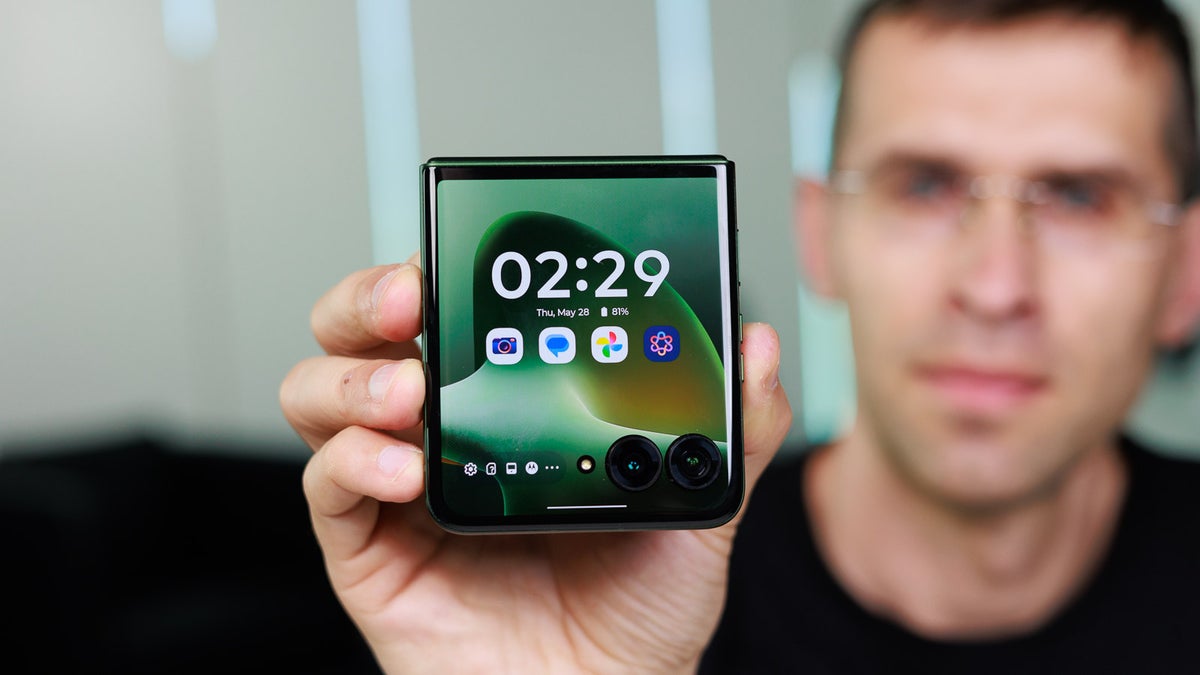
The Motorola Razr Plus (2026) strikes the best balance of price and features | Image by PhoneArena
Using the Motorola Razr Plus 2026 feels incredibly familiar. The phone hasn't changed much in the past two years, with Motorola only tweaking the color scheme.
More so, the new Razr Plus also uses the same processor as the last two models, which would absolutely doom it if it were a regular phone.
But it's not — it's a flip phone, and there are not many competitors around. Priced at $1,100 in 2026, it is also $100 more expensive than its predecessor, so it now competes directly with the Samsung Galaxy Z Flip series, which also has the same price.
Is Motorola giving us more and better features for that price? While a lot remains the same, some features have improved. One big change is the 4,500mAh battery, 12% larger than before. Motorola also replaces the 2X telephoto camera from the last year model with an ultra-wide one, which seems just a bit more versatile.
So where can you buy it? In the United States, the Razr Plus 2026 is available at AT&T and Verizon, while T-Mobile has announced they will have this model "in the coming months."
Unlike the cheaper base model Razr, the Razr Plus 2026 is not available on smaller US carriers. Brands like Google Fi, Visible, Cricket, Metro by T-Mobile and Boost Mobile only bet on having the cheaper, $800 Razr 2026 in their lineup.
You can also buy the Razr Plus on Amazon, Best Buy and Motorola.com, and the latter offers a $300 discount with a trade-in plus a pair of free Swarovski Moto Buds Loop headphones.
Table of Contents:
Also read:
- Motorola Razr 2026 review
- Motorola Razr Fold review
Motorola Razr Plus 2026 Design and Display
Only one color option in the US
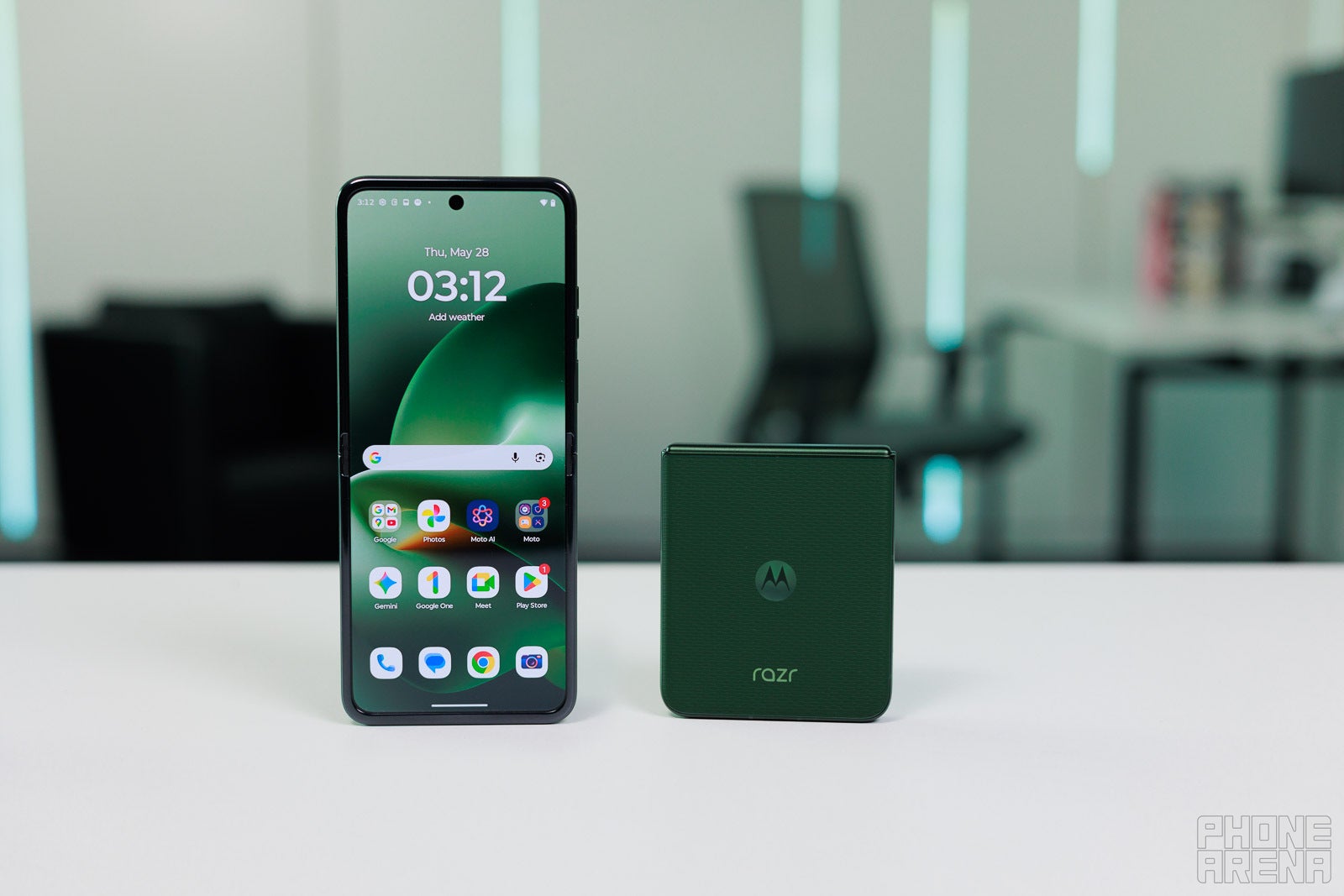
Image by PhoneArena
The Razr Plus only comes in one color — green (the official name is Pantone Mountain View), with a vegan leather back cover that feels very nice and soft to the touch. I love having something different than a glass and metal sandwich of a phone.
It's also about the little details: the aluminum frame is color-matched, which helps achieve a more cohesive look.
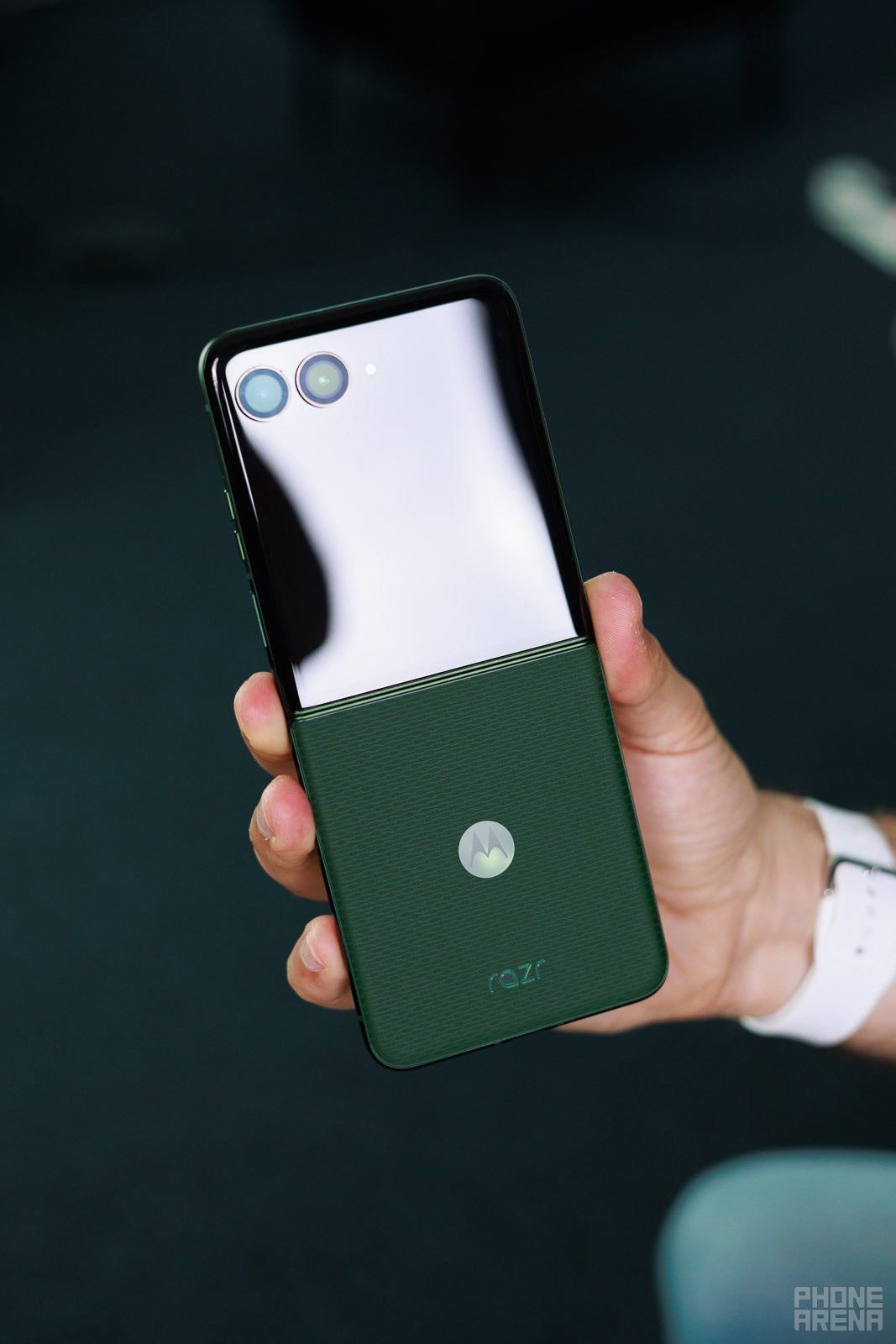
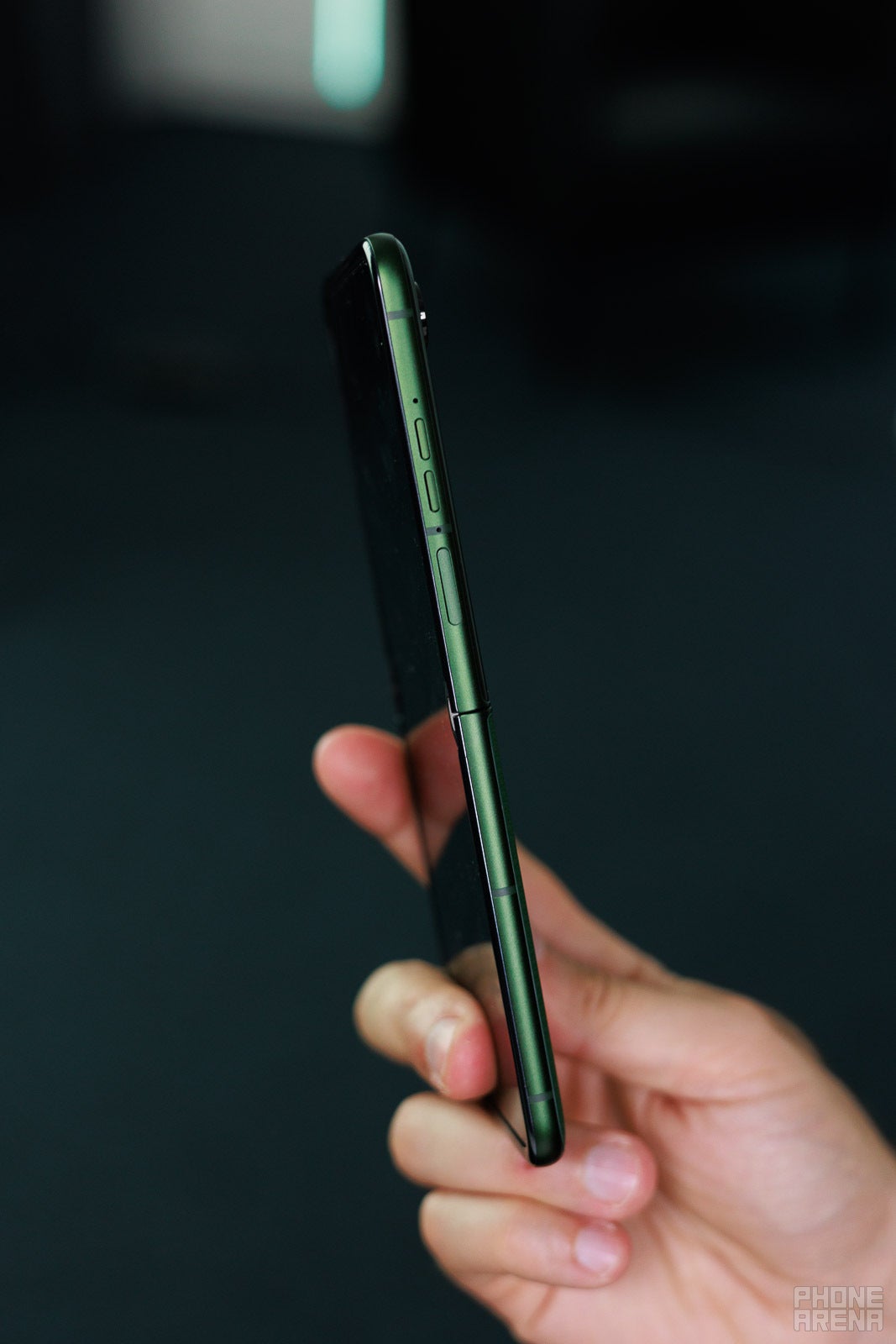
At 7.1mm thickness when unfolded, the Razr Plus isn't quite razor-thin, but it doesn't feel excessive in the hand either. It's noticeably taller than non-folding phones, though.
When folded, it gets chubbier at 15.3mm. That's nearly 10% thicker than the Galaxy Z Flip 7 (but you do get a bigger battery on the Motorola).
Aside from that, the phone is not too heavy at 189 grams, and that's on par with its Galaxy rival.
It also has IP48 water and dust protection (only protected against larger dust particles, sized at over 1mm). That's become a standard on flip phones and it gives you some peace of mind when using these otherwise more fragile phones.
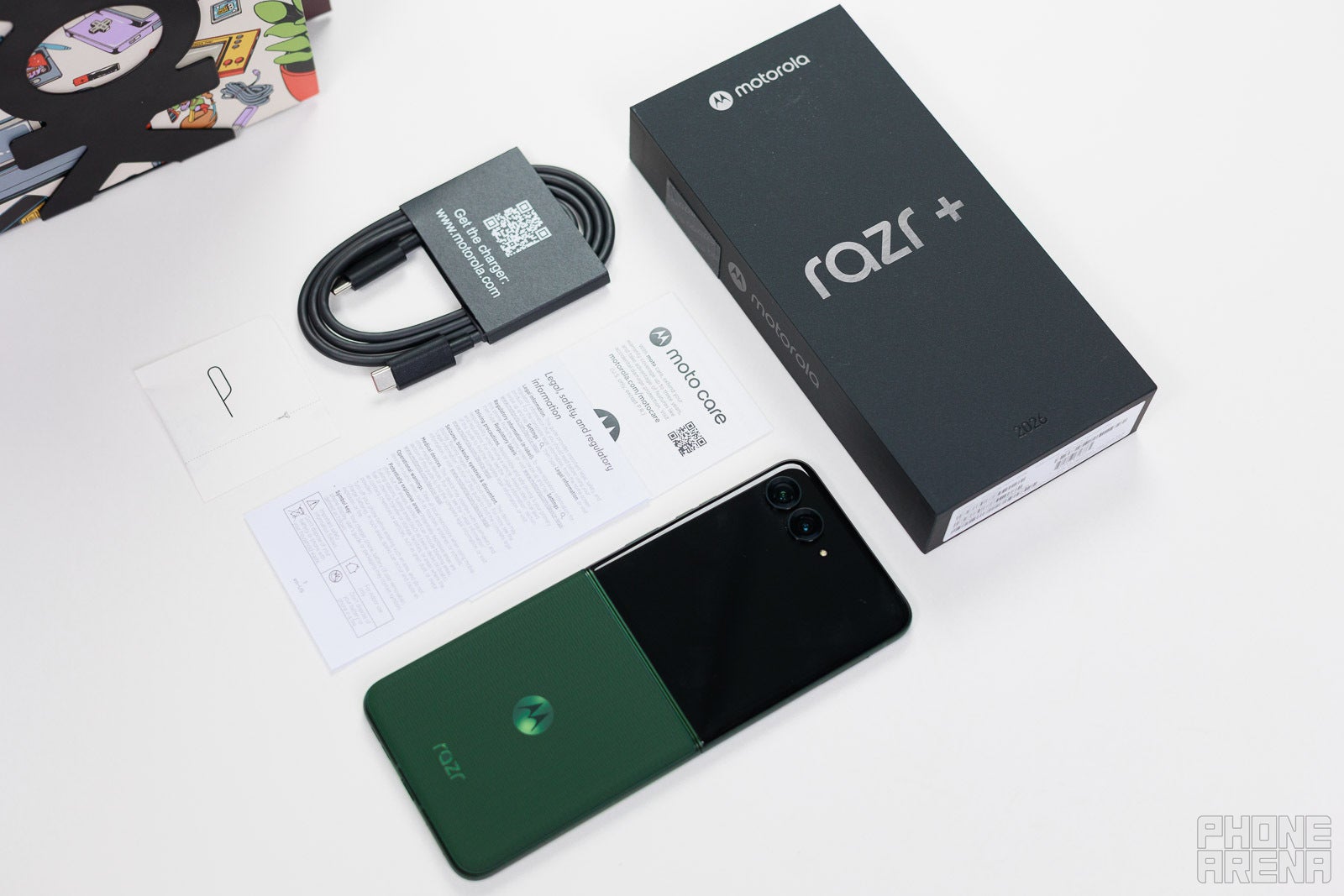
Image by PhoneArena
Inside the box, you will find:
- the Motorola Razr Plus 2026 itself
- USB Type-C cable
- SIM ejector tool
- User manuals
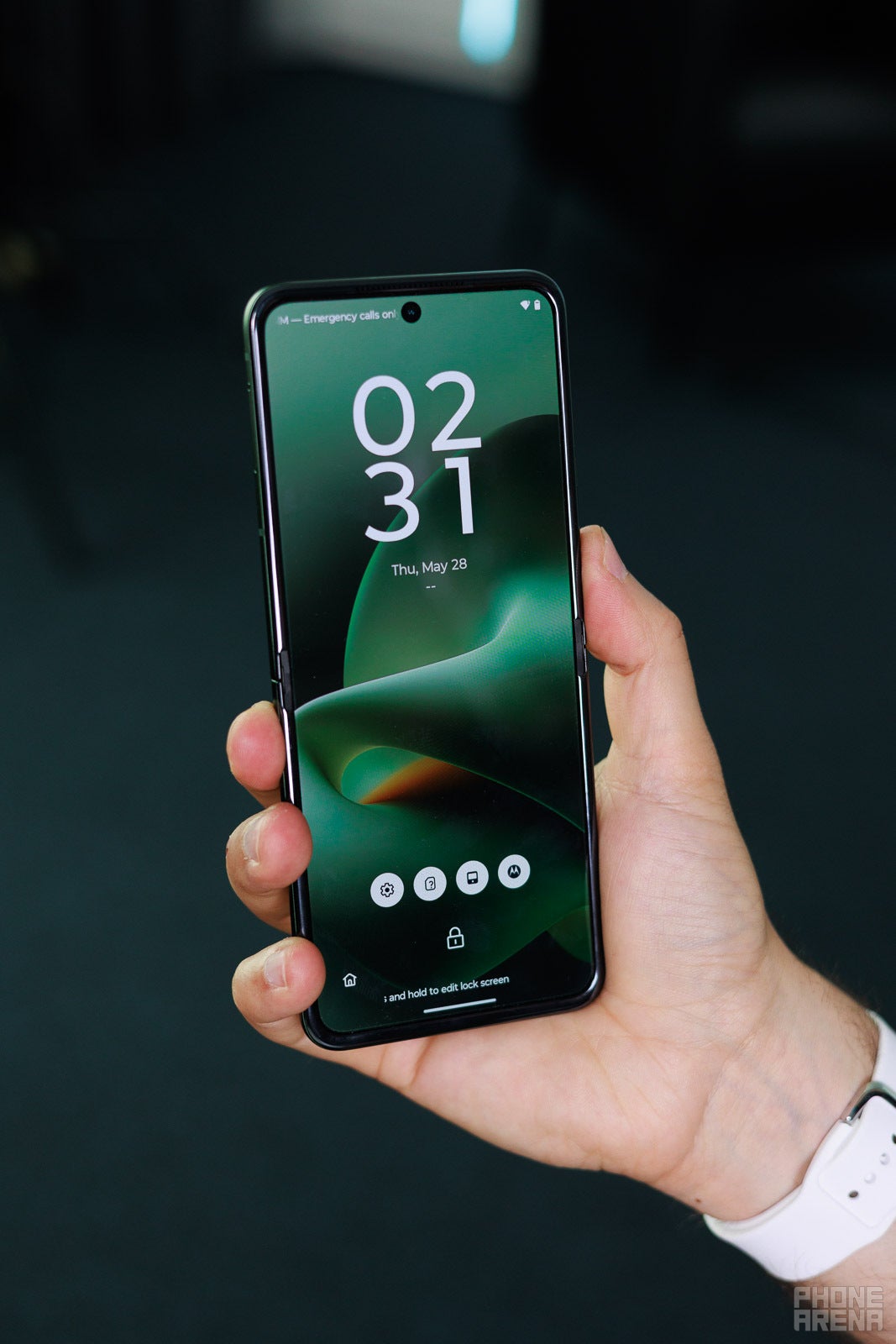
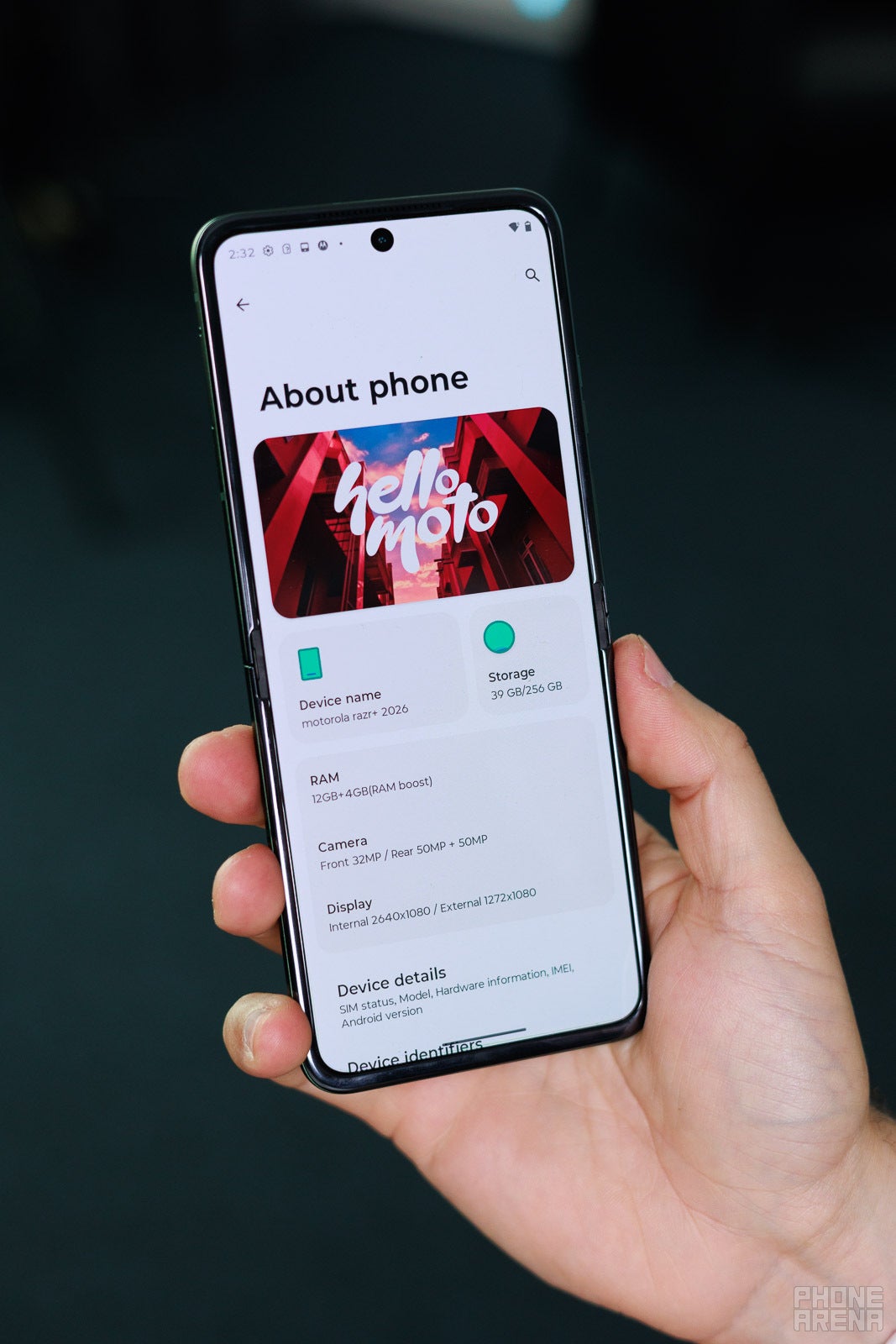
The main display is a 6.9-inch OLED panel with Full HD resolution and 165Hz refresh rate (in daily use, it still runs at 120Hz, the benefit is mostly for gaming).
The Razr Plus boasts a nearly creaseless experience thanks to a teardrop-style hinge, and in a direct comparison with the base model the crease indeed looked a bit shallower to my eyes.
The external screen is 4 inches, going edge to edge, and that's the biggest advantage over the non-Plus model, which has a 10% smaller display.
Display Measurements:
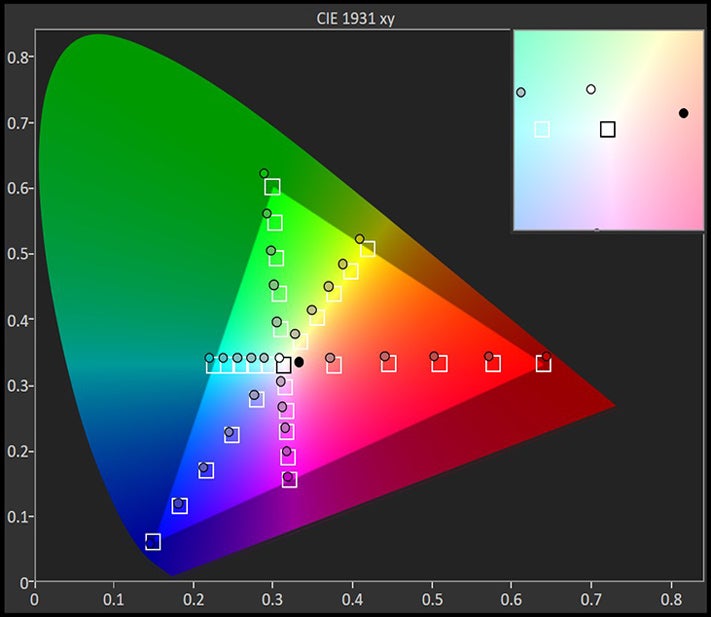
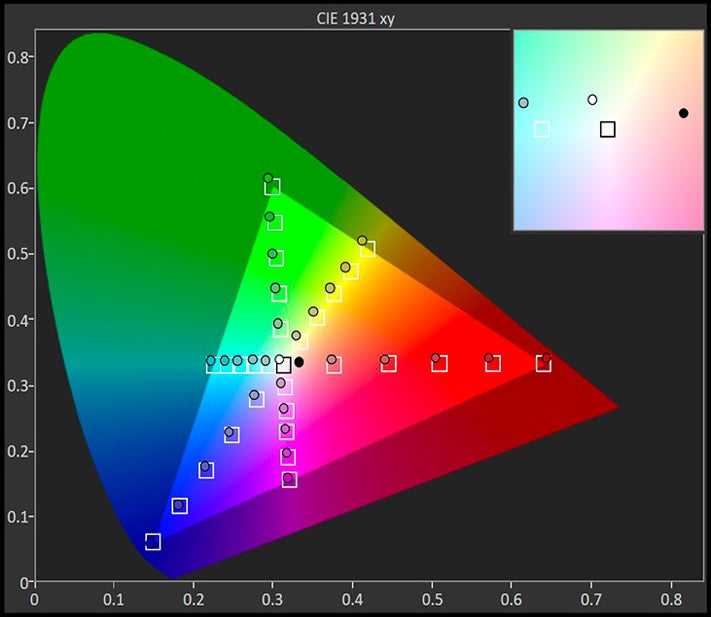
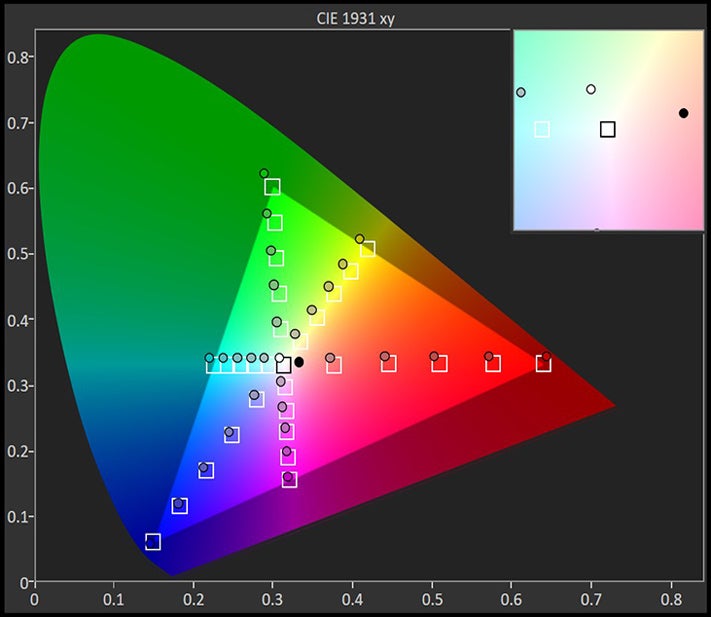
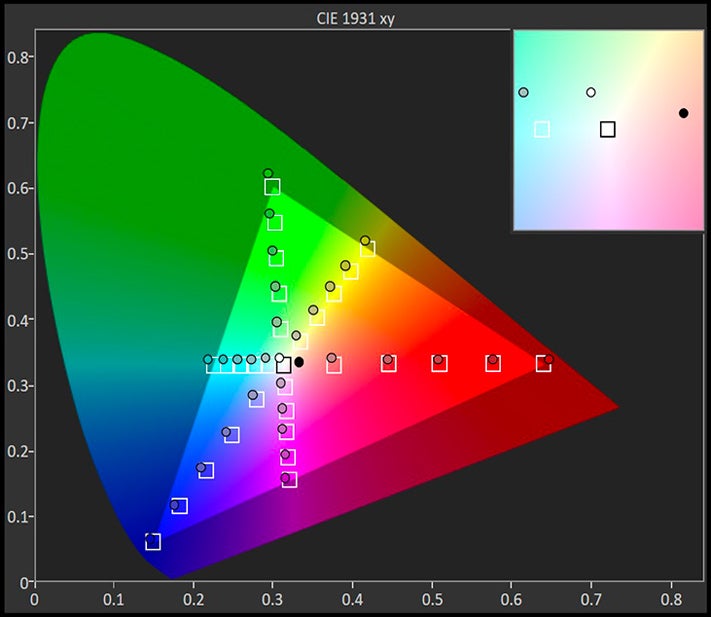
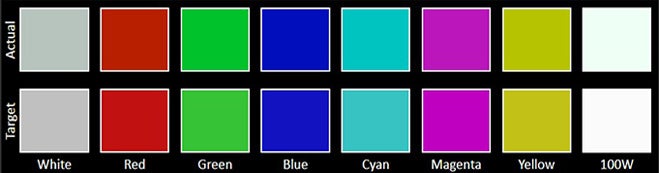
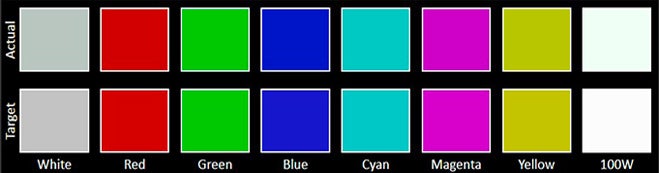
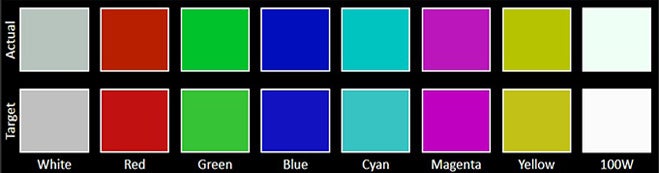
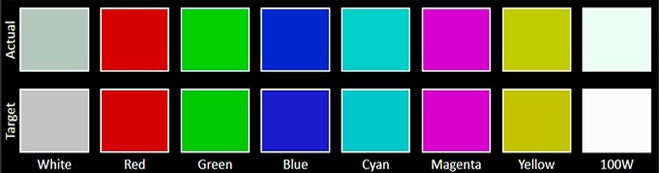




In our in-house display lab tests, the Razr Plus 2026 scores a higher peak brightness score, which is a welcome improvement. We recorded max brightness reaching nearly 1,500 nits compared to 1,200 nits on the Razr Plus 2025 (we tested the main screen).
The fingerprint scanner is embedded in the side-positioned power button. It's an old-school capacitive fingerprint reader, and I've had no issues with it as it unlocks the phone quickly and reliably.
Motorola Razr Plus 2026 Camera
Swapping the zoom camera for an ultra-wide one
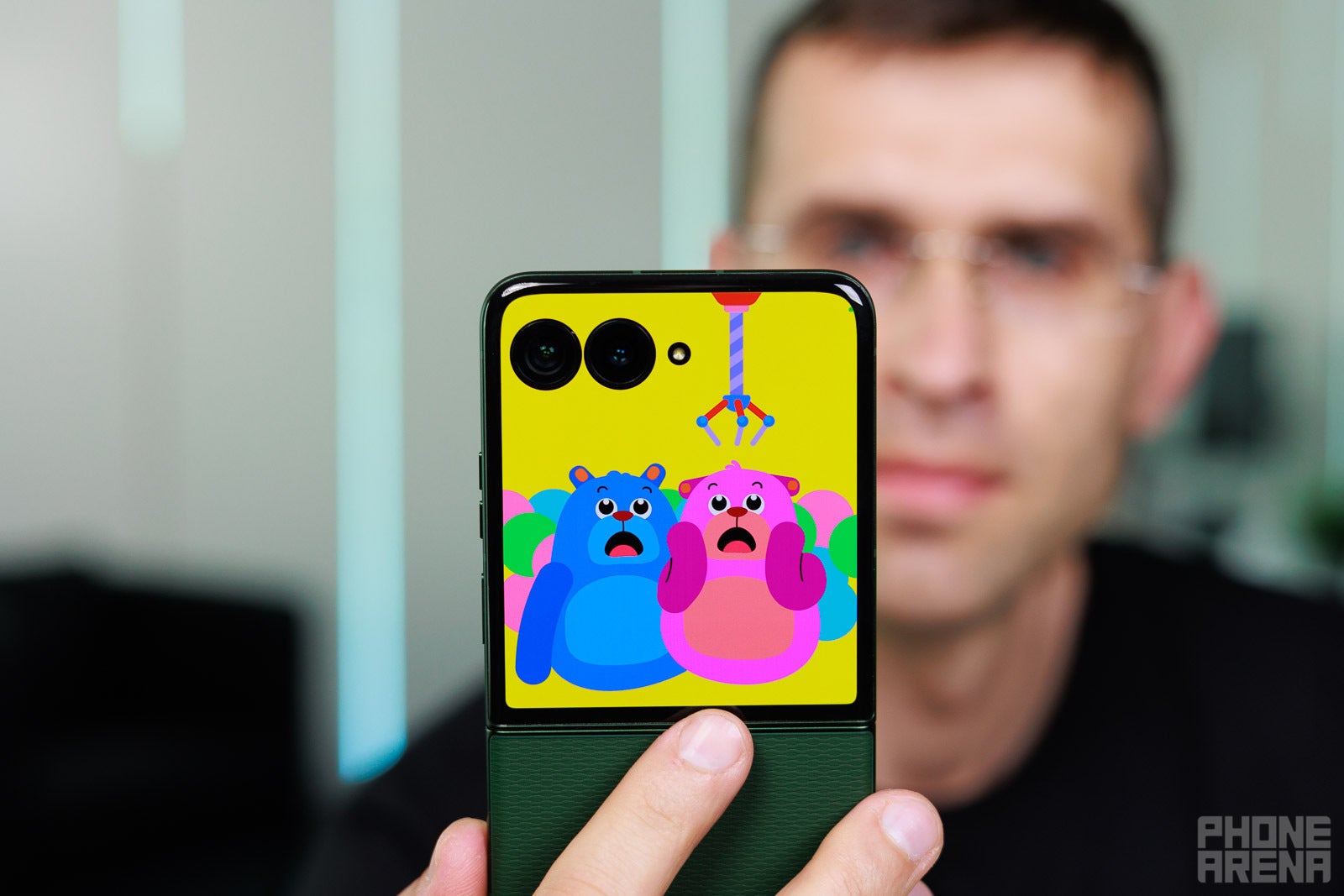
Image by PhoneArena
All 2026 Razr flip phones come with a dual camera system with two 50MP shooters, a main camera and an ultra-wide one.
Last year's Razr Plus 2025 edition features a 2X telephoto secondary camera, so switching to an ultra-wide second camera is a big change. Of course, losing the telephoto camera results in worse-looking zoomed shots, but it seems that the trade-off of having an extra wide field of view is worth it for many people.
As for the main camera, no big changes — the Razr Plus has the same mid-tier 1/1.95-inch sensor size as the base version (the Ultra is the only one with a larger main camera sensor).
Main Camera
In a direct comparison with the yesteryear Razr Plus, we see that some things have changed, but for the most part, it's the same camera.
Images on the newer model tend to have a brighter exposure and boosted colors, but the level of detail is similar. It's hard to pick a winner here.










Portrait Mode
Portrait mode now features more pleasing, softer bokeh, so I would say it's a small step forward for the Razr Plus 2026.




Zoom Quality
As you would expect with the Razr Plus 2026 dropping the zoom camera, zoom quality has gotten worse compared to the previous model. Last year's Razr Plus captures sharper and more plentiful detail.




Ultra-wide
The new ultra-wide camera brings extra wide perspectives that unlock plenty of creative photo opportunities.

Razr Plus 2026 ultra-wide | Image by PhoneArena

Razr Plus 2026 ultra-wide | Image by PhoneArena

Razr Plus 2026 ultra-wide | Image by PhoneArena
Selfies
Selfies have also improved quite a lot, with better skin handling and dynamic range.


Motorola Razr Plus 2026 Performance & Benchmarks
Disappointing
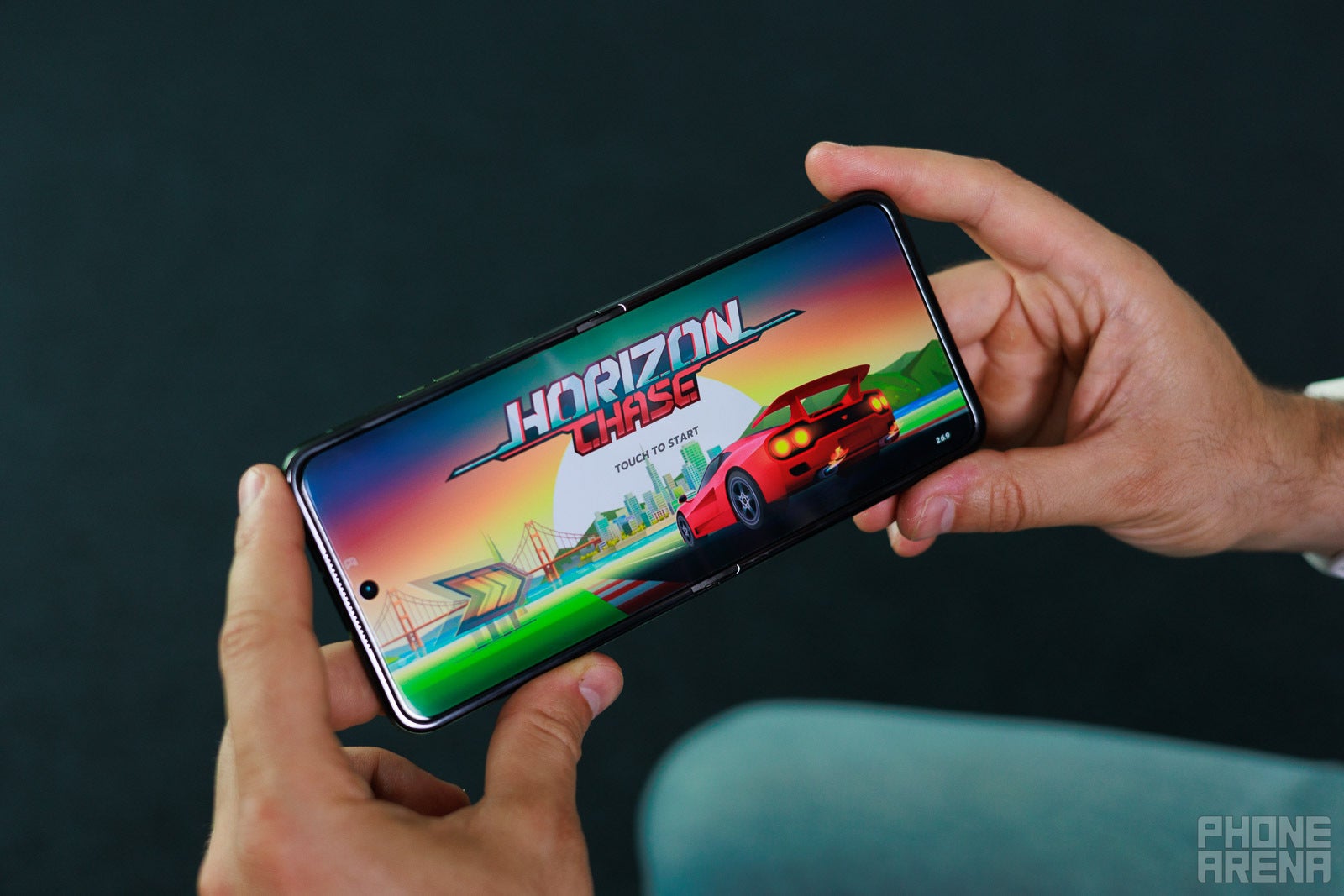
Image by PhoneArena
Under the hood of the Razr Plus 2026, you have the same Snapdragon 8s Gen 3 chipset as the last two Razr Plus generations. Disappointing, that's for sure. This is paired with 12GB of RAM, an upgrade over the 8GB of RAM on the base Razr 2026 version.
In daily use, the Razr Plus feels noticeably snappier than the base model, which comes with a slower Mediatek processor, so for speeds alone, the Plus has an advantage.
CPU Performance Benchmarks:
It's quite revealing, though, that the performance of the similarly priced Flip 7 from last year is still much faster than the new Razr Plus 2026. That's not a good look.
Motorola also does not seem to prioritize on-device AI speeds, as they are way behind the competition.
GPU Performance
GPU performance is again identical to last year's model and sometimes half the speed of what you can get on the Galaxy Flip 7. Samsung easily wins the performance race in flip phones.
Storage speed
The Razr Plus comes with either 256GB of built-in storage (there is no microSD card support here).
Our measurements were a mixed bag of results, as on some tests the new Plus model fell behind the predecessor, while on others it was a bit faster.
Motorola Razr Plus 2026 Software
The Razr Plus 2026 arrives with Android 16 and Motorola's light custom skin on top that looks very close to stock.
Software updates remain the big disappointments. We can somehow overlook that on the $800 cheaper base Razr model, but there is no excuse for this $1,100 phone to only support three years of Android OS updates (basically, you get Android 19 and that's it).
Motorola has also added a few small AI improvements, though there's no dedicated AI button on the phone. You long-press the power key to pull up Gemini, same as before.
These are the main Moto AI features on the Razr 2026, most of which actually go back to last year:
These are the main Moto AI features on the Razr 2026, most of which actually go back to last year:
- Catch Me Up: Summarizes your missed notifications and chat threads, including stuff from WhatsApp and Messages. It runs a bit faster now and handles more regional languages directly on the device.
- Pay Attention: Records live conversations or meetings and automatically transcribes and summarizes everything into Moto Notes. This one's been around since 2025, but multi-speaker separation is noticeably better this time around.
- Remember This: Whenever you take a screenshot or snap a photo, the AI adds a text description to it so you can search for it later just by describing what you're looking for.
- Look and Talk: Lets you wake the assistant just by looking at the cover screen while the phone is propped open in Tent mode. When this first came out in 2025 it was exclusive to the Razr Ultra, but now it's available across all 2026 Moto foldables.
- Playlist / Image Studio: You can generate custom wallpapers from a text prompt or describe a musical feeling in your own words and get a music playlist built around it.
Motorola Razr Plus 2026 Battery
Big battery size improvement

With a nearly 10% bigger battery, the Razr Plus 2026 fixes the biggest complaint we had against the 2025 model — it's way too small battery.
The new phone comes with a 4,500mAh battery size (the older one had a 4,000mAh cell).
PhoneArena Battery Test Results:
Results on the web browsing test were half an hour better than last year's model, while we had an interesting anomaly on the video streaming test with the phone lasting a record 15+ hours.
In terms of charging, you get 45W wired and 15W wireless charging. Not the fastest out there (the Razr Ultra supports 68W wired charge), but quite good.
A full top up takes around 1 hour if you use a cable. There are no magnets on this phone (hence, no Qi2/MagSafe support), which is a bit of a disappointment.
Motorola Razr Plus 2026 Audio Quality and Haptics
The speakers are improved a bit and sound very decent for a flip phone.
Haptics are also tight and lively, which we definitely appreciate, no complaints on that front.
Motorola Razr Plus 2026 Specs
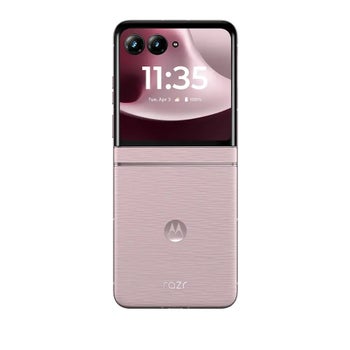
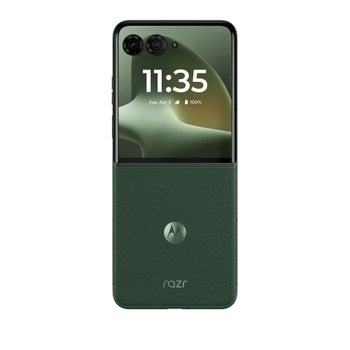
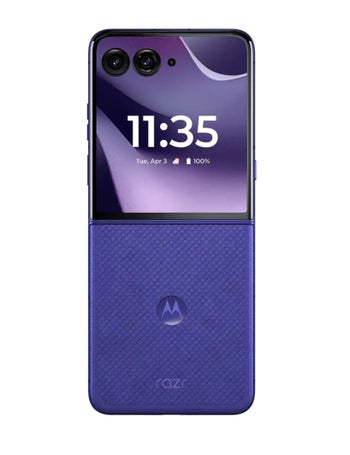
Here is an overview of the Motorola Razr Plus 2026 specs:
|
|
|
| Motorola Razr (2026) | Motorola Razr Plus (2026) | Motorola Razr Ultra (2026) |
| Dimensions | ||
|---|---|---|
| 171.30 x 73.99 x 7.25 mm | 171.4 x 74 x 7.1 mm | 171.48 × 73.99 × 7.19 mm (~8.99 mm with camera bump) |
| Weight | ||
| 188.0 g | 189.0 g | 199.0 g |
| Size | ||
|---|---|---|
| 6.9-inch | 6.9-inch | 7.0-inch |
| Type | ||
| AMOLED, 120Hz | AMOLED, 165Hz | AMOLED, 165Hz |
| System chip | ||
|---|---|---|
| MediaTek Dimensity 7450X (4 nm) | Snapdragon 8s Gen 3 SM8635 (4 nm) | Snapdragon 8 Elite SM8750-AC (3 nm) |
| Memory | ||
| 8GB (LPDDR5X)/256GB (UFS 3.1) | 12GB (LPDDR5X)/256GB (UFS 4.0) | 16GB (LPDDR5X)/512GB (UFS 4.0) |
| OS | ||
| Android (16) | Android (16) | Android (16), up to 3 OS updates |
| Type | ||
|---|---|---|
| 4800 mAh | 4500 mAh | 5000 mAh |
| Charge speed | ||
| Wired: 30.0W Wireless: 15.0W | Wired: 45.0W Wireless: 15.0W | Wired: 68.0W Wireless: 30.0W |
| Main camera | ||
|---|---|---|
| 50 MP (PDAF) Aperture size: F1.7 Focal length: 25 mm Sensor size: 1/1.95" Pixel size: 0.8 μm | 50 MP (OIS, PDAF) Aperture size: F1.8 Focal length: 24 mm Sensor size: 1/1.95" Pixel size: 0.8 μm | 50 MP (OIS, PDAF) Aperture size: F1.8 Focal length: 24 mm Sensor size: 1/1.56" Pixel size: 1.0 μm |
| Second camera | ||
| 50 MP (Ultra-wide) Aperture size: F2.0 Focal Length: 12 mm Sensor size: 1/2.76" Pixel size: 0.64 μm | 50 MP (Ultra-wide) Aperture size: F2.0 Focal Length: 12 mm Sensor size: 1/2.76" Pixel size: 0.64 μm | 50 MP (Ultra-wide, PDAF) Aperture size: F2.0 Focal Length: 12 mm Sensor size: 1/2.93" Pixel size: 0.6 μm |
| Front | ||
| 32 MP | 32 MP | 50 MP |
See the full
Motorola Razr (2026) vs Motorola Razr Plus (2026) vs Motorola Razr Ultra (2026) specs comparison
or compare them to other phones using our
Phone Comparison tool
Should you buy it?
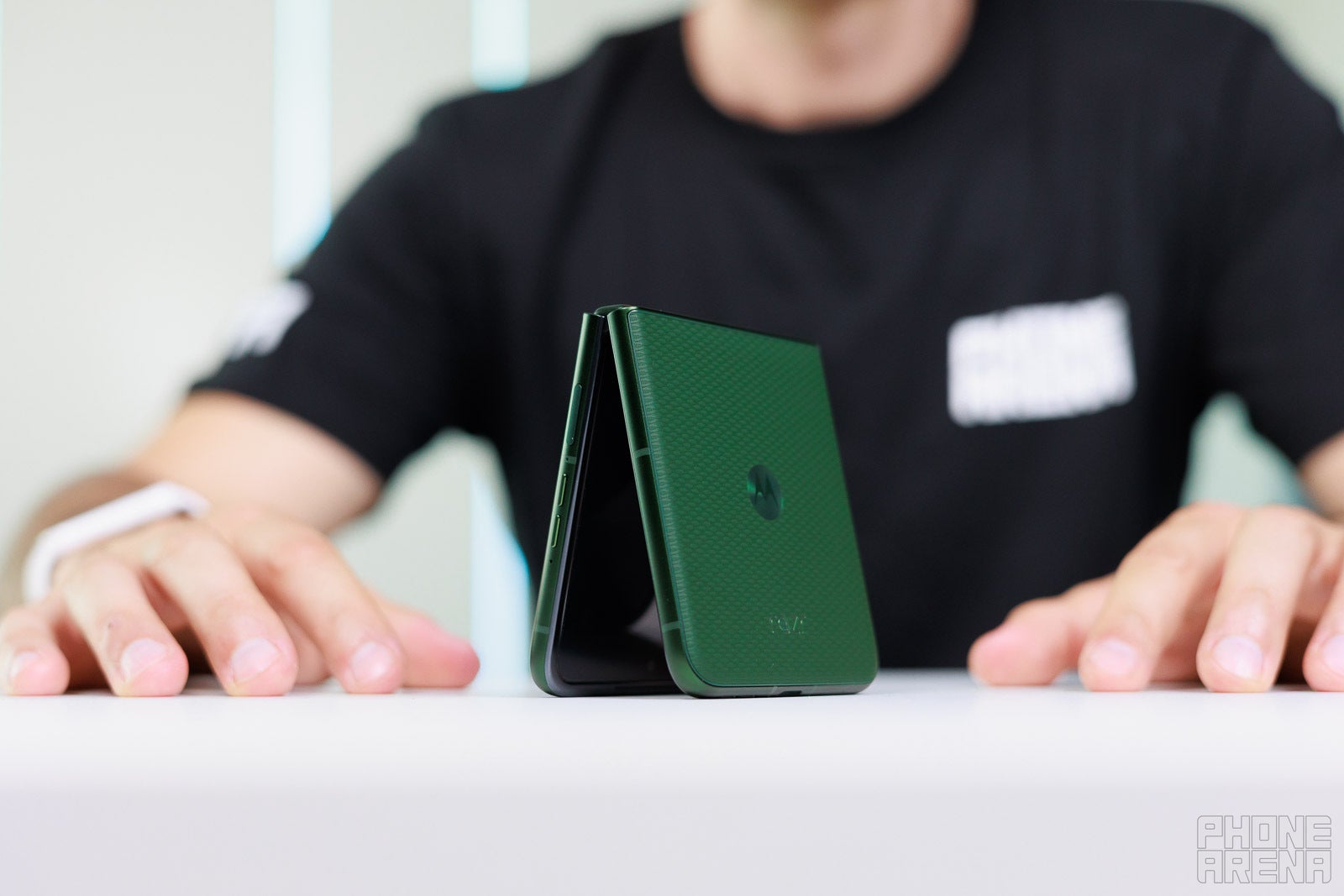
Image by PhoneArena
The Motorola Razr Plus 2026 suffers from being the middle child.
It has to find the perfect balance of features and price, but with the new and higher $1,100 price, it's not cheap. It's also $300 pricier than the base Razr 2026 model, and for most people, I think that price premium is not worth it. You get a bigger cover screen, which, after using the phone, does not translate as a massive advantage. The only other big reason to opt for the Plus is a faster processor, but for casual use the base model is fine.
Worryingly, Samsung's last year Flip 7 outperforms the Razr Plus in many areas while costing the same (or less with all the discounts).
The Razr Plus 2026 is not a bad phone, of course, but it seems to be made for a very specific user, and with the higher price, it will be a tougher sell.


Popular stories



Latest News

Things that are NOT allowed:
To help keep our community safe and free from spam, we apply temporary limits to newly created accounts: