Every product we review or recommend is thoroughly tested by our in-house experts in real-world conditions, following our
review methodology
and
ethics statement
to ensure honest, independent, and data-driven results.
We may earn a commission if you make a purchase from the links on this page.
I did not expect to like this phone so much. The new Motorola Razr Fold is the first serious competitor to Samsung's Galaxy Z Fold series, especially considering that it's the only other book-style foldable you can get in the United States.
It is not any cheaper, but after spending the last few days folding and unfolding it, I think it does a much better job in one key area of the foldable experience, and matches or slightly beats the Galaxy in many others.
But first, prices and availability. The Motorola Razr Fold is available at T-Mobile, and you can also buy it unlocked on Amazon, Best Buy or Motorola's official website, but it is currently not sold at AT&T and Verizon (Verizon is rumored to have the phone over the next "few months", while AT&T seems to skip it entirely).
The price is $1,900 and the only model sold in the US has a generous 16GB of RAM and 512GB of storage. Keep in mind, though, that Motorola will give you a $500 discount when you trade-in almost any smartphone, and some gifts like the Moto Buds 2 Plus and a 4-pack of the Moto Tags. With all of these discounts, the Motorola can easily drop below the price of the already aging Galaxy Z Fold 7.
This device scores 2.7% worse than the average for this price class, which includes devices like the OPPO Find X10 Pro Max, Honor Magic V6 and Motorola Razr Ultra (2026)
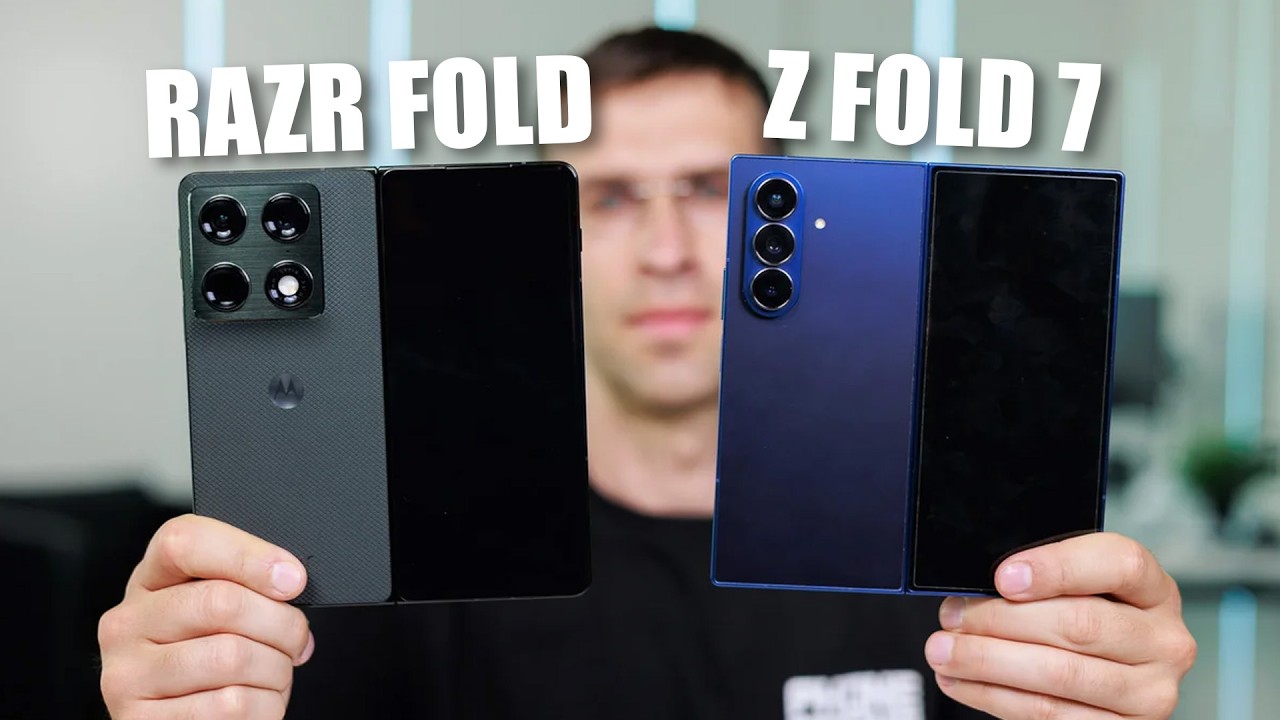
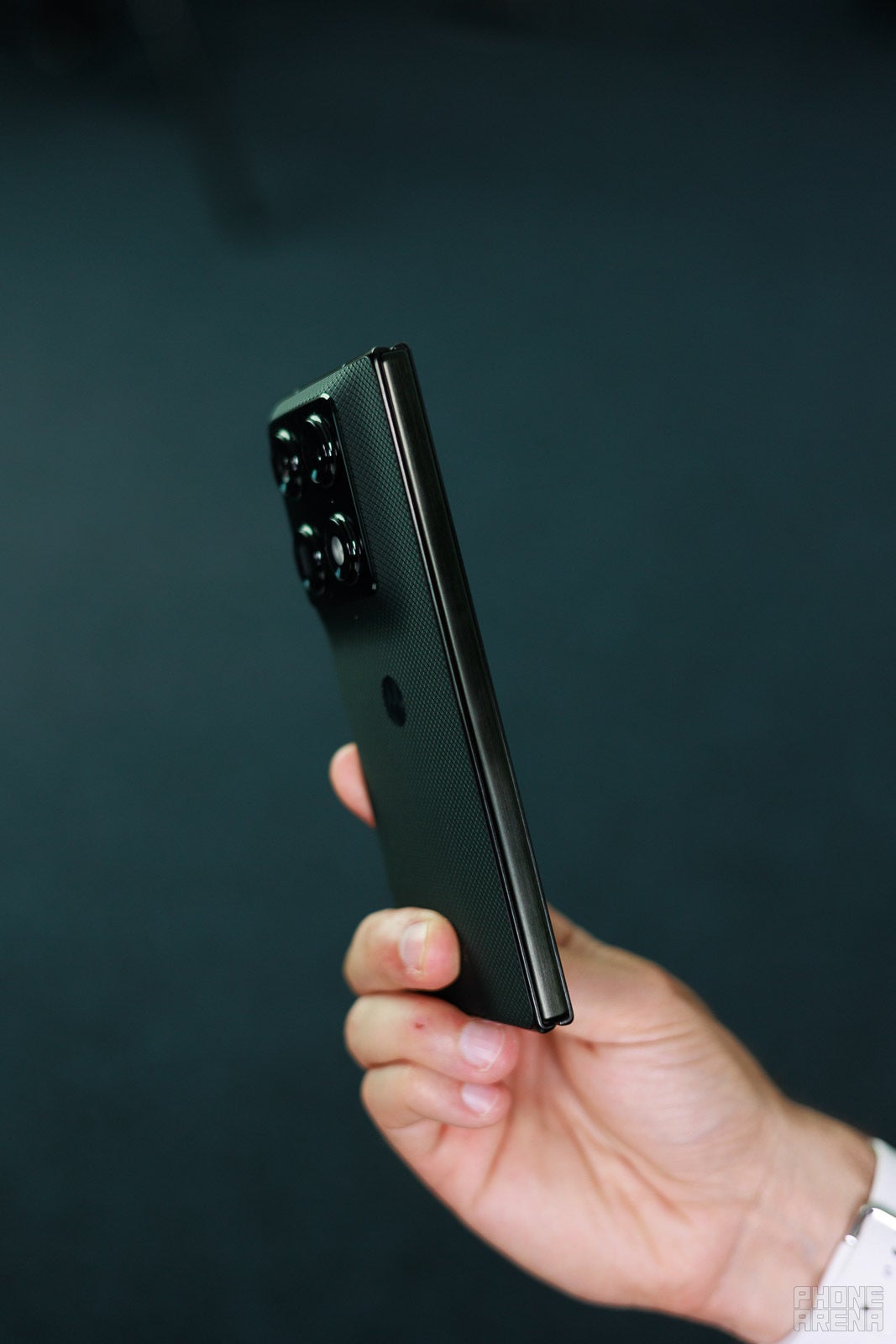
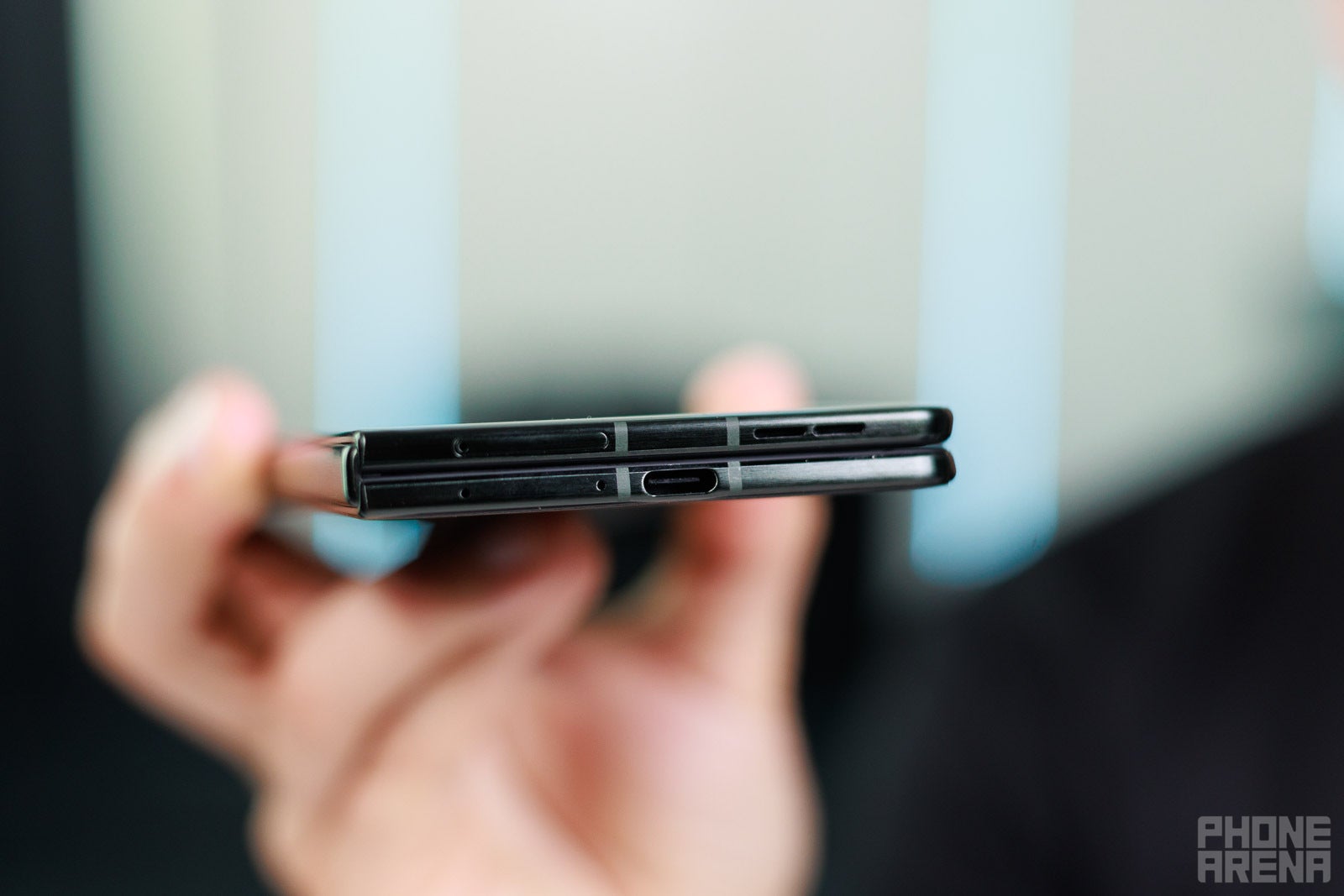
I was honestly a bit concerned about this phone before I got to actually use it, seeing its weight and thickness. The Razr Fold weighs 243 grams, nearly 15% heavier than the Galaxy Z Fold 7, and at 9.9mm, it is 15% thicker as well (the Galaxy is just 8.6mm).
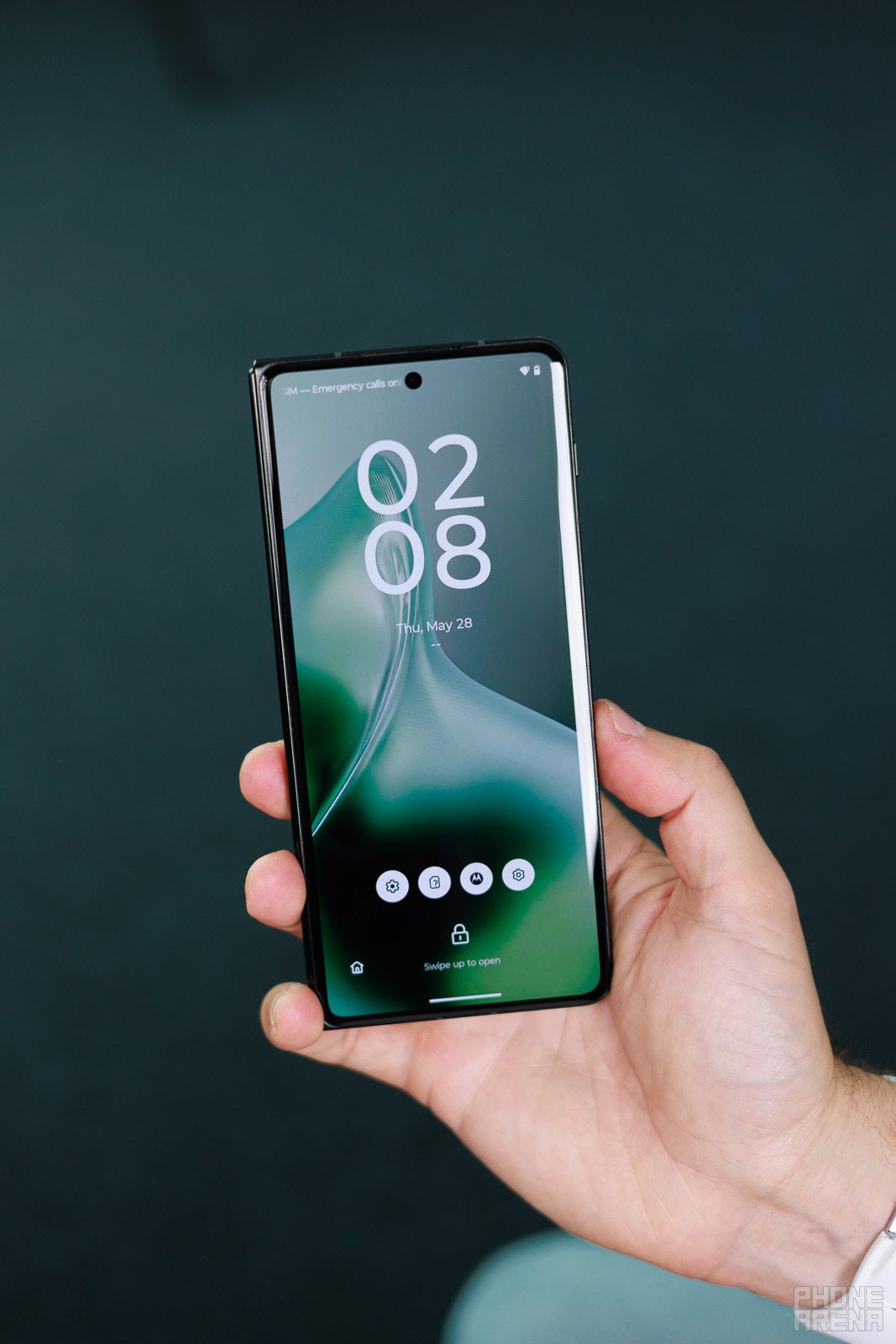
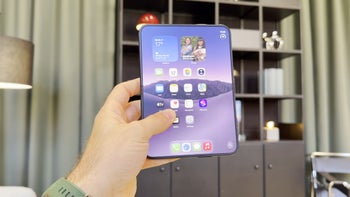
However, after actually living with it for a few days, I am beyond relieved. The Razr Fold does not feel like a heavy phone. It is well balanced in the hand and the rounded corners make holding it actually better than the otherwise lighter Galaxy Fold 7!
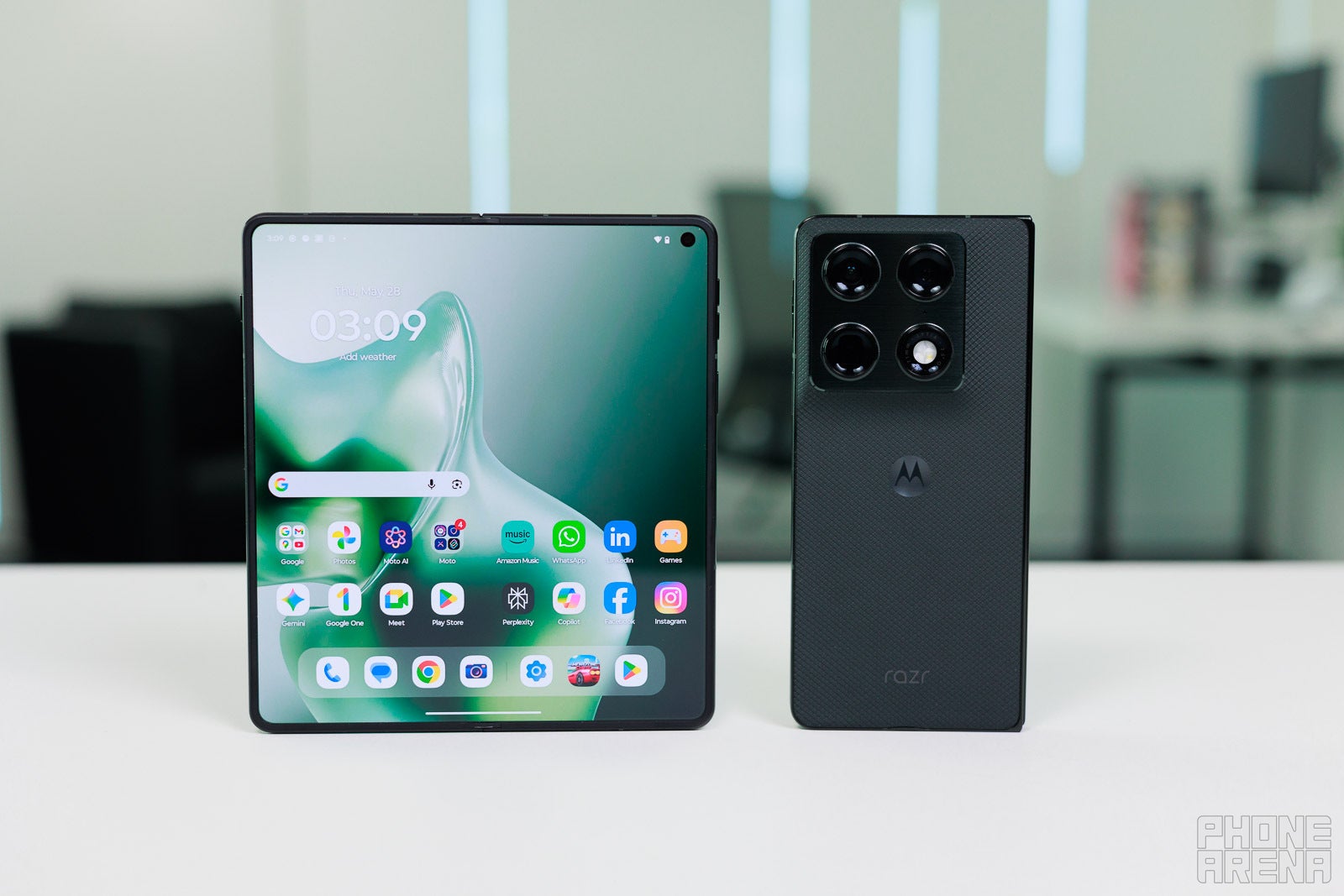
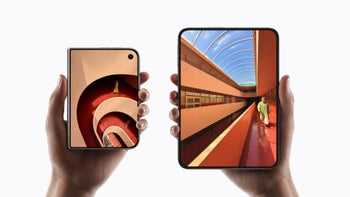
I also appreciate that the Razr Fold has a slightly bigger canvas than the Fold 7 — both when folded and when unfolded. It's also worth noting that when folded, the phone feels a lot like a regular smartphone.
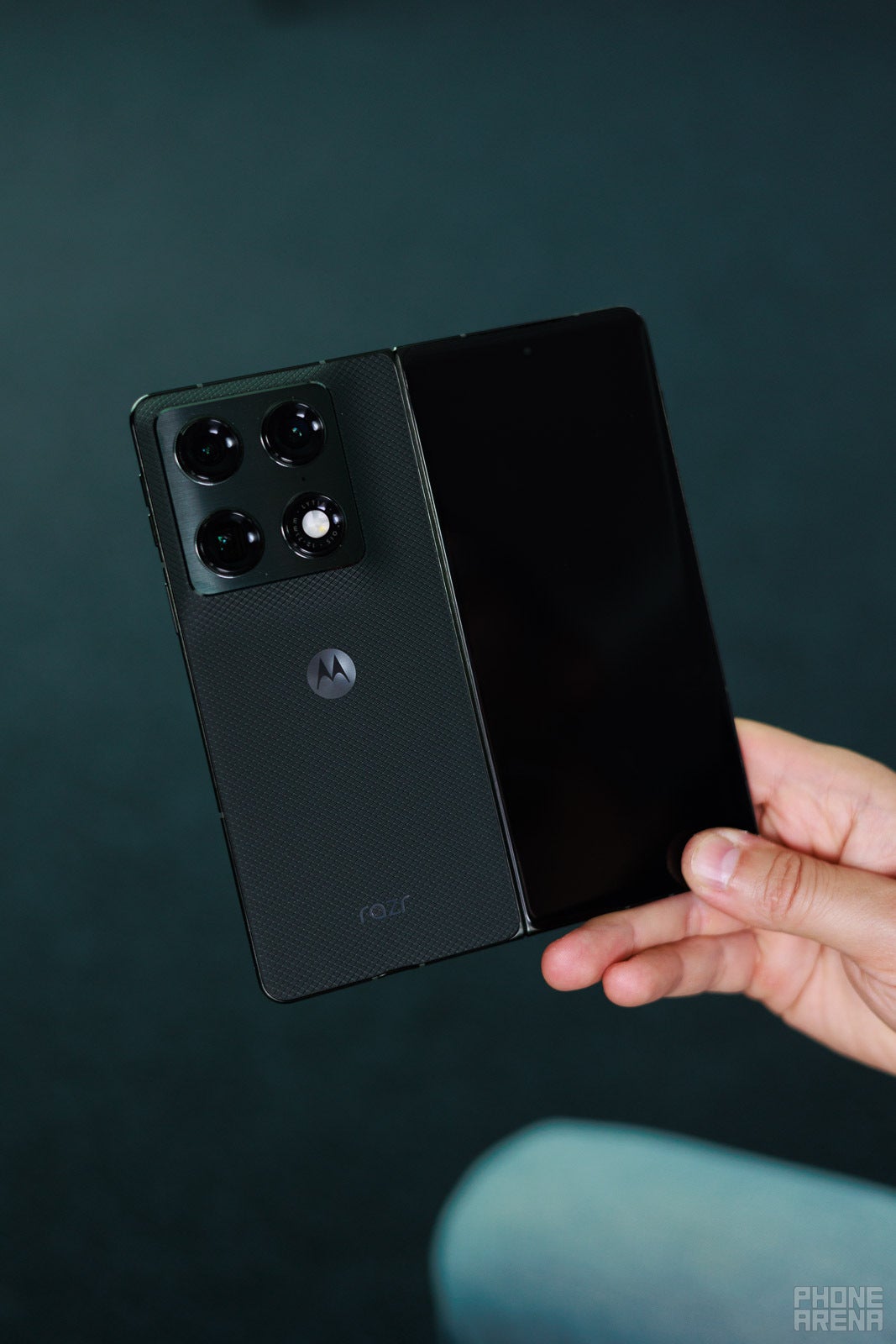
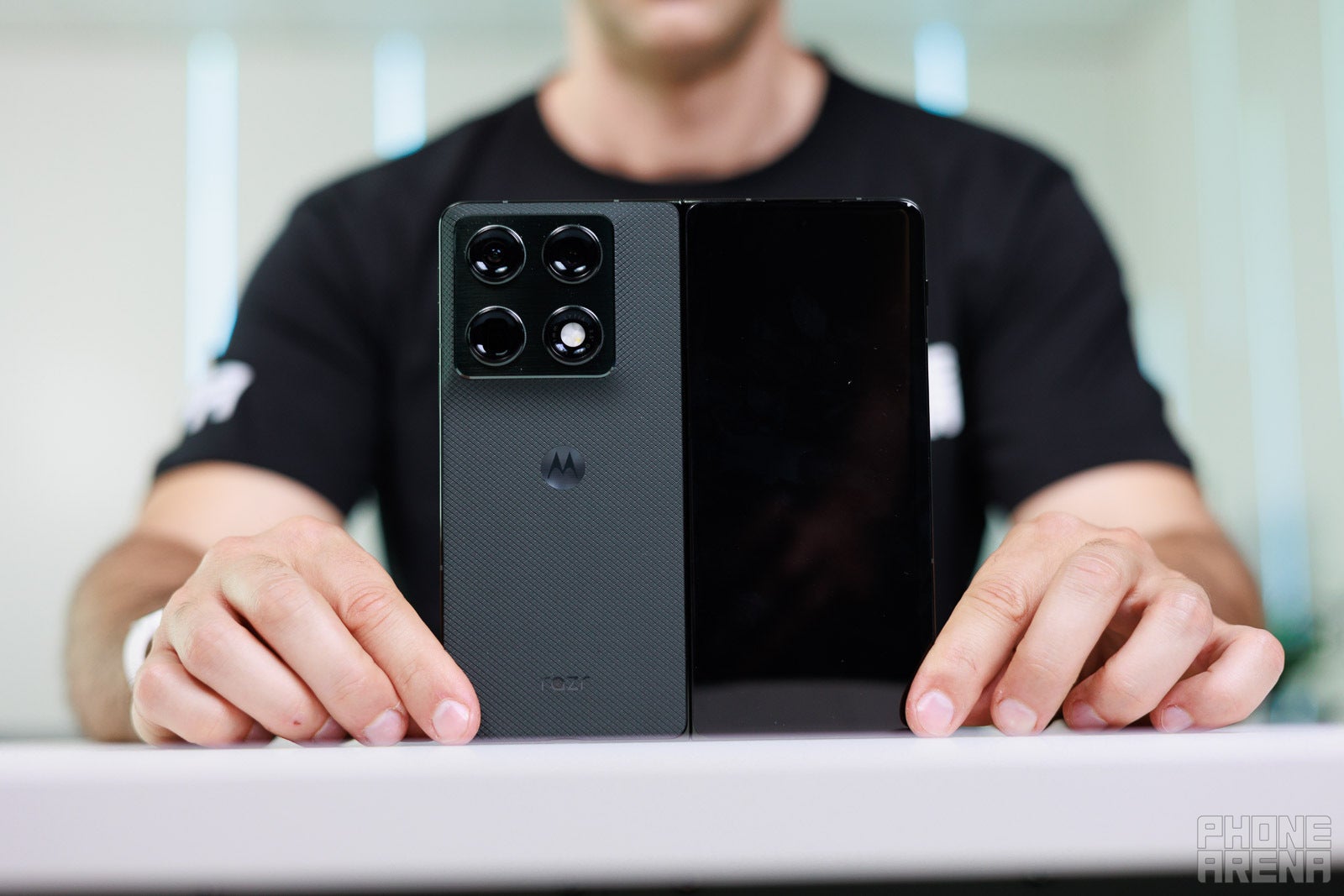
I have the Blackened Blue colorway and this particular model features a fabric-like texture on the back that makes it a bit more grippy, which is very important for a big and expensive foldable phone.
Recommended For You
Apart from the traditional power and volume keys (located on the right side), you also have Motorola's AI button on the top left.
The hinge of the Razr Fold also feels very durable. It is rated for 200,000 cycles, which means you can open and close the phone 100 times a day for about 5 years. This is fine, but Samsung's Galaxy Z Fold 7 is rated for 500,000 cycles, thanks to its new and thinner Armor Flex Hinge. At least on paper, this should make the Fold significantly more resilient to wear and tear.
The Motorola also carries an IP48/IP49 rating, meaning it can withstand fine debris and even high-temperature water jets.
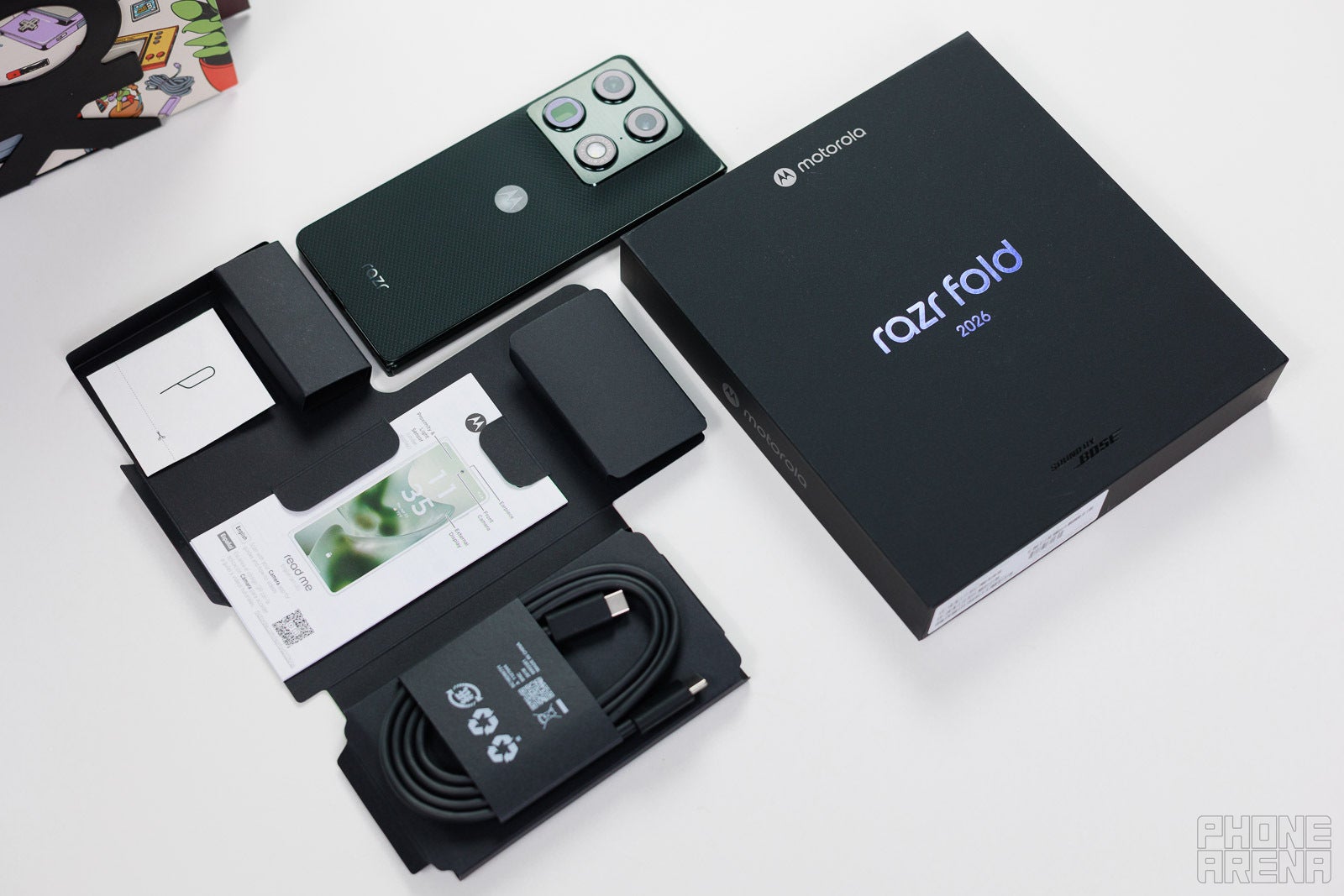
Motorola Razr Fold unboxing | Image by PhoneArena
The Razr Fold comes with a very modest box — there is no charger, nor a case included in the package. You only get a standard USB-C to USB-C charging cable, a SIM tool and user manuals, that's it.
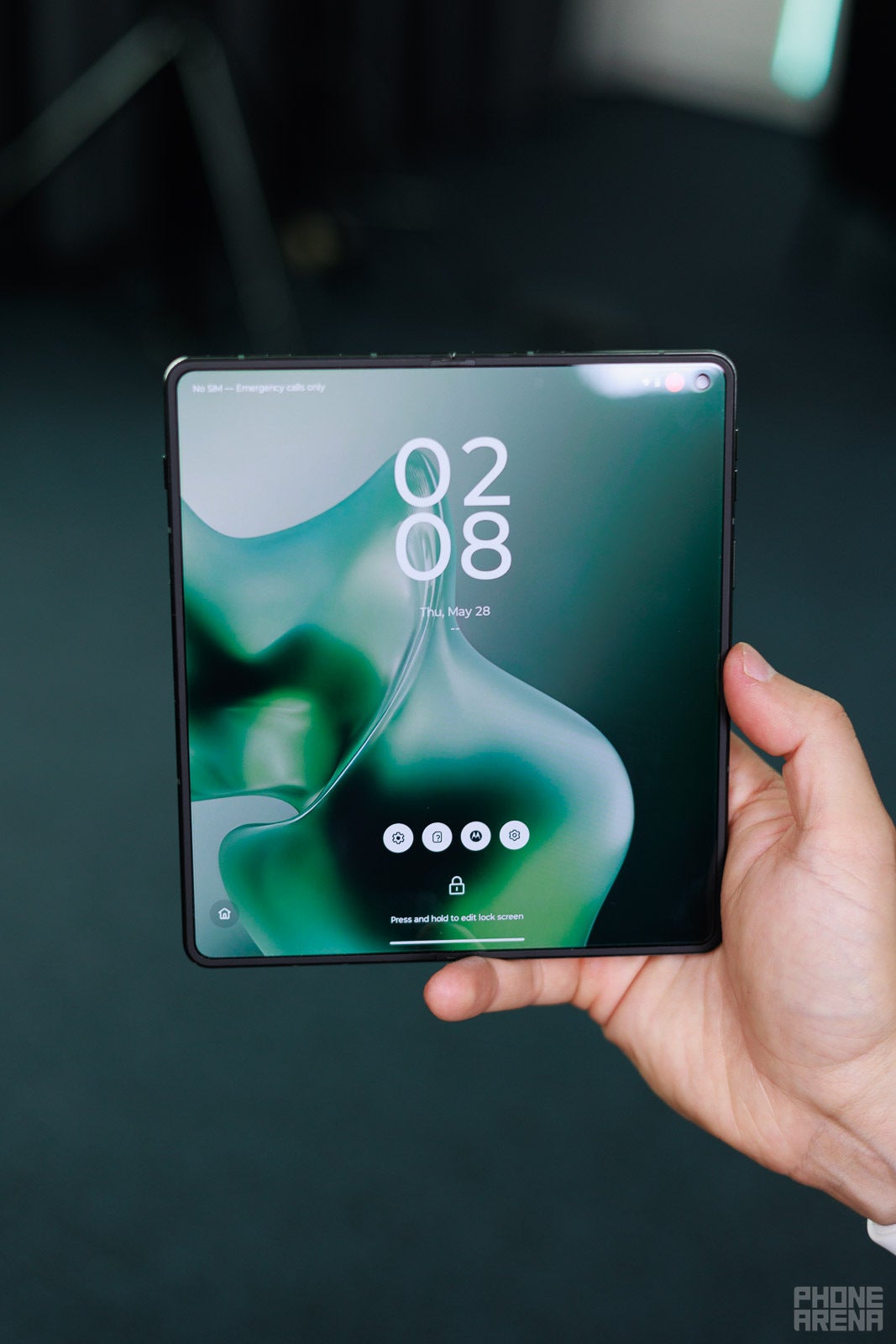
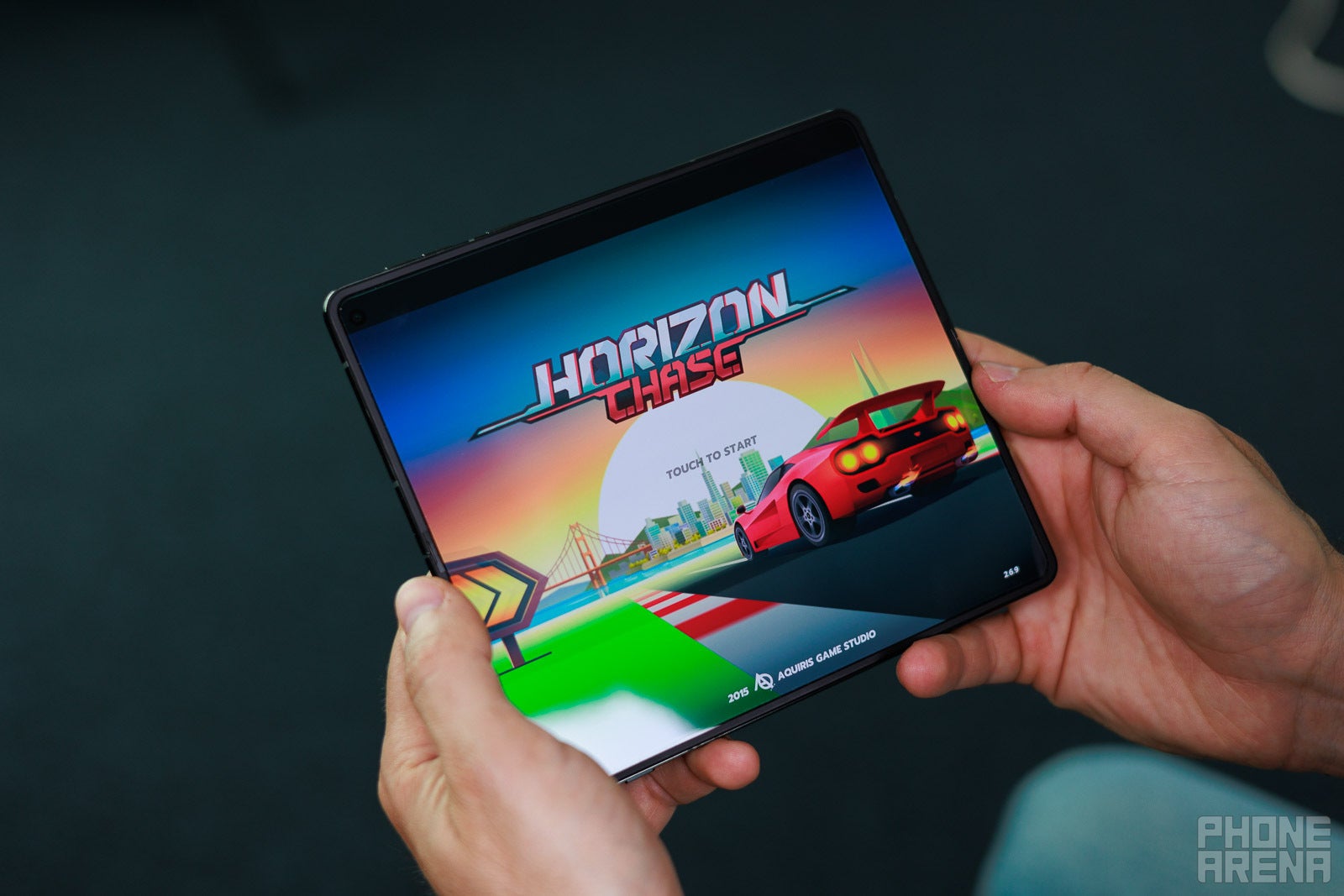
The Razr Fold comes with a 6.6-inch outer screen and an 8.1-inch inner display (both slightly bigger than on the Fold 7).
These are both OLED screens with one notable difference in refresh rate: the outer screen can reach 165Hz, while the inner one runs at 120Hz.
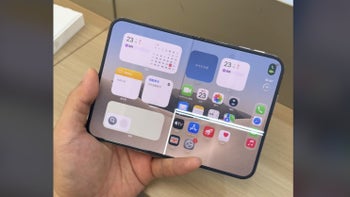
Most imporantly, the crease on the inner screen is barely noticeable (thanks to a teardrop shaped hinge), and if you ask me, it's a more seamless look than on the Fold 7 or Pixel 10 Pro Fold.
Also, the phone closes with zero gap, just as you'd expect from a modern device.
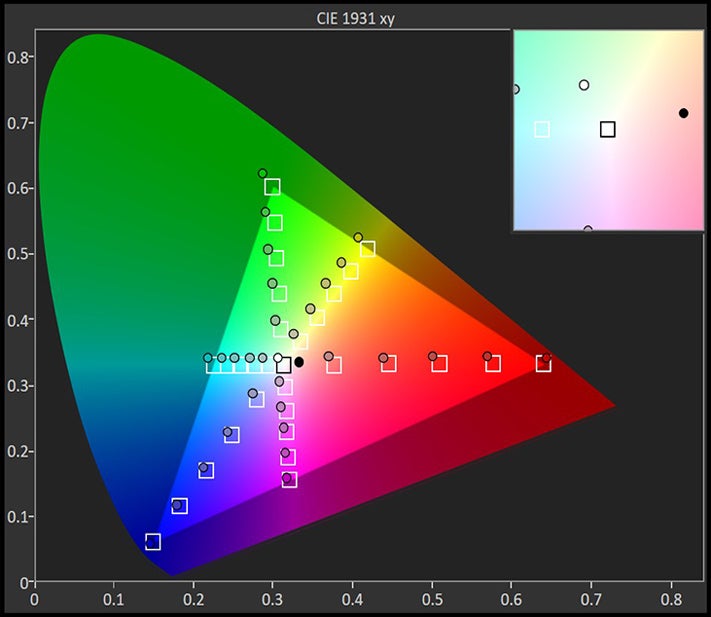
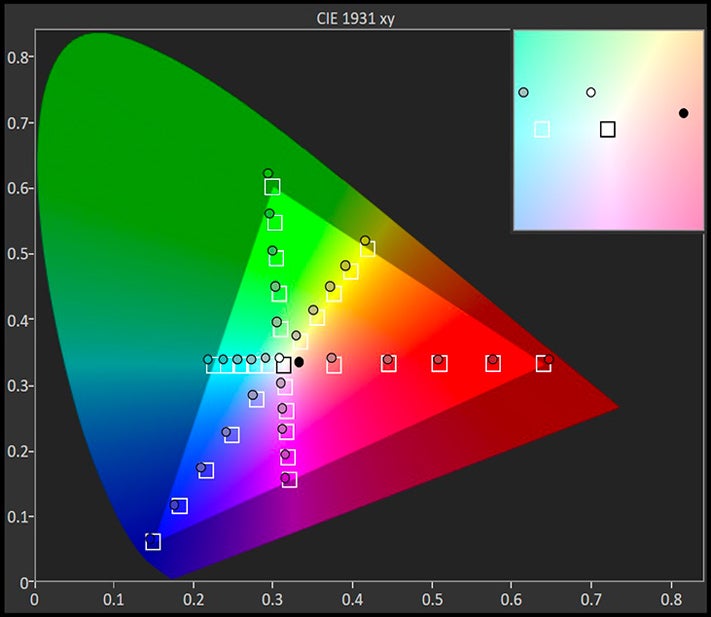
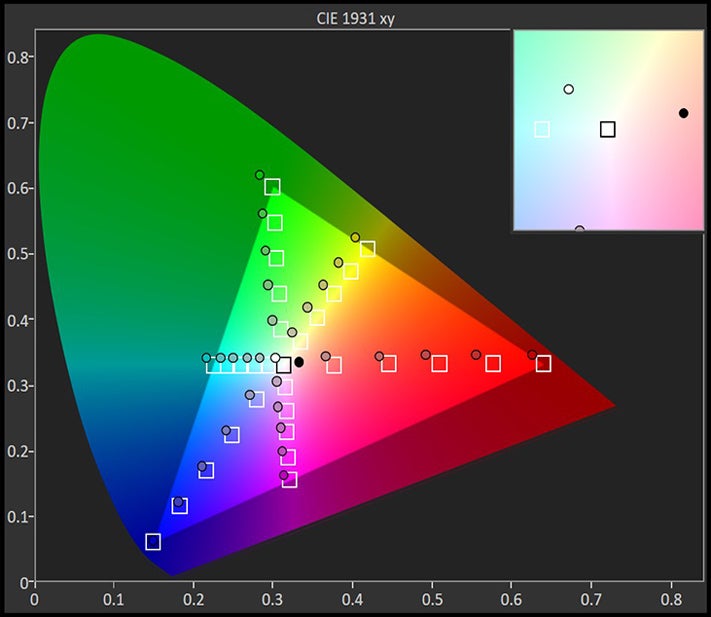
The CIE 1931 xy color gamut chart represents the set(area)of colors that a display can reproduce,with the sRGB colorspace(the highlighted triangle)serving as reference.The chart also provides a visual representation of a display's color accuracy. The small squares across the boundaries of the triangle are the reference points for the various colors, while the small dots are the actual measurements. Ideally, each dot should be positioned on top of its respective square. The 'x:CIE31' and 'y:CIE31' values in the table below the chart indicate the position of each measurement on the chart. 'Y' shows the luminance (in nits) of each measured color, while 'Target Y' is the desired luminance level for that color. Finally, 'ΔE 2000' is the Delta E value of the measured color. Delta E values of below 2 are ideal.
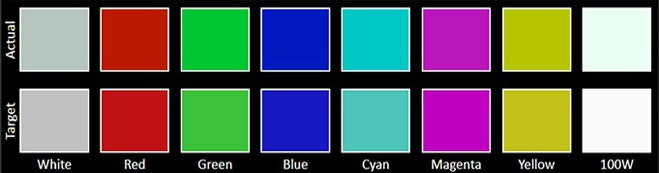
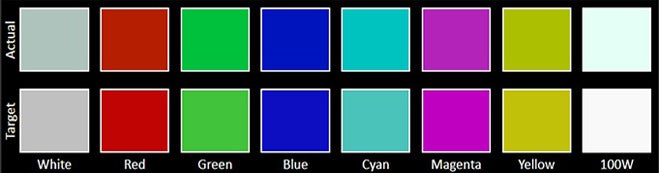
The Color accuracy chart gives an idea of how close a display's measured colors are to their referential values. The first line holds the measured (actual) colors, while the second line holds the reference (target) colors. The closer the actual colors are to the target ones, the better.
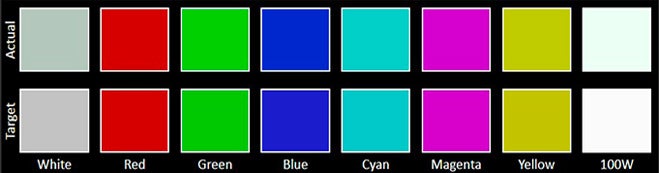
The Grayscale accuracy chart shows whether a display has a correct white balance(balance between red,green and blue)across different levels of grey(from dark to bright).The closer the Actual colors are to the Target ones,the better.
Motorola also advertizes some crazy max brightness numbers (to the tune of 6,000 nits). That usually has to do more with marketing than with real-world benefits since some companies use a very artificial display setting to claim that number.
We measure all screens at 20% white level, and we got just over 2,000 ntis of peak brightness on the inner display, which is actually a bit below the Galaxy Fold 7 and Pixel 10 Pro Fold.
The Razr Fold also uses a fingerprint scanner embedded in the power button on the side, just like most foldables. It's fast and reliables, and I've had no issues with it in my time with the phone.
Motorola Razr Fold Camera
Great (for a foldable phone)
Image by PhoneArena
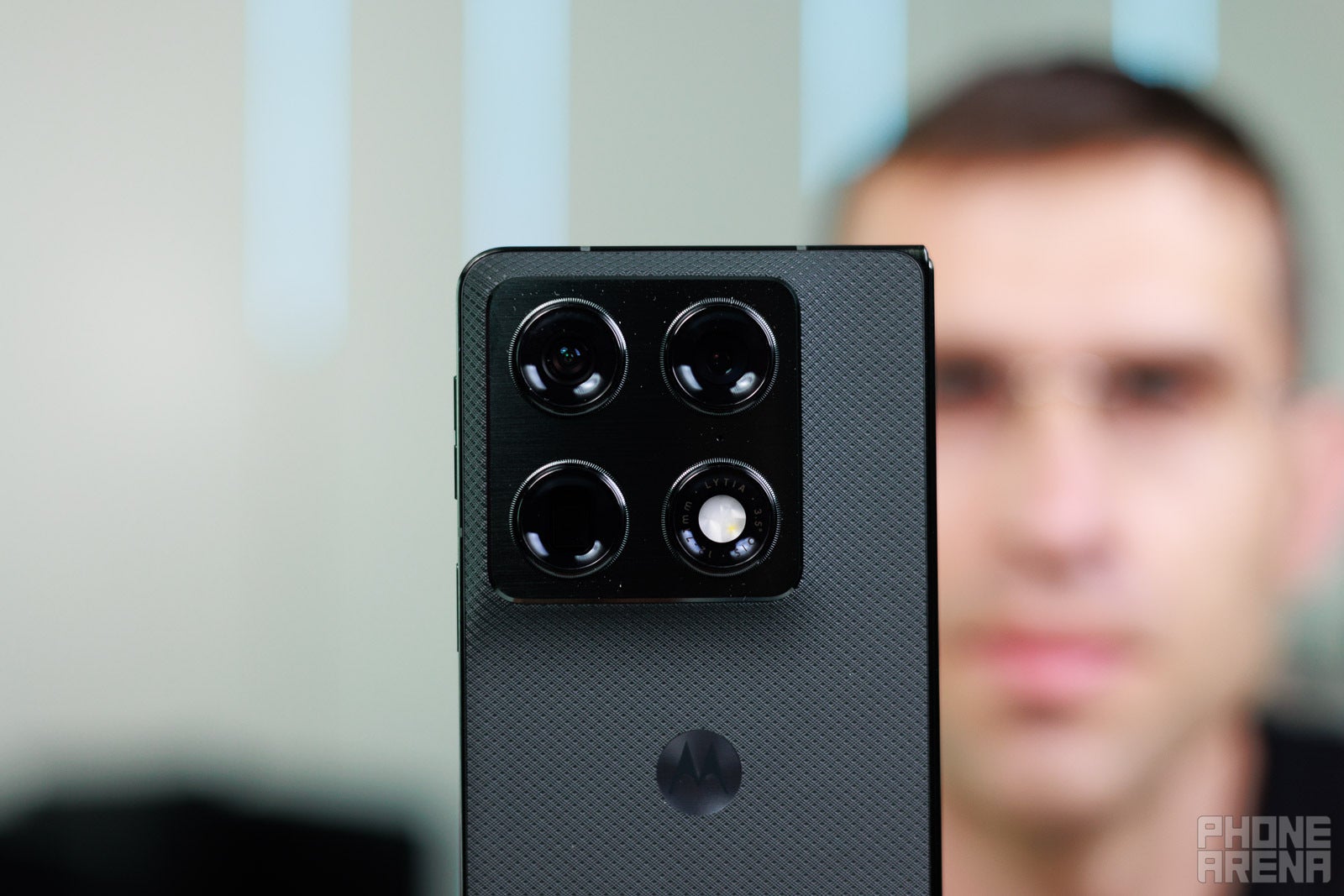
The Razr Fold comes with a big camera plateau (a stylish look, I would say) and three 50MP rear cameras in it.
The main camera uses a 1/1.3-inch type sensor, same size as on the Galaxy, but the ultra-wide is slightly bigger on the Motorola and the telephoto camera is MUCH bigger, which should result in a noticeable upgrade in quality.
Main Camera
The main camera on the Razr Fold captures good-looking photos, with a tendency to go for a more "cheerful" look: brighter exposure, lifted shadows, and slightly more vivid colors.
< Razr FoldGalaxy Fold 7 >
< Razr FoldGalaxy Fold 7 >
On this photo, I liked that the Razr did not blow out the highlights like the Galaxy and this resulted in a richer, more dynamic picture.
< Razr FoldGalaxy Fold 7 >
Zoom Quality
While the Razr Fold has a 3X telephoto camera like the Fold 7, it uses a much larger sensor, which results in more detailed photos.
In fact, sensor on the Motorola Razr Fold (1/1.95") is roughly 3.2 to 4.1 times larger in total surface area than the one on the Galaxy Fold 7 (1/3.94").
< Razr FoldGalaxy Fold 7 >
< Razr FoldGalaxy Fold 7 >
Ultra-wide
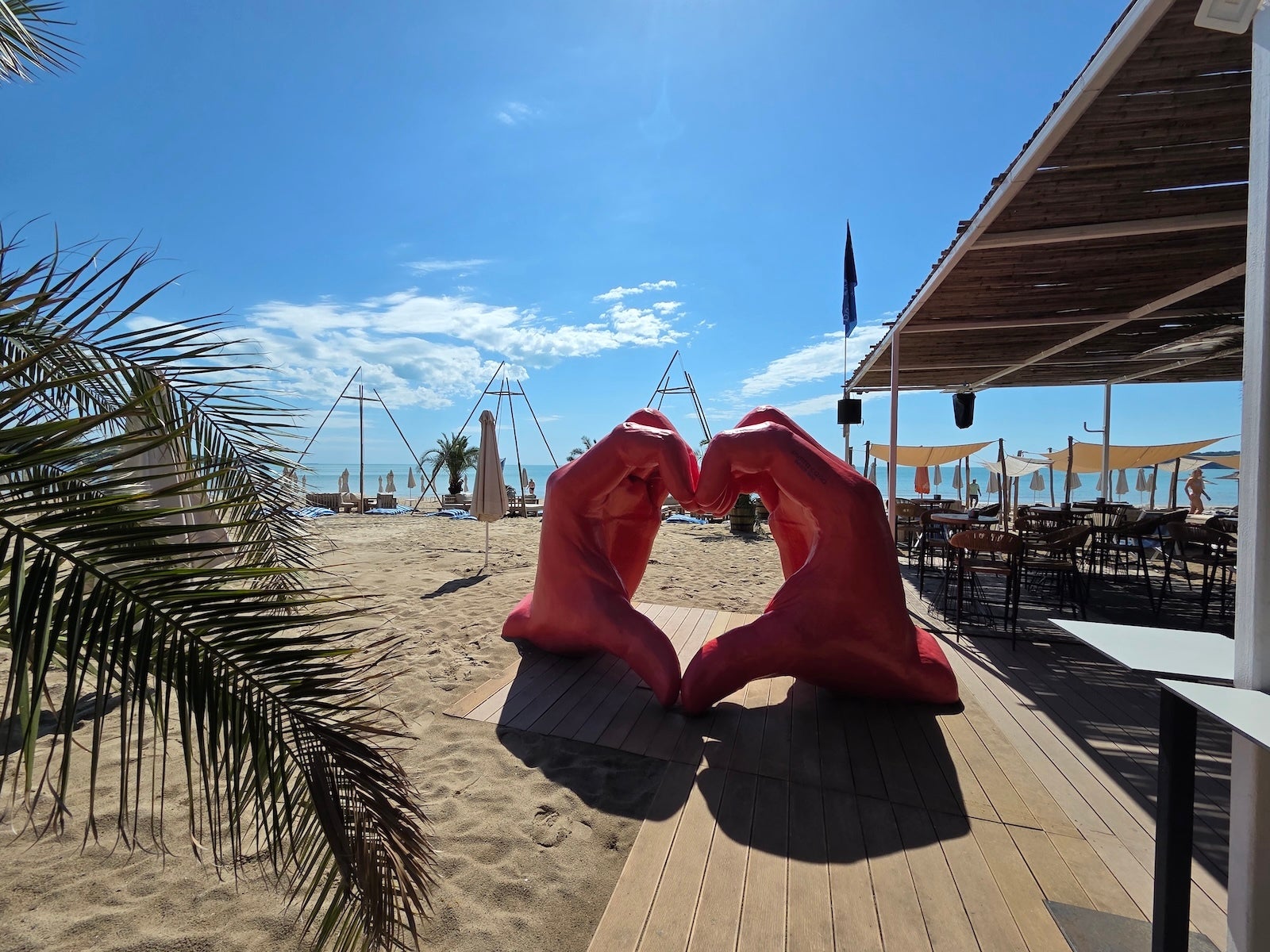
With a 12mm focal length, the ultra-wide camera on the Razr Fold captures an even wider perspective than the 13mm lens on the Galaxy Z Fold 7.
Ultra-wide photos have the same character as the main lens — brighter, with lifted shadows and vibrant colors.
< Razr FoldGalaxy Fold 7 >
< Razr FoldGalaxy Fold 7 >
< Razr FoldGalaxy Fold 7 >
< Razr FoldGalaxy Fold 7 >
Selfies
< Razr FoldGalaxy Fold 7 >
The front camera on the Razr Fold also captures a richer picture than the Galaxy. I tried taking this selfie in our office kitchen and you can see the background completely blown out on the Samsung, while the Motorola preserves it well.
Motorola Razr Fold Performance & Benchmarks
Fast chip and plenty of RAM
Image by PhoneArena
The Razr Fold comes with the Snapdragon 8 Gen 5 chip coupled with a generous 16GB of RAM.
I did not notice it stutter or slow down in daily use, but what about more intense tasks?
CPU Performance Benchmarks:
Geekbench 6 Single Higher is better
Motorola Razr Fold2617
Samsung Galaxy Z Fold 72948
Google Pixel 10 Pro Fold2320
Geekbench 6 MultiHigher is better
Motorola Razr Fold8819
Samsung Galaxy Z Fold 79365
Google Pixel 10 Pro Fold6288
Geekbench 6: A high single-core score is what makes your phone feel snappy during everyday tasks like opening apps, typing and browsing. The multi-core score matters most when doing heavier work like video editing or gaming.
The Razr Fold is behind the Galaxy Z Fold 7 in CPU performance, but not by much. It is far ahead of the Google Pixel 10 Pro Fold, though.
AI-QuantizedHigher is better
Motorola Razr Fold3966
Samsung Galaxy Z Fold 75246
AI Quantized: This test measures how efficiently your phone's 'brain' handles AI tasks, ensuring that features like live translation and smart photo editing feel instant and fluid without draining your battery.
The Galaxy also takes the win with on-device AI speed.
GPU Performance
3DMark Extreme(High)Higher is better
Motorola Razr Fold4804
Samsung Galaxy Z Fold 75358
Google Pixel 10 Pro Fold3248
3DMark Extreme(Low)Higher is better
Motorola Razr Fold3271
Samsung Galaxy Z Fold 72823
Google Pixel 10 Pro Fold2304
Wild Life Extreme is a heavy graphics workload used to measure a device's sustained GPU performance and thermal throttling. It uses older mobile rendering techniques and is friendly to older or lower-end mobile devices.
And what about gaming? Well, the Razr Fold is certainly a powerful phone, but there are some nuances. In the older Wild Life Extreme test, it beats the Galaxy by some margin.
3DMark Steel Nomad Light(High)Higher is better
Motorola Razr Fold2035
Samsung Galaxy Z Fold 72333
3DMark Steel Nomad Light(Low)Higher is better
Motorola Razr Fold1369
Samsung Galaxy Z Fold 71443
Steel Nomad Light Stress Test: Measures your phone's 'gaming stamina' by comparing its peak speed (High) against its throttled speed after it heats up (Low), revealing whether your performance will stay smooth or start lagging during a long session. It loads heavier, more modern effects than Wild Life Extreme and is more in line with current games.
However, when you run the newer Steel Nomad test, you can see that the Galaxy actually comes on top, and that test is more indicative of the graphics you'd find in modern games.
3DMark Solar Bay Extreme(High)Higher is better
Motorola Razr Fold660
Samsung Galaxy Z Fold 71212
3DMark Solar Bay Extreme(Low)Higher is better
Motorola Razr Fold564
Samsung Galaxy Z Fold 7782
Ray Tracing: The test measures Ray Tracing performance because this advanced technology creates the hyper-realistic reflections and shadows found in next-gen titles like Arena Breakout. Even if you don't play games with ray tracing, a high score here means your phone has a 'best-in-class' cooling system.
The Razr Fold comes with 512GB of native storage and it uses the newer UFS 4.1 storage type.
Random Read(MB/s)Higher is better
Motorola Razr Fold48.7
Samsung Galaxy Z Fold 749.6
Random Write(MB/s)Higher is better
Motorola Razr Fold51
Samsung Galaxy Z Fold 785
Sequential Read(MB/s)Higher is better
Motorola Razr Fold1420
Samsung Galaxy Z Fold 73180
Sequential Write(MB/s)Higher is better
Motorola Razr Fold882
Samsung Galaxy Z Fold 71090
Storage tests measure how quickly your phone can move data. Random read and write show how fast your phone can find and move thousands of tiny, scattered files. This is the most important metric for an average user because it's what happens when you open an app, check your notifications, or search through your photo gallery. Sequential read and write measure the speed of moving one giant, continuous file. You'll notice this when you are saving a 4K video you just recorded or downloading a massive game update.
Interestingly, though, storage speed tests show the Galaxy pulling ahead, in both random and sequential tests.
Motorola Razr Fold Software
The Razr Fold comes with a promise for 7 years of OS upgrades and up to 7 years of security updates — a big change from the usual Motorola software policy. For comparison, the new 2026 Razr flip phones are still stuck with only 3 years of Android updates and 4 years of security patches.
The Razr Fold and Motorola Signature are the only two Motorola phones currently receiving the 7-year guarantee.
I also generally like the lightweight and simple Hello UI skin, running on top of Android 16, but I miss some features from the Fold 7. For example, the app drawer on the Fold can take two different forms and I can clearly see my most recently installed apps, while you don't have that option on the Razr Fold.
So what are the specific foldable phone features here?
I like the Proactive Split-Screen on the Moto. When you manually siwtch back and forth between two apps, Hello UI will suggest you to "Open in split screen" instantly. Clever!
And when you are inside messaging apps like Gmail or Google Messages and tap a link, it will automatically splits the screen, opening the link in Chrome on one side without leaving the main app.
I also appreciate that Motorola places a dedicated split-screen button directly on every card in the app switcher view, so you don't need to hold down or dig through submenus.
Admittedly, though, you don't have some other cool features. I loved using two-finger gestures on the Samsung Galaxy Fold where you swipe with two fingers from the side or bottom to instantly push your current app into a split-screen view.
One of the biggest Motorola Razr Fold achievements is how it manages to cram in a massive 6,000mAh battery in a design that is not significantly thicker than most other foldables out there.
The secret is clearly that Motorola is not afraid to use the new silicon-carbon battery tech, while Samsung and other companies are notoriously late to that party, instead opting to use standard battery chemistry for safety reasons.
We saw that battery propel the Razr Fold ahead in our YouTube video streaming test, where it scored 7 hours and 42 minutes on the main screen, an hour more than the Galaxy and Pixel foldables.
The Motorola also charges surprisingly quickly, supporting a whopping 80W charging speed (but only if you use Motorola's own charger as the company's TurboPower tech is proprietary).
Image by PhoneArena
You also have 50W wireless charging speed support, again only with a compatible Motorola wireless charger. There are sadly no magnets here (meaning no Qi2 or MagSafe support).
Motorola Razr Fold Audio Quality and Haptics
The dual speakers on the Razr Fold sound boomy and deliver a good amount of clarity and even some stereo separation.
Haptics also feel nice and tight, just like you'd expect from a premium flagship.
Motorola Razr Fold Specs
Let's see the full Motorola Razr Fold specs:
Motorola Razr Fold
Samsung Galaxy Z Fold 7
Motorola Razr Fold
Samsung Galaxy Z Fold 7
Design
Dimensions
160.05 x 144.47 x 4.55 mm (~10.68 mm with camera bump)
Motorola is firing on all cylinders in 2026 and you can tell.
The Motorola Razr Fold (2026) is a premium, book-style foldable that genuinely impressed me.
Its biggest win is in ergonomics, as it has a large canvas, a massive battery, yet it feels slim and light enough to be comfortable. The rounded edges and the beautiful styling certainly help.
I am not particularly impressed by Motorola's take on AI, but its clean software and absolute dominance in areas like battery life and charging, plus a capable camera system make this one an easy recommendation.
Still, if you are in no rush, I would wait for Samsung's new Fold 8 family that is rumored to include a new wider-format device that might just prove more practical. But if you are certain in the form factor, the Razr Fold now seems to nail it, plus it has the long software support that was missing before.
Victor, a seasoned mobile technology expert, has spent over a decade at PhoneArena, exploring the depths of mobile photography and reviewing hundreds of smartphones across Android and iOS ecosystems. His passion for technology, coupled with his extensive knowledge of smartphone cameras and battery life, has positioned him as a leading voice in the mobile tech industry.
A discussion is a place, where people can voice their opinion, no matter if it
is positive, neutral or negative. However, when posting, one must stay true to the topic, and not just share some
random thoughts, which are not directly related to the matter.
Things that are NOT allowed:
Off-topic talk - you must stick to the subject of discussion
Offensive, hate speech - if you want to say something, say it politely
Spam/Advertisements - these posts are deleted
Multiple accounts - one person can have only one account
Impersonations and offensive nicknames - these accounts get banned
To help keep our community safe and free from spam, we apply temporary limits to newly created accounts:
New accounts created within the last 24 hours may experience restrictions on how frequently they can
post or comment.
These limits are in place as a precaution and will automatically lift.
Moderation is done by humans. We try to be as objective as possible and moderate with zero bias. If you think a
post should be moderated - please, report it.
Have a question about the rules or why you have been moderated/limited/banned? Please,
contact us.
































Things that are NOT allowed:
To help keep our community safe and free from spam, we apply temporary limits to newly created accounts: