Apple iPhone Duo vs Google Pixel 11 Pro Fold: differences to consider
The wide iPassport is official! But it's landing in a world that already has pretty advanced foldables...
We may earn a commission if you make a purchase from the links on this page.
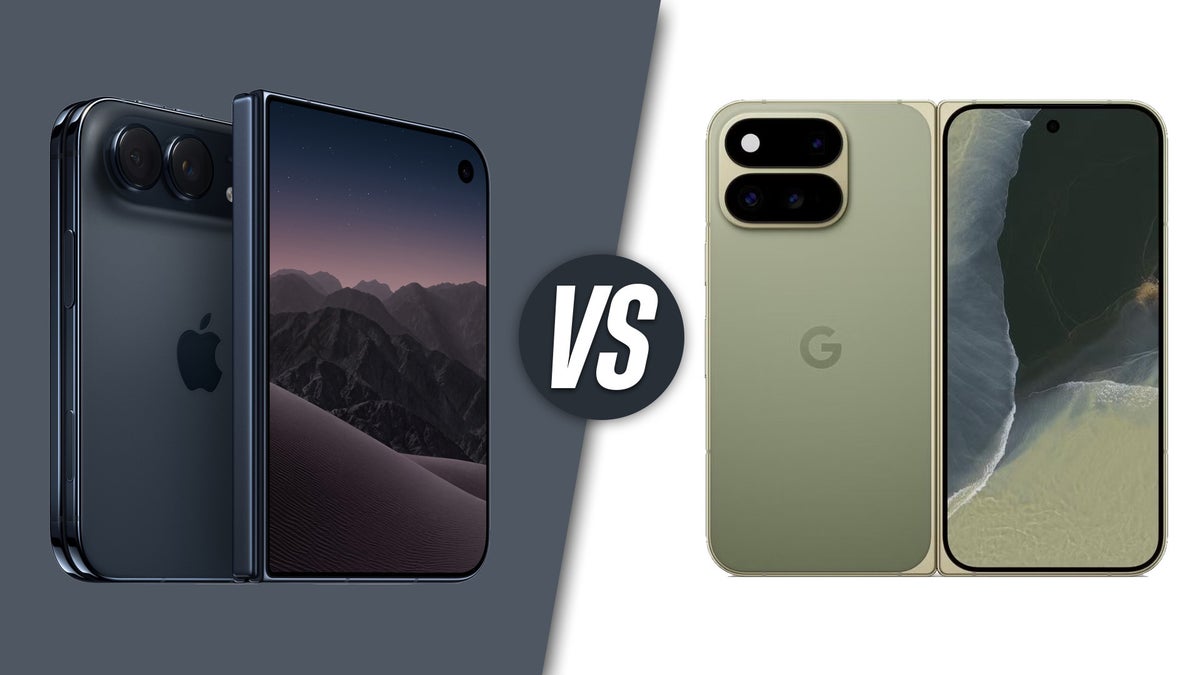
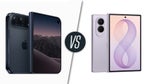
Who is going to fold? | Image by PhoneArena
Apple's long-awaited first-ever foldable (intentionally foldable) is now reality. The iPhone Duo is here, and it is poised to reshape the way foldables evolve moving forward. However, it is landing in a market that has already been evolved by the likes of Samsung and Google. And the Pixel 11 Pro Fold is a 3rd generation foldable from Google, with its kinks supposedly ironed out and its overall design perfected.
And look, thankfully, these devices are actually very different. So, we actually have two offerings to consider instead of pixel-peeping and looking at minor quirks or tendencies when making a choice. Here are the things that drive a major rift between the iPhone Duo and Pixel 11 Pro Fold.
Apple iPhone Duo vs Galaxy Z Fold 8 expected differences:
| iPhone Duo | Pixel 11 Pro Fold |
|---|---|
| A wide wallet-style foldable | A square-ish foldable |
| IP68 water and dust resistance | IP68 water and dust resistance |
| A 7.6-inch internal screen with 1.4:1 aspect ratio | 8-inch main screen, almost 1:1 ratio |
| 5.4-inch outer screen with 1.4:1 aspect ratio, mirroring the main screen | 6.5-inch cover screen, conventional 19.5:9 ratio |
| 3,000-nit peak brightness | 3,600-nit peak brightness |
| Matte layer on the inner screen | Glossy inner screen |
| 12 GB RAM in the base model | 16 GB RAM in the base model |
| Apple A20 Pro chip, built on a 2 nm node | Google Tensor G6, 3 nm |
| Dual camera system (48 MP main + 48 MP ultrawide) | Triple camera (48 MP main + 10.5 MP ultra-wide + 10.8 MP 5x telephoto) |
| 4K120fps video-recording | 4K60fps video-recording |
| Touch ID fingerprint sensor | Fingerprint sensor in power button, face unlock with AI-beefed security |
| 60 W wired charging, 25 W MagSafe 2 | 30 W wired charging, 25 W Qi wireless charging |
Table of Contents:
Read more:
- Apple's iPhone Duo: release date expectations, price estimates and upgrades
- Galaxy Z Fold 8 release date expectations, price estimates and upgrades
Design and Size
Apple's take vs Google's take
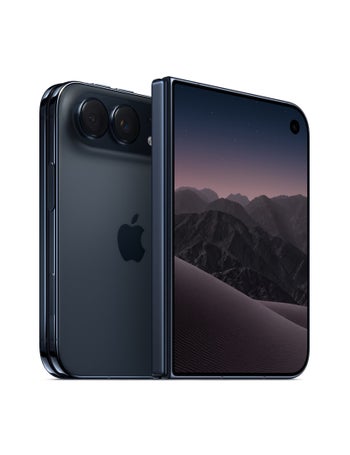
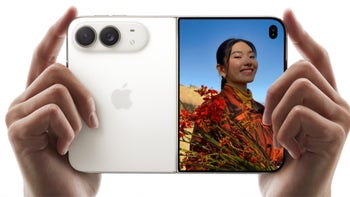
Apple did the Apple thing and entered the market its own way. The iPhone Duo has a wide "passport" design — not unseen before but definitely rare in the market. And a full re-thinking of how iOS 27 operates around it. Even the app dock was moved to the side instead of the bottom.
It also made sure that the build is sturdy, with fancy titanium base plates and carbon fiber reinforcement, plus a full 7-layer protection over the internal screen. All of that, we will inevitably get to see in a teardown or durability test. But what's really interesting for the day-to-day user is that Apple chose to make the main display matte.
All that covered, it also arrives with a splash — safely, because it has IP68 water- and dust-resistance rating.
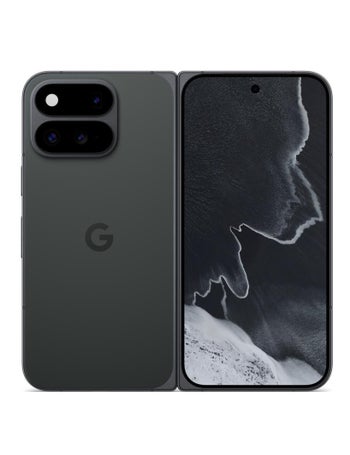
The Pixel 11 Pro Fold was also an evolution of Google's sturdy design, employing an aluminum spine and frame, anodized metal for the camera bump, super-tough ceramic glass for the back and cover screen, and a re-engineered "ultra-thin glass" substrate for the main screen, which reduced the crease down the middle. It's also IP68-rated.
But yes, the crease... the Pixel 11 Pro Fold still has it, shallow as it may be. The iPhone Duo comes out of the gates swinging with a perfectly smooth inner screen.
|
|
| Apple iPhone Duo | Google Pixel 11 Pro Fold |
| Dimensions | |
|---|---|
| 117.8 x 164.6 x 5.2 mm (~10.40 mm with camera bump) | 155.2 x 150.4 x 5.0 mm (~9.0 mm with camera bump) |
| Weight | |
| 254.0 g | 239.0 g |
See the full
Apple iPhone Duo vs Google Pixel 11 Pro Fold specs comparison
or compare them to other phones using our
Phone Comparison tool
Display Differences
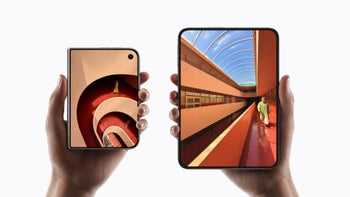
Both devices have very different philosophies. The Pixel 11 Pro XL wants to offer you a "normal smartphone" experience with a conventional aspect ratio on the cover screen and an overall thin build. If you ever feel the need to engage with the bigger display — it unfolds into a square shape, which is not ideal for media and gaming, but perfectly fine to split two apps side by side or explore spreadsheets.
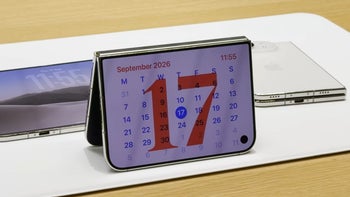
The iPhone Duo strives to offer an entirely new experience in both its forms. The cover screen is a wider one, kind of like on the recently-released Galaxy Z Fold 8. To make use of that extra width, Apple actually moved the dock to the side instead of trying to cram it at the bottom of the homescreen. When you open the iPhone Duo up, it's a much wider canvas — slightly longer than a 4:3 screen. Better for multimedia and games, still lends itself excellently for document work. And, you can turn it vertical for a more taller look if you are reading articles, for example.
Personally, I am a proponent of the wide fold format. The Z Fold 8 was the first time I actually considered fully switching to a foldable phone. The iPhone Duo will be quite exciting to play with!
The iPhone Duo strives to offer an entirely new experience in both its forms. The cover screen is a wider one, kind of like on the recently-released Galaxy Z Fold 8. To make use of that extra width, Apple actually moved the dock to the side instead of trying to cram it at the bottom of the homescreen. When you open the iPhone Duo up, it's a much wider canvas — slightly longer than a 4:3 screen. Better for multimedia and games, still lends itself excellently for document work. And, you can turn it vertical for a more taller look if you are reading articles, for example.
It's also interesting that Apple chose to make the main display matte. I wonder if it was the best or only way they could achieve a nice smooth surface, or the improved durability they promised at the unveiling. It remains to be seen if it distorts details or colors in any way, but I am a fan of Paperlike screen protectors, and am for this change in the iPhone Duo. Especially considering that it will support Apple Pencil as well.
Peak brightness is an on-paper spec that doesn't mean anything until we get to actually measure the screens. But, for what its worth, the Pixel is in the lead here with 3,600 nits peak, where the iPhone Due promises 3,000 nits peak.
|
|
|
| Apple iPhone Duo | Google Pixel 11 Pro Fold |
| Size | |
|---|---|
| 7.6-inch | 8.0-inch |
| Type | |
| OLED, 120Hz | OLED, 120Hz |
See the full
Apple iPhone Duo vs Google Pixel 11 Pro Fold specs comparison
or compare them to other phones using our
Phone Comparison tool
When it comes to cutouts and notches, both screens have a punch-hole selfie camera on their cover displays. Yeah, no Dynamic Island on the Duo, weird. Inside, Apple used an under-screen selfie camera. An experiment, which Samsung dropped, we'll see if it's good or distracting on the Duo when we get it. Google is much more straightforward here and unashamed to simply have a camera cutout on the internal screen as well.
For biometrics, we don't get Face ID on the iPhone Duo. No Dynamic Island, so yeah... no room for those fancy sensors. It uses Touch ID in the power button. The Pixel has a scanner in its power button, too, but also has face unlock which uses the selfie camera and advanced AI algorithms that elevate its security beyond the cheaper and unsafe face unlock methods.
Performance and Software
Apple's chips get another upgrade
The iPhone Duo gets Apple's first 2 nm processor — the Apple A20 Pro. Obviously, it's a leap forward, with another GPU added to make a total of 7. Apple touted huge improvements in gaming frames over the Apple A19 Pro from last year. I am slightly worried about thermals and sustained performance here, but I would hope Apple used all the lessons it learned, and copied the excellent thermal management that the iPhone 17 Pro had.
Google's Tensor chips are famously not at the top of the food chain. They often get outpaced in hardcore benchmark tests, but are well-known to have AI cores specifically developed to support and enhance the work of Google's Gemini on-device.
So, once the benchmarks start rolling in, I fully expect the A20 Pro to be well above the Tensor G6. I would also rely on the iPhone Duo to be better for gaming specifically — both in hardware prowess and game availability in the App Store.
That said, the Pixel 11 Pro Fold does run just fine — snappy and responsive and perfectly smooth for what's intended for. A smart daily assistant, heavy on proactive AI features, and with decent cameras.
|
|
|
| Apple iPhone Duo | Google Pixel 11 Pro Fold |
| System chip | |
|---|---|
| Apple A20 Pro (2 nm) | Google Tensor G6 (3 nm) |
| Memory | |
| 12GB (LPDDR5X)/256GB (UFS 4.1) 12GB/512GB 12GB/1TB 12GB/2TB |
16GB (LPDDR5)/256GB (UFS 4.0) 16GB/512GB |
| OS | |
| iOS (27.x) | Android (17), up to 7 OS updates |
See the full
Apple iPhone Duo vs Google Pixel 11 Pro Fold specs comparison
or compare them to other phones using our
Phone Comparison tool
The Apple iPhone Duo starts off with 256 GB and has storage tiers all the way up to 2 TB. According to preliminary information, it has at least 12 GB of RAM, but we don't know if that increases with the more expensive tiers. The Google Pixel 11 Pro Fold offers 256 GB and 512 GB storage options, both with 16 GB RAM.
In terms of software, Apple made huge strides with iOS 27. We finally get the smarter, topic-oriented, conversational Siri that we've been expecting for maybe two years now. It even gets its own app where you can converse with Siri either through keyboard or voice. And yes, it can pull context from your apps, messages, mails, photos, et cetera and answer or perform a complex string of queries. At least that's what Apple demoed.
Image Playground has also been upgraded to have more styles, so it should feel less like an afterthought app. And the AI image editing tools like Cleanup (Magic Eraser) have been tuned to be more accurate, Apple says.
Of course, Google has had all of these features for a while, as Gemini is a powerhouse in the AI world. And it's actually one of the selling points of the Pixel phones — you are first to get access to the newest, and maybe some exclusive Gemini features that others can't use and are forced to copy. Like "Hold for me", "Direct my call", "Call screening", live sync across your calendar, phonebook, and messages, magic image editing and more on-device processing via the Tensor chip, instead of relying on the cloud.
Camera
Pixel got 3 cameras in there
As expected, Apple cut out the zoom camera from the iPhone Duo. Either for space limitations, price cuts, or just to keep the iPhone 18 Pro unique. In any case, we have a 48 MP main camera with "optical quality" crop-in zoom at 2x. So, still some breathing room in there for portrait photos. And its sidekick is a 48 MP ultra-wide camera.
The Pixel 11 Pro Fold has a 48 MP main camera, 10.5 MP ultra-wide, and 10.8 MP 5x telephoto camera. A bit more options to work with here, even if the sensor resolutions don't sound as impressive on paper. Of course, a full 1 vs 1 is pending here.
|
|
|
| Apple iPhone Duo | Google Pixel 11 Pro Fold |
| Main camera | |
|---|---|
| 48 MP (OIS, PDAF) Sensor name: Sony IMX905 Aperture size: F1.6 Focal length: 24 mm Sensor size: 1/1.28" Pixel size: 1.22 μm |
48 MP (OIS, PDAF) Aperture size: F1.7 Focal length: 24 mm Sensor size: 1/1.56" |
| Second camera | |
| 48 MP (Ultra-wide) Sensor name: Sony IMX972 Aperture size: F2.2 Focal Length: 13 mm Sensor size: 1/2.55" Pixel size: 0.7 μm |
10.5 MP (Ultra-wide) Aperture size: F2.2 Focal Length: 12 mm Sensor size: 1/3.4" |
| Third camera | |
| 10.8 MP (Telephoto, OIS, PDAF) Optical zoom: 5.0x Aperture size: F3.1 Focal Length: 111 mm Sensor size: 1/3.2" |
|
| Front | |
| 12 MP (Under-screen) | 10 MP |
See the full
Apple iPhone Duo vs Google Pixel 11 Pro Fold specs comparison
or compare them to other phones using our
Phone Comparison tool
On the selfie camera front, Apple offers a 12 MP front camera on the cover screen and a "FaceTime" camera hidden under the screen. I'm led to believe that means 1080p camera.
The Pixel 11 Pro Max has equal 10 MP cameras both on both sides. Of course, both manufacturers encourage you to take selfies with their main cameras, while using the cover screen as a viewfinder. The "selfie" cameras are more intended — and marketed as — video call options.
Battery Life and Charging
Apple with fast charging? Say it ain't so!
Apple doesn't like to talk about nitty gritty specs like RAM and battery capacity in mAh. We get the same old "all day battery" promise, which is fine as long as it holds up. But we do get faster charging on the new iPhones! Now at 60 W.
The Pixel 11 Pro Fold has a 4,750 mAh battery, which holds up satisfactorily in our tests. Hold on until we get to put the iPhone Duo through the ringer!
|
|
|
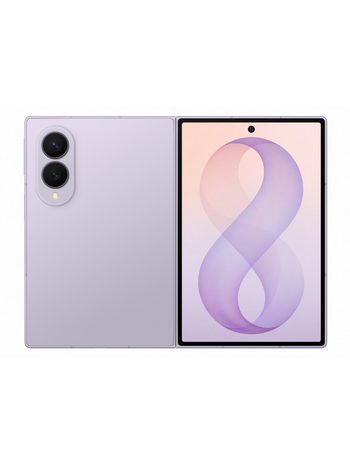
| Apple iPhone Duo | Samsung Galaxy Z Fold 8 |
| Type | |
|---|---|
| 4883 mAh | 4800 mAh |
| Charge speed | |
| Wired: 60.0W Wireless: 25.0W |
Wired: 45.0W Wireless: 20.0W |
See the full
Apple iPhone Duo vs Samsung Galaxy Z Fold 8 specs comparison
or compare them to other phones using our
Phone Comparison tool
The Pixel charges slower, though, with 30 W on the wire. But both have equal wireless charging potential — Apple utilizes MagSafe 2 for 25 W charging on a puck, the Pixel has PixelSnap (based on MagSafe 2) for magnetic alignment and the same 25 W power draw.
Specs Comparison
Here's how the iPhone Duo and the Pixel 11 Pro Fold specs compare.
|
|
|
| Apple iPhone Duo | Samsung Galaxy Z Fold 8 |
| Dimensions | |
|---|---|
| 117.8 x 164.6 x 5.2 mm (~10.40 mm with camera bump) | 123.9 x 161.4 x 4.5 mm (~8.75 mm with camera bump) |
| Weight | |
| 254.0 g | 201.0 g |
| Size | |
|---|---|
| 7.6-inch | 7.6-inch |
| Type | |
| OLED, 120Hz | Dynamic AMOLED, 120Hz |
| System chip | |
|---|---|
| Apple A20 Pro (2 nm) | Snapdragon 8 Elite Gen 5 for Galaxy SM8850-1-AD (3 nm) |
| Memory | |
| 12GB (LPDDR5X)/256GB (UFS 4.1) 12GB/512GB 12GB/1TB 12GB/2TB |
12GB (LPDDR5X)/256GB (UFS 4.0) 12GB/512GB 16GB/1TB |
| OS | |
| iOS (27.x) | Android (17), up to 7 OS updates |
| Type | |
|---|---|
| 4883 mAh | 4800 mAh |
| Charge speed | |
| Wired: 60.0W Wireless: 25.0W |
Wired: 45.0W Wireless: 20.0W |
| Main camera | |
|---|---|
| 48 MP (OIS, PDAF) Sensor name: Sony IMX905 Aperture size: F1.6 Focal length: 24 mm Sensor size: 1/1.28" Pixel size: 1.22 μm |
50 MP (OIS, PDAF) Sensor name: Samsung ISOCELL GN3 Aperture size: F1.8 Focal length: 24 mm Sensor size: 1/1.56" Pixel size: 1.0 μm |
| Second camera | |
| 48 MP (Ultra-wide) Sensor name: Sony IMX972 Aperture size: F2.2 Focal Length: 13 mm Sensor size: 1/2.55" Pixel size: 0.7 μm | 50 MP (Ultra-wide) Sensor name: Samsung ISOCELL JN3 Aperture size: F1.9 Focal Length: 13 mm Sensor size: 1/2.5" Pixel size: 0.7 μm |
| Front | |
| 12 MP (Under-screen) | 10 MP (HDR) |
See the full
Apple iPhone Duo vs Samsung Galaxy Z Fold 8 specs comparison
or compare them to other phones using our
Phone Comparison tool
Summary
So, two very different devices. Apple leaned heavily into the multimedia machine that's also extra smart. That's why it chose a wide screen, and it talked it up quite a lot during the presentation.
Google, on the other hand, is on the main quest of making the smartest smartphone it can. Even if it can't crush 3D games.
To be fair, with modern tech and everyone having top software-developing talent under their respective roof, the line between these devices' functions is incredibly blurry. If you are choosing between the iPhone Duo and Pixel 11 Pro Fold, consider these things foremost:
- Form factor — do you prefer the wide screen for gaming and video, or the more orthodox approach of the Pixel 11 Pro Fold for a "normal" smartphone experience when closed
- Performance — again, mainly a gaming thing but also future-proofing. The Apple A20 Pro chip is simply a beast here
- Ecosystems — App Store exclusive apps vs Play Store filled with millins of options. Apple Watch vs a slightly more lax ecosystem that works with more devices (but there still is a Pixel Watch which is not half bad). AirPods vs Pixel Buds. Et cetera.
- Camera — potentially better on the Pixel, but jury is still out until we get to test the iPhone Due extensively.
Also, do consider the fact that the iPhone Duo is a first-gen device. At this point, I would hope that Apple has learned its lessons and really, really polished the premium foldable until calling it "ready for primetime". In other words, I hope there are no unexpected bugs or literal breaking points. Still, being careful does not hurt.


Related Content
Popular stories


Latest News


Things that are NOT allowed:
To help keep our community safe and free from spam, we apply temporary limits to newly created accounts: