Every product we review or recommend is thoroughly tested by our in-house experts in real-world conditions, following our
review methodology
and
ethics statement
to ensure honest, independent, and data-driven results.
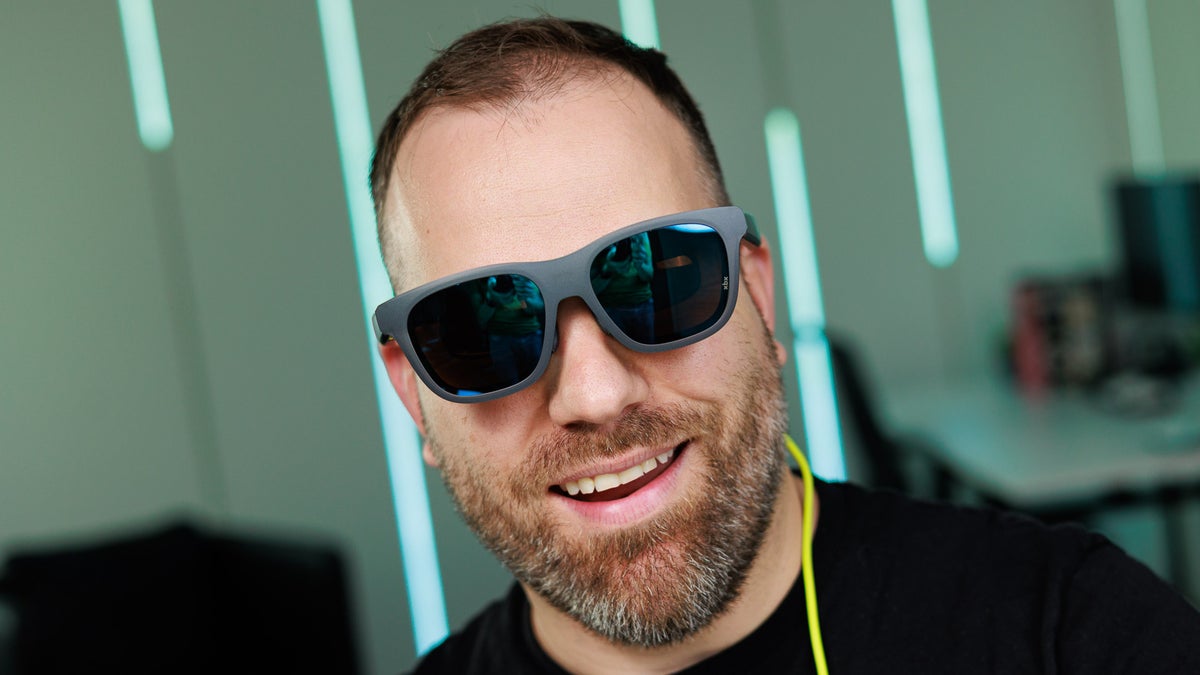
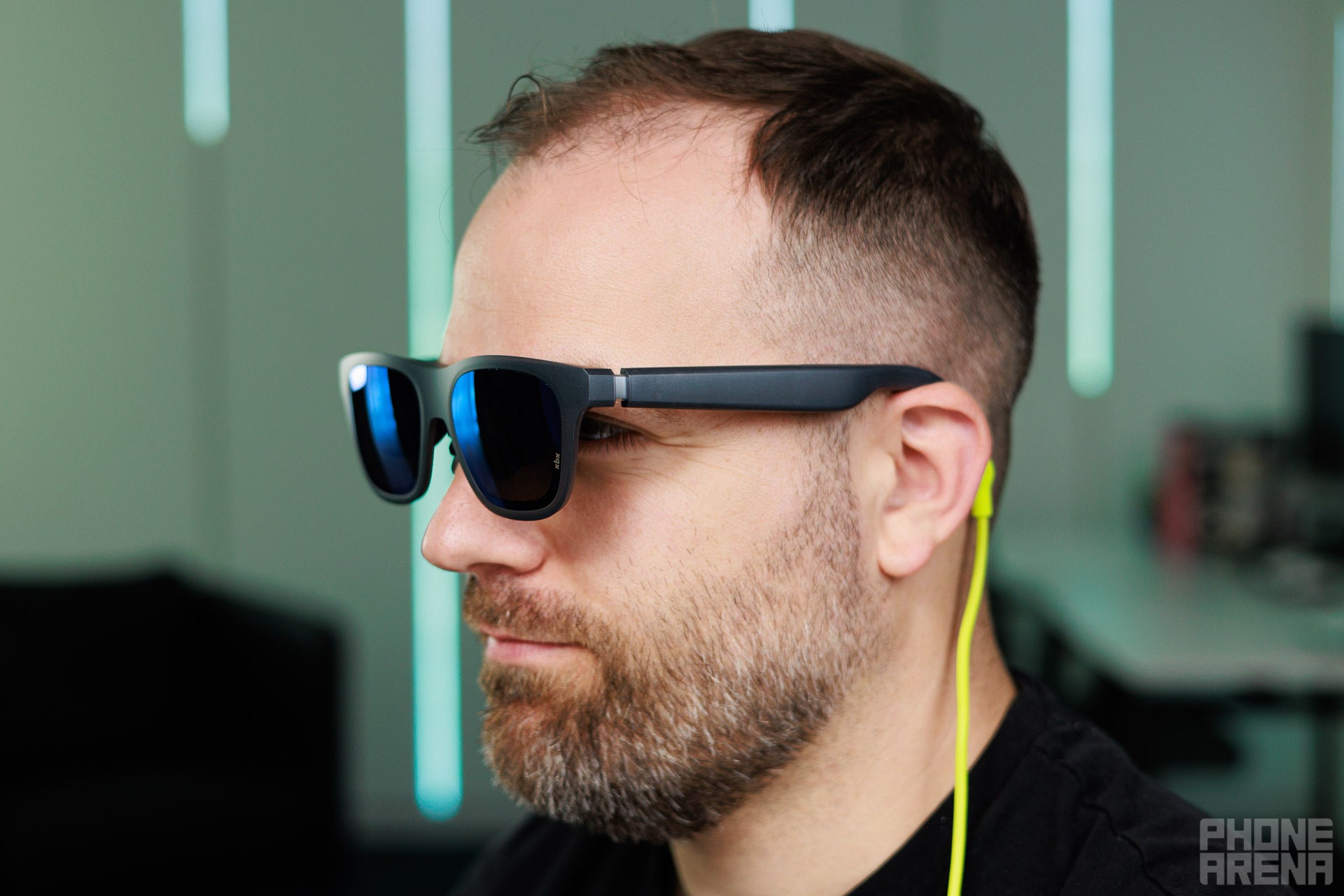
A very different style of XR glasses | Image by PhoneArena
The xbx a01+ is Xreal's foray into a whole new market segment. This is their first truly budget pair of XR glasses, and they are the company's cheapest model to date. Essentially, the xbx a01+ aims to bring the fundamental XR glasses experience to a larger audience at a lower price point.
I've been using the Xreal xbx a01+ for a few weeks now and will share my impressions of these entry-level smart glasses in this review. At $300, these are a direct competitor to the RayNeo Air 4 Pro. The Air 4 Pro, which I reviewed earlier this year, are a very cool pair of glasses, thanks to their affordable price, plug-and-play nature, high image quality and high brightness output. So, let's see if Xreal's first budget glasses can be a worthy alternative and if they actually bring anything new to the table.
What’s new
One look at the Xreal xbx a01+ is enough to see that this is a very different product from Xreal's typical affair. For starters, the name is extremely strange, but in a cool way. There are bright yellow labels and logos decorating both the case and the glasses themselves. Perhaps the most striking design choice here is the display cable, which comes in a matching neon yellow color.
Obviously, the xbx a01+ does not try to act like a typical pair of smart glasses. They are not ashamed of what they are. It also feels like this is a product designed for the younger crowd. At first, I thought the neon accent colors were somewhat jarring, but they quickly grew on me, and I began to appreciate the idea that maybe it's OK for XR glasses to have a pinch of playfulness in their design.
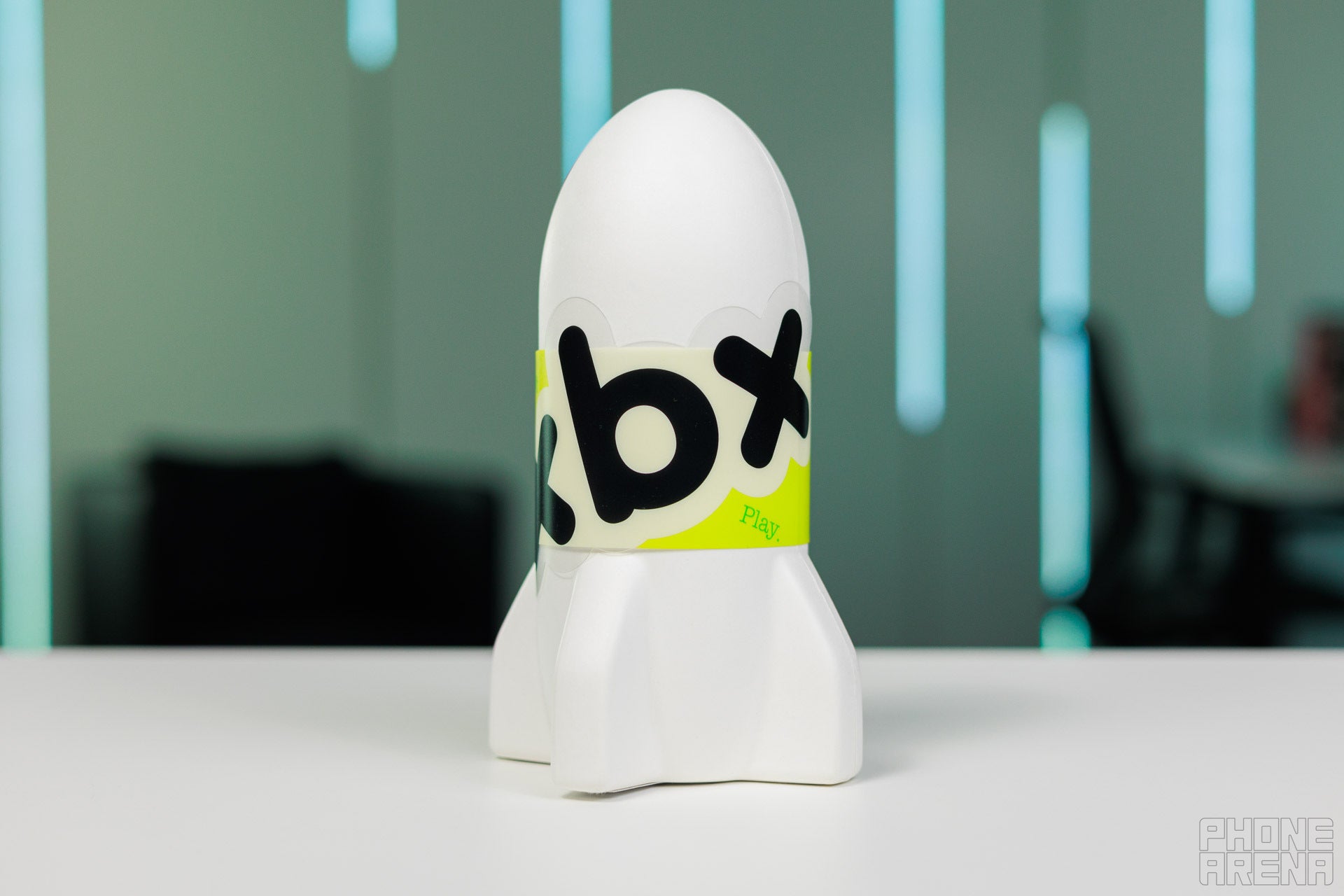
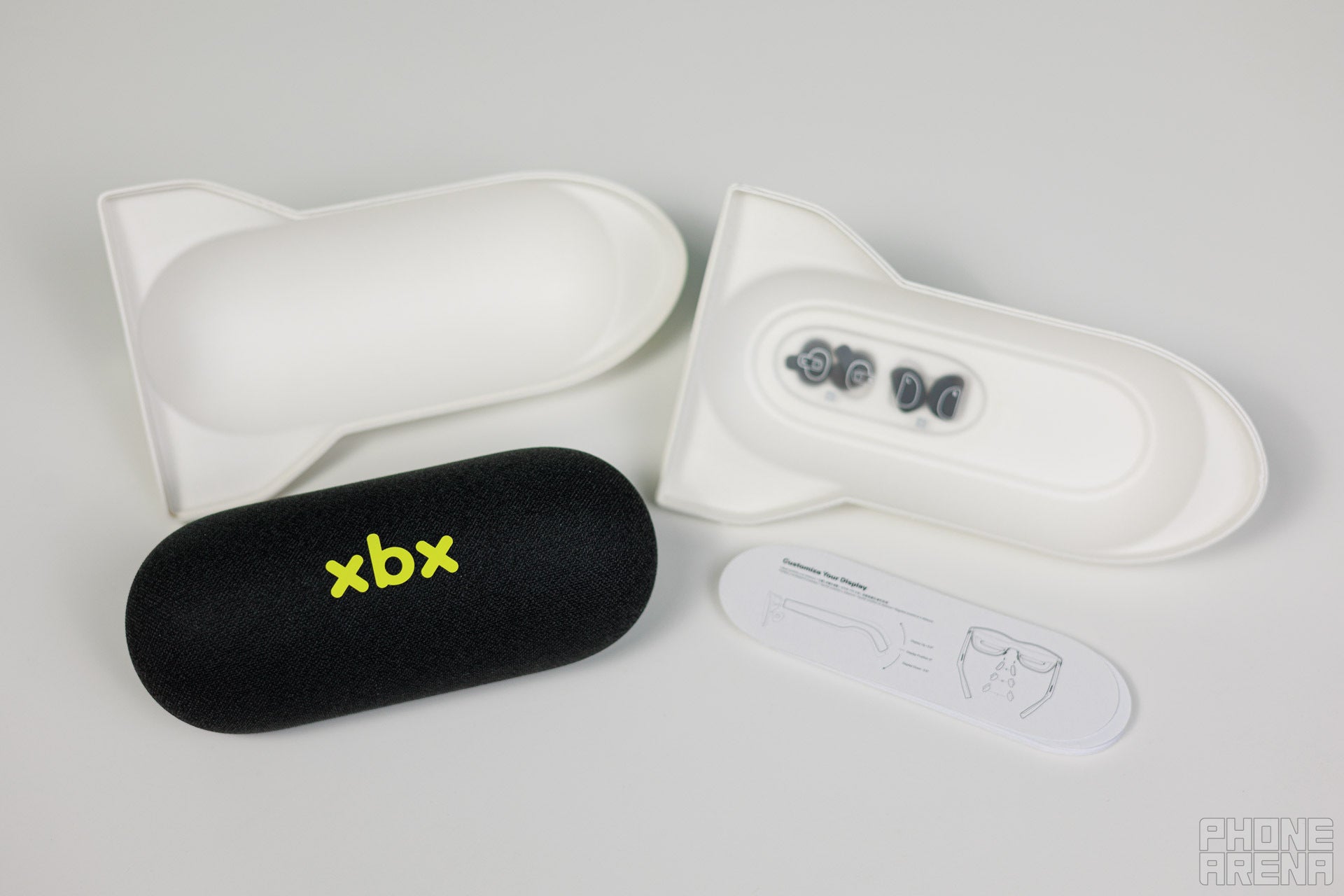
Speaking of playfulness, the xbx a01+ come in the familiar case that Xreal ships with their glasses (although the material it's made from is different), but the retail box has nothing to do with any retail box you've seen. Check it out:
The retail box of the xbx a01+ is brilliant. | Image by PhoneArena
To hit the $300 price point, though, Xreal had to remove some key features that were used in their more premium products. These include electrochromic dimming, audio tuned by Bose, and perhaps most importantly, the lack of an X1 chip, which is what enables the various spatial viewing modes on other Xreal products.
Recommended For You
What this means is the xbx a01+ does not have different screen modes like anchored mode, side view, ultrawide, and so on. Instead, these are a simple pair of wearable displays where you will always be looking at the display, as it will always follow your gaze.
Still, Xreal wanted to add a drop of special sauce here, so they've included a stabilizer mode, which makes the viewing experience feel way more stationary and smooth. This is one considerable advantage of the xbx a01+ over the Air 4 Pro by RayNeo.
The stabilizer doesn't work like Xreal's typical smooth follow mode that we know from the One series. Obviously, this is a simpler solution. As you move your head around, you see the display move and warp a little bit, but it's not an unpleasant thing. By and large, the stabilizer works very well, and I don't think it causes any significant compromises with image quality. At the same time, it's very effective at eliminating erratic movements and keeping the image very stable.
Aside from that, what we have here is a fairly typical XR setup. The micro OLED displays come with 1080p resolution per eye, and they can operate at either 60 Hz or 120 Hz. There is an HDR mode, but it's limited to 60 Hz or 90 Hz. The field of view here is estimated at 50 degrees, which is a little bit better than the Air4 Pro's 46 degrees.
If you've used higher-end XR glasses, the xbx a01+ do feel a little bit tighter, a little bit closed-in, but they still offer you a nicely sized display. What's more, this display can reach up to 1,600 nits of brightness, which is a very high output and more than what most other XR glasses can offer.
Moving on, the xbx a01+ is also one of the lightest, if not the lightest, wearable displays so far, at just 62 g. When it comes to smart glasses, obviously, the lighter, the better, so this is a definite advantage of the a01+. But there is no magic here – after a long session, like 1 hour or more, you'll surely feel the relief when you take them off.
What’s great about the Xreal xbx a01+
You get the familiar case, but this time, it's got a more casual vibe about it. | Image by PhoneArena
I very much enjoyed the design of the a01+. It's very fresh and cool. These glasses don't try to take themselves too seriously. They don't try to hide what they are. Instead, they embrace their youthful nature and their smart glasses DNA, which I like.
The Xreal xbx glasses are fairly simple and don't offer many bells and whistles. However, they do make up for it with very high image quality, while most other wearable displays come with some sort of artifacts, micro flickers, or text that would seem compressed in certain situations. The Xreal xbx a01+ looks clean and rock solid. This is a very similar showing to RayNeo's Air 4 Pro model. I guess the lack of additional image processing helps with retaining clean image quality.
Make no mistake: these glasses are for games, video, and other entertainment. Sure, you can do work on them. You can do whatever you want on them, but the 1080p resolution and the lack of additional screen modes like ultra-wide mean that they aren't very well positioned for productivity.
Things are much simpler if you choose to just look at these as game and entertainment wearable displays.
What needs to be improved
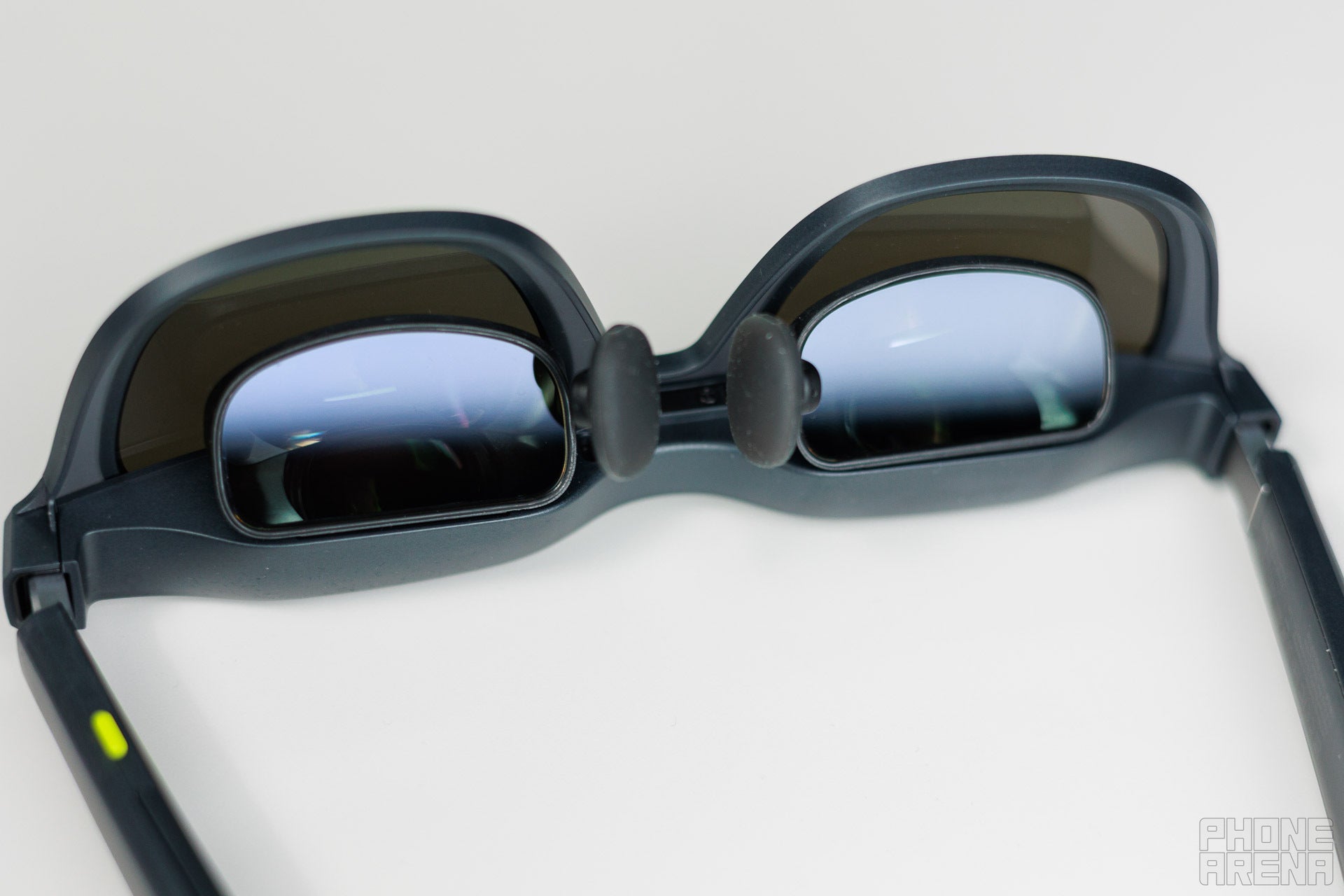
Image by PhoneArena
At such an accessible price point, we can't expect everything to be perfect, and one thing that isn't perfect is the audio quality. The xbx a01+ would definitely not impress you with its speakers. They're fine as a fall-back audio output, but if you really wish to be immersed in your content, the best thing to do would be to also wear earbuds.
Of course, the next major feature that would make Xreal's budget offering that much better would be anchored mode, as well as a higher resolution, but I wouldn't hold my breath for that.
Are the Xreal xbx a01+ worth it?
The front lens have a very cool tint. | Image by PhoneArena
All that said, if you're looking for an affordable pair of XR glasses, the Xreal xbx a01+ is an excellent option at $300. They offer a high quality image, look fresh, and are fairly convenient. There are some meaningful differences against their main competitor, the RayNeo Air 4 Pro. Most importantly, the xbx a01+ offers a stabilizer feature, but the Air 4 Pro counters with richer audio quality and a more standard, mature XR glasses design.
If the lack of spatial features and modes like ultra-wide or anchor mode is a deal breaker for you, obviously you need to spend a little bit more and get Xreal's higher-end 1S or One Pro Plus models. RayNeo's GT Max glasses are also a great alternative to consider.
If you're wondering about XR glasses and whether or not you should try this emerging product category, it makes sense to spend a limited amount on an entry-level option. And the Xreal xbx a01+, at $300, fits that bill very, very well. You can't really go wrong with these XR frames.
Rad Slavov is the Editor-in-Chief at PhoneArena. He joined the media in 2008, right on the cusp of the modern smartphone revolution. Through time and perseverance, he amassed a great deal of knowledge and industry know-how, allowing him to guide and organize the company's growing line-up of talented content creators and ever-expanding content portfolio.
A discussion is a place, where people can voice their opinion, no matter if it
is positive, neutral or negative. However, when posting, one must stay true to the topic, and not just share some
random thoughts, which are not directly related to the matter.
Things that are NOT allowed:
Off-topic talk - you must stick to the subject of discussion
Offensive, hate speech - if you want to say something, say it politely
Spam/Advertisements - these posts are deleted
Multiple accounts - one person can have only one account
Impersonations and offensive nicknames - these accounts get banned
To help keep our community safe and free from spam, we apply temporary limits to newly created accounts:
New accounts created within the last 24 hours may experience restrictions on how frequently they can
post or comment.
These limits are in place as a precaution and will automatically lift.
Moderation is done by humans. We try to be as objective as possible and moderate with zero bias. If you think a
post should be moderated - please, report it.
Have a question about the rules or why you have been moderated/limited/banned? Please,
contact us.







Things that are NOT allowed:
To help keep our community safe and free from spam, we apply temporary limits to newly created accounts: