RayNeo GT Max Review: A superb 3DoF XR glasses deal
RayNeo is on the offense with a more premium pair of XR glasses this time, offering a Pinned spatial screen mode and a wider-than-the-competition, 59-degree FoV.
Every product we review or recommend is thoroughly tested by our in-house experts in real-world conditions, following our
review methodology
and
ethics statement
to ensure honest, independent, and data-driven results.
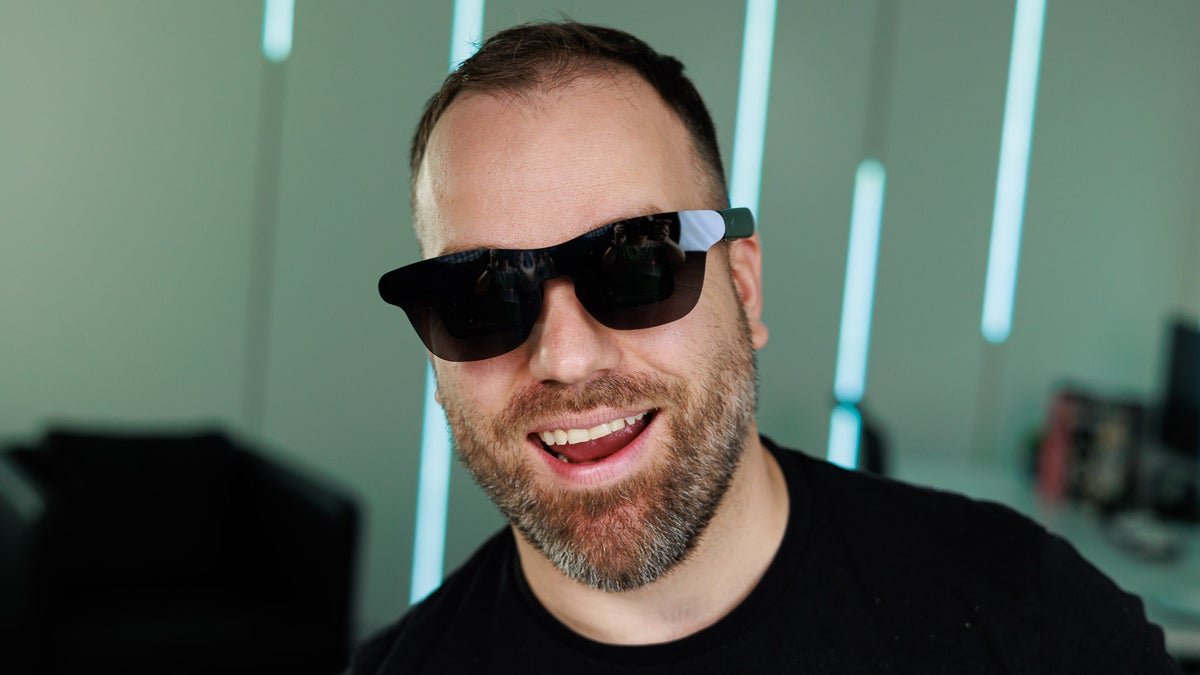
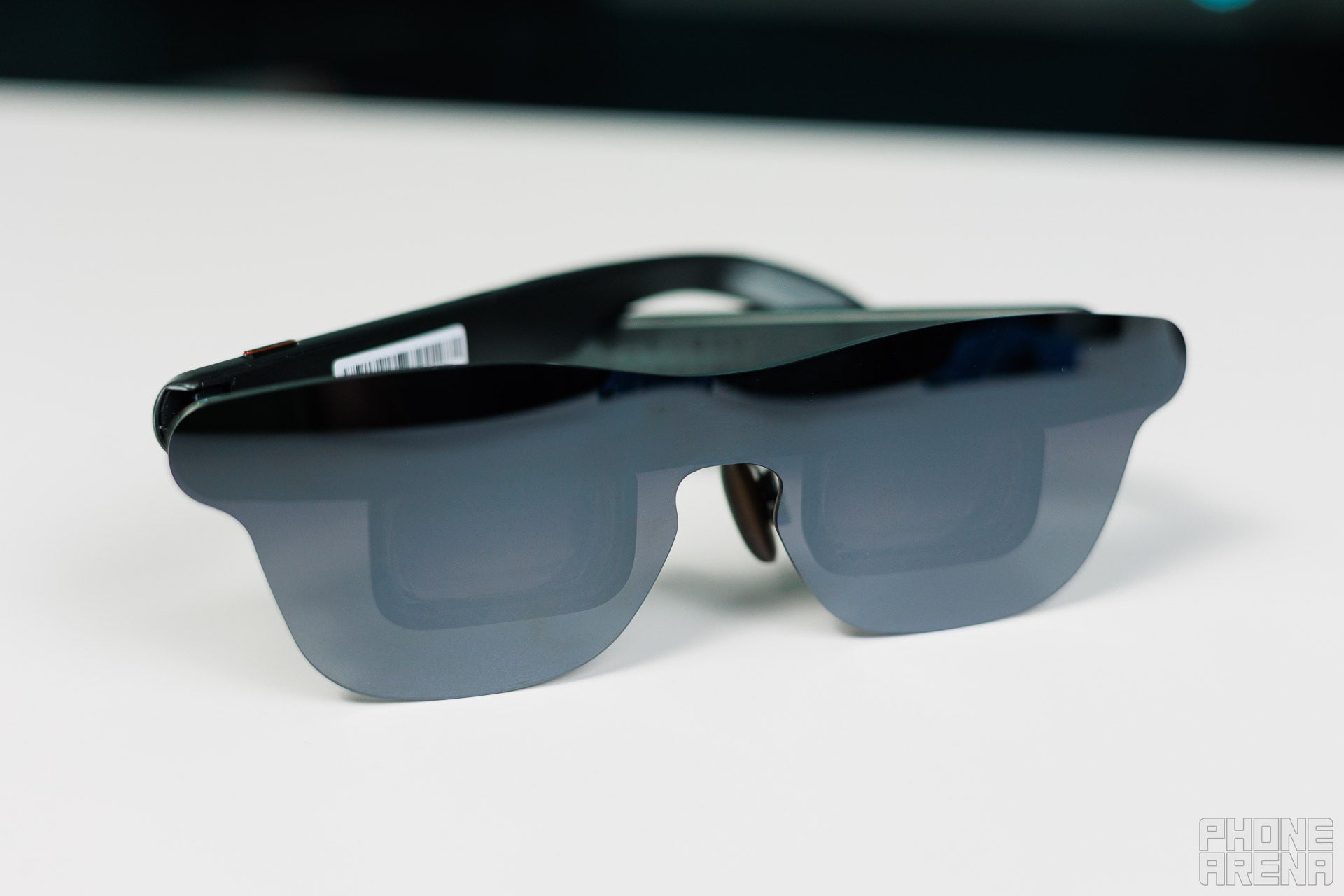
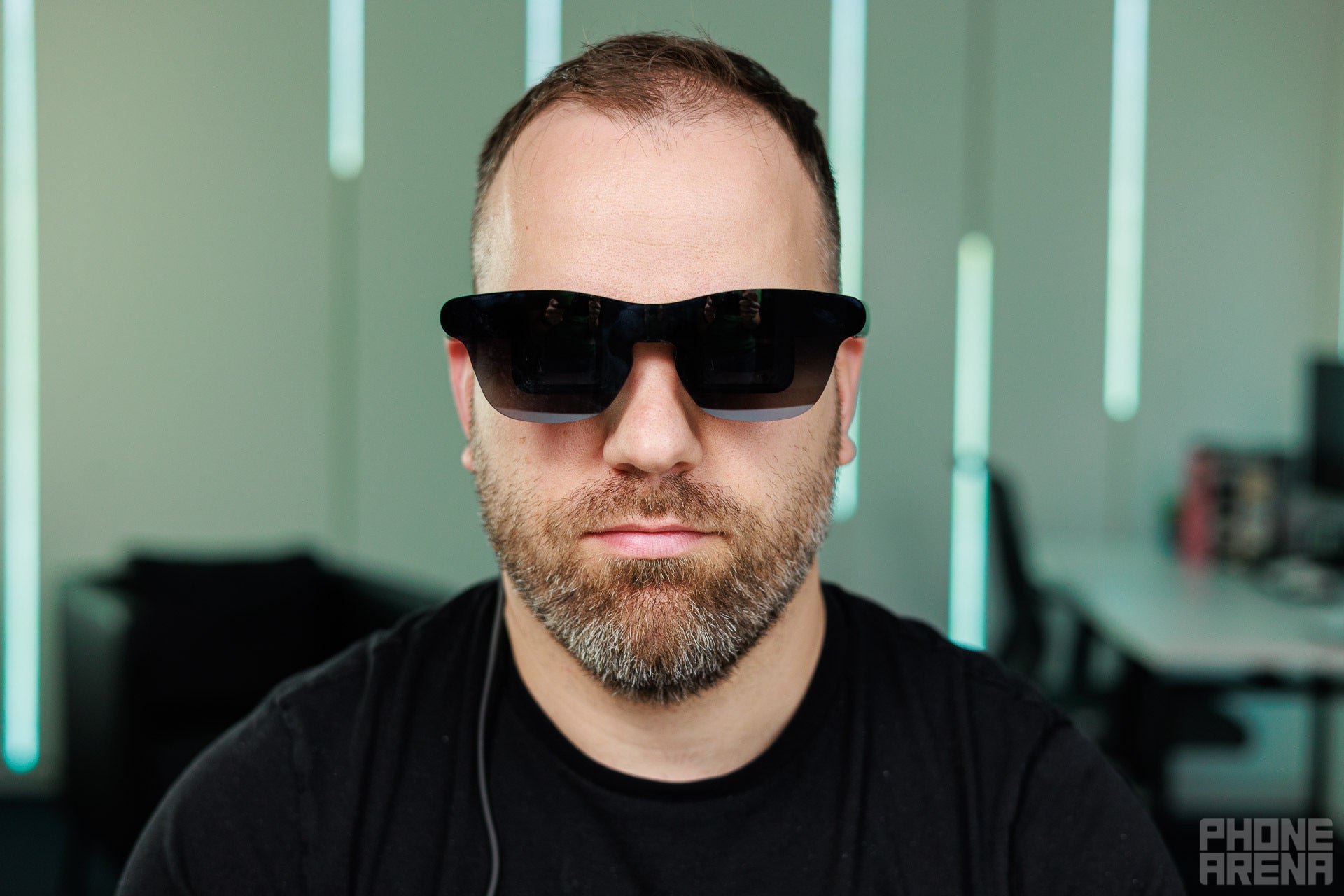
Just like normal sunglasses... from the front. | Image by PhoneArena
RayNeo’s GT Series takes the company's XR efforts to the next level, and the GT Max is the high-end model designed to compete with Xreal’s One Pro, or 1 Pro+. Earlier this year, I really enjoyed my time with the RayNeo Air 4 Pro. At around $300, it remains a great option for a budget pair of XR glasses. Now, the RayNeo GT Max costs around $430, so they're obviously more of a higher-end offering.
One of my major complaints when reviewing the Air 4 Pro was the lack of an anchored mode, and the GT Max fixes this. Not only that, but it brings a much wider field of view, which is a big deal in the world of XR glasses.
Let's dive a little bit deeper to see whether you should go for the simpler Air 4 Pro, or reach for the more premium experience offered by the GT Max.
What’s new in the RayNeo GT Max
So, the RayNeo GT Max isn't a successor to the Air 4 Pro. It is a step up that mainly appeals to those looking for screen anchoring and a wider field of view.
The new Pinned mode, powered by the Zone 360 chip, which enables 3DoF tracking, allows you to position your screen in space. As you turn your head around, the display will remain perfectly stable exactly where you put it.
And it works very, very well. During my testing of the RayNeo GT Max, I had no issues using Pinned mode. No screen drift, nothing.
In addition to the new Pinned mode, you also have the standard direct Follow mode, like on any other RayNeo pair of glasses. There's also Steady mode, which has the display follow your gaze, but in a much more fluid manner. Obviously, Steady mode would be ideal if you happen to be using the RayNeo GT Max while moving around.
The other big upgrade here is the much wider field of view. At 59 degrees, I believe the Ray Neo GT Max are the XR glasses with the widest FOV right now. The Air 4 Pro has a 46-degree FOV, and the Xreal One Pro and One Pro Plus have a 57-degree FOV.
Similar to the Xreal One series, the Ray Neo GT Max allows you to tweak screen size straight from the glasses. No apps, no tethered computing pucks. Well, there is a puck, and it allows you to enable Dolby Vision support, but it also costs another $200, so you really need to consider whether you really need the extra functionality.
Recommended For You
Back to the GT Max, it lets you switch between three different display sizes: 227-inch, 267-inch, and 307-inch displays. The default option, the 267-inch screen, is the one that tends to completely fill your view. If you go to the bigger 307-inch option, the screen will actually become bigger than your FOV, meaning that you need to look around a little bit in order to see the edges.
RayNeo has achieved this wider field of view thanks to the new Peacock Optical Engine 3.0 Max optics. It is a flatter prism design, which is a similar approach to what Xreal uses in the One Pro. The displays themselves are the well-known 0.6-inch tandem micro OLED panels, and they still offer 1080p resolution per eye and a 120 Hz refresh rate. These XR displays can get plenty bright at up to 1,200 nits, but this can only be reached in Follow mode. If you switch to Pinned mode, the maximum brightness is much lower. For reference, this is exactly how it works with Xreal as well, so this is obviously a limitation of the technology right now.
The speakers are advertised as tuned by Bang & Olufsen, and they are not bad for what they are. But I would say, don't expect any wonders from these speakers. If you want really immersive and high-quality audio, you need to pair the glasses with Bluetooth earbuds.
What’s great about the RayNeo GT Max
At 78 g, the RayNeo GT Max is a pleasantly lightweight pair of XR glasses. However, my favorite feature of this generation has to be the Pinned display mode. Maybe this sounds like a gimmick to some of you, but I think it's a game changer for RayNeo XR glasses, as it makes the whole user experience way more convenient and unlocks some very cool things, like the ability to have a much bigger display.
Aside from that, I really appreciate the 59-degree field of view. It's not a secret that one of the bigger limitations of these XR glasses has always been the relatively limited field of view. If you compare that to something like Apple's Vision Pro or any VR headset out there, you undoubtedly notice how much more limited the FOV is with XR glasses. RayNeo's GT Max is pushing the envelope here with its 59-degree FOV, and it really makes a difference. (Although there’s still a lot of room for improvement.)
Of course, the major use cases of these glasses are to be found in gaming and entertainment, where they feel particularly at home. If you connect them to a gaming handheld device like a Steam Deck or a Lenovo Legion Go, all of a sudden, you get a full-blown monitor in front of you, making for a way more immersive experience compared to your handheld’s relatively tiny display.
What needs to be improved
The RayNeo GT Max is a significant step forward, but that doesn't mean that there is nothing left to improve yet.
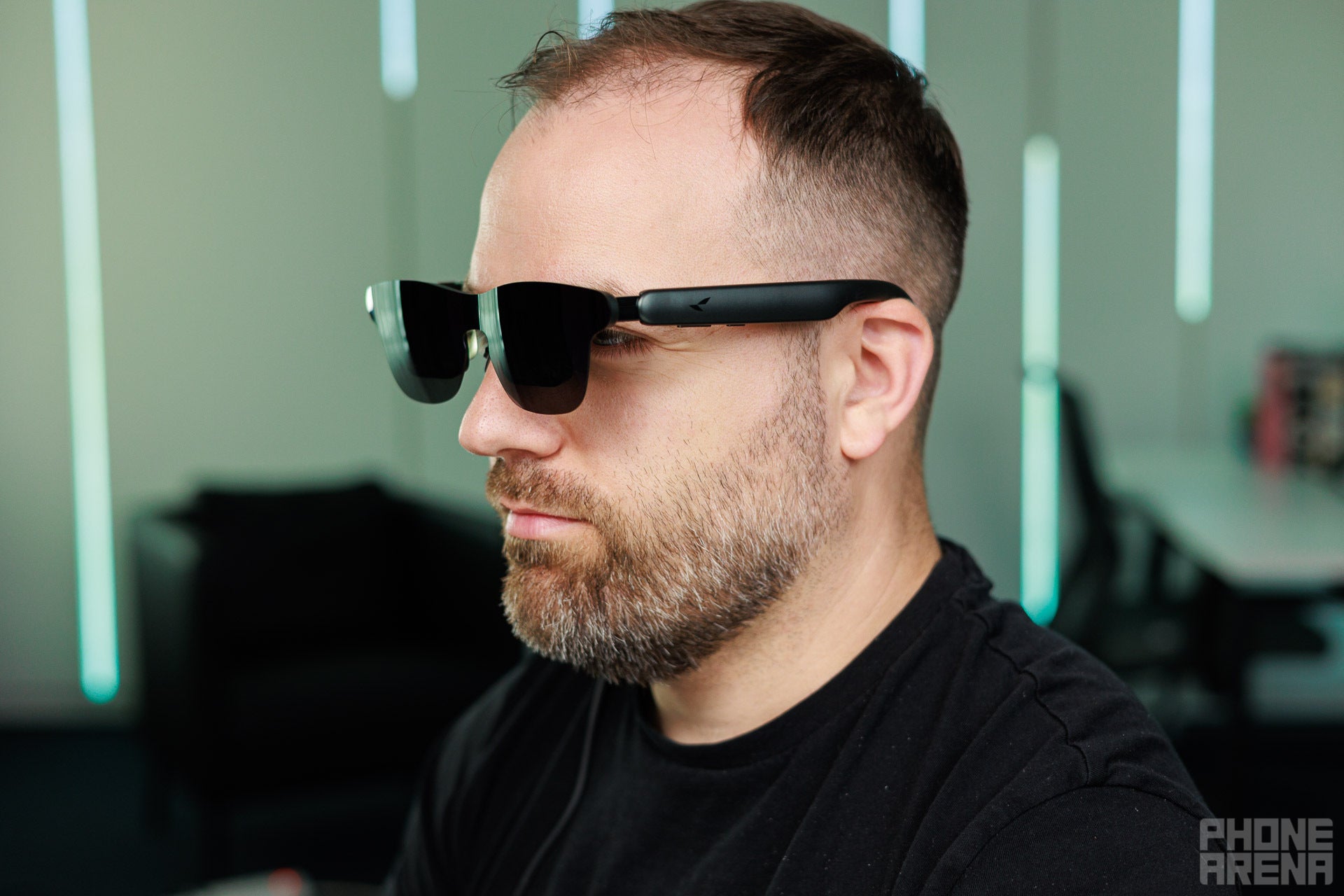
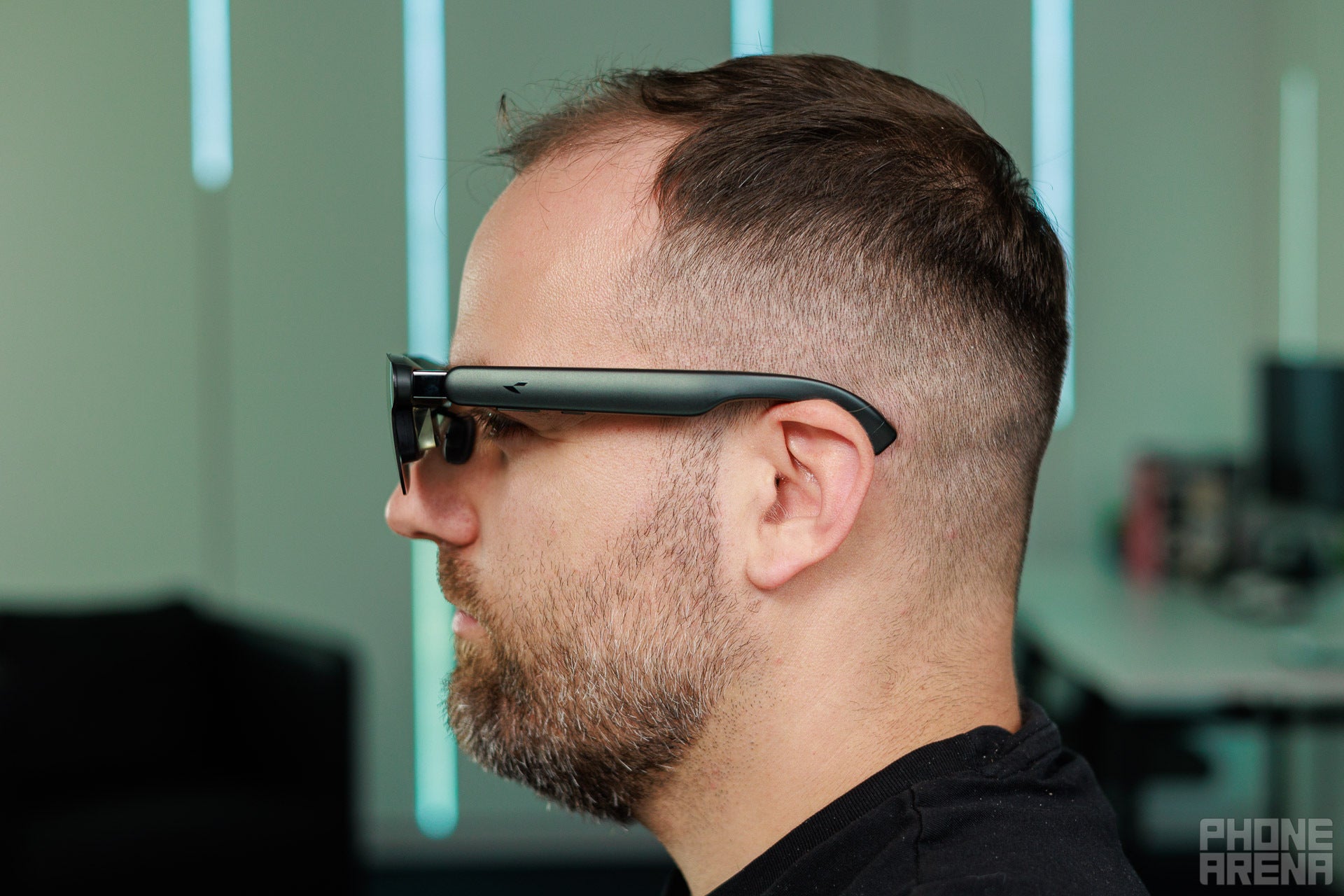
Still not the best from the side, but we're getting there! | Images by PhoneArena
Once again, the resolution is the first thing on my list. The RayNeo GT Max is yet another pair of XR glasses that offers a 1080p pixel resolution per eye. While that's generally great for gaming and video watching, it's not particularly helpful for work and productivity. If the resolution could be cranked up to 2560 x 1440 pixels, that would make for a huge leap in terms of image quality and readability of small details like text.
Of course, if RayNeo can find a way to keep the brightness higher while in Pinned mode, that would undoubtedly be a very significant upgrade as well.
Electrochromic dimming works like magic on the Xreal One series. While it's not a mission-critical feature, it would make RayNeo's flagship glasses a more refined product.
That said the GT Max’s dark lenses are great at creating an immersive view, but if needed, you can get the optional $19 clip-on shades for an extra-dark look with fewer distractions. Not as fancy as electrochromic dimming, but absolutely gets the job done.
Is the RayNeo GT Max worth it?
Image by PhoneArena
For those who are interested in what the GT Max offers, I would say absolutely. It's a great value at $430. This is considerably more expensive than the budget Air 4 Pro model, but the built-in spatial features and significantly wider field of view absolutely justify the higher price.
For those who feel that they don't need the extra features, the RayNeo Air 4 Pro, at around $300, remains a great, inexpensive option to get into XR glasses. On the other hand, if you like the bonus functionality but don't happen to care much for Xreal’s electrochromic dimming, productivity-focused ultra-wide mode, or 2D-to-3D real-time conversion mode, the RayNeo GT Max is positioned perfectly to satisfy your needs.
Rad Slavov is the Editor-in-Chief at PhoneArena. He joined the media in 2008, right on the cusp of the modern smartphone revolution. Through time and perseverance, he amassed a great deal of knowledge and industry know-how, allowing him to guide and organize the company's growing line-up of talented content creators and ever-expanding content portfolio.
A discussion is a place, where people can voice their opinion, no matter if it
is positive, neutral or negative. However, when posting, one must stay true to the topic, and not just share some
random thoughts, which are not directly related to the matter.
Things that are NOT allowed:
Off-topic talk - you must stick to the subject of discussion
Offensive, hate speech - if you want to say something, say it politely
Spam/Advertisements - these posts are deleted
Multiple accounts - one person can have only one account
Impersonations and offensive nicknames - these accounts get banned
To help keep our community safe and free from spam, we apply temporary limits to newly created accounts:
New accounts created within the last 24 hours may experience restrictions on how frequently they can
post or comment.
These limits are in place as a precaution and will automatically lift.
Moderation is done by humans. We try to be as objective as possible and moderate with zero bias. If you think a
post should be moderated - please, report it.
Have a question about the rules or why you have been moderated/limited/banned? Please,
contact us.










Things that are NOT allowed:
To help keep our community safe and free from spam, we apply temporary limits to newly created accounts: