Although T-Mobile, Verizon and AT&T are the biggest carriers in the US, one doesn't have to settle with either of the three. There are numerous MVNOs out there – and Mint Mobile is among the most popular of these mobile virtual network operators.
If you're fond of the green fox (that's Mint's mascot), but you wonder whether you'd be better off with T-Mobile, we've compiled an in-depth article to help you make the best decision.
T-Mobile vs Mint Mobile pros and cons
T-Mobile
Pros:
Broader plan lineup including premium postpaid plans with perks.
Best-in-class 5G availability and speeds according to companies like Ookla.
Extensive unlimited premium data, hotspot allowances, and entertainment bundles.
T-Mobile Tuesdays, international roaming in 215+ countries included on Go5G plans.
Cons:
Higher monthly cost, especially for single-line users (multi-line discounts are essential).
Pricing structure can be complex with various "Go5G".
Many perks are only available on higher-tier (more expensive) plans.
Mint Mobile
Pros:
Versatile low pricing on prepaid & unlimited plans, often less than half of comparable T-Mobile options.
Uses the same 5G network footprint as T-Mobile for much less money.
Simplified plan structure (6 GB, 17 GB, 23 GB, or Unlimited).
Free calling to Mexico, Canada, and the UK.
Cons:
Requires upfront payment for best rates (3, 6, or 12 months)
Fewer included perks (limited streaming, minimal bundled extras).
Subject to "deprioritization", meaning speeds may slow during network congestion.
Pricing and plans comparison
Depending on the kind of subscriber you are, it could be said that generally, T-Mobile is the network that's best for families and those who use data all the time and in all places. If, however, you're a single-line subscriber, maybe Mint is the saner option.
Recommended For You
That's because T-Mobile's way of structuring its offerings. The aim is to bundle services, taxes, and fees into a single advertised monthly rate on most Go5G tiers. This approach is especially attractive for households, since the per-line cost declines noticeably as additional lines are added, making multi-line accounts far more economical.
Mint Mobile takes a very different approach, focusing almost entirely on maximizing value for individual users.
Its model relies on multi-month payment in advance, which reduces recurring billing and administrative costs and allows Mint to undercut traditional monthly pricing. The trade-off is a larger initial payment and the fact that taxes and fees are calculated separately at checkout, which can come as a surprise to new customers.
Feature
T-Mobile (Go5G Plus)
Mint Mobile (Unlimited)
Base Price (1 Line)
$90/mo. (with AutoPay)
$30/mo. (paid annually)
*$15/mo. (a current New Customers Offer)
Base Price (2 Lines)
$150/mo. (with AutoPay)
$60/mo. (paid annually)
Base Price (3 Lines)
$185/mo. (with AutoPay)
$90/mo. (paid annually)
Base Price (4 Lines)
$220/mo. (with AutoPay)
$120/mo. (paid annually)
Taxes and Fees
Included
Extra (plus recovery fees)
Premium Data
Unlimited (No Throttling)
50 GB (then slowed)
Hotspot Allotment
50 GB High-Speed
10 GB High-Speed
Video Quality
Up to 4K UHD
480p (Standard Definition)
International
5 GB high-speed abroad
Minternational Pass ($5-$20)
Perks
Netflix, Apple TV+, Hulu
N/A
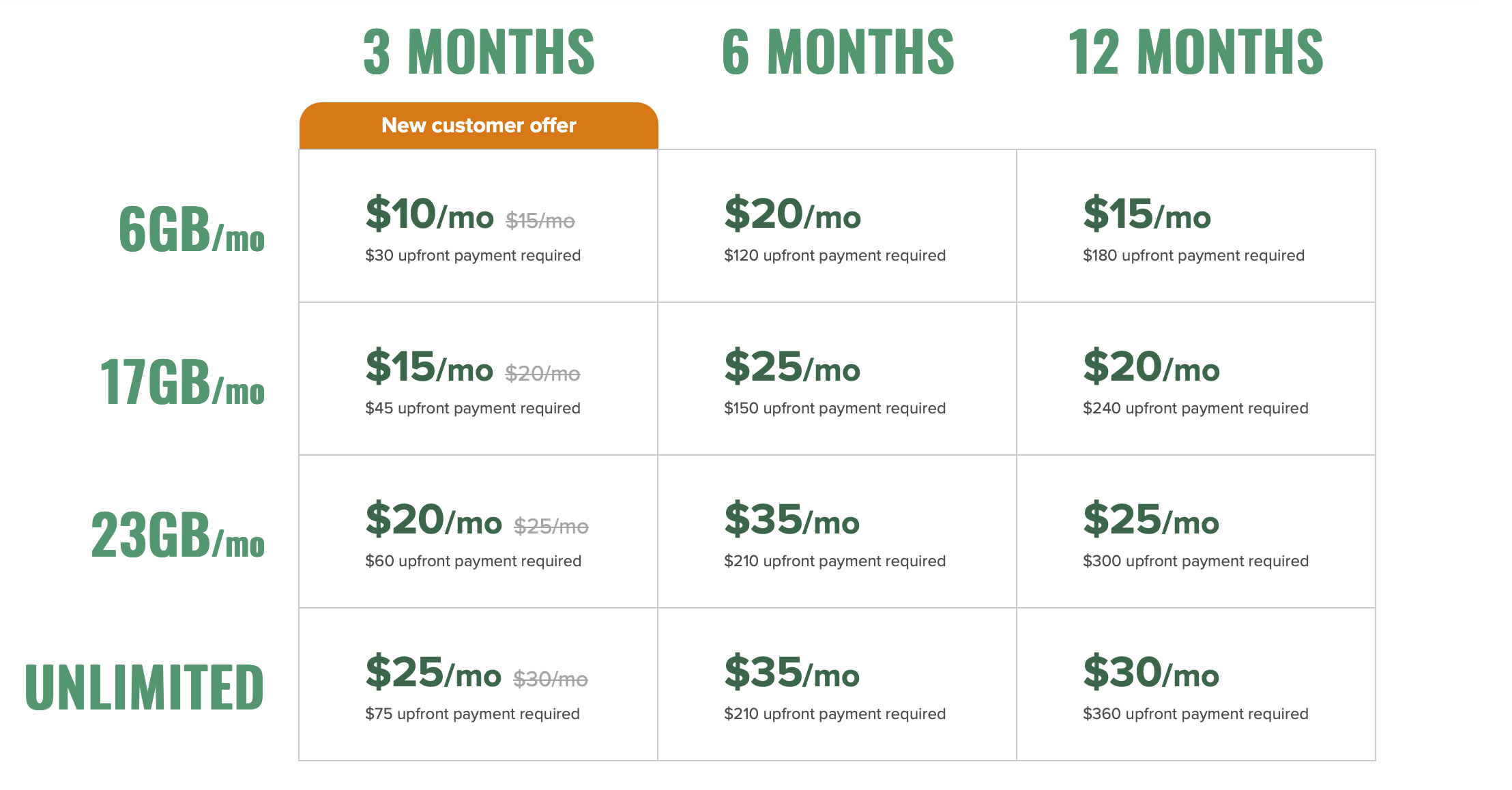
Since June 10, 2026, Mint Mobile has started offering increased data allotments to its core plans at no additional cost to customers. The 5 GB, 15 GB, and 20 GB plans are now becoming 6 GB, 17 GB, and 23 GB, respectively, at no additional cost.
The new core plans. | Image by Mint Mobile
Coverage comparison
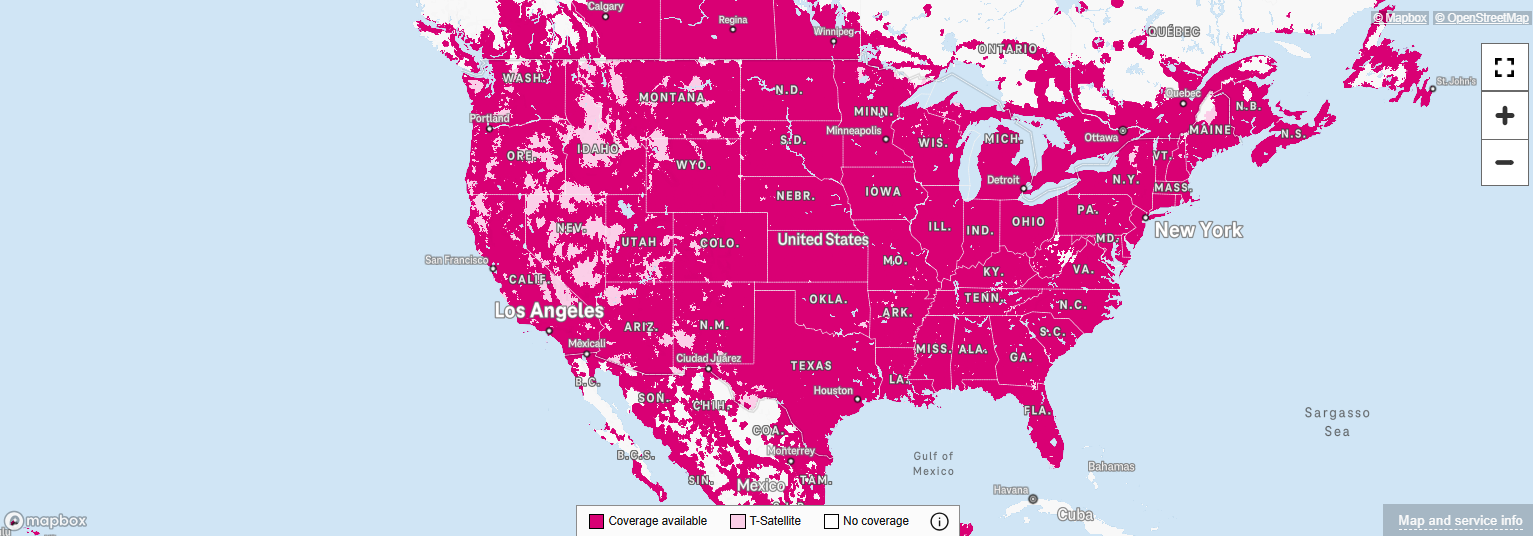
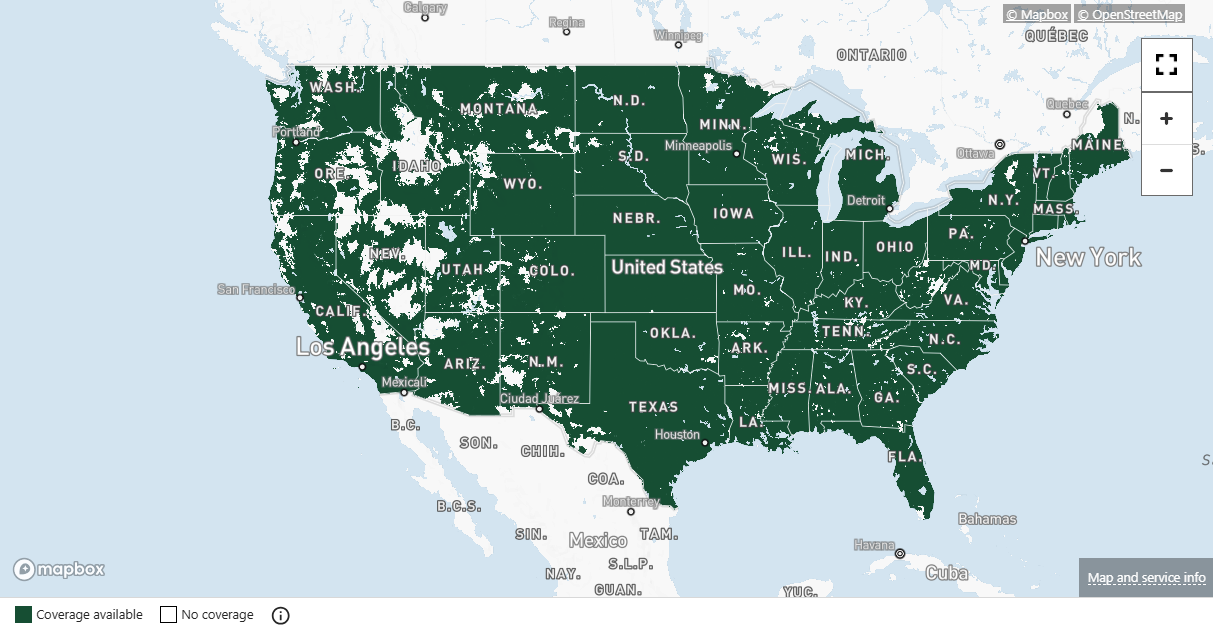
Independent network tests indicate that T-Mobile operates the largest 5G network in the US, reaching more than 98% of the population. Since Mint Mobile uses T-Mobile's 5G and 4G LTE network, its coverage largely matches what T-Mobile shows on its official coverage maps.
Image by T-Mobile
T-Mobile is well known for its wide 5G reach and strong nationwide presence, and third-party testing regularly places it near the top among US carriers.
Image by Mint Mobile
Both services take advantage of T-Mobile's low-band and mid-band 5G, which helps with coverage and speeds in many areas. The main difference appears during busy times, when customers on T-Mobile's higher-tier plans are usually given priority over Mint Mobile users.
The bottom line is that coverage is mostly the same on paper, but real-world performance can favor T-Mobile when the network is crowded.
Reliability
Coverage maps show where a signal should be available, but day-to-day reliability depends on how the network behaves when it gets busy. Independent testing has consistently shown that T-Mobile delivers strong and stable performance, helped by its large spectrum holdings.
Mint Mobile users generally experience the same level of connectivity in areas with solid T-Mobile signal, especially in normal conditions. The difference becomes noticeable during peak times, such as rush hour or crowded events.
T-Mobile customers are given priority access to network capacity, which helps keep speeds and connections steady when towers are congested. Mint Mobile, as a carrier that operates on T-Mobile's network, is deprioritized, meaning its users may see brief slowdowns or less consistent speeds in high-traffic areas.
Overall, reliability feels similar in many urban and suburban settings during off-peak hours, but T-Mobile tends to have the advantage when the network is under heavy load.
Network performance
In daily use, both carriers feel fast because they rely on T-Mobile's 5G and 4G network. Basic tasks like web browsing, social media, and HD video streaming are usually smooth, with little to no buffering.
In areas with strong 5G Ultra Capacity (T-Mobile's 5G network that combines mid-band and high-band spectrum) coverage, speeds can be very high for both services.
The differences show up for heavier use. T-Mobile customers on higher-tier plans can stream video at higher quality, including 4K, while Mint Mobile limits streaming quality to standard definition. T-Mobile also offers larger hotspot allowances and more consistent speeds for users who rely heavily on mobile data, making it a better choice for power users.
If you always watch your dramas in 4K, you should go with T-Mobile.
Phone selection
This area is a major point of difference.
T-Mobile provides a full range of the latest flagship phones, including iPhones, Samsung Galaxy devices and Google Pixels with $0-down financing and trade-in offers that can reach several hundred dollars. You should always read the fine print, though, as these flagships are not literally "free".
Mint Mobile also supports these flagship devices and eSIM activation, but most customers need to pay for their phones upfront or use third-party financing options like Affirm.
Mint Mobile works especially well for users who already own an unlocked phone, as it supports Bring Your Own Device (BYOD) setups. While T-Mobile has more in-house selection, financing options, and promotions, Mint focuses on flexibility for existing devices and straightforward eSIM activation.
If you're the kind of person who likes to experiment with phones and brands, it's probably safer to play along with Mint.
Features and perks
As a true corporation, T-Mobile stands out for its extras and perks. Its higher-tier plans often include streaming services like Netflix, Hulu, and Apple TV+, along with 50 GB of high-speed hotspot and free in-flight Wi-Fi (on select airlines). The T-Mobile Tuesdays app also offers weekly discounts and free items, giving customers additional value.
Mint Mobile takes a simpler approach, focusing on unlimited talk, text, and data without bundled streaming or shopping perks. It does include some basic benefits, such as free calling to Mexico and Canada, which can be useful for light international use.
Customer service
T-Mobile offers a full-service support experience, with 24/7 phone and live chat options, plus the ability to visit physical stores for in-person assistance.
Mint Mobile, in contrast, operates entirely online and through phone support, with help available via their app, an AI chatbot, or a support line from 5 am to 7 pm PST. While Mint's support is generally reliable for a budget carrier, it lacks the convenience and hands-on options that T-Mobile's retail network provides.
Of course, customer support is a sensitive issue for any carrier or MVNO out there, and nobody's perfect, to put it mildly.
Which carrier should you choose?
For solo users on a tight budget, Mint Mobile is the clear choice, offering the lowest annual cost for basic unlimited service.
Families may benefit more from T-Mobile, where multi-line discounts and included perks like streaming services can make the higher base price worthwhile.
Travelers and remote workers will find T-Mobile's generous 50 GB hotspot and international roaming options more suitable.
Similarly, heavy hotspot users are better off with T-Mobile, since Mint Mobile's 10 GB limit can be quickly exceeded when using laptops or other high-data devices.
If you often change handsets (and you explore brands beyond Apple, Samsung or Google) go with Mint.
FAQs
What's the main difference between T-Mobile and Mint Mobile?
T-Mobile is a full-service carrier with more perks, multi-line discounts, and in-store support, while Mint Mobile is a budget-friendly MVNO using T-Mobile's network, sold mostly online with prepaid plans.
Is T-Mobile really unlimited data?
Yes, T-Mobile offers unlimited data with no throttling on higher-tier plans, though speeds may slow in congested areas for some plans.
Is Mint Mobile cheaper than T-Mobile?
Yes, Mint Mobile is usually much cheaper, but only if you compare Unlimited plans for a solo line, though taxes and fees are added at checkout.
Do T-Mobile and Mint Mobile offer hotspot and wearable support?
Both support hotspots and wearables, but T-Mobile offers larger high-speed hotspot limits (50 GB vs. Mint's 10 GB) and more consistent speeds during busy times.
Which network is better: T-Mobile or Mint Mobile?
Coverage is similar since Mint uses T-Mobile's network, but T-Mobile generally performs better in crowded areas and for heavy users thanks to priority access and higher-tier perks.
Who should choose T-Mobile vs. who should choose Mint Mobile?
T-Mobile is best for families, frequent travelers, and heavy data users who want perks and reliable high-speed access. Mint Mobile suits solo users, budget-conscious customers, and those who already have an unlocked phone or don't need extra perks.
Six-month unlimited plan is now 57% off
$90
$210
$120 off (57%)
Mint Mobile is now allowing you to get whichever plan you like for either three, six, or 12 months for just $15/mo. If you go for the six-month unlimited service, for instance, you'll now have to pay just $90 upfront instead of $210.
Sebastian is one of PhoneArena’s senior opinionators. A veteran news writer with almost 20 years of experience in media and technology, he not only covers all the hot news about Galaxies and iPhones, but often provides hot takes on industry trends. He’s fascinated with camera-focused flagships from the likes of Oppo and Vivo, as well as foldable phones.
A discussion is a place, where people can voice their opinion, no matter if it
is positive, neutral or negative. However, when posting, one must stay true to the topic, and not just share some
random thoughts, which are not directly related to the matter.
Things that are NOT allowed:
Off-topic talk - you must stick to the subject of discussion
Offensive, hate speech - if you want to say something, say it politely
Spam/Advertisements - these posts are deleted
Multiple accounts - one person can have only one account
Impersonations and offensive nicknames - these accounts get banned
To help keep our community safe and free from spam, we apply temporary limits to newly created accounts:
New accounts created within the last 24 hours may experience restrictions on how frequently they can
post or comment.
These limits are in place as a precaution and will automatically lift.
Moderation is done by humans. We try to be as objective as possible and moderate with zero bias. If you think a
post should be moderated - please, report it.
Have a question about the rules or why you have been moderated/limited/banned? Please,
contact us.






Things that are NOT allowed:
To help keep our community safe and free from spam, we apply temporary limits to newly created accounts: