Companies that aren't involved in telecommunications are dipping their feet into the water and are becoming Mobile Virtual Network Operators (MVNO). An MVNO is a wireless provider that doesn't own any cell towers or other network infrastructure. MVNOs buy "airtime" wholesale from Mobile Network Operators (MNOs) like Verizon, T-Mobile and AT&T, and sell it to consumers for a profit.
Report says global MVNO customers will rise 31.5% to 458 million by 2030
A fresh report says that retailers, digital brands, and "fintechs" (financial technology) are moving into the business. Of course, that doesn't happen unless the demand is there and estimates from Juniper Research show that it is. The latter estimates that the number of global MVNO customers will rise 31.5% from 333 million this year to 438 million by 2030. By that year, the MVNO business could generate $1.9 billion in revenue according to Juniper.
Would you be apt to use an MVNO owned by the supermarket chain you shop at?
114 Votes
Yes. If the price and sound quality were good.
42.98%
No. I'd rather stick with one owned by a telecom firm.
39.47%
It doesn't matter to me.
17.54%
Non-telecom companies are getting involved in the business of providing consumers with wireless service because of "MVNO in a box" which uses a complete turnkey system that allows companies to quickly launch branded mobile services. This turns wireless connectivity into a modular product that many businesses can simply plug in to offer mobile service to consumers. That is why companies not doing business in the telecom industry like banks and retailers are trying their hands at offering wireless connectivity.
Why a popular supermarket chain should use "MVNO in a box" to offer wireless service
Juniper's report notes that consumers are willing to accept this because most don't care who owns the network they are using as long as they are paying a good price, and the quality of the service is good. If those two conditions are met, consumers consider an MVNO to be equivalent to MNOs such as Verizon, T-Mobile, and AT&T.
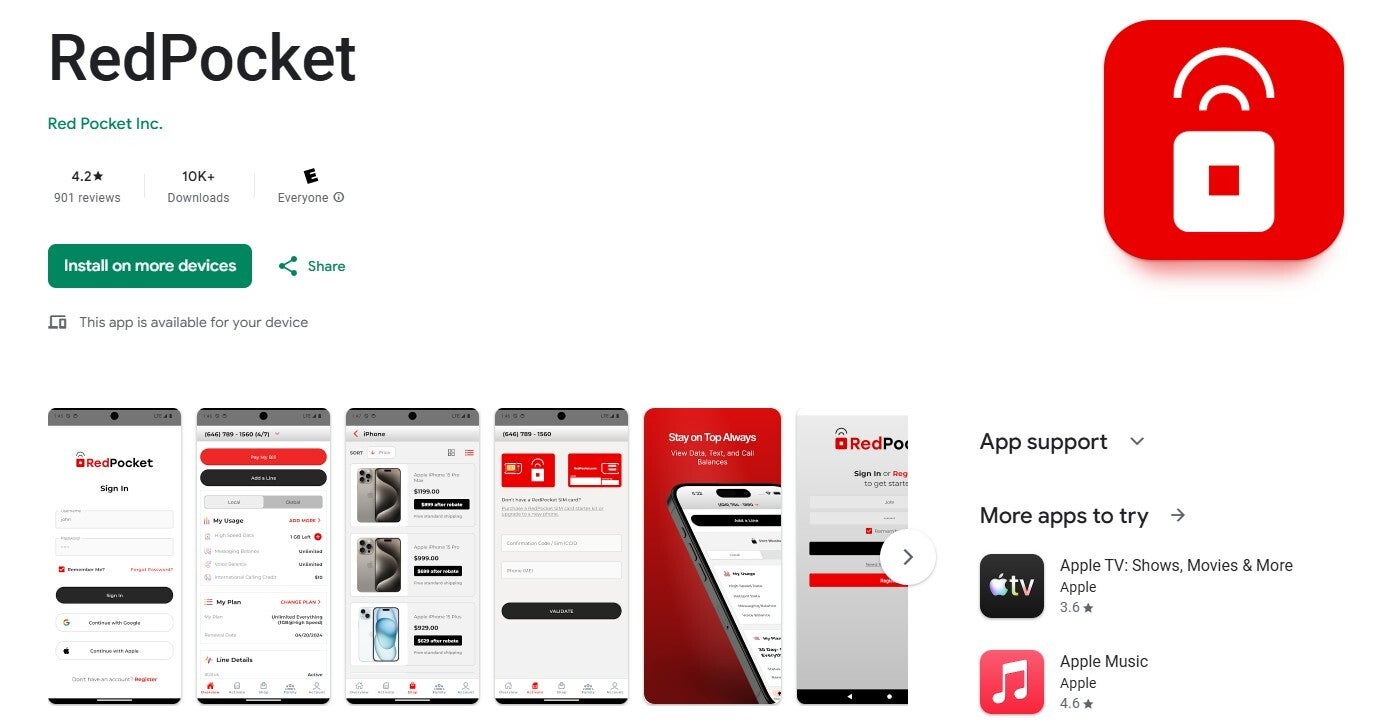
RedPocket is an independent MVNO in the U.S. that users control via an app. | Image credit-RedPocket
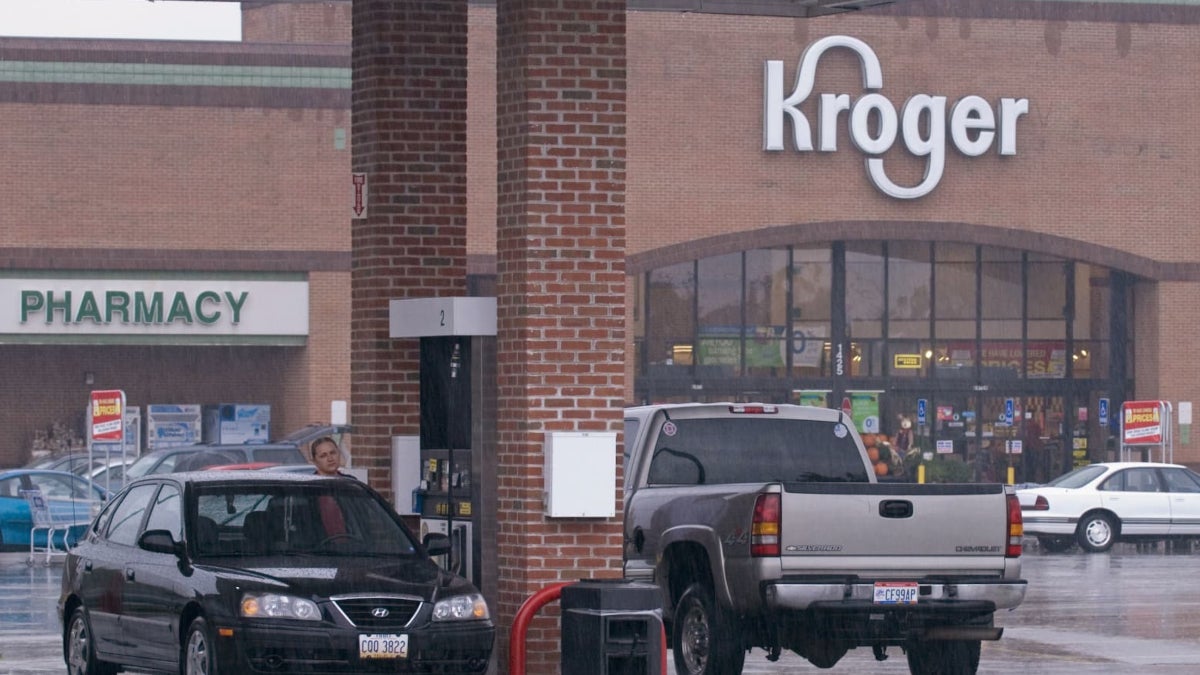
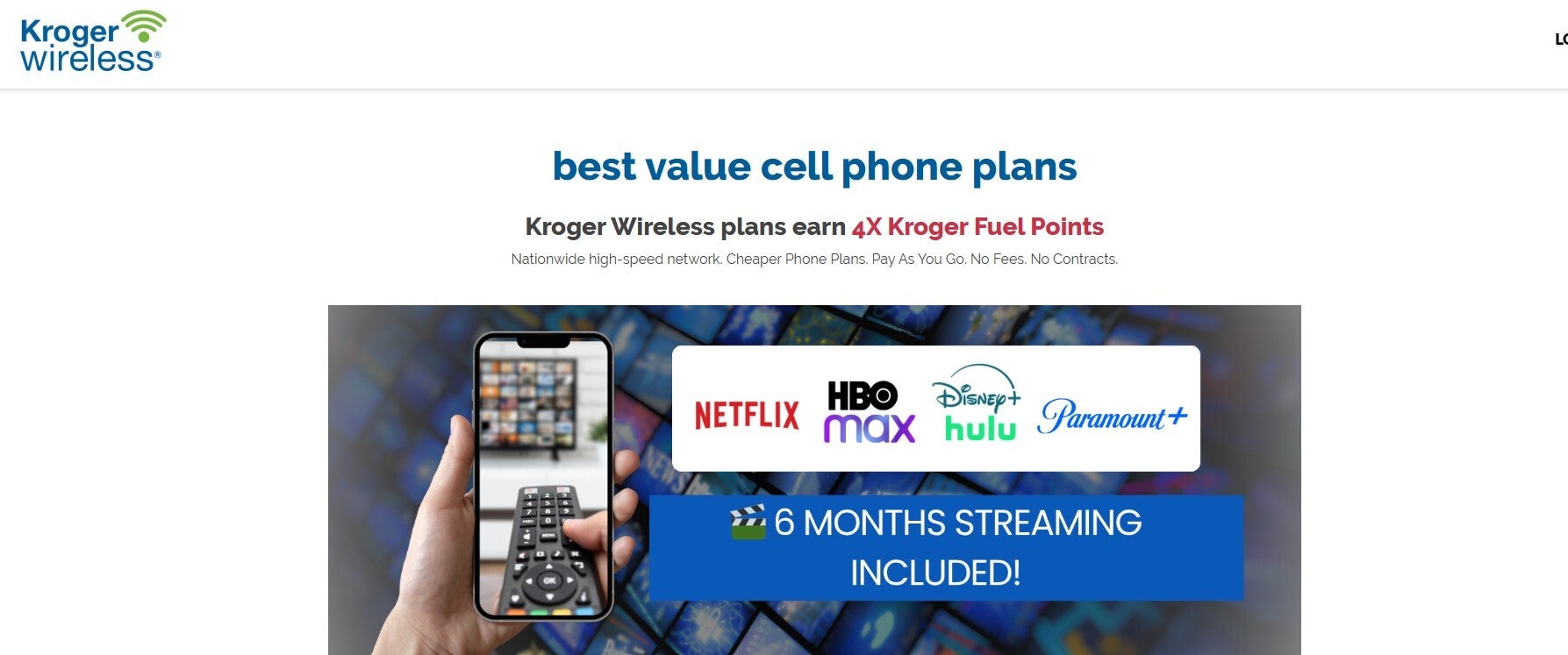
MVNOs typically have simple plans that are less expensive and with no contracts for customers to sign. Consumers can be drawn to non-telecom MVNOs because they could be owned by brands that they are immensely familiar with. For example, it would make sense for a well-known supermarket chain to start an MVNO. They could include a stuffer in every shopper's bag, and the brand name recognition will help drive sales. U.S. supermarket chain Kroger offers Kroger Wireless. When you pay your phone bill on time, you can save money on gas purchased at Kroger.
Recommended For You
MVNOs can target certain customers such as international callers, members of a loyalty program, digital-first users, and travelers. In addition, these non-telecom companies are using certain models to become successful in the business. The Revenue-driven model uses pricing to compete with telecom-based firms. Customer-driven models increase customer loyalty, reduce churn and increase the value of an existing customer base.
Hiding wireless service behind an app
There is also a strategy involving the creation of a super app. If a company offers an app that provides banking, shopping, payments, and subscription services, adding mobile services to that list makes sense. Offering mobile services will lock customers into that app even more with a customer's phone number, data plan, and daily app usage all collected within one ecosystem. This reduces the chances that consumers will switch to other providers.
Most of the companies interested in starting an MVNO inside a super app appear to be European firms. American consumers currently are less interested in the super app concept. Juniper says that while banks and fintechs have been the most aggressive, retailers were the first of the non-telecom firms to get into the MVNO business. In the U.S., 7-Eleven launched an MVNO called SpeakOut Wireless in 2003. That service shut in 2010 and these days 7-Eleven is more of a partner than an operator. For example, inside 7-Elevan convenience stores, Boost Mobile SIM kits and "Re-Boost" cards can be found in more than 7,500 locations.
As more non-telecom firms use MVNO in a box and offer mobile connectivity to their customers, this service simply becomes a digital business hidden inside an app. While T-Mobile isn't an MVNO, this is similar to its strategy of pivoting to a digital carrier with everything moving to the T-Life app.
Mint Mobile's 6-month plans now cost $10/mo
$10
/mo
$35
$25 off (71%)
Mint Mobile is celebrating its 10-year anniversary with a special offer on its six-month subscription plans. For a limited time, you can get your preferred tier (6GB, 17GB, 23GB or unlimited) for just $10/mo. That saves you between 50% and 71% on the carrier's mobile plans, making it way easier to recommend.
Alan, an ardent smartphone enthusiast and a veteran writer at PhoneArena since 2009, has witnessed and chronicled the transformative years of mobile technology. Owning iconic phones from the original iPhone to the iPhone 15 Pro Max, he has seen smartphones evolve into a global phenomenon. Beyond smartphones, Alan has covered the emergence of tablets, smartwatches, and smart speakers.
A discussion is a place, where people can voice their opinion, no matter if it
is positive, neutral or negative. However, when posting, one must stay true to the topic, and not just share some
random thoughts, which are not directly related to the matter.
Things that are NOT allowed:
Off-topic talk - you must stick to the subject of discussion
Offensive, hate speech - if you want to say something, say it politely
Spam/Advertisements - these posts are deleted
Multiple accounts - one person can have only one account
Impersonations and offensive nicknames - these accounts get banned
To help keep our community safe and free from spam, we apply temporary limits to newly created accounts:
New accounts created within the last 24 hours may experience restrictions on how frequently they can
post or comment.
These limits are in place as a precaution and will automatically lift.
Moderation is done by humans. We try to be as objective as possible and moderate with zero bias. If you think a
post should be moderated - please, report it.
Have a question about the rules or why you have been moderated/limited/banned? Please,
contact us.





Things that are NOT allowed:
To help keep our community safe and free from spam, we apply temporary limits to newly created accounts: