Meta is not able to keep up with the high demand for its Ray-Ban Display smart glasses. That's why only US tech-savvy users would be able to get those in the near future.
Meta had plans to release its Ray-Ban Display glasses – an AI tool above all – to markets like the UK, France, Italy and Canada in early 2026, but that's out the window now.
Pausing the international expansion
Reuters reports that Meta has decided to pause the international rollout of this pair of smart glasses due to strong demand and limited supply in the United States. The company says it will focus on fulfilling current US orders while reconsidering its approach to global availability, noting that product waitlists now extend into 2026.
Meta sold 15,000 units in the first quarter and captured about 6% of the smart glasses market, according to IDC. To meet growing demand, the company plans to increase production capacity. Earlier in 2025, EssilorLuxottica (Meta's partner in the smart glasses development) announced over 200% growth in smart glasses sales and strong quarterly revenue gains!
At the ongoing Consumer Electronics Show in Las Vegas, Meta also announced new features for the glasses and its Meta Neural Band wrist device.
Recommended For You
These include a teleprompter feature for reading notes and scrolling via the wristband, as well as expanded pedestrian navigation in four additional cities, bringing the total to 32.
What else do these do?
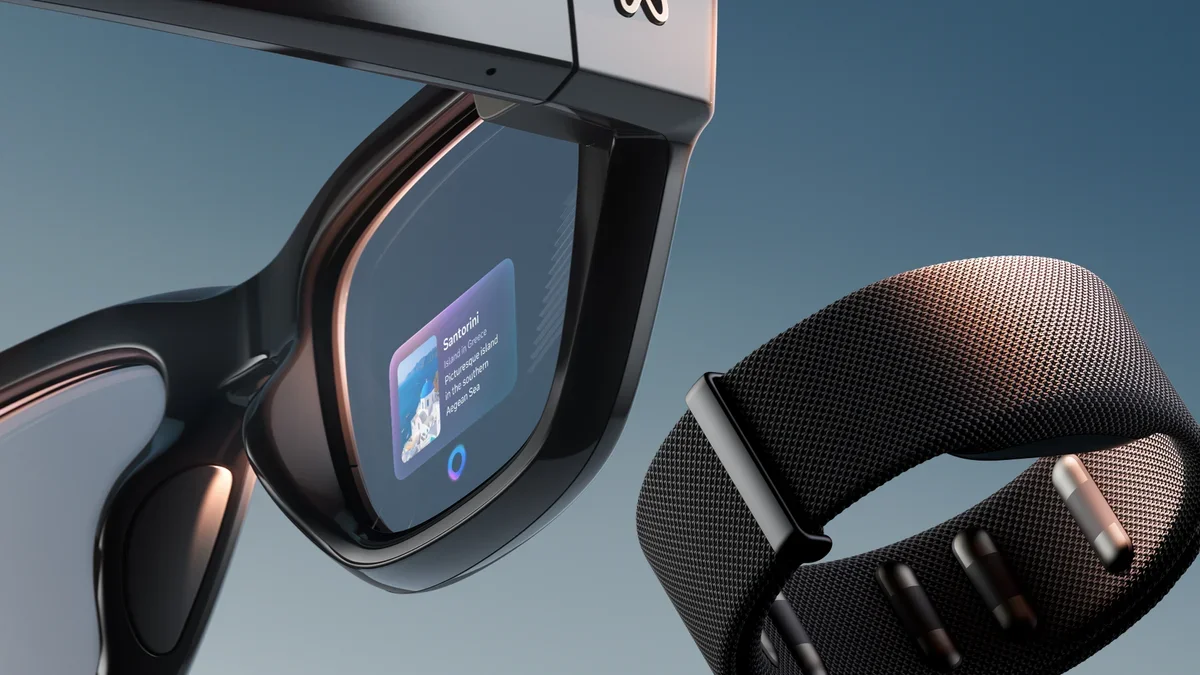
Image by Meta and Ray-Ban
The Meta Ray-Ban Display glasses are pure sci-fi tech! Although, as you know, high-tech dystopia is a subgenre of that, so I won't be mad at you if you get a bit worried about humanity's future.
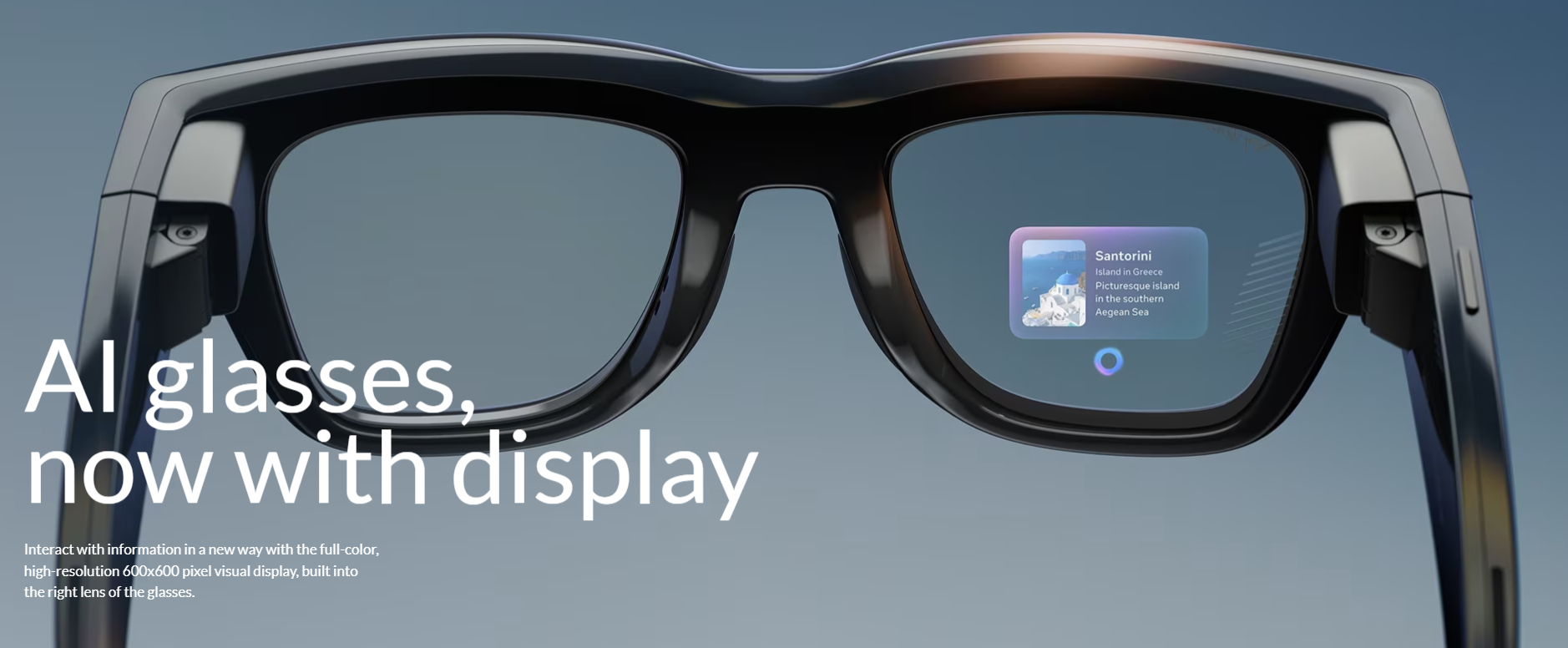
The glasses combine a high-resolution display with wearable AI features. Unlike augmented reality devices, the display appears on one side of the wearer's field of view, showing notifications, directions, apps, video calls, and Meta AI assistance. Users can interact with the glasses using the Meta Neural wristband, which detects gestures such as swipes, taps, and even air-writing to control the interface or input text.
The wristband can perform actions like adjusting volume, selecting options, or sending messages without touching a phone. Live AI mode allows the glasses to see and hear what the wearer sees, providing guidance for tasks like cooking, navigation, or other real-world interactions. The glasses also feature live subtitles, generating accurate captions for conversations and offering translation into the user's language, making communication more accessible.
Additional tools let users browse apps, manage notifications, and interact with an AI assistant hands-free. Meta is also exploring AI-powered experiences for creating virtual environments, which will complement the glasses' display and potentially integrate with Meta's Quest headsets. The glasses aim to reduce reliance on smartphones by letting users perform tasks with simple gestures while staying engaged with their surroundings.
Because nothing says "more present in the moment" like strapping a tiny screen to your face and waving your hands around while being bombarded with notifications and unskippable ads. Hey, I'm not going to be bitter right now, but the irony is obvious.
Will such AI smart glasses help us... or not?
21 Votes
Yes, we can't stop the tech progress.
57.14%
Only if by "help" you mean a total human degradation.
9.52%
They'll have their 15 minutes of fame, but nothing more.
19.05%
This trend won't get viral.
14.29%
Glassy hits
The Meta Ray-Ban Display is a hit at $799 (the pair hit the shelves at the end of September 2025).
This gadget, of course, is not the only player in town when it comes to face wearables.
At CES 2026, Lenovo teased the AI Glasses concept. The glasses connect wirelessly to a smartphone and run on Lenovo and Motorola's shared AI platform, Qira, which includes a feature that summarizes notifications from multiple devices. These have an eight-hour battery life, built-in speakers, and a 2 MP camera.
Samsung appears to be gearing up to release smart glasses, too, as we told you a day ago.
And while Apple's Vision Pro headset is selling poorly – yeah, the $3,500 price tag will always be a shocker regardless of inflation levels – Cupertino might also come up with its first pair of AI-enhanced smartglasses.
Also, we recently reviewed the Xreal 1S, and we called it "the coolest gadget since iPhone". If you're interested in what the future looks like, be sure to check it out.
See ya!
Get iPhone 18 Pro with Visible, get $480 off!
$719
/mo
$1199
$480 off (40%)
On the Visible+ Pro plan, you get access to 5G Ultra Wideband data on Verizon's fastest network. Along with unlimited roaming across Mexico and Canada, 2 days of Global Pass per month, 3x hotspot speeds, 4K streaming, and Smartwatch service.
Sebastian is one of PhoneArena’s senior opinionators. A veteran news writer with almost 20 years of experience in media and technology, he not only covers all the hot news about Galaxies and iPhones, but often provides hot takes on industry trends. He’s fascinated with camera-focused flagships from the likes of Oppo and Vivo, as well as foldable phones.
A discussion is a place, where people can voice their opinion, no matter if it
is positive, neutral or negative. However, when posting, one must stay true to the topic, and not just share some
random thoughts, which are not directly related to the matter.
Things that are NOT allowed:
Off-topic talk - you must stick to the subject of discussion
Offensive, hate speech - if you want to say something, say it politely
Spam/Advertisements - these posts are deleted
Multiple accounts - one person can have only one account
Impersonations and offensive nicknames - these accounts get banned
To help keep our community safe and free from spam, we apply temporary limits to newly created accounts:
New accounts created within the last 24 hours may experience restrictions on how frequently they can
post or comment.
These limits are in place as a precaution and will automatically lift.
Moderation is done by humans. We try to be as objective as possible and moderate with zero bias. If you think a
post should be moderated - please, report it.
Have a question about the rules or why you have been moderated/limited/banned? Please,
contact us.





![Another batch of Galaxy S26 series users in the US are getting a nice surprise today [UPDATED]](https://m-cdn.phonearena.com/images/article/183643-wide-two_350/Another-batch-of-Galaxy-S26-series-users-in-the-US-are-getting-a-nice-surprise-today-UPDATED.webp)
Things that are NOT allowed:
To help keep our community safe and free from spam, we apply temporary limits to newly created accounts: