Editorials
iOS: State of the Platform part 2 - Market share and iOS 8
This article may contain personal views and opinion from the author.

If you missed Part 1, check out our review of the iOS platform in 2013.
Market Share
This section is here partially for consistency with the Android piece as well as the first half of this article, but also because there is a bit to talk about in terms of Apple and market share in 2014. All things being the same, Apple is expected to hold steady in terms of overall market share in both smartphones and tablets. But, all things may not be the same for 2014.
In an interview in early February with The Wall Street Journal, Apple CEO Tim Cook spoke about what the company is doing in emerging markets. Cook was obviously a bit cagey, and didn't mention anything regarding Africa or South America (except for Brazil), but he did have some things to say about Asia and Oceania. Cook made the interesting point that for many countries in those regions, the iPhone is the first Apple product that consumers have been introduced to. The Mac and the iPod never made any headway in emerging markets, so Apple is really laying the groundwork right now in order to build in those regions. He also pointed to the large revenue that Apple has made from China in the past twelve months (around $30 billion). And, Apple is still looking to expand more. Cook finished off talking about emerging markets by mentioning that Apple still only reaches two-thirds of the mobile subscribers in the world, and it is planning to add another fifty carrier partners by the end of March.
Software (iOS 8)
Apple is essentially the only mobile company that controls everything from hardware to software (though Microsoft is getting closer to that with Windows Phone and its pending acquisition of Nokia), so there is always something interesting to talk about with both aspects. Because of this, we'll do our best to organize this in a good way, but there are certain items that can't be easily split between software and hardware, like Touch ID and the iWatch which are expected to be big for Apple in 2014 both in terms of hardware and software.
We know that iOS 8 is on the way this year, because that's just the way Apple works. Every year brings a new version of iOS, likely released in the fall. The trouble is that despite the wealth of rumors surrounding Apple and its plans, very few of those rumors tend to focus on the software, which is extremely odd. The rumor mill doesn't much care for software, unless you consider concept renders which are usually flights of fancy, but we think that is somewhat asinine. Software is the real driver of user experience, but it always takes a back seat in the rumor mill to hardware. The truth is that the real-world performance difference between a Nexus 5 and a Galaxy S5 will be negligible, but the clean software of the Nexus will certainly be noticed when compared to the bloat that Samsung provides.
Health
There have been multiple reports that iOS 8 will have an increased focus on health and health tracking, which makes perfect sense because smartwatches right now are best used for health tracking and offloading notifications. We know that Apple has been hiring health experts, and is supposedly putting together an app called "Healthbook". Healthbook is rumored to offer exercise tracking like calories burned, miles walked, steps taken, and more. It also could offer other health tracking including heart rate, blood pressure, hydration levels, glucose levels, sleep quality, stress, medication reminders, and even data related to pregnancy.
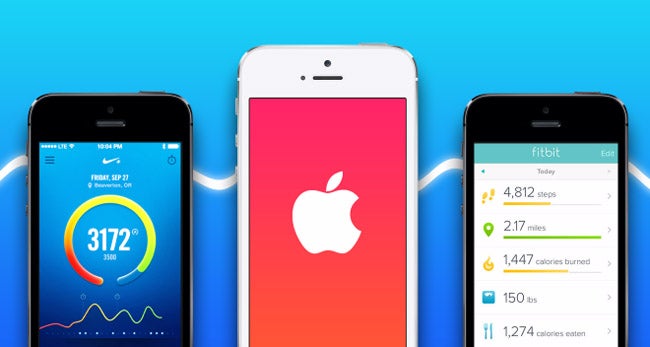
The question right now is to what extent Apple will push into the health tracking world. The rumors have also mentioned Apple trying to "simplify" the aim of the iWatch, because pushing too far will not only make the product complicated for users, but it could also cause headaches for Apple itself. For example, in order to offer glucose and hydration tracking, the potential iWatch would need to go through regulatory approval by the Food and Drug Administration (FDA). Given the various production delays that have been reported surrounding the iWatch, it seems unlikely that Apple would want to add governmental approval to the list. However, it was reported that Apple met with the FDA at the beginning of February, so anything is possible.
Siri
Also closely related to the reported iWatch would be Siri. Obviously, Siri has been a part of iOS for a while now, but as we mentioned before users have been somewhat reluctant to take advantage of the service so far. Siri and voice command in general is something that will likely be pushed to the forefront when it comes to wearable devices, because it is the easiest way to expand functionality. Text input on a watch screen would be nearly impossible without dictation, even with redesigned keyboards (which wouldn't exist on iOS anyway), and apps can't be too complex. There hasn't been anything by way of rumors in this regard, so we're going with educated guesses and hopes for the rest of this section.
Siri is already quite skilled at organizing your calendar, but we are expecting those features to be expanded. We wouldn't be surprised to see a number of the options that we've heard in connection to Microsoft's Cortana be a part of a Siri update for iOS. This would include more times when Siri would engage in a back-and-forth to gather more information on a reminder or calendar event.
Having just seen the reveal of the Moov, we can't help but wonder if Apple might try to make Siri into a personal fitness coach as well. It certainly wouldn't be something that we expect to happen, but we wouldn't completely rule it out either.
Touch ID
We're also expecting to see an expansion of the Touch ID fingerprint scanner and its functionality in 2014. This is another section that could fit into either software or hardware, but the hardware part of it all would be fairly short and read simply: "Expect all new flagship Apple devices to include a Touch ID sensor."
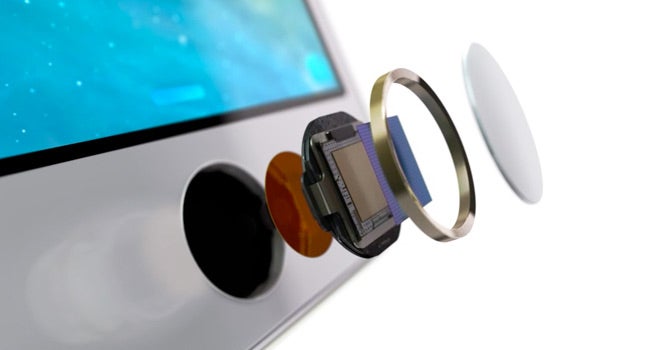
It is much less likely, but it is also possible that the expansion of Touch ID could also lead to Apple offering multiple user support in iOS. The general thinking has been that Apple has avoided multiple user support in iOS because it wants people to buy multiple iPads, rather than just one to share. But, another issue could have been that Apple simply wants to avoid users needing to deal with a login screen. Touch ID would mostly remove that trouble, because the system would detect the user by fingerprint and skip any login screen altogether.
Up next: Part 3 where we cover the upcoming Apple hardware for 2014 including the iPhone 6, possible iPhablet, iPad updates, and the iWatch.


Popular stories



Latest News


Things that are NOT allowed:
To help keep our community safe and free from spam, we apply temporary limits to newly created accounts: