AT&T takes Spectrum's "Fiber-Powered" claim to federal court
AT&T Teleholdings and AT&T Wireline Holdings filed the complaint on Friday in the Northern District of Texas, case number 3:26-cv-02919, naming Charter Communications and Spectrum Management Holding Company as defendants. The claims are false advertising under the Lanham Act plus unfair competition under Texas law, and AT&T has asked for a jury.
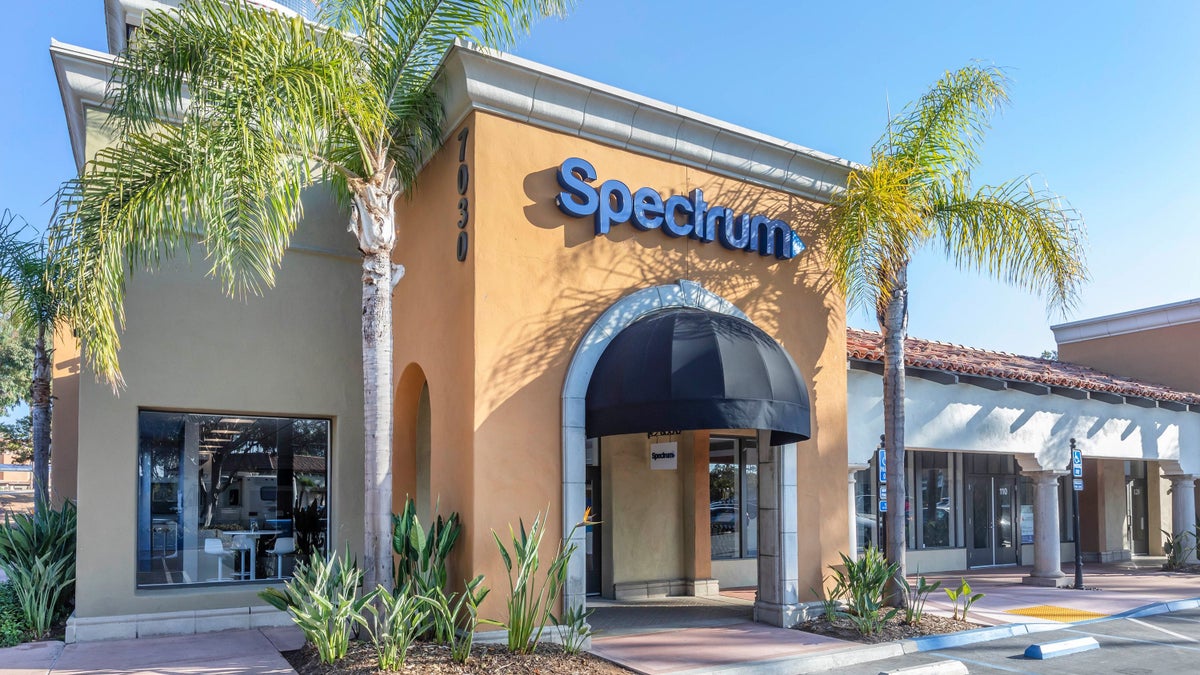
The argument is that "Fiber-Powered Internet" and the "Spectrum Fiber Broadband Network" umbrella both suggest a fiber-to-the-home service, while most Spectrum internet runs on a hybrid network where coaxial cable makes the final connection. AT&T also points at the timing, since Charter closed its Cox Communications acquisition on August 20 and Cox has used the same phrasing for years.
You wouldn't call a half-gallon a gallon or a half-truth the whole truth. And a disclaimer doesn't turn copper into fiber.
An AT&T spokesperson, in a statement to PhoneArena, August 28, 2026
Recommended For You
It should be noted that this is one side of a fight, filed by the side that stands to gain from winning it, and AT&T's communications team sent us the complaint directly. Charter has not answered the allegations in court, and we have reached out for comment and will update this story when we hear back.
What matters most to you when picking a home internet plan?
32 Votes
The connection type, I want real fiber to the house
46.88%
Upload speed and how it holds up at peak hours
21.88%
Price, whatever the wiring gets called
21.88%
Whoever is available at my address
9.38%
What fiber-powered means at your wall, and where Spectrum sits against AT&T Fiber
The plain version is this: fiber runs from the network hub out to a box in your neighborhood, then coaxial copper cable carries the signal the rest of the way into your building. Charter's own FAQ describes it in almost those words, and its true 100% fiber product is offered only to select residential customers.
A Spectrum field technician on a service call. | Image by Spectrum
We covered round one of this back in March, when the National Advertising Division reviewed the same wording and Charter agreed to adjust its disclosures. AT&T clearly does not think the added fine print fixed anything, which is how a self-regulatory complaint turned into a federal lawsuit five months later.
So the distance between the best fiber network in the country and the hybrid network AT&T is suing over comes to roughly six points. Real, but not the chasm either company's marketing implies.
If you are on Spectrum or Cox today, nothing about your service changes because of this filing, and the wiring in your street is the same as it was last week. What would change, if AT&T wins, is the label on the box.
Xfinity customers sit in much the same spot, since Comcast runs a hybrid network too and reaches for similar language. However, if you already have Verizon Fios or another true fiber-to-the-home line, this one passes you by entirely, apart from the small satisfaction of seeing the distinction spelled out in public.
Two giants arguing over a word, while the rest of us read the fine print
I do think the wording deserves the scrutiny, because "fiber-powered" is doing real work in those ads, and a disclaimer that flashes past without a voiceover is not much of a correction. Still, it is worth remembering who is asking here.
AT&T is not filing this on behalf of confused shoppers, it is filing because it sells the thing Charter is borrowing the shine from. Both of those can be true at the same time.
Hopefully the outcome is just clearer labels on plan pages, since that is the part that would help someone comparing options at their own address. I would personally love to see the whole industry pushed into saying plainly what runs into the house.
Mint Mobile's 6-month plans now cost $10/mo
$10
/mo
$35
$25 off (71%)
Mint Mobile is celebrating its 10-year anniversary with a special offer on its six-month subscription plans. For a limited time, you can get your preferred tier (6GB, 17GB, 23GB or unlimited) for just $10/mo. That saves you between 50% and 71% on the carrier's mobile plans, making it way easier to recommend.
Johanna Romero is a Senior News Writer at PhoneArena, covering mobile technology news across Android, iOS, wearables, and the Google ecosystem she knows best. Drawing on 15 years in IT and tech support from 2007 to 2022, she brings a user-friendly eye for the practical features and lesser-known tricks readers care about. Google named her an official #TeamPixel member in 2022, and she also reviews the latest devices on her YouTube channel, JoJo the Techie.
A discussion is a place, where people can voice their opinion, no matter if it
is positive, neutral or negative. However, when posting, one must stay true to the topic, and not just share some
random thoughts, which are not directly related to the matter.
Things that are NOT allowed:
Off-topic talk - you must stick to the subject of discussion
Offensive, hate speech - if you want to say something, say it politely
Spam/Advertisements - these posts are deleted
Multiple accounts - one person can have only one account
Impersonations and offensive nicknames - these accounts get banned
To help keep our community safe and free from spam, we apply temporary limits to newly created accounts:
New accounts created within the last 24 hours may experience restrictions on how frequently they can
post or comment.
These limits are in place as a precaution and will automatically lift.
Moderation is done by humans. We try to be as objective as possible and moderate with zero bias. If you think a
post should be moderated - please, report it.
Have a question about the rules or why you have been moderated/limited/banned? Please,
contact us.











Things that are NOT allowed:
To help keep our community safe and free from spam, we apply temporary limits to newly created accounts: