iPhone 18 Pro Max buyers just absorbed a $100 increase, and the next one is already being lined up. Apple has reportedly accepted Samsung's higher memory prices for early 2027, which puts every iPhone worth buying, along with rivals like the Galaxy S26 Ultra, on track to cost more next year. However, it looks to me like the numbers being passed around are being read the wrong way.
Apple was first in line for Samsung's 2027 memory prices
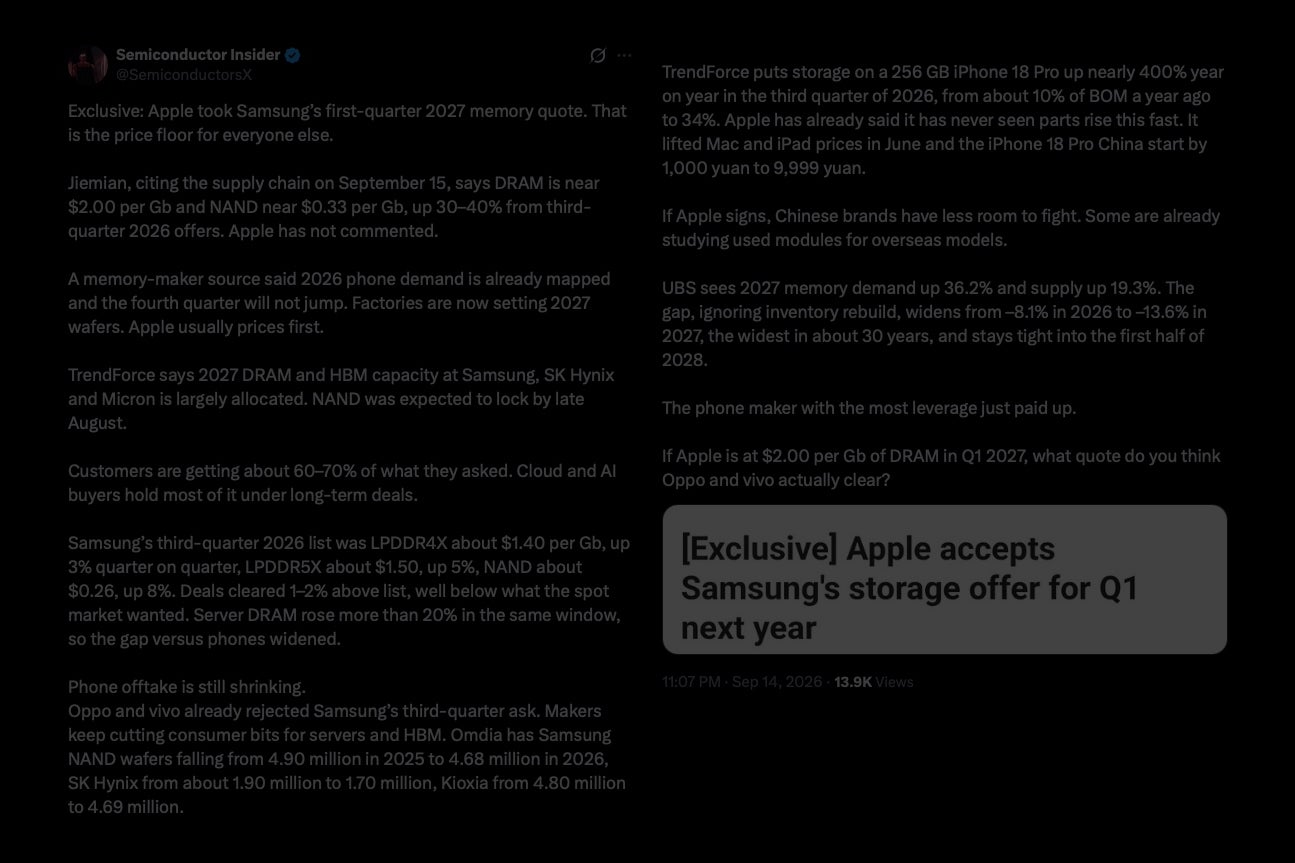
The figures surfaced on September 14, when the supply chain account Semiconductor Insider posted Samsung's quote for the first quarter of 2027: close to $2.00 per gigabit for LPDDR5X RAM and about $0.33 for NAND storage, up from roughly $1.50 and $0.26 in the third quarter of this year.
Samsung's third-quarter list prices sit right next to the 2027 quote in the post. | Image by Semiconductor Insider via X
Two days later, a supply chain report out of Taiwan said the deal was done, and that Apple is the first major phone maker to settle its 2027 memory pricing.
What would you do if we get an other price hike in 2027?
4 Votes
What $2.00 per gigabit does to the memory bill in your next iPhone
Here's the part that keeps getting mangled: memory is sold by the bit, not the byte. TrendForce publishes DRAM contract prices in dollars per gigabit, and there are eight gigabits in a gigabyte, so a $2.00 quote is not $2.00 for each gigabyte of RAM in a phone.
Recommended For You
Read the way the original reports wrote it, the 12GB of RAM in an entry-level Pro iPhone works out closer to $190 than the $24 figure doing the rounds.
LPDDR5X is the fast, low-power RAM holding whatever you have open, and NAND is the storage that keeps your photos when the phone is off. Both are getting squeezed because AI data centers have first claim on the wafers, which is how TrendForce ended up recording mobile DRAM contract prices climbing 78% to 83% in a single quarter earlier this year.
Meanwhile, Samsung is on both sides of this one, selling the expensive memory while its own phone division pays for it. We reported yesterday that Samsung may hold the base Galaxy S27 models on slower LPDDR5X from Micron and save the newer LPDDR6 for the S27 Ultra, which is the compromise you make when parts get this expensive.
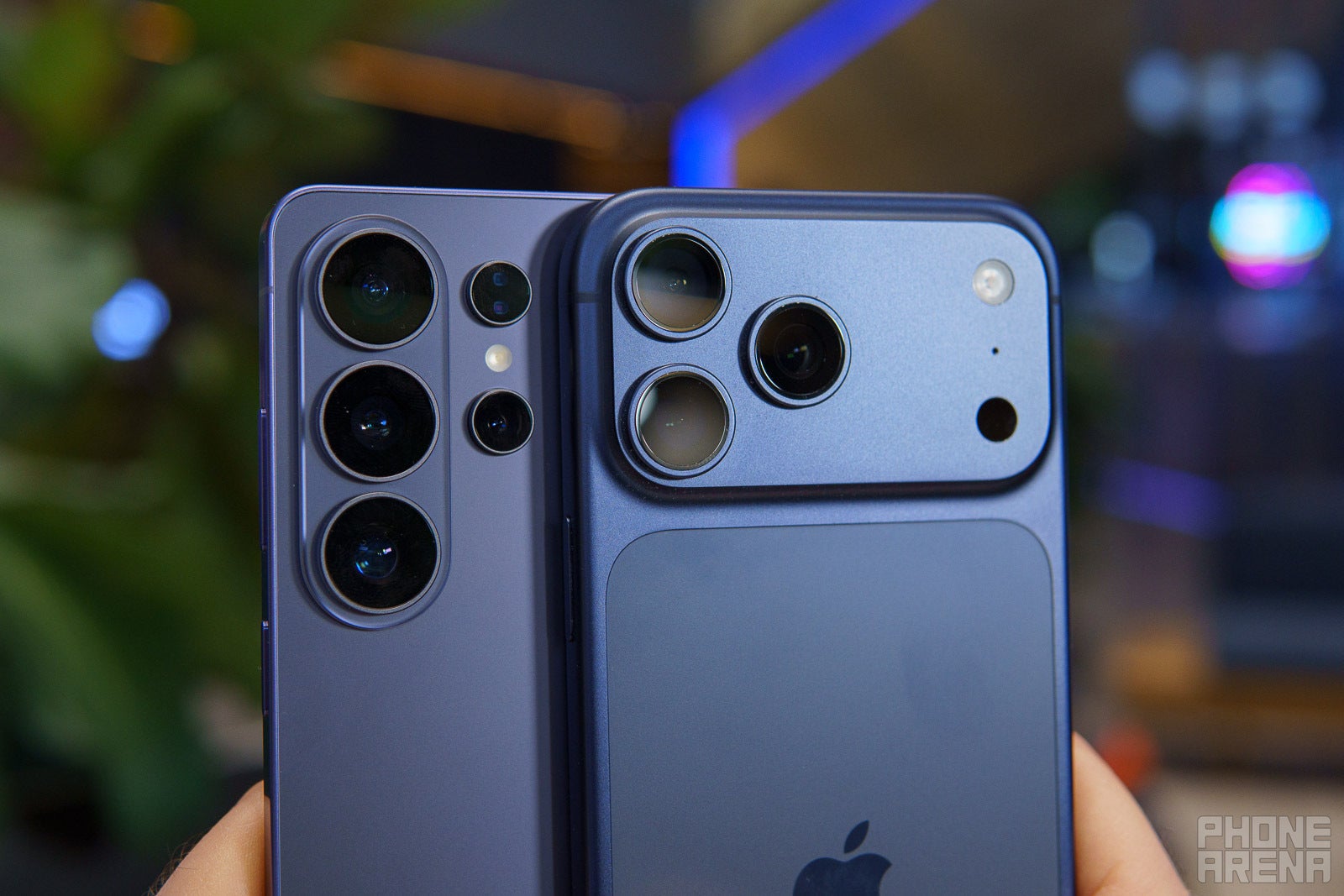
Samsung sells Apple the memory and pays for it on its own phones too. | Image by PhoneArena
Still, if you are holding a Galaxy S26 Ultra or picking up an iPhone 18 Pro Max this week, none of this touches the phone in your hand. It is a 2027 sticker price story, and Galaxy owners are sitting in the same boat as the rest of us.
Who actually pays for this, and when
The first test is the spring, when the iPhone 18 and iPhone Air 2 are expected. If Apple passes the cost along there, it is the cheapest iPhone in the lineup getting more expensive, which lands hardest on people who were never shopping at Pro prices to begin with.
I'd rather Apple just say it out loud
What bothers me is not the increase itself, because the component math is real and every phone maker is stuck in the same squeeze. It is that we keep learning about it through supply chain leaks instead of from Apple.
A plain line about component costs would go a long way, and I'd personally love to see one company get out ahead of this for once instead of letting the price tag do the talking in September.
Johanna Romero is a Senior News Writer at PhoneArena, covering mobile technology news across Android, iOS, wearables, and the Google ecosystem she knows best. Drawing on 15 years in IT and tech support from 2007 to 2022, she brings a user-friendly eye for the practical features and lesser-known tricks readers care about. Google named her an official #TeamPixel member in 2022, and she also reviews the latest devices on her YouTube channel, JoJo the Techie.
A discussion is a place, where people can voice their opinion, no matter if it
is positive, neutral or negative. However, when posting, one must stay true to the topic, and not just share some
random thoughts, which are not directly related to the matter.
Things that are NOT allowed:
Off-topic talk - you must stick to the subject of discussion
Offensive, hate speech - if you want to say something, say it politely
Spam/Advertisements - these posts are deleted
Multiple accounts - one person can have only one account
Impersonations and offensive nicknames - these accounts get banned
To help keep our community safe and free from spam, we apply temporary limits to newly created accounts:
New accounts created within the last 24 hours may experience restrictions on how frequently they can
post or comment.
These limits are in place as a precaution and will automatically lift.
Moderation is done by humans. We try to be as objective as possible and moderate with zero bias. If you think a
post should be moderated - please, report it.
Have a question about the rules or why you have been moderated/limited/banned? Please,
contact us.








Things that are NOT allowed:
To help keep our community safe and free from spam, we apply temporary limits to newly created accounts: