What's the name of the game? To have more and more subscribers? To have them sign a costly contract? Yes, of course – every telco wants that, but it's not the end of it. Every business wants to be more efficient and wants to do more with less.
The AI RAN idea
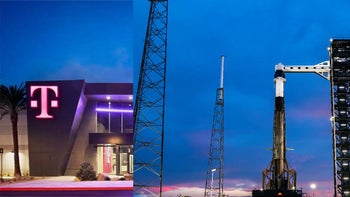
The carrier has many ideas for the future. | Image by PhoneArena
T-Mobile strongly supports an idea from Nvidia about adding AI capabilities to mobile network infrastructure. The concept suggests that future radio sites could use Nvidia's GPUs to handle AI processing. Instead of only running the wireless network, these locations could also act as small edge data centers for AI tasks.
This is a project that may have lots of potential, but carriers already rely on AI for their networks and it's all about efficiency gains and performance. Ankur Kapoor, T-Mobile's chief network officer, spoke recently to Light Reading and shared some interesting information.
T-Mobile already uses artificial intelligence in several parts of its network, and the company views these technologies as an important step toward the broader AI RAN vision promoted by Nvidia.
One example comes from disaster recovery situations. In such scenarios, the carrier's cell sites can automatically adjust their coverage to serve areas where connectivity is most needed, such as locations used by emergency responders.
Recommended For You
The system relies on a self-organizing network powered by real-time AI and predictive data models that can redirect signals dynamically. According to Kapoor, the AI algorithms are integrated directly into the customized radio access network (RAN), allowing cell sites to modify antenna tilt and other technical parameters within minutes to improve coverage.
The operator has also introduced a feature known as service-aware RAN as part of its 5G Advanced rollout. While not strictly categorized as AI in RAN, the capability allows radio sites to allocate network resources based on the type of service customers are using.
What this means is that the network can recognize different applications and assign only the necessary capacity to each one.
Kapoor indicated that the feature has delivered roughly 40% efficiency gains since T-Mobile began deploying it about a year ago. The company says it was the first carrier in the US to roll out this capability nationwide, with support from its RAN suppliers, Ericsson and Nokia.
What do you think of T-Mobile's network in the last year?
20 Votes
It's much better.
55%
It's slightly better.
20%
Same ol', same ol'.
15%
It's a bit worse.
5%
It's way worse for me.
5%
Live Translation (and more)
Some days ago I told you about T-Mobile's latest AI stunt: the carrier launched a voice translation service that relies on an AI agent. This allows real-time translation during calls made from the phone's native dialer when at least one participant is connected through T-Mobile's network.
T-Mobile believes its highly distributed infrastructure could support this approach. The operator runs more than 85,000 cell sites and around 100 core network locations across the US, which Kapoor said makes its network several times more distributed than typical public cloud infrastructure.
Free Galaxy A17 5G with Straight Talk
Get a free Galaxy A17 with Straight Talk. To claim this deal, you need to pair the phone with activation on a Silver Unlimited Plan or higher. This tier costs $45 per month. Offer valid through 01/10/27 while supplies last online.
Sebastian is one of PhoneArena’s senior opinionators. A veteran news writer with almost 20 years of experience in media and technology, he not only covers all the hot news about Galaxies and iPhones, but often provides hot takes on industry trends. He’s fascinated with camera-focused flagships from the likes of Oppo and Vivo, as well as foldable phones.
A discussion is a place, where people can voice their opinion, no matter if it
is positive, neutral or negative. However, when posting, one must stay true to the topic, and not just share some
random thoughts, which are not directly related to the matter.
Things that are NOT allowed:
Off-topic talk - you must stick to the subject of discussion
Offensive, hate speech - if you want to say something, say it politely
Spam/Advertisements - these posts are deleted
Multiple accounts - one person can have only one account
Impersonations and offensive nicknames - these accounts get banned
To help keep our community safe and free from spam, we apply temporary limits to newly created accounts:
New accounts created within the last 24 hours may experience restrictions on how frequently they can
post or comment.
These limits are in place as a precaution and will automatically lift.
Moderation is done by humans. We try to be as objective as possible and moderate with zero bias. If you think a
post should be moderated - please, report it.
Have a question about the rules or why you have been moderated/limited/banned? Please,
contact us.









Things that are NOT allowed:
To help keep our community safe and free from spam, we apply temporary limits to newly created accounts: