Apple iPhone's Emergency SOS via Satellite saves six caught in an avalanche
The satellite service allowed those trapped by the snow to contact emergency rescue when no cell service was available nearby.
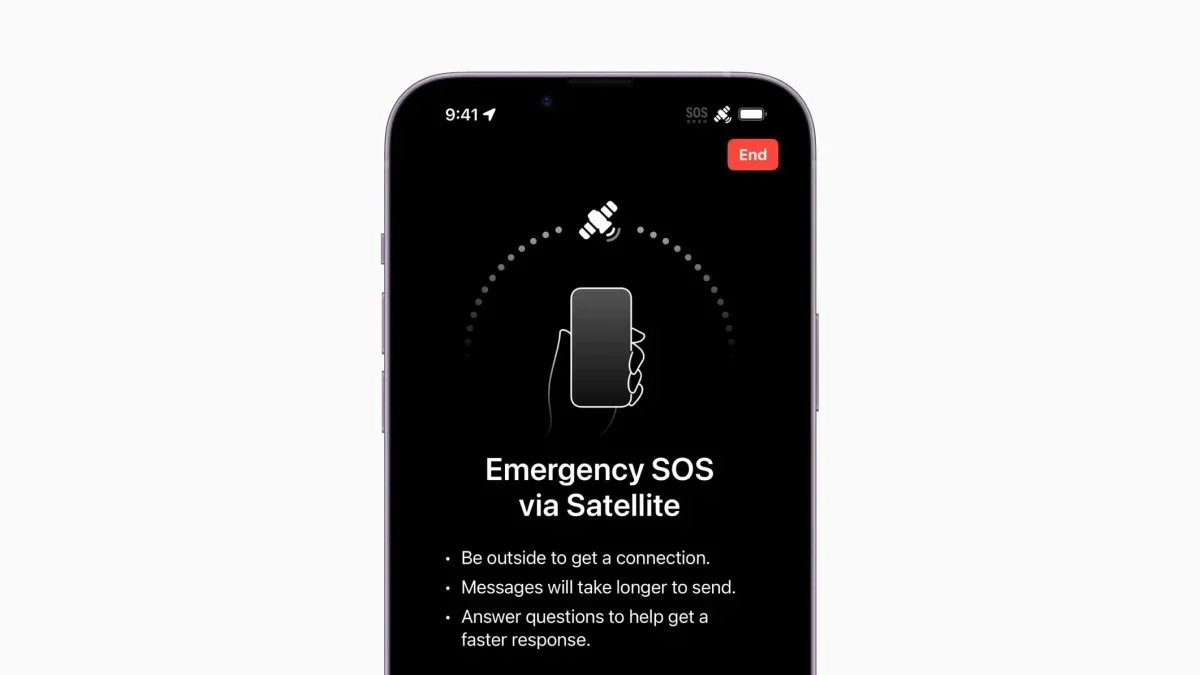
Apple's satellite feature for iPhone saves lives. | Image by Apple
The iPhone's Emergency SOS feature, which allows users to seek emergency help via text messages in areas where there is no cellular connectivity or Wi-Fi, helped save six lives after an avalanche hit an area just outside Lake Tahoe on Tuesday. The feature allows an iPhone user to connect his phone to a low-orbiting satellite if calling an emergency number, like 911, doesn't result in a connection.
The iPhone will guide the user to help him/her connect to a satellite
If no one answers the emergency phone call because of the lack of cellular service in the area, the iPhone user answers questions about the emergency on his phone. The next step is for the iPhone user to connect to a satellite by standing outside with a clear view of the horizon and sky.
The iPhone display will guide the user, who is holding his phone up toward the sky, where to move his hand holding the phone in order to connect to a satellite. Once connected, a text is sent from the iPhone to emergency responders who ask for the user's location, emergency contacts, and seek the answer to the most important question, how much battery life remains on your device?
During the incident that happened this past Tuesday, it was the Nevada County Sheriff's Office in charge of the rescue efforts. Don O’Keefe, the law enforcement chief for California's Office of Emergency Services, said, "One of my personnel was communicating with one of the guides over a four-hour period, giving information back to the Nevada sheriff's office and coordinating what rescues could be permitted."
These are the iPhone models that offer Emergency SOS via Satellite
The six survivors were part of a group of 15 on a multi-day trip through the Sierra Nevada mountains. While the six did survive the ordeal thanks to the iPhone's satellite capabilities, eight perished and one is missing and is presumed dead.
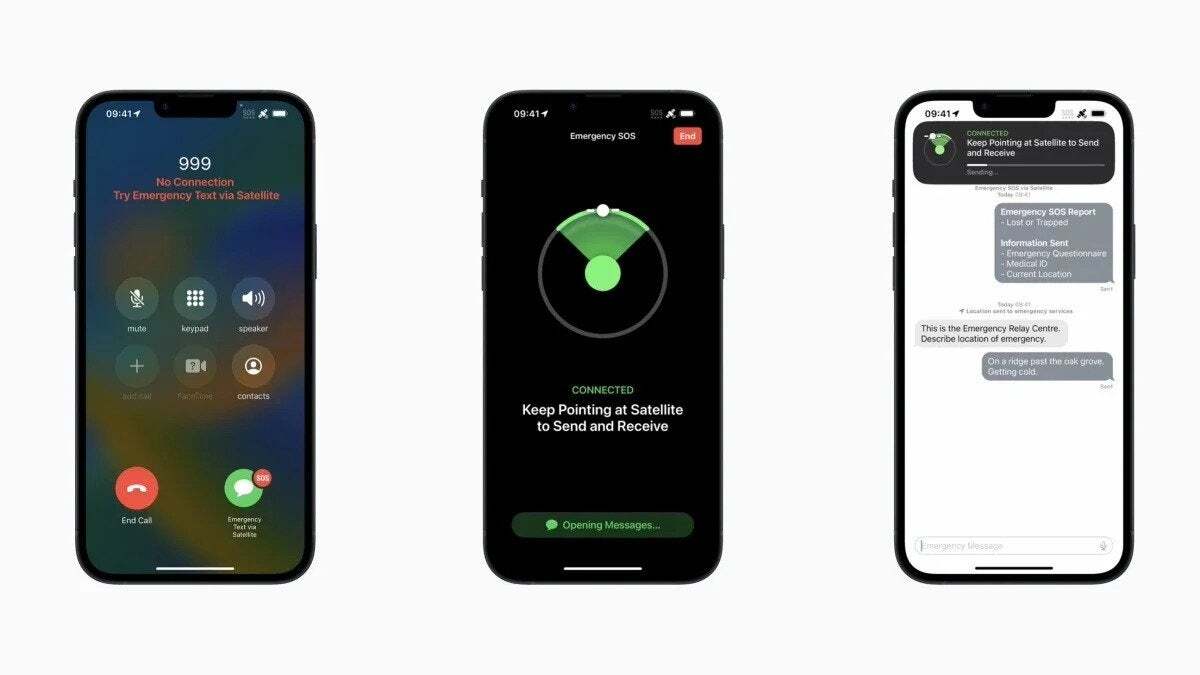
Screenshots show how the iPhone's satellite servuce works. | Image by PhoneArena
The iPhone's Emergency SOS via Satellite is available on all iPhone 14 and newer models running iOS 16.1 or later. It is free for two years following the activation of an iPhone 17 series model. Those with an iPhone 14 series, iPhone 15 series, and iPhone 16 series model will continue to get the satellite service free until at least November 2026. The feature is also available on the Apple Watch Ultra 3.
The feature has now evolved to the point where it can be used for non-emergency purposes, such as sending an iMessage or SMS. Once you are unable to connect to a cellular signal, you will receive a prompt to help get you to connect to a satellite. Once connected, you can send and receive messages like you have always done. You'll be able to include emojis and Tapbacks.
This year's iPhone 18 Pro series might allow users to browse the internet using satellite service
There is speculation that the iPhone 18 Pro and iPhone 18 Pro Max, expected to be released next September, will feature Full 5G Satellite Internet, which will allow users to surf the web via a satellite connection. Once again, this works only when there is no 5G cellular service available.
The Emergency SOS via Satellite feature has saved lives before. Back in 2024, four lives were saved even though these survivors were surrounded by wildfires. It is estimated that the feature has saved hundreds of people.
For those of you who have been wondering or need to know to win a bet, the Apple iPhone's satellite needs are met by the Globalstar satellite constellation. Apple has invested $1.5 billion into the Globalstar infrastructure to guarantee that it will have priority over Globalstar's other customers. There are 24 satellites in Globalstar's fleet and for iPhone features, Apple currently uses 85% of the entire network capacity used by Globalstar.
Expecting Apple to need more satellite coverage soon, Globalstar is launching a new series of advanced satellites that might go into operation by the end of this year. Apple is funding 95% of the cost of building the new satellites.


Popular stories



Latest News






Things that are NOT allowed:
To help keep our community safe and free from spam, we apply temporary limits to newly created accounts: