iPhone 18 Pro camera module will reportedly be a little thicker, but that is actually good news
The thicker rear camera module turns out to be a positive sign for the iPhone 18 Pro's Main camera.
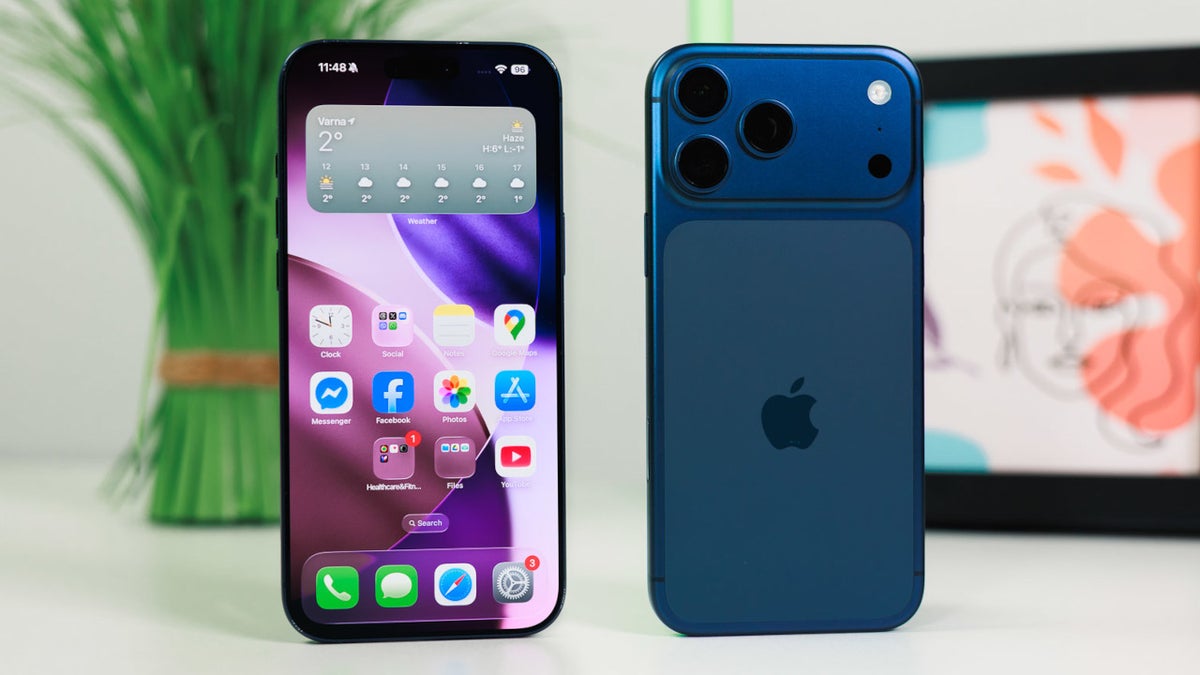
Apple iPhone 18 Pro series to have thicker camera module | Image by PhoneArena
The iPhone 18 Pro and iPhone 18 Pro Max are expected to be unveiled in less than three months, alongside the foldable iPhone Ultra. A Weibo post from leaker Fixed Focus Digital brings us some information about the Wide camera on the iPhone 18 Pro series. You might know it as the Main or primary camera on the rear camera module.
Apple iPhone 18 series expected to have thicker rear camera module
Speaking about the rear camera module, Fixed Focus Digital says that the upgrades made to the Main camera for the iPhone 18 Pro line have been confirmed. You can expect the rear aluminum alloy back plate to be 2mm thicker.
You might not like to hear about a thicker phone module, but you might not be too upset after you read why Apple might have done this. The leaker says that the increased thickness is due to an "Enlarged main camera module." This makes sense since we expect Apple to make some major improvements to the camera.

Weibo post made by leaker Fixed Focus Digital and machine translated. | mage by Weibo
How variable aperture works
The iPhone 18 Main camera is rumored to include variable aperture. This is expected to work with blades that shut (a higher f-stop) when conditions are bright, preventing too much light from entering the sensor. This prevents the photos being taken from being overexposed.
In a dark environment, the blades are open, allowing the sensor to capture as much light as possible. This allows the user to snap photos under low-light conditions without having to deal with noise in such photographs. And based on Fixed Focus Digital's information, it sounds like Apple will be using larger internal components for the Main camera on the iPhone 18 Pro and iPhone 18 Pro Max.
Huawei was the first to equip a smartphone with a multiple stop variable aperture system
Because Huawei stories seem to get readers worked up into a lather, I thought that this would be the best time to note something important. The beleaguered Chinese tech firm gets the credit for releasing the first smartphone sporting a variable aperture with multiple stops like a DSLR camera (f/1.4, f/2.0, f/2.8, and f/4.0). That phone was the Mate 50 Pro released in 2022.
Samsung released a dual-aperture system on the Samsung Galaxy S9 and Galaxy S9+ in 2018. The settings could be switched between f/1.5 in low-light environments to let in more light. The other setting was f/2.4 to be used in bright daylight to reduce the amount of light making it to the sensor to prevent overexposures.
Apple is making a change this year, planning to unveil the premium iPhone 18 Pro, iPhone 18 Pro Max, and iPhone Ultra in September. The two iPhone 18 Pro models should be released the same month. The iPhone Ultra might not actually be released until later in the fall. Next spring, Apple is expected to release the iPhone 18, the lower-priced iPhone 18e, and the iPhone Air 2.
The upcoming iPhone 18 Pro models will be first iPhones to sport 2nm processor
It also should be noted that the iPhone 18 Pro series will be the first iPhone models to use a processor made using TSMC's 2nm process node and Gate-All-Around (GAA) transistor architecture. The latter is a method that uses vertically-placed horizontal nanosheets to cover the channel on all four sides, reducing current leaks and improving the drive current.
The aforementioned application processor is the A20 Pro. This SoC is expected to deliver up to a 15% improvement in CPU speed compared to the A19 Pro chipset.
Typically, Apple is the first to use the latest, lower process node. For example, the iPhone XS and iPhone XS Max models in 2018 were the first smartphones to use a processor built using a 7nm process node. The iPhone 12 line in 2020 were the first smartphones to use a chip built using the 5nm process node, and the iPhone 15 Pro models in 2023 were the first smartphones powered by a 3nm processor.
This year, the Samsung Galaxy S26 and Galaxy S26+ models in Europe and Korea, and in other markets outside of North America, China, and Japan, were the first smartphones to use a 2nm processor. Those phones were powered by the Exynos 2600. This chipset was designed by Samsung and built by Samsung Foundry.


Popular stories





Latest News





Things that are NOT allowed:
To help keep our community safe and free from spam, we apply temporary limits to newly created accounts: