The iPhone Duo just landed in our office, and you know that means it will be going through our rigorous testing process.
But I think there is something valuable in sharing unfiltered first experiences with new form factors like this iPhone Duo, so below you can find exactly that.
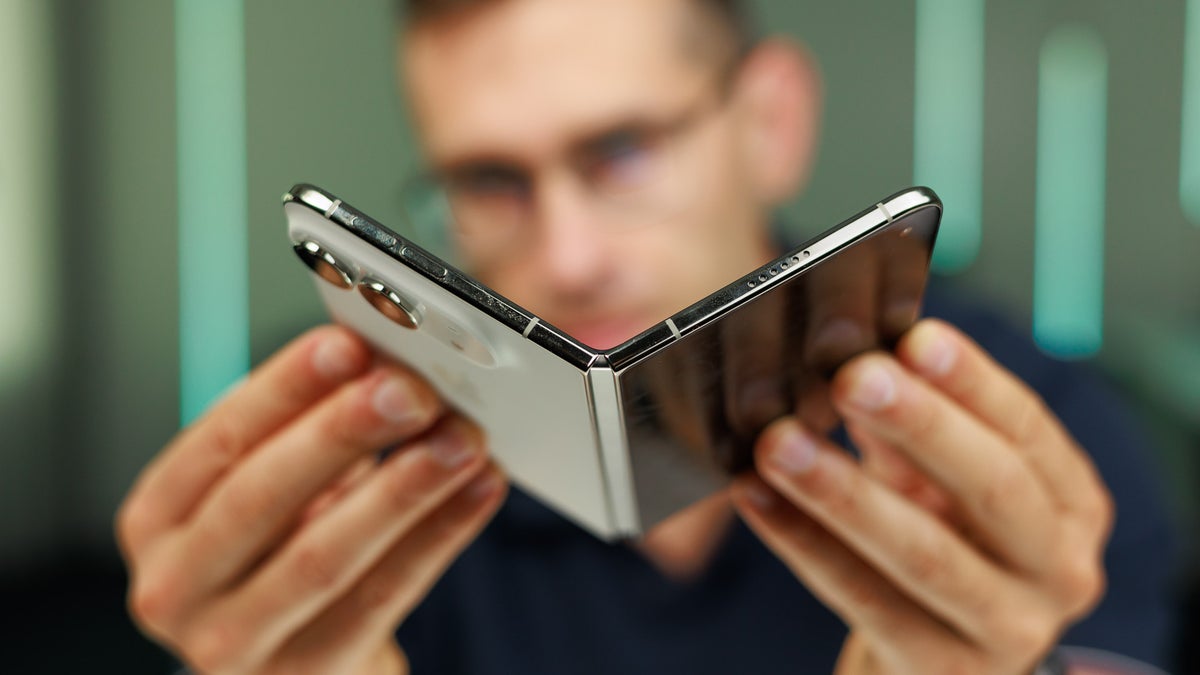
The iPhone Duo feels Apple-ish in a lot of ways, from the familiar construction, the little software refinements and delightful touches, but it also feels surprisingly heavier and thicker than other foldables like the Galaxy Fold 8.
I still have mixed feelings about foldables in general. Do we really need them in our lives? And does the iPhone Duo add some arguments in favor of the foldable form factor?
Image by PhoneArena
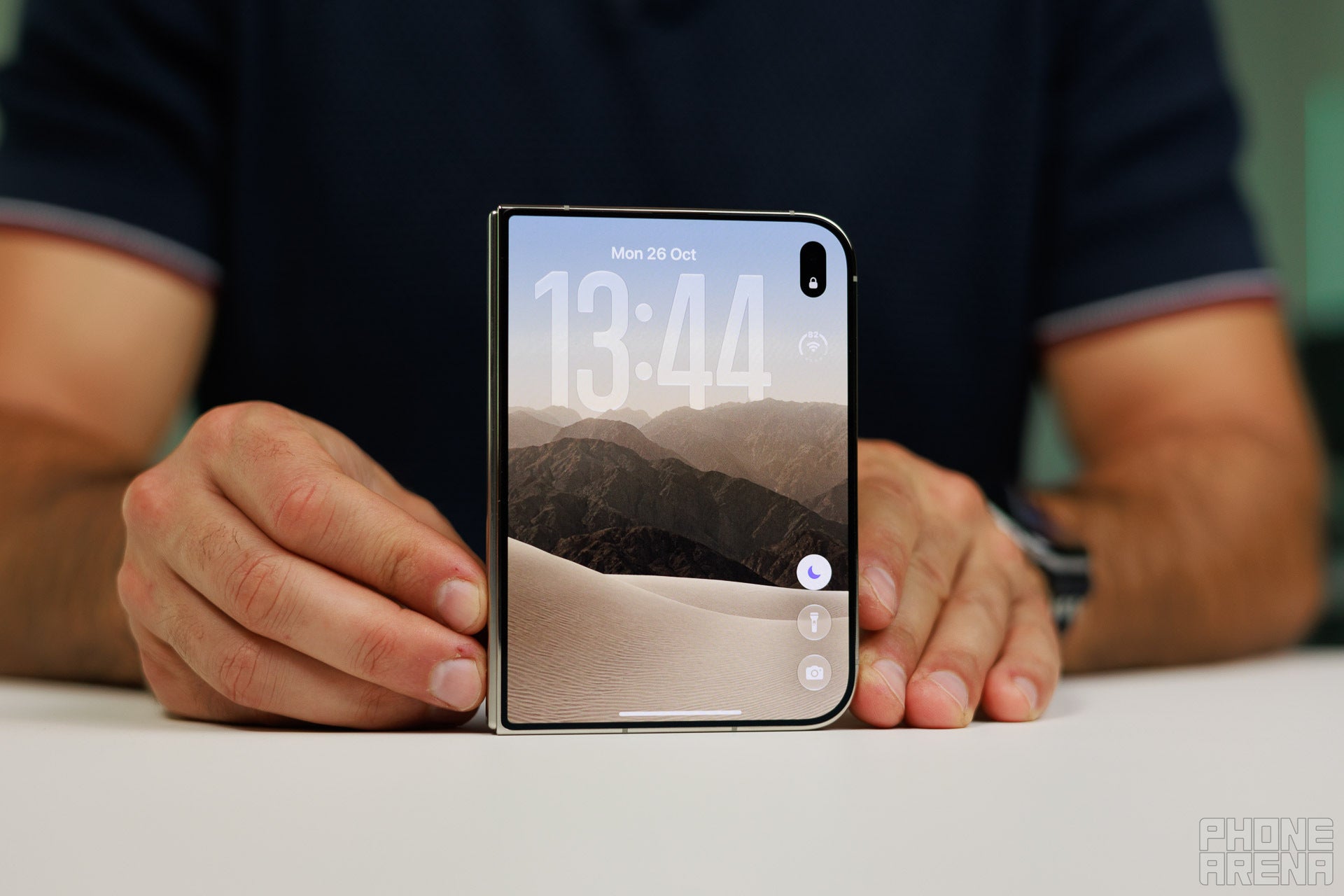
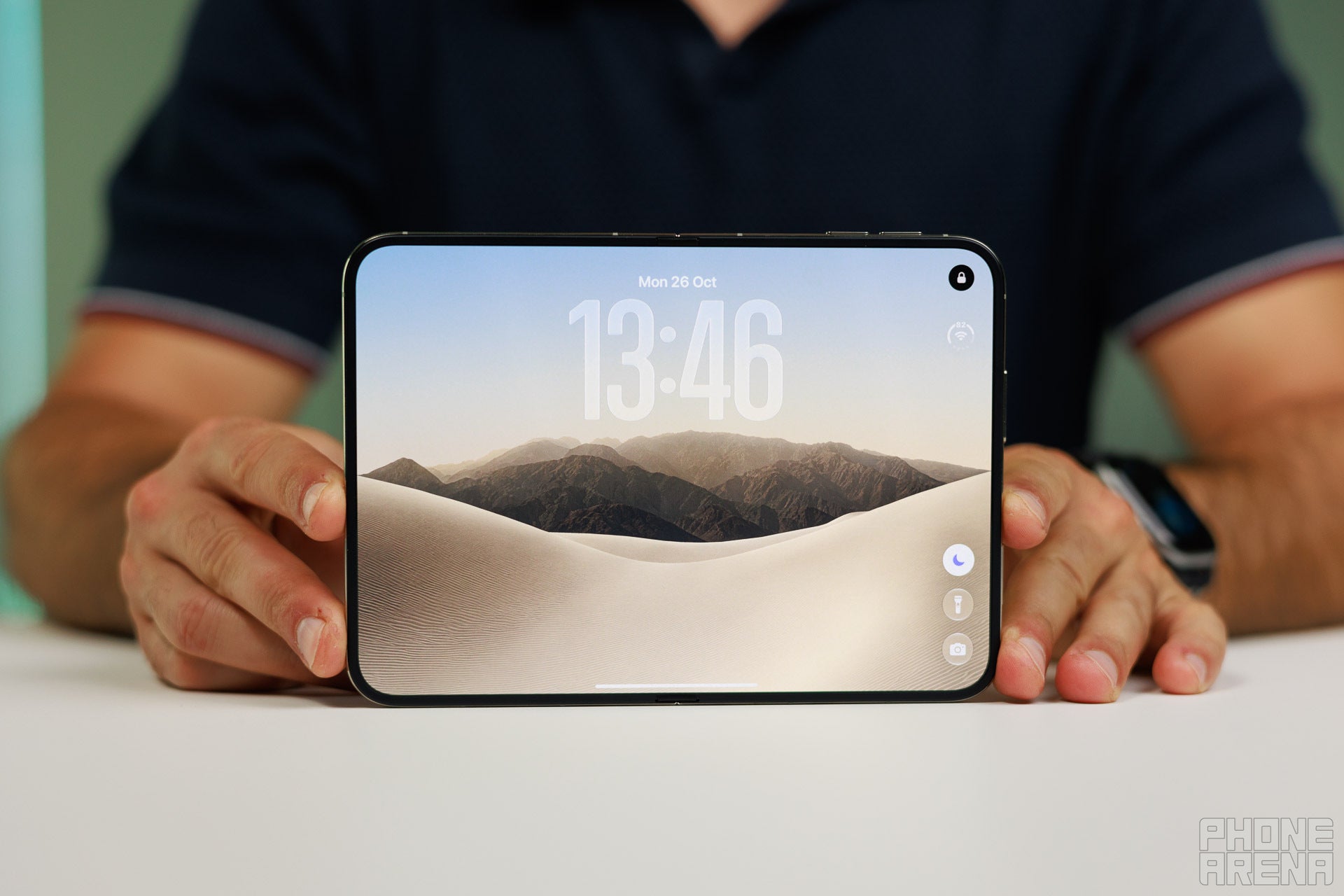
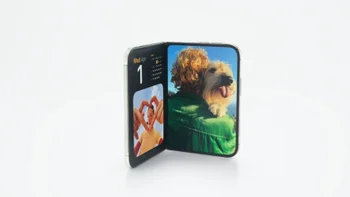
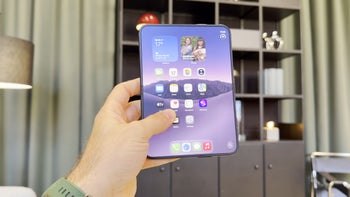
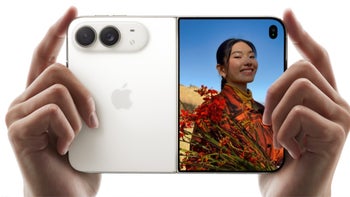
First, the iPhone Duo is shaped like a passport, so it's shorter and wider than a standard phone.
Apple has also moved the dock with your main icons to the side, instead of its usual position on the bottom.
Image by PhoneArena
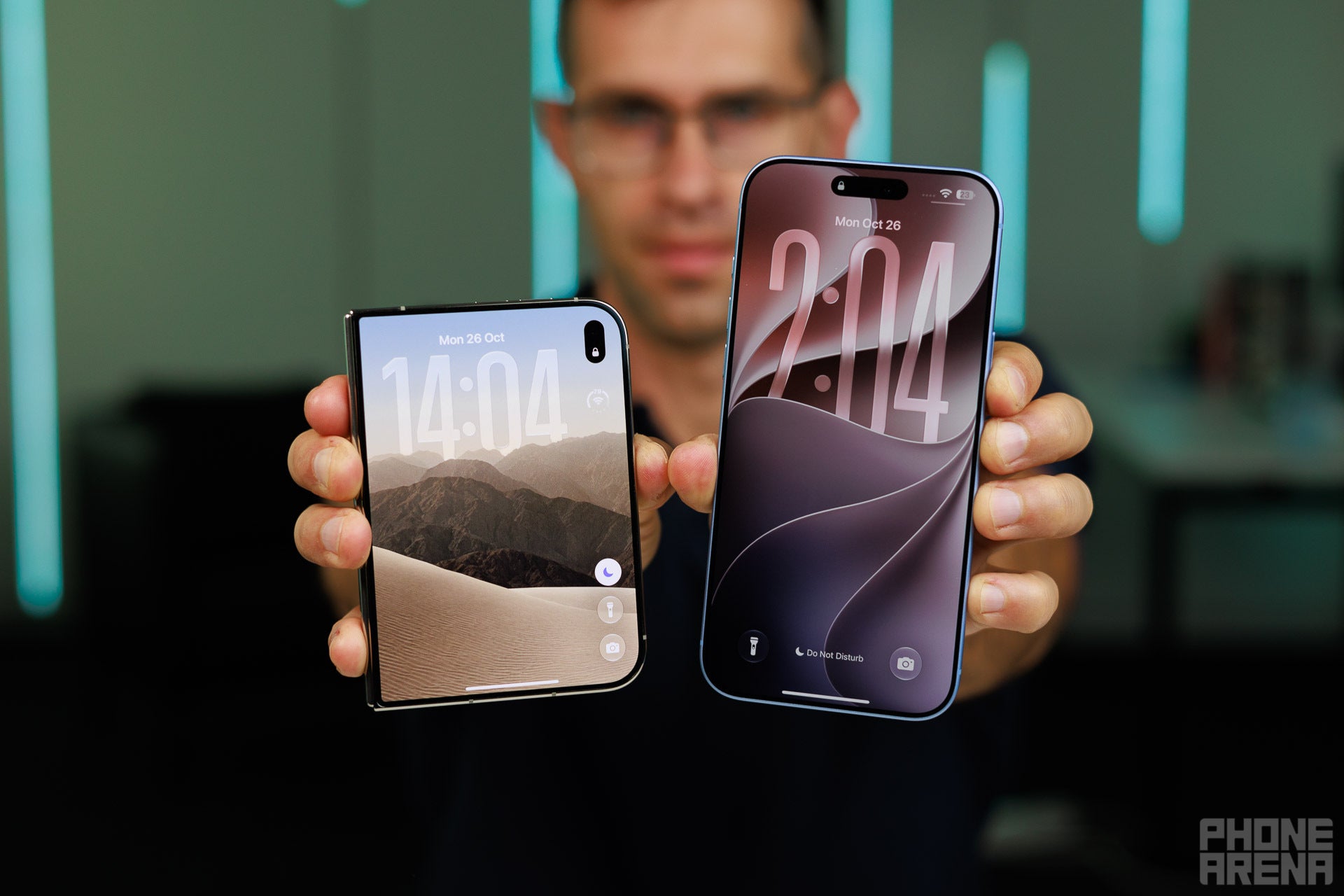
Here is how it looks next to the iPhone 18 Pro Max. The iPhone Duo features a 5.4-inch cover screen with a 14:10 aspect ratio, while the iPhone 18 Pro Max comes with a 6.9-inch display with a 19.5:9 aspect ratio.
The Duo also uses the same excellent Ceramic Shield 2 for the cover screen, same as on the 17 Pro and 18 Pro series. The back of the iPhone Duo, however, only features the less scratch-resistant first-gen Ceramic Shield.
Recommended For You
Image by PhoneArena
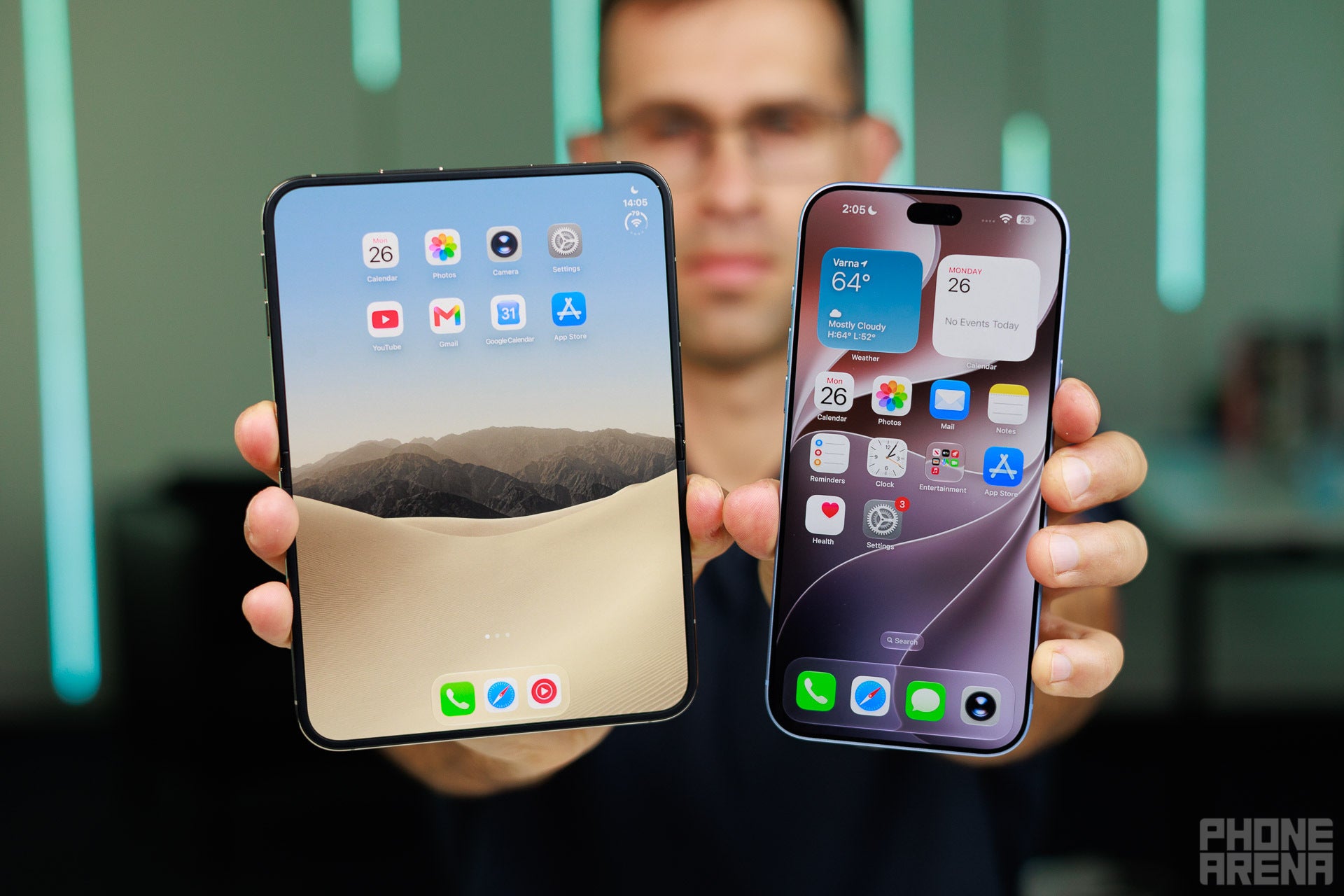
On paper, the difference between the 7.6-inch main screen of the Duo and the 6.9-inch screen of the 18 Pro Max does not sound massive, but because of the different aspect ratios, the iPhone Duo actually offers 50% more screen space than the Pro Max.
Image by PhoneArena
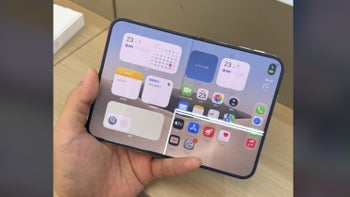
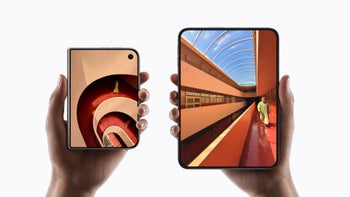
It opens into a wide 7.6-inch main screen. A curious detail is that the inner screen has the same 14:10 aspect ratio as the cover display.
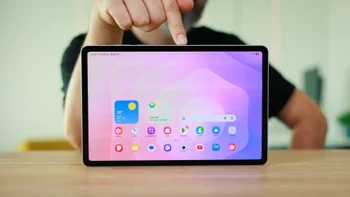
This screen size is similar to that of the iPad mini, but slightly smaller (the newly launched iPad mini comes with an 8.5-inch display).
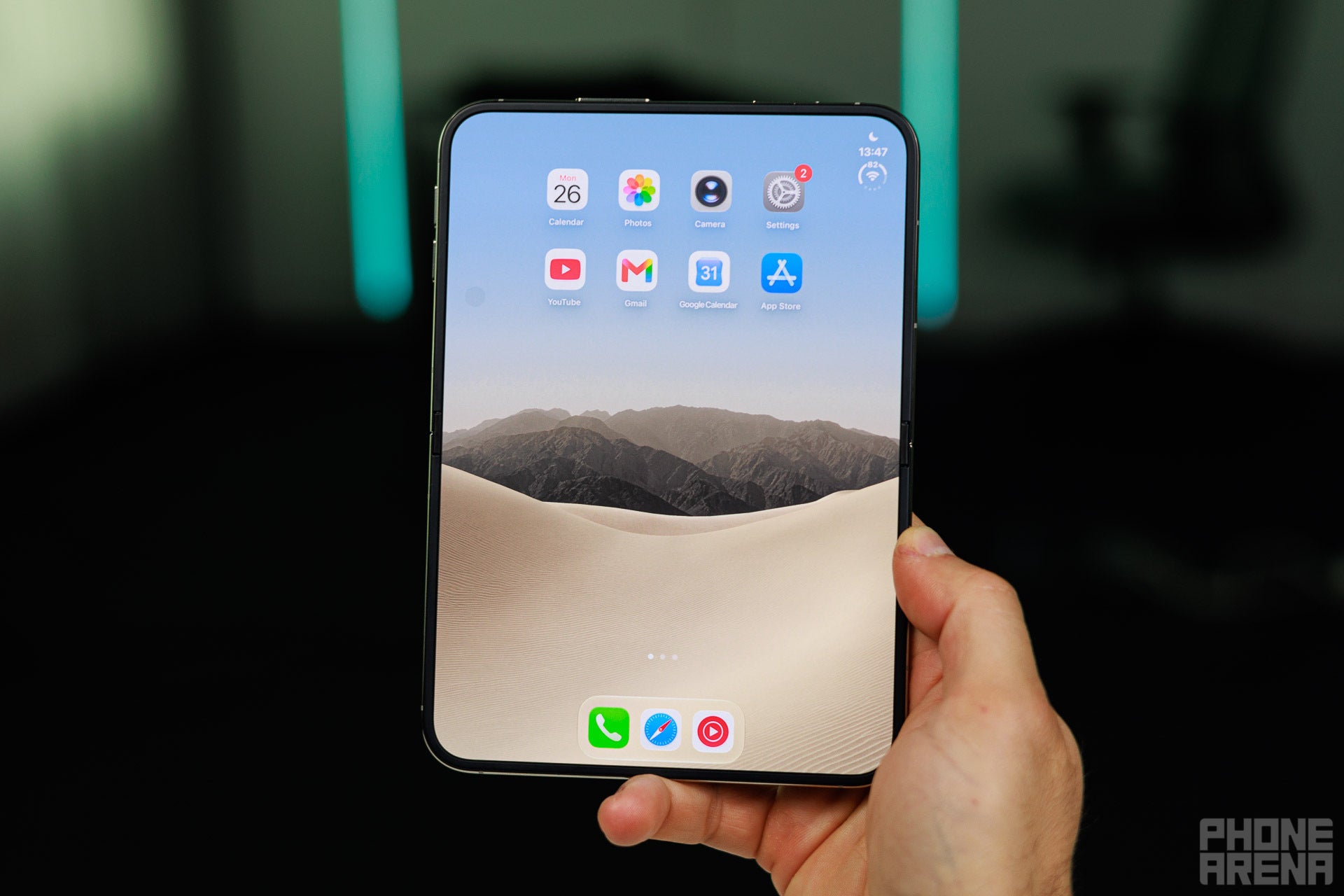
In this landscape mode, you can see two of your home screen panels on the iPhone Duo.
Image by PhoneArena
When you hold it in portrait orientation, it only displays one home screen at once, much like an iPad.
I've used the Galaxy Fold 8 previously, and one annoying limitation on the Galaxy is that you cannot rearrange icons in portrait mode. Thankfully, you don't have that limitation on the Duo.
Image by PhoneArena
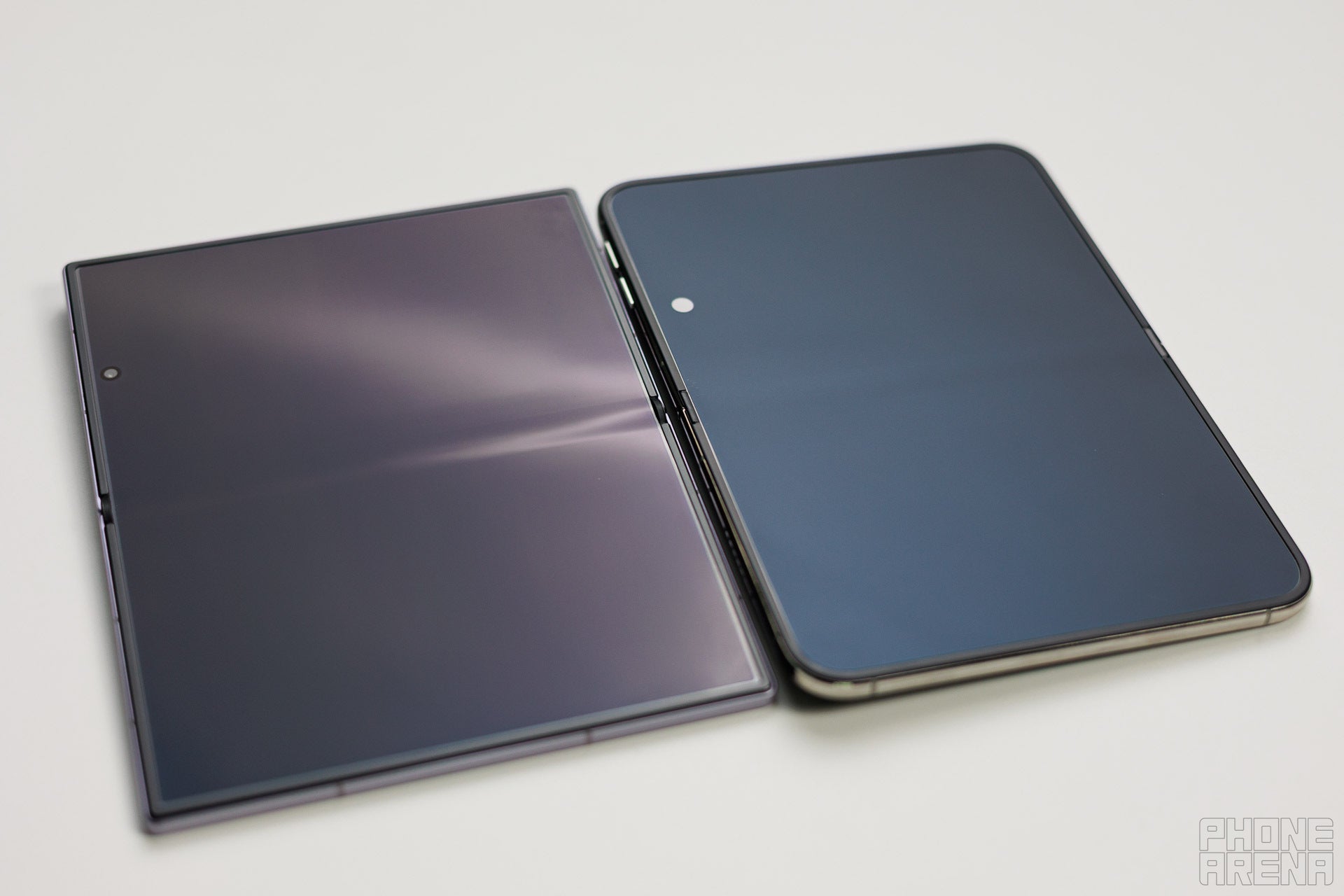
The crease on the iPhone Duo is almost invisible. Here is a comparison with the Galaxy Fold 8, and you can see the crease on the Samsung foldable a bit more.
Image by PhoneArena
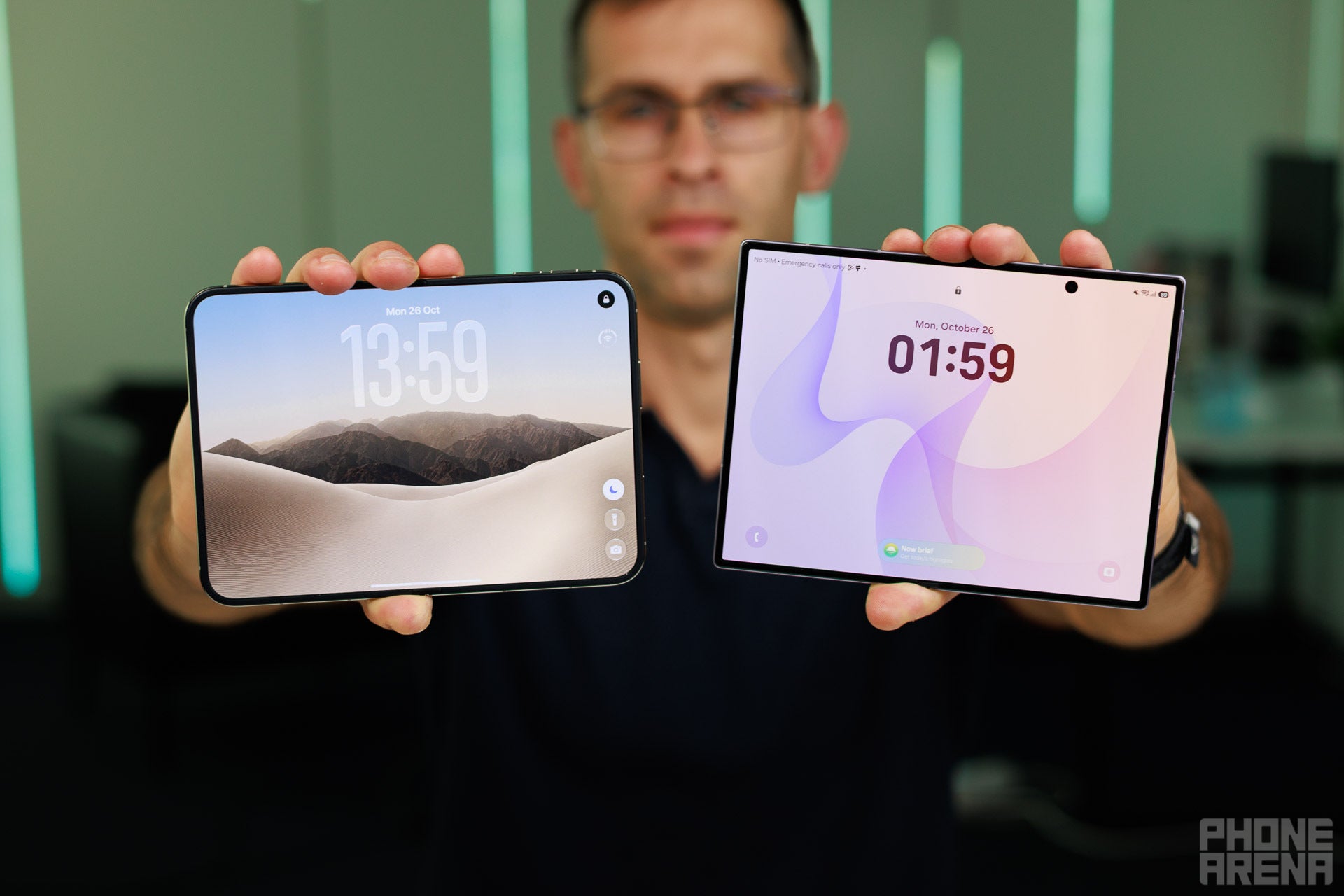
The main difference between the iPhone Duo and Galaxy Fold 8 is the rounded corners on the Duo and the sharp corners on the Galaxy. The Samsung phone also has a slightly bigger display.
Image by PhoneArena
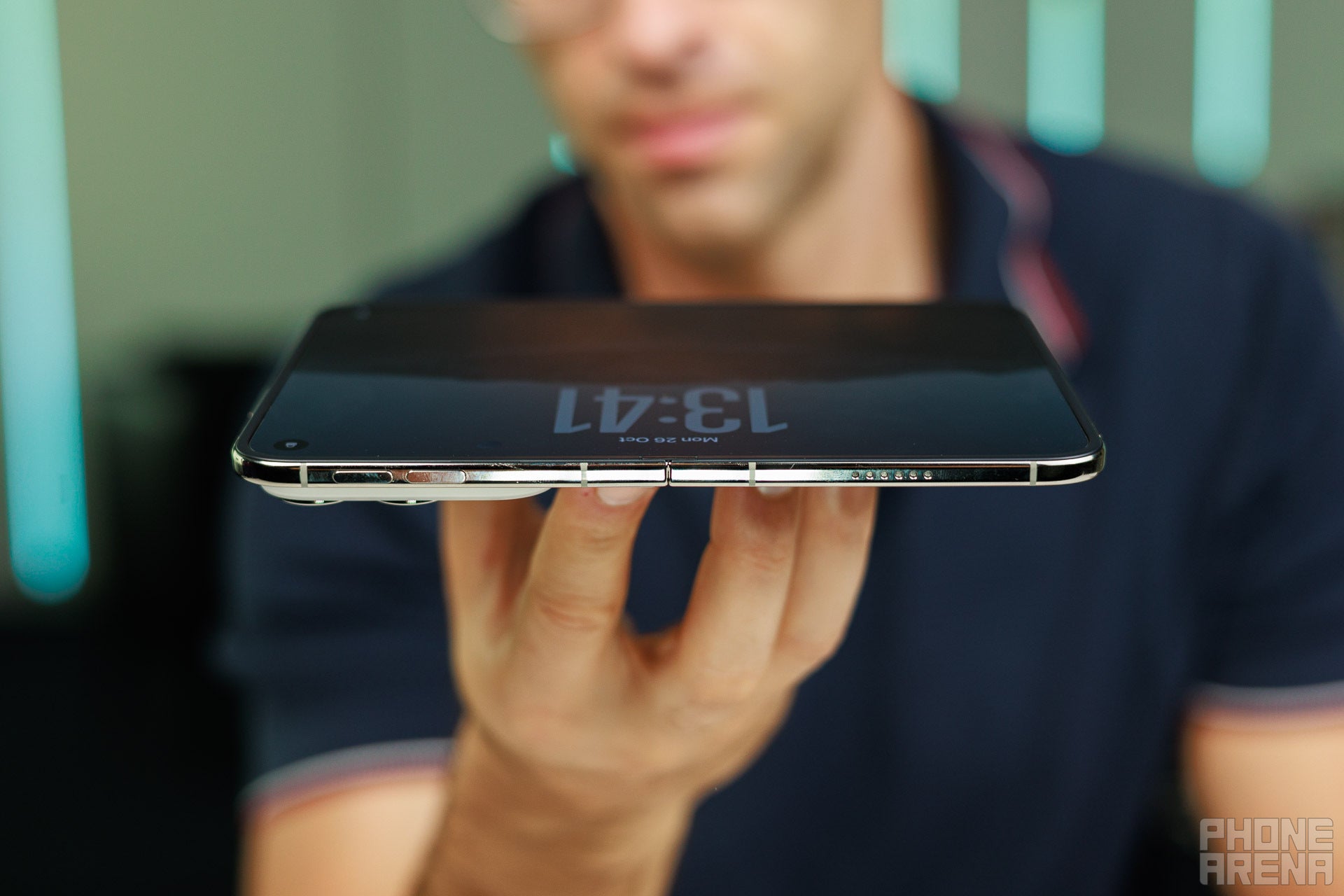
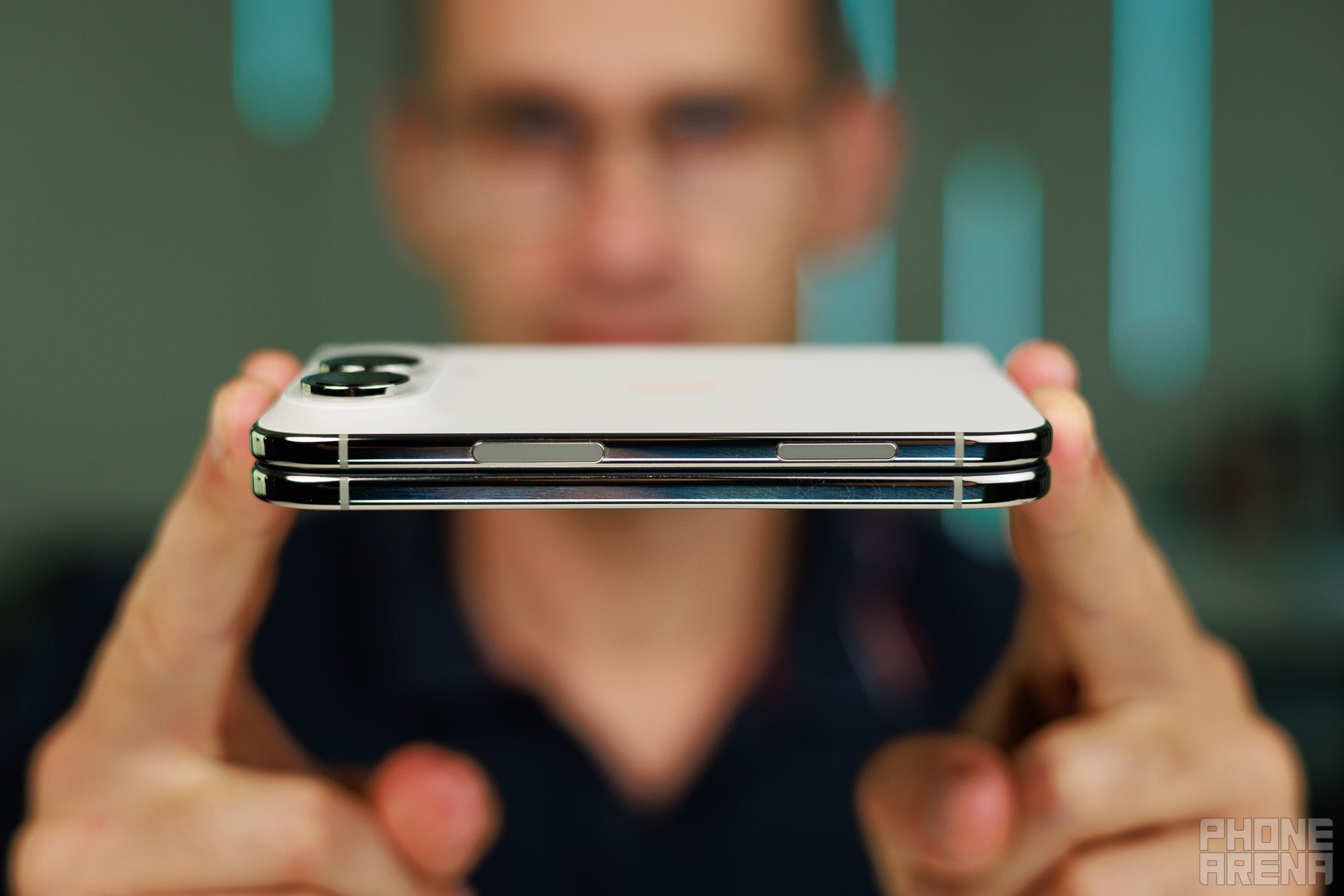
When unfolded, the iPhone Duo measures 5.2mm, which is thin, but not as thin as the Samsung Galaxy Fold 8, which measures 4.5mm, nearly 15% slimmer.
Image by PhoneArena
The iPhone Duo also weighs a noticeable 254 grams, compared to just 201 grams on the Fold 8. That's 26% heavier!
Overall, the iPhone Duo does not feel particularly thin or light, and you can definitely feel its heft in your pocket.
Image by PhoneArena
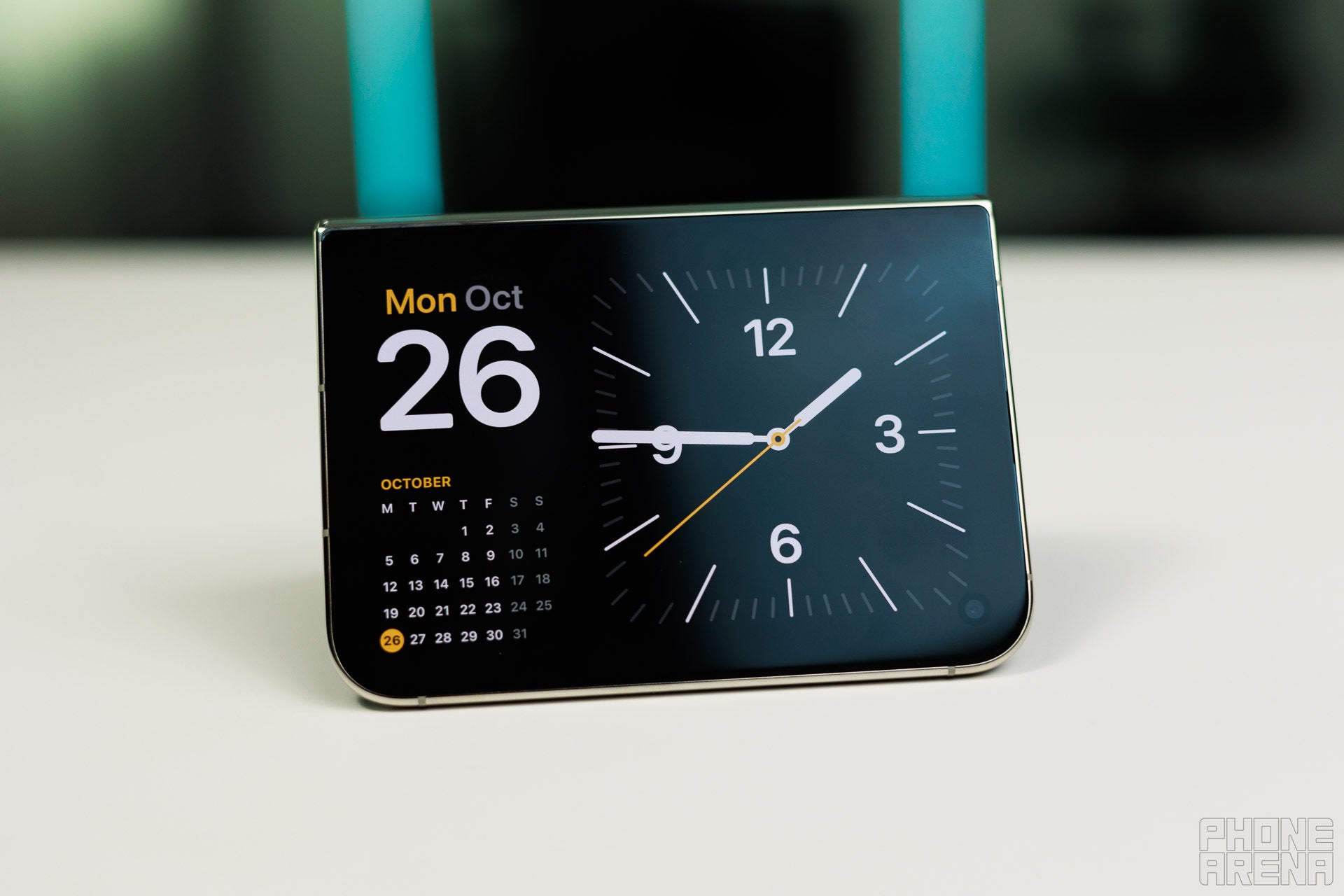
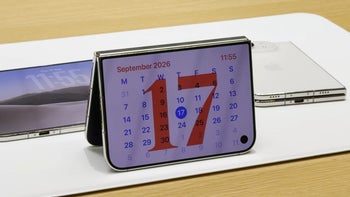
My favorite feature of the iPhone Duo is Standby Mode. You enter this mode automatically, no matter whether you are charging or not, and this is seriously underrated!
You can customize it much like an Apple Watch, with modular faces, and you can finally use your iPhone Duo as a photo frame. Such a cool feature.
It's also interactive, so you can tap on the calendar in Standby mode and jump directly to the Calendar app.
Image by PhoneArena
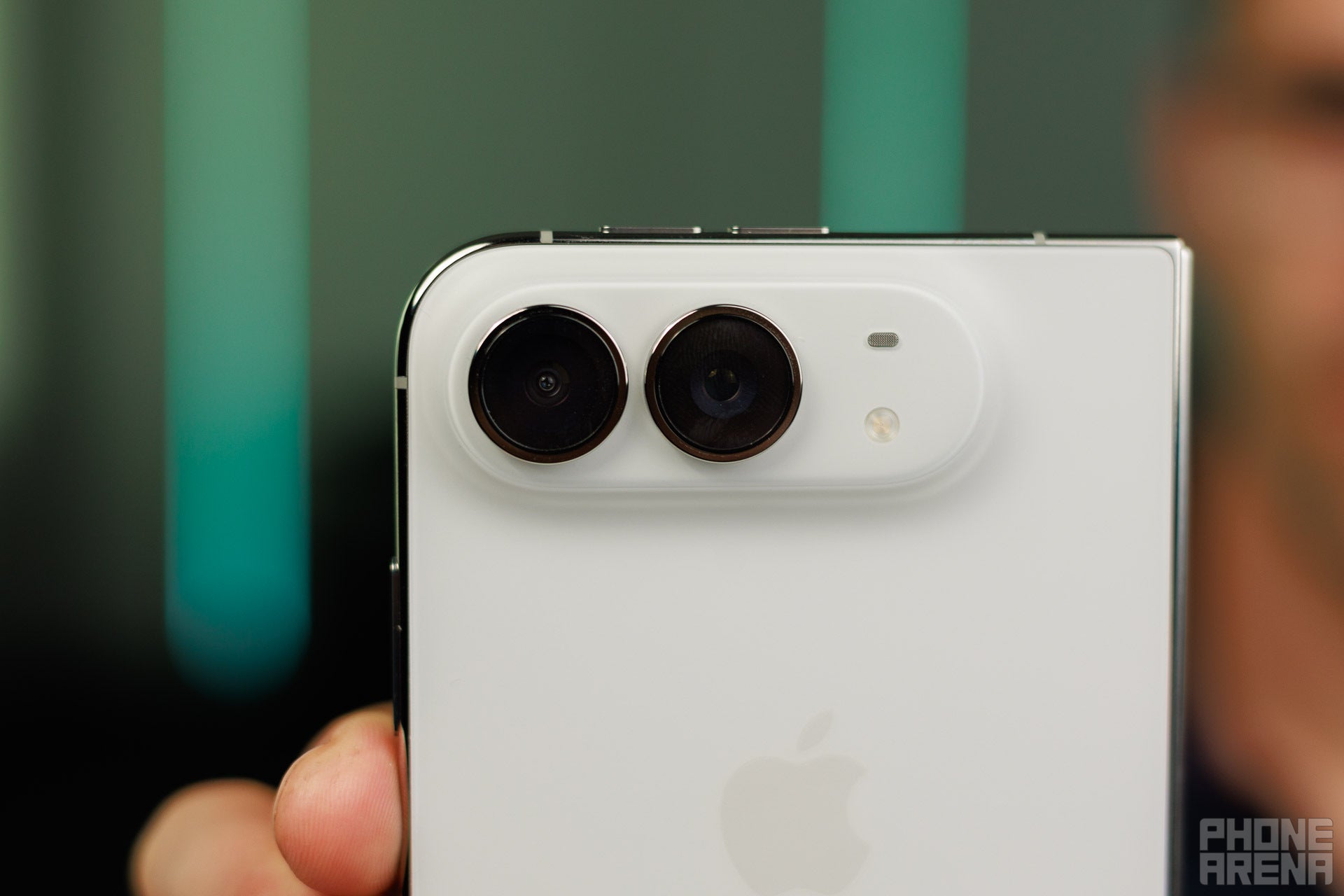
The iPhone Duo has two cameras on the back, and that is probably the biggest compromise compared to traditional phones.
You don't get a telephoto camera, so you only have digital zoom, which only goes to 10X. However, I noticed that quality drops quite noticeably at 4X and beyond. And for video, you are limited to 6X digital zoom.
Image by PhoneArena
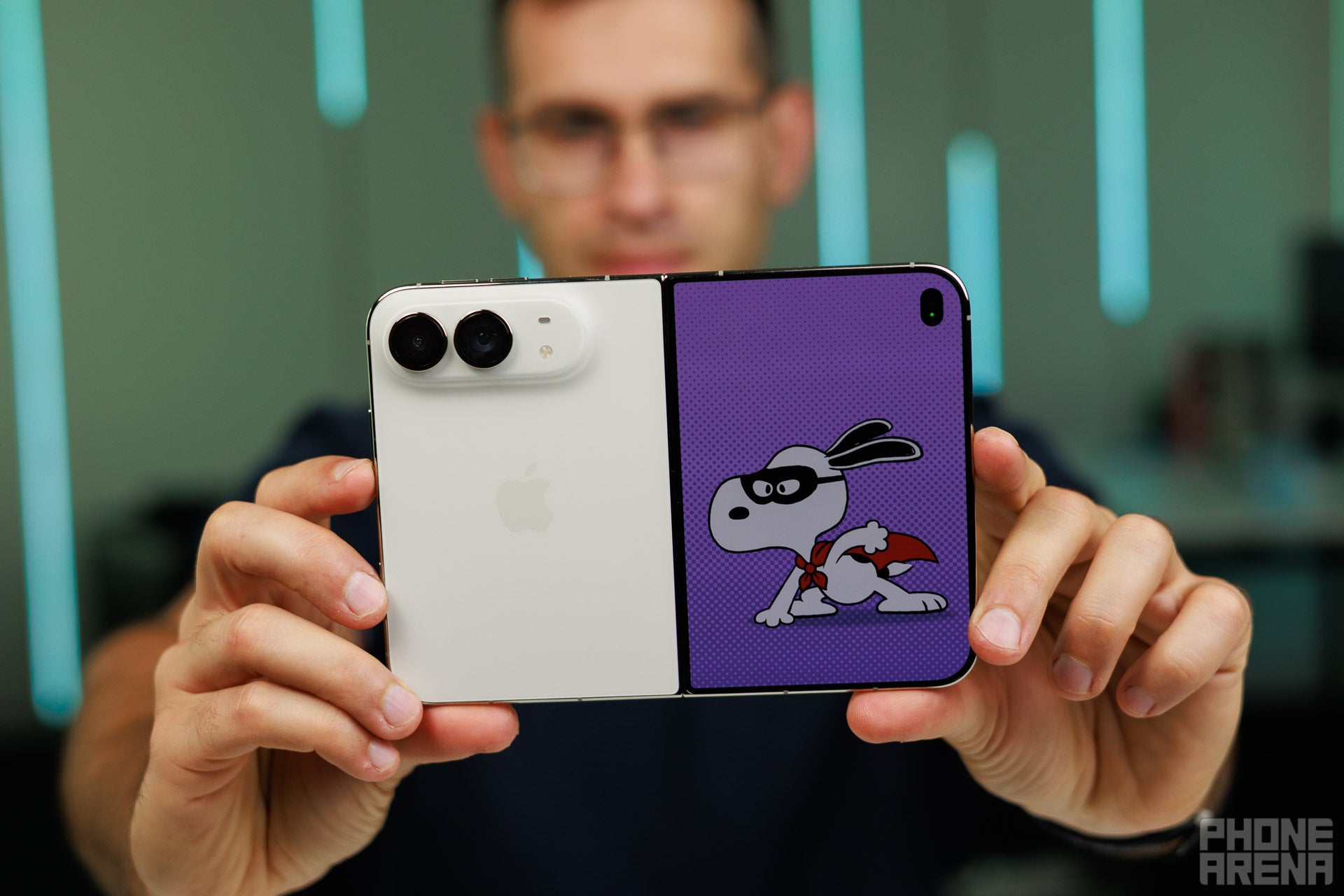
Despite the slightly smaller camera sensors and lack of a telephoto camera, the iPhone Duo has a few advantages as a camera. You can use the cover screen to get the attention of your kid easier with Snoopy animations, or you can have your model see themselves in the cover display.
Also, you can open the phone and turn it with the rear cameras facing you for a higher quality selfie, even if that takes a bit of hand gymnastics.
Image by PhoneArena
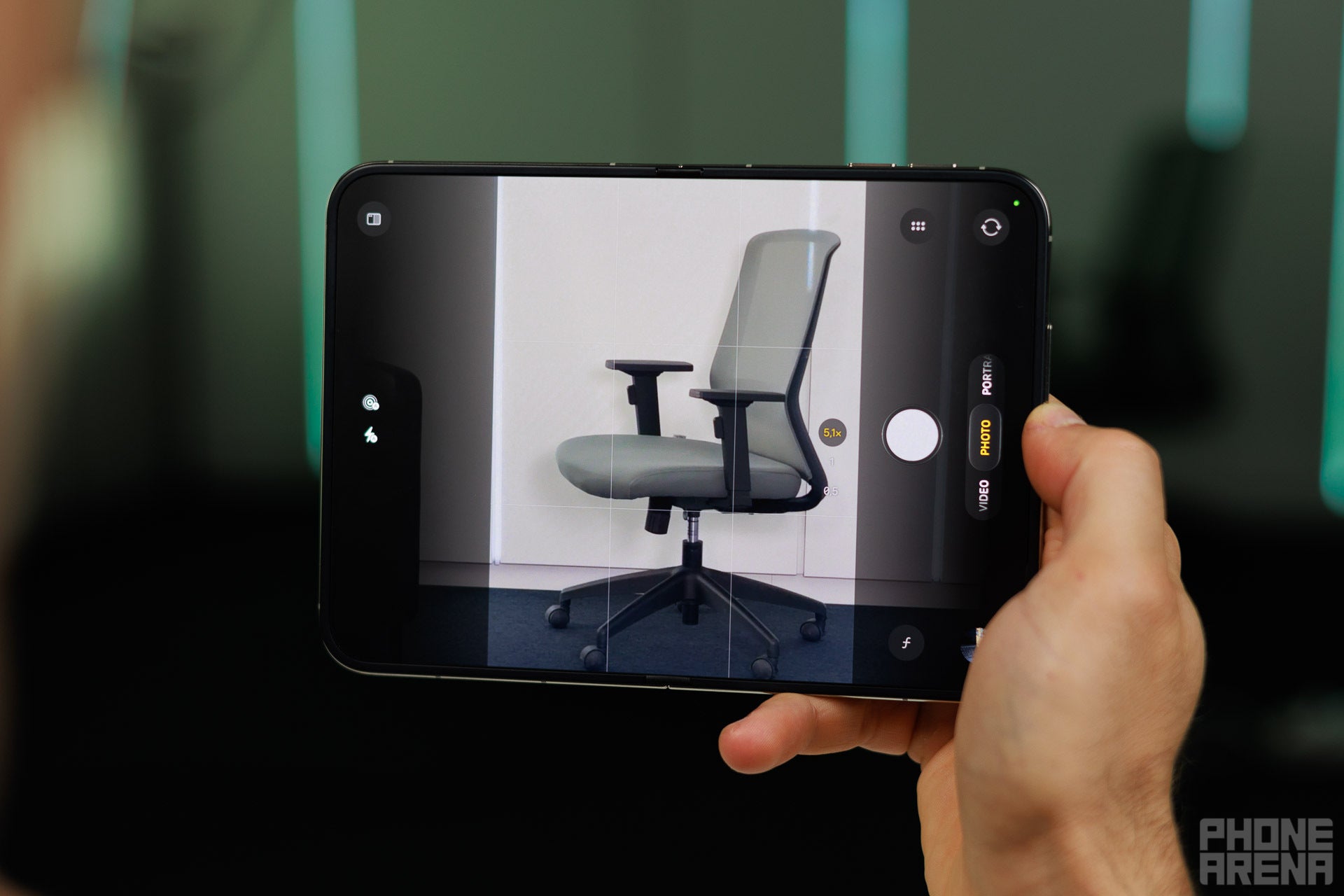
The camera app comes with a quite familiar interface.
Image by PhoneArena
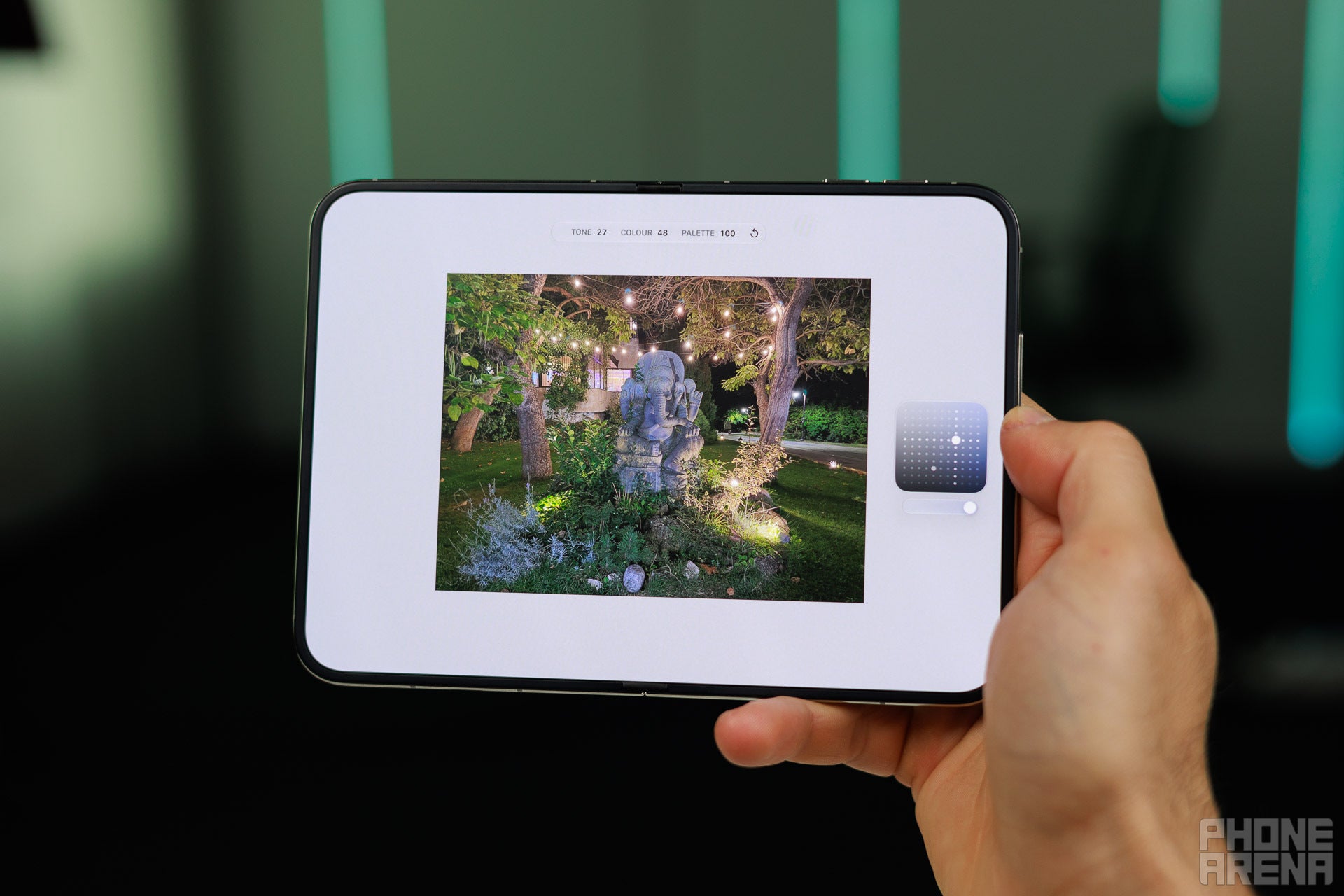
The larger main screen canvas makes editing a bit easier, but I feel like Apple could have made slightly better use of the space here — there is just too much white space.
Image by PhoneArena
Ultimately, the iPhone Duo is all about that main screen experience.
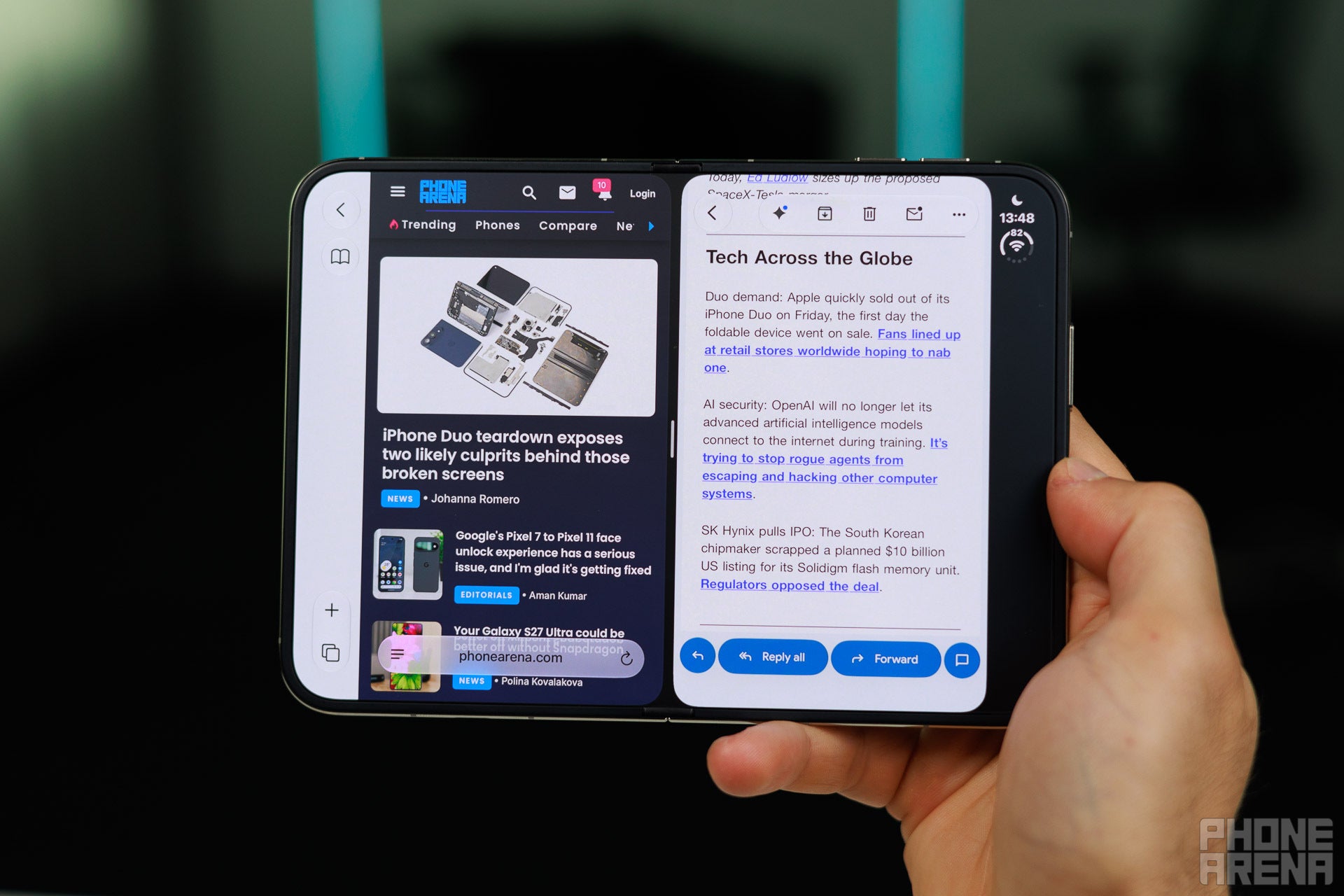
It's the first iPhone to support split-screen multitasking, and in a typical Apple fashion, it's super easy to get to that, just swipe up from the bottom to the side to place your current app in one half of the screen, and then select your other app.
One limitation compared to Android foldable phones is that the iPhone only supports a 50/50 split. I love the ability to freely split your apps and especially the 90/10 split on Android phones, so I definitely miss that versatility here.
Image by PhoneArena
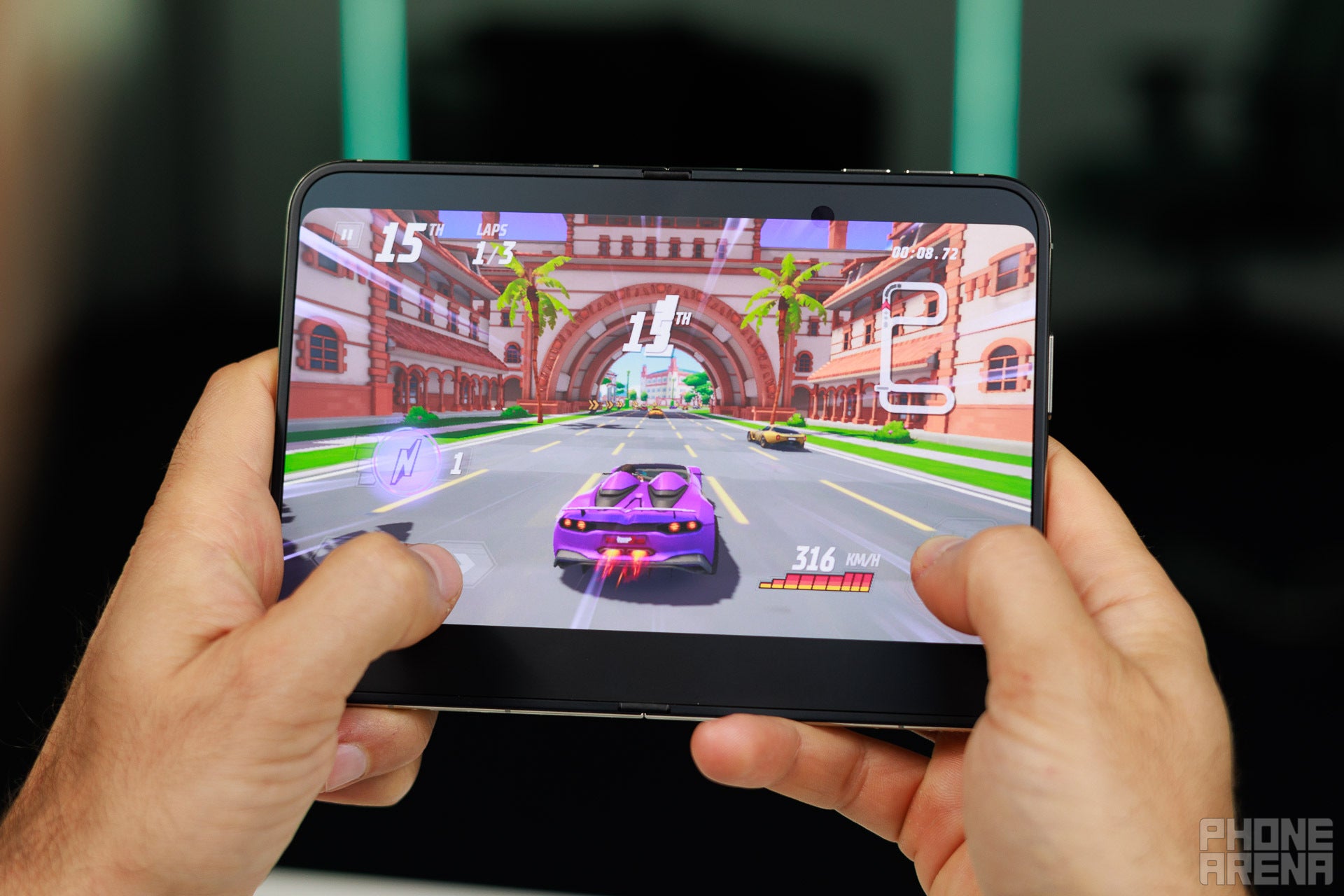
The iPhone Duo has the same A20 Pro chipset as the iPhone 18 Pro family, which means it's an absolute beast for gaming. The Android competition still hasn't caught up to this chip, and some issues with the latest Snapdragon chip suggest that Apple might have this lead for longer this time around.
Image by PhoneArena
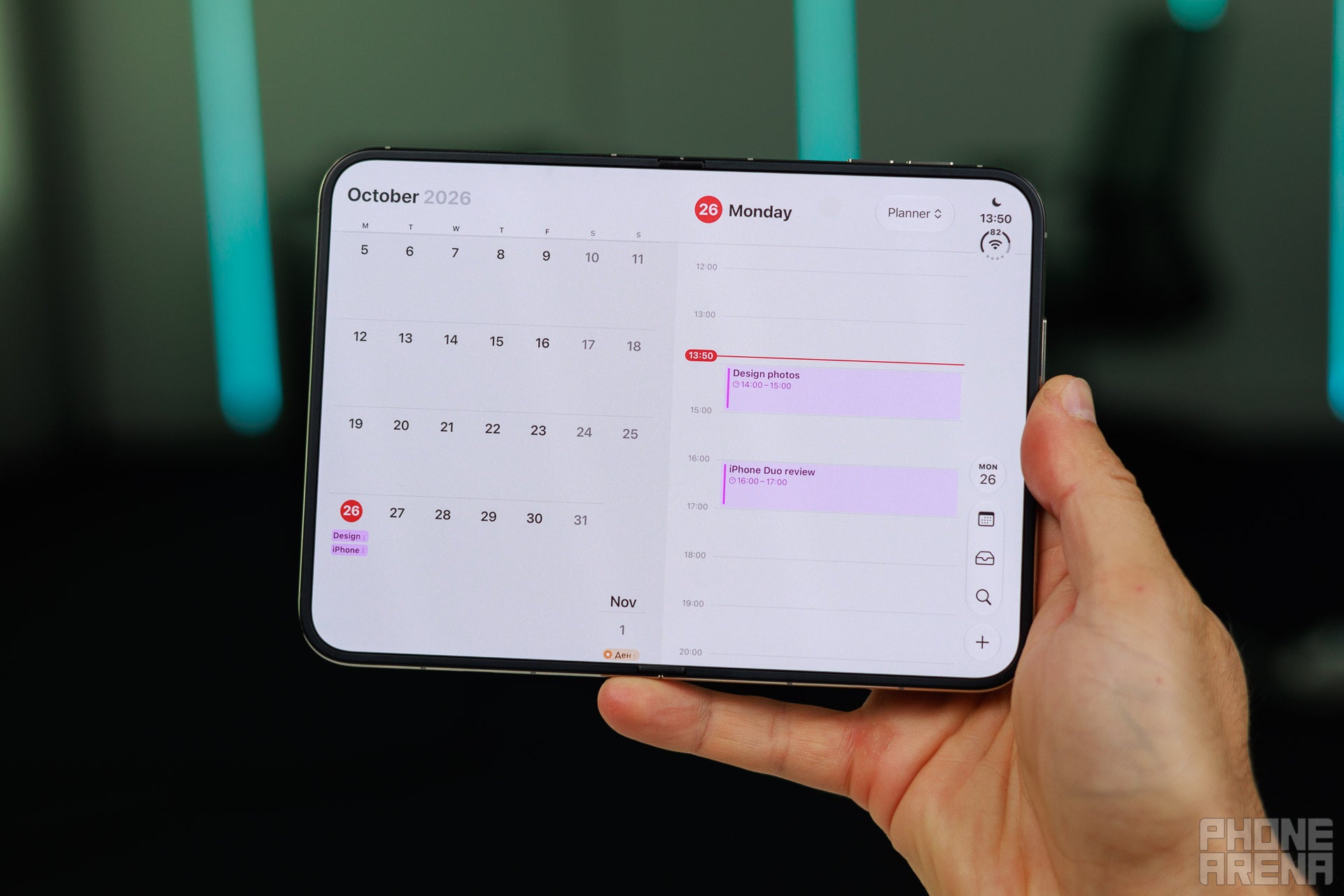
As for the everyday experience, most native Apple apps are already optimized for the Duo form factor, like the Calendar app.
Image by PhoneArena
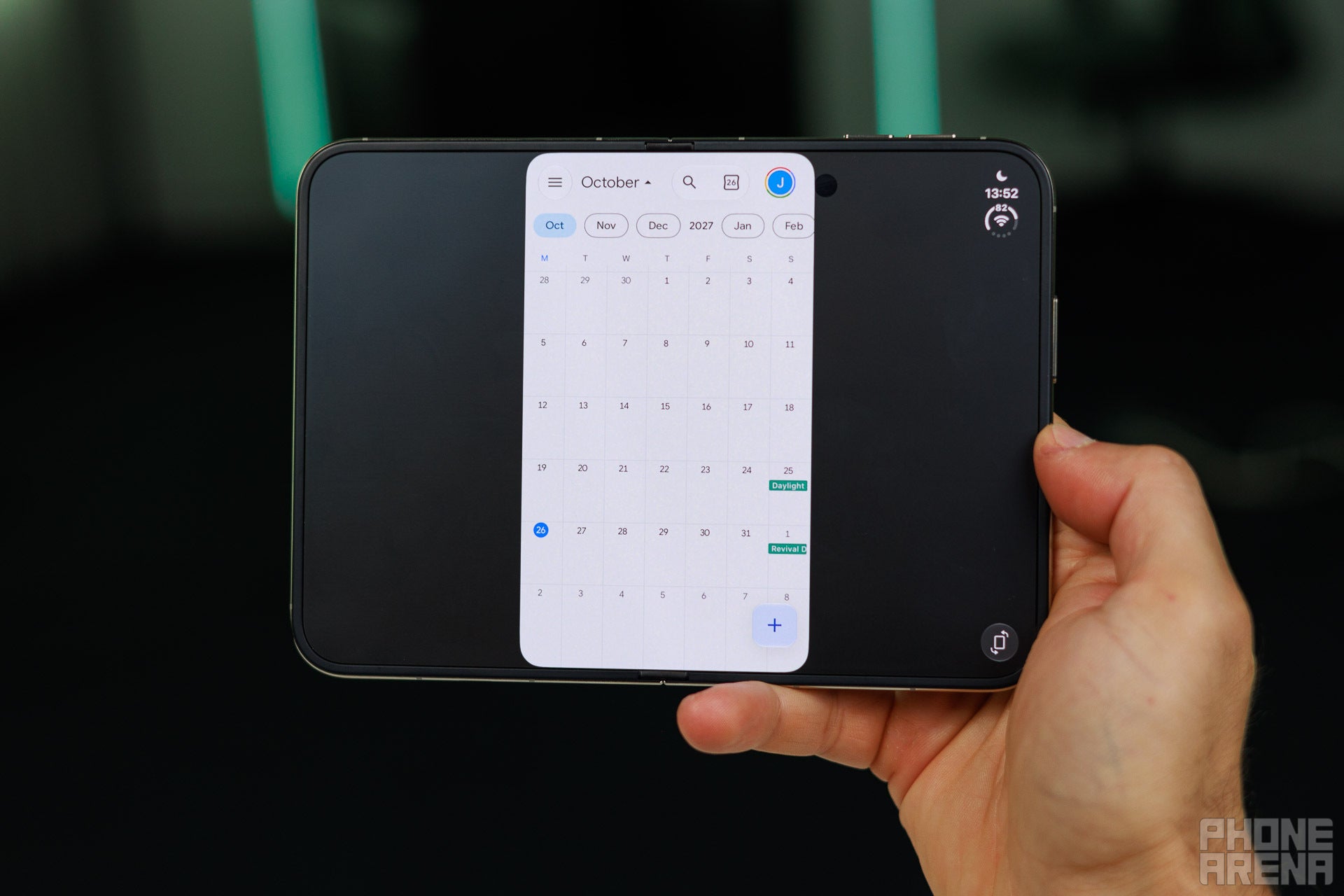
However, super popular apps like Google Calendar still show up in a traditional format, meaning you get giant black bars. I'm hopeful that the major app makers will update their software quickly for the Duo, but it's not guaranteed.
Image by PhoneArena
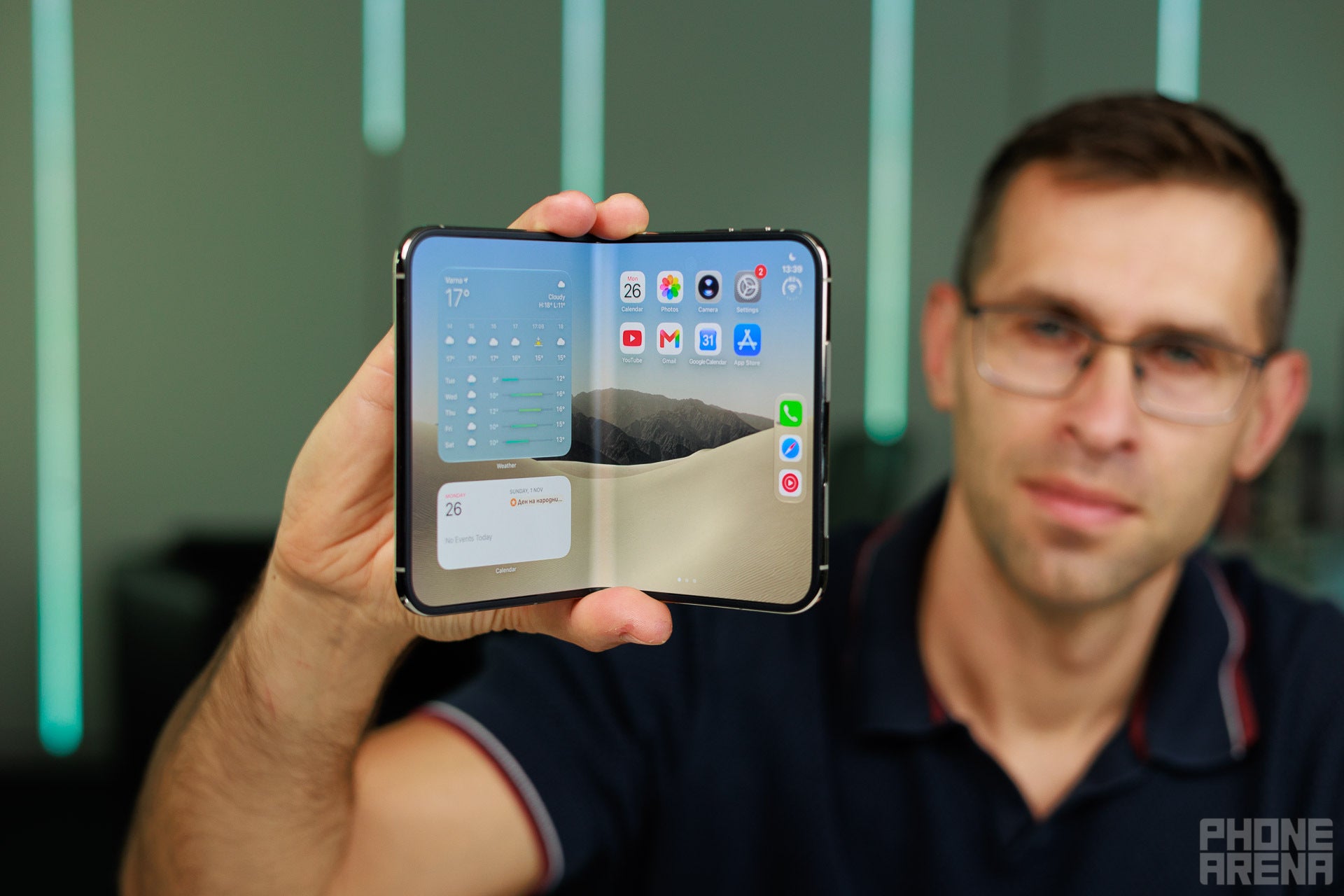
I will be gathering more impressions with the Duo over the coming days, and it's already undergoing our rigorous PhoneArena testing process. Stay tuned for my full review coming soon.
Trade in your old phone for cash at ecoATM!
Recycle your used phone and get instant cash. Find out how at ecoATM!
Victor, a seasoned mobile technology expert, has spent over a decade at PhoneArena, exploring the depths of mobile photography and reviewing hundreds of smartphones across Android and iOS ecosystems. His passion for technology, coupled with his extensive knowledge of smartphone cameras and battery life, has positioned him as a leading voice in the mobile tech industry.
A discussion is a place, where people can voice their opinion, no matter if it
is positive, neutral or negative. However, when posting, one must stay true to the topic, and not just share some
random thoughts, which are not directly related to the matter.
Things that are NOT allowed:
Off-topic talk - you must stick to the subject of discussion
Offensive, hate speech - if you want to say something, say it politely
Spam/Advertisements - these posts are deleted
Multiple accounts - one person can have only one account
Impersonations and offensive nicknames - these accounts get banned
To help keep our community safe and free from spam, we apply temporary limits to newly created accounts:
New accounts created within the last 24 hours may experience restrictions on how frequently they can
post or comment.
These limits are in place as a precaution and will automatically lift.
Moderation is done by humans. We try to be as objective as possible and moderate with zero bias. If you think a
post should be moderated - please, report it.
Have a question about the rules or why you have been moderated/limited/banned? Please,
contact us.






Things that are NOT allowed:
To help keep our community safe and free from spam, we apply temporary limits to newly created accounts: