AT&T clinches win against T-Mobile, but customers may side with the latter
A court has sided with AT&T's complaint against T-Mobile's Easy Switch feature.
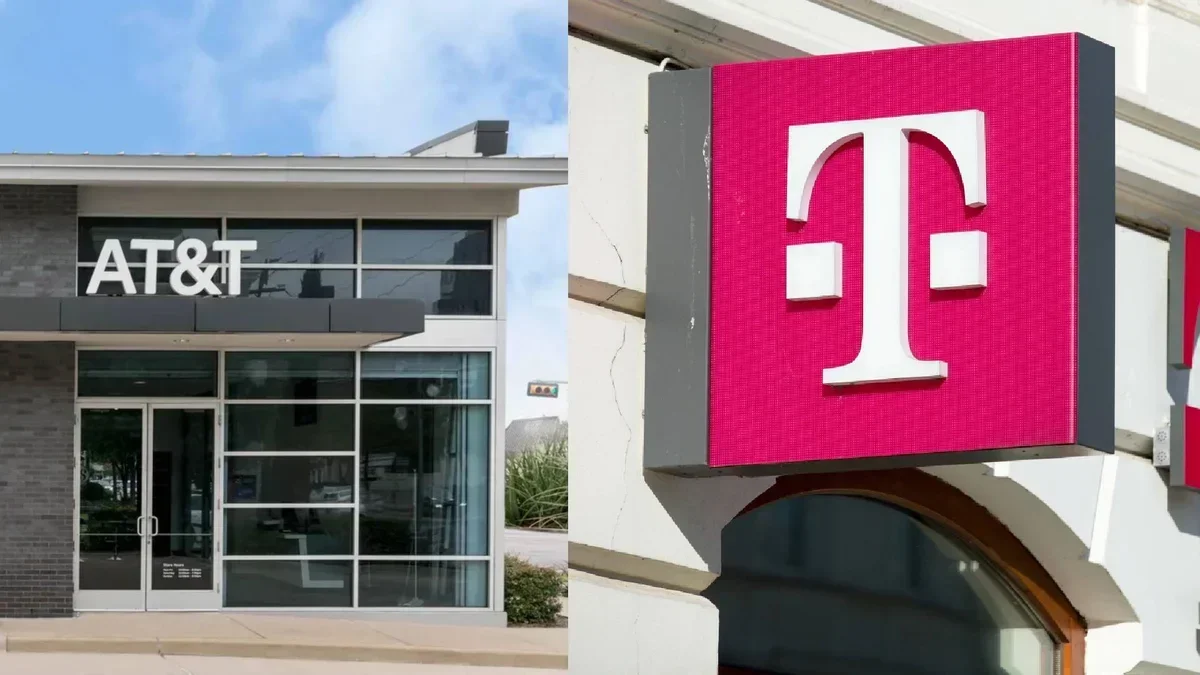
A court has ordered T-Mobile not to use its Easy Switch tool to intrude on AT&T's servers, according to a Law360 report cited by Light Reading. This is a win for AT&T, which alleged that T-Mobile's automatic switching tool illegally accessed its systems to harvest valuable data. T-Mobile maintains that AT&T's case has no legal grounds and its legal battle is a sham meant to obfuscate its attempts to stifle customer freedom.
T-Mobile added a beta version of Easy Switch to its T-Life app in November with the aim of moving the switching process online. The tool uses AI to recommend a better plan to customers than what's offered by AT&T and Verizon, and shortens the switching process to as little as 15 minutes.
The original version of Easy Switch required customers to log in to their AT&T or Verizon accounts using the T-Life app. T-Mobile disabled this method on November 26, before AT&T sued it for unauthorized access to its systems. The current version of Easy Switch requires customers to upload a copy of their bill or input data manually.
The court sided with AT&T, finding that without legal intervention, it would continue to suffer at the hands of T-Mobile. Although T-Mobile has pared back the feature for now, there's no legal barrier preventing it from reverting to the original version until a court instructs it to do so. That's despite the company saying it doesn't plan to re-enable the original version.
The case is ongoing, and AT&T and T-Mobile will return to court in a month.
Industry veteran and consultant Brian Newman has also offered another perspective. He argues that as the market saturates and competitive advantages erode, carriers are turning to creating obstacles and mudslinging to stay ahead. That not only shifts the focus from technical advancements to storytelling but also invites regulatory scrutiny.
T-Mobile is set to report its Q4 earnings on February 11. Its net adds may offer a glimpse into the effectiveness of Easy Switch, though the picture will become clearer when Q1 2025 results are reported.
By that time, we may see similar features from AT&T and Verizon. The pivot to digital transformation comes at a time when wireless consumers are more open to the idea of switching, creating a fiercely competitive environment.
Court sides with AT&T
T-Mobile added a beta version of Easy Switch to its T-Life app in November with the aim of moving the switching process online. The tool uses AI to recommend a better plan to customers than what's offered by AT&T and Verizon, and shortens the switching process to as little as 15 minutes.
The Northern Texas US District Court has granted AT&T's request to issue a restraining order against T-Mobile to block it from breaking into AT&T's servers. That's crucial because AT&T isn't content with T-Mobile modifying Easy Switch for now; it wants assurance that T-Mobile will never breach its systems again.
The court sided with AT&T, finding that without legal intervention, it would continue to suffer at the hands of T-Mobile. Although T-Mobile has pared back the feature for now, there's no legal barrier preventing it from reverting to the original version until a court instructs it to do so. That's despite the company saying it doesn't plan to re-enable the original version.
Who is right?
Beyond the courtroom, a larger debate over consumer freedom is unfolding.
AT&T has accused T-Mobile of getting into its systems to violate the privacy of its customers and siphon off valuable data that it has collected over the years.
T-Mobile contends that AT&T should focus on innovating instead of spending time on a version of Easy Switch that's no longer available.
While it's easy to get lost in the technicalities, the bigger picture is that T-Mobile wants to change how switching works, and its rivals want to maintain the status quo.
That's understandable, given that T-Mobile has been growing at a faster clip than AT&T and Verizon. AT&T is open to the idea of digital switching, but it's at odds with how T-Mobile is going about it.
T-Mobile has offered to work with rivals to revolutionize the switching process, a sign that it doesn't just want to simplify the switch to its service, but also the switch from it.
While AT&T may win the legal battle, its measures appear to be an attempt to uphold a legacy system that discourages switching. This strategy suggests that rather than leading through network value, AT&T is relying on friction to reduce churn.
That's not to say AT&T isn't open to modernizing its systems, and its CEO, John Stankey, has already acknowledged that most customers would prefer to switch without needing to go to a store.
AT&T has accused T-Mobile of getting into its systems to violate the privacy of its customers and siphon off valuable data that it has collected over the years.
T-Mobile contends that AT&T should focus on innovating instead of spending time on a version of Easy Switch that's no longer available.
While it's easy to get lost in the technicalities, the bigger picture is that T-Mobile wants to change how switching works, and its rivals want to maintain the status quo.
That's understandable, given that T-Mobile has been growing at a faster clip than AT&T and Verizon. AT&T is open to the idea of digital switching, but it's at odds with how T-Mobile is going about it.
T-Mobile has offered to work with rivals to revolutionize the switching process, a sign that it doesn't just want to simplify the switch to its service, but also the switch from it.
That's not to say AT&T isn't open to modernizing its systems, and its CEO, John Stankey, has already acknowledged that most customers would prefer to switch without needing to go to a store.
A current case between AT&T, T-Mobile, and Verizon is not really about ads or switching tools. It is about control of customer perception in a market where performance gaps are narrowing and growth is harder to find.
Brian Newman, CEO AI-Driven Consulting, December 2025
Industry veteran and consultant Brian Newman has also offered another perspective. He argues that as the market saturates and competitive advantages erode, carriers are turning to creating obstacles and mudslinging to stay ahead. That not only shifts the focus from technical advancements to storytelling but also invites regulatory scrutiny.
Who do you side with?
55 Votes
AT&T.
32.73%
T-Mobile.
45.45%
Both (digital switching without leaving room for scraping).
21.82%
The next two quarters will be interesting
T-Mobile is set to report its Q4 earnings on February 11. Its net adds may offer a glimpse into the effectiveness of Easy Switch, though the picture will become clearer when Q1 2025 results are reported.
By that time, we may see similar features from AT&T and Verizon. The pivot to digital transformation comes at a time when wireless consumers are more open to the idea of switching, creating a fiercely competitive environment.


Popular stories





Latest News





Things that are NOT allowed:
To help keep our community safe and free from spam, we apply temporary limits to newly created accounts: