Verizon's comeback and T-Mobile's slump becoming apparent
Verizon leaves T-Mobile behind in yet another report.
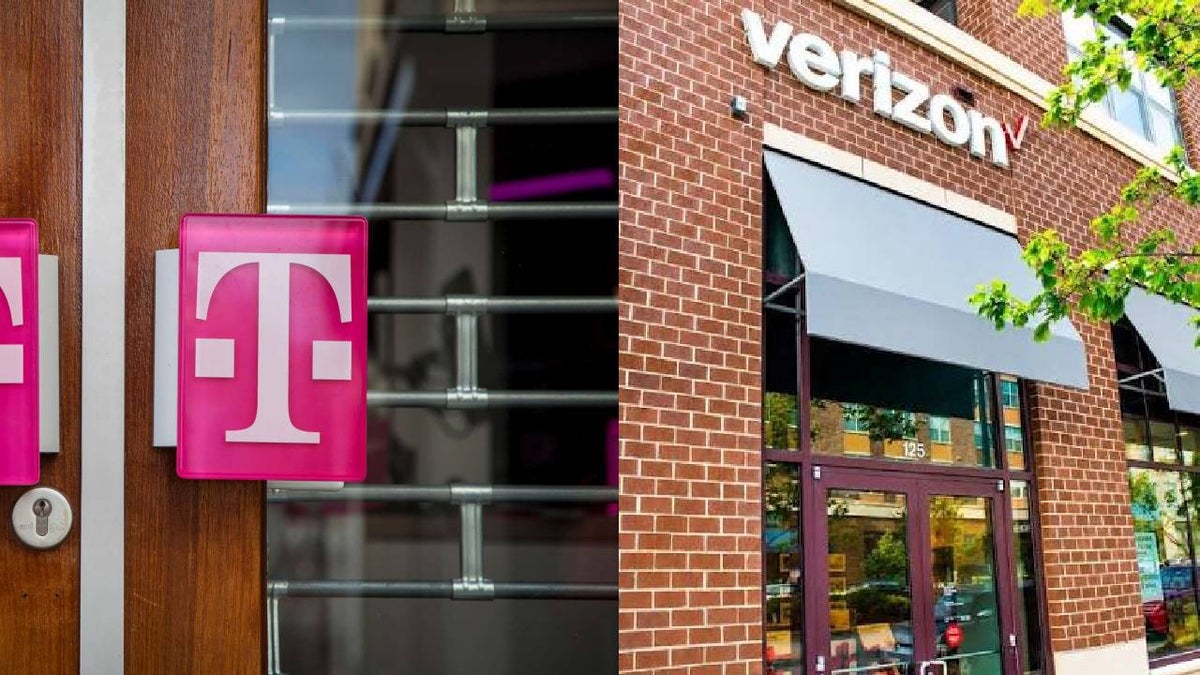
Network quality is rising across the board | Image by PhoneArena
The network gap between AT&T, T-Mobile, and Verizon may be narrowing, but even a slight lead determines who is truly at the top of their game. A recent RootMetrics report concluded that Verizon edged out AT&T and T-Mobile in performance during the first half of 2026. A new study reveals the same pattern.
JD Power today published its 2026 U.S. Wireless Network Quality Performance Study. It found that wireless customers ran into just 8 problems per 100 cell phone interactions (PP100), breaking previous records.
While a lower PP100 score generally indicates higher network quality, these impressive results may have been partially driven by a substantial decline in device usage. Across the US, wireless customers used their gadgets for an average of 16 fewer minutes per 48-hour period over the past six months than they did last year.
On average, users spent seven fewer minutes on voice calls and messaging, and nine fewer minutes browsing, streaming, and gaming.
The study also discovered that around four in ten customers choose a carrier based on network quality (39%) and reputation (38%), while around one-fourth (24%) pick a provider based on price.
While some of this trend is no doubt being driven by carrier efforts to improve their networks, JD Power also finds a concordant trend in reduced overall device usage, which is helping to keep problem counts lower.
Of the six regions examined, Verizon led in the Mid-Atlantic (6 PP100), North Central (6 PP100), and Southeast (7 PP100).
T-Mobile came out ahead in the Southwest region (7 PP100) and tied with Verizon (7 PP100) in the Northeast and West.
AT&T tied for the runner-up position in two regions.
Verizon also shone brightly in the RootMetrics report, winning outright in Network Responsiveness, Data Performance, and Video Performance, with AT&T trailing slightly behind.
Verizon even defeated T-Mobile in 5G tests.
Since each of the Big Three carriers had a strong showing, user experience will likely be comparable among the three.
There can only be one winner, though, and that appears to be Verizon, suggesting its turnaround is going well.
T-Mobile is losing the edge it held in 5G. At the same time, it no longer provides the value it once did. This leaves the carrier in a tough spot: it's no longer the cheapest option by a wide margin, nor is it the fastest.
It will be interesting to see how the company attempts to differentiate itself going forward.
All carriers are doing better
JD Power today published its 2026 U.S. Wireless Network Quality Performance Study. It found that wireless customers ran into just 8 problems per 100 cell phone interactions (PP100), breaking previous records.
On average, users spent seven fewer minutes on voice calls and messaging, and nine fewer minutes browsing, streaming, and gaming.
The study also discovered that around four in ten customers choose a carrier based on network quality (39%) and reputation (38%), while around one-fourth (24%) pick a provider based on price.
Network quality and reliability are among the most important aspects of the wireless customer experience, so it is great news for the industry that problem counts are trending lower nationwide.
Carl Lepper, senior director, TMT and Utilities Practice at JD Power, July 2026
Verizon leads the pack
Of the six regions examined, Verizon led in the Mid-Atlantic (6 PP100), North Central (6 PP100), and Southeast (7 PP100).
T-Mobile came out ahead in the Southwest region (7 PP100) and tied with Verizon (7 PP100) in the Northeast and West.
AT&T tied for the runner-up position in two regions.
Which carrier is doing the best?
1278 Votes
AT&T
10.09%
T-Mobile
40.22%
Verizon
49.69%
The turnaround
Verizon also shone brightly in the RootMetrics report, winning outright in Network Responsiveness, Data Performance, and Video Performance, with AT&T trailing slightly behind.
Since each of the Big Three carriers had a strong showing, user experience will likely be comparable among the three.
There can only be one winner, though, and that appears to be Verizon, suggesting its turnaround is going well.
T-Mobile is no longer the 5G leader
T-Mobile is losing the edge it held in 5G. At the same time, it no longer provides the value it once did. This leaves the carrier in a tough spot: it's no longer the cheapest option by a wide margin, nor is it the fastest.
It will be interesting to see how the company attempts to differentiate itself going forward.


Popular stories
Latest News
Things that are NOT allowed:
To help keep our community safe and free from spam, we apply temporary limits to newly created accounts: