FCC demands answers from T-Mobile for violating customer commitments
T-Mobile users aren't going to be pleased with a new analysis, but one customer is making sure the carrier will pay.
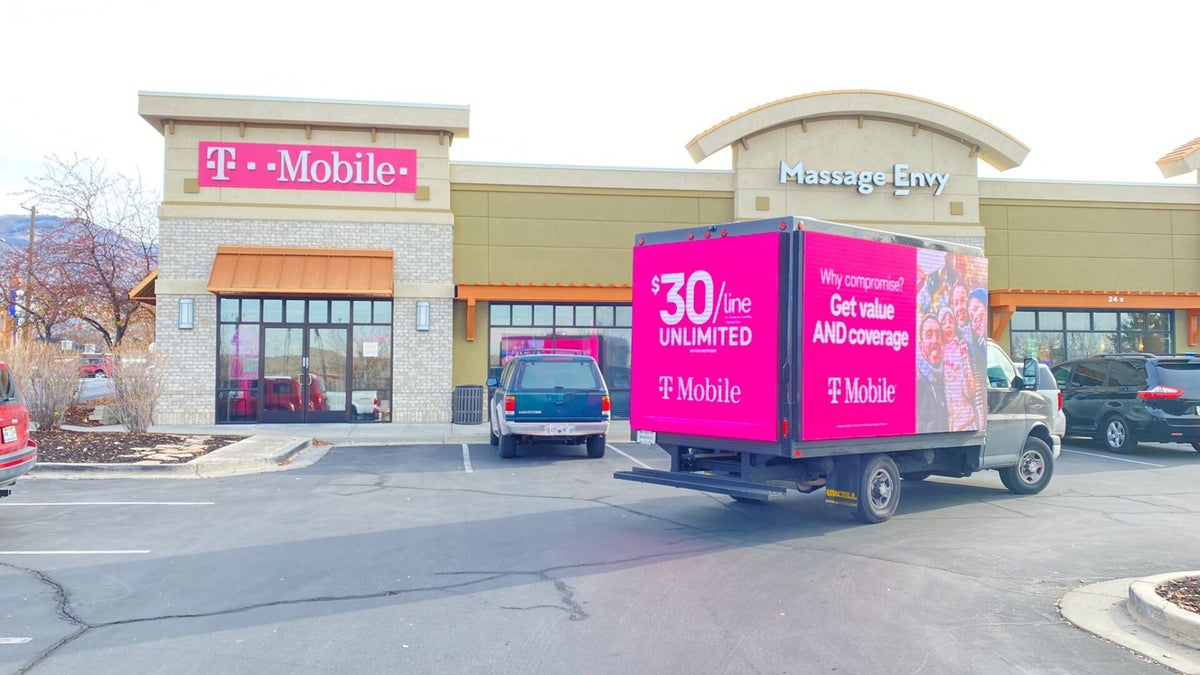
T-Mobile has been asked to explain its actions. | Image by Can't Miss US
Longtime T-Mobile customers are seething over forced plan changes that have raised their monthly bills by at least $6 for each line. Many have threatened to leave, but only a few seem to have actually done so. Most will stay put, shattering the idea that a hurt user base could inflict pain on the carrier.
T-Mobile justified the plan migrations by claiming that customers on 3G- and 4G-era plans weren't able to take advantage of the best it has to offer.
Making the best of it
T-Mobile justified the plan migrations by claiming that customers on 3G- and 4G-era plans weren't able to take advantage of the best it has to offer.
We do not expect a notable churn bubble given the $6 hike is lower than the AT&T and Verizon front book offers. If we run the quick math, this implies a $288 million/year annual lift in mobile service revenue.
TD Cowen analysts, July 2026
That wasn't enough to appease customers, with many of them vowing to leave. Most won't make good on their threat, according to analysts at TD Cowen, as reported by Fierce Network.
While T-Mobile is moving an estimated 8 million of its customers to modern plans, half of them won't be subject to price increases. The other 4 million, even with at least a $6 monthly increase, would still be paying less than AT&T and Verizon customers. They simply don't have a compelling enough reason to switch.
A large percentage of people will see no price change.
T-Mobile spokesperson, July 2026
Meanwhile, T-Mobile will generate an additional $288 million in annual revenue, which would be an estimated 0.4% increase over last year's revenue.
Some customers won't let it go
Even if the vast majority of the impacted customers stay put, a small fraction will still resist. While some have quietly left, others like 71-year-old Alex Gerwer are raising hell.
He lodged a notice of dispute with the company's legal department in Bellevue, Washington, and also submitted complaints to the Federal Communications Commission (FCC) and the California Attorney General. He also contacted the attorneys of the Oddo v. T-Mobile case, which was filed in 2024 after T-Mobile raised prices on legacy plans.
Gerwer accuses T-Mobile of predatory tactics, which are particularly damaging to senior citizens who rely on price lock guarantees for financial planning. He wants the FCC to compel T-Mobile to abide by the "Original Price Lock" pledge that applied to his account in June 2024.
We have to hold people like the leaders of T-Mobile accountable because otherwise they will ride roughshod over consumers.
Alex Gerwer, T-Mobile customer, July 2026
Gerwer has experience in the telecom industry, which has led him to theorize that T-Mobile is relying on customer inertia to get away with price hikes.
What would you do if your carrier went back on its word?
326 Votes
Leave if I can get lower prices elsewhere.
56.44%
Leave after paying off my device.
17.79%
Sue it.
25.77%
Will T-Mobile pay for reneging on its promise?
Given that the company says only a small percentage of users have been impacted, the FCC may not hold it to account. Even if it's sued, the case could drag on for years. If the company settles, most customers will receive only a small payout.
The bottom line is that large corporations are pretty good at evading consequences for their actions.
Push back matters
Should customers avoid voicing dissent just because it won't have any impact? Not in the least. Gerwer's persistence is already paying off, even if it is not how he would like. The company will have to come up with more than a boilerplate response to get the FCC off its back. In the future, it will have to be more careful about how it words its contracts and ads.


Popular stories





Latest News





Things that are NOT allowed:
To help keep our community safe and free from spam, we apply temporary limits to newly created accounts: