While the Big Three — AT&T, T-Mobile, Verizon — continue to get more powerful, they are getting worse at holding onto customers. Churn, or the percentage of customers leaving, rose for all three in Q4, a trend reflected in the aggressive, prolonged promotional campaigns aimed at poaching rival subscribers. Is there a method to this madness? Apparently, yes, according to phone number-parking service NumberBarn.
Marching out
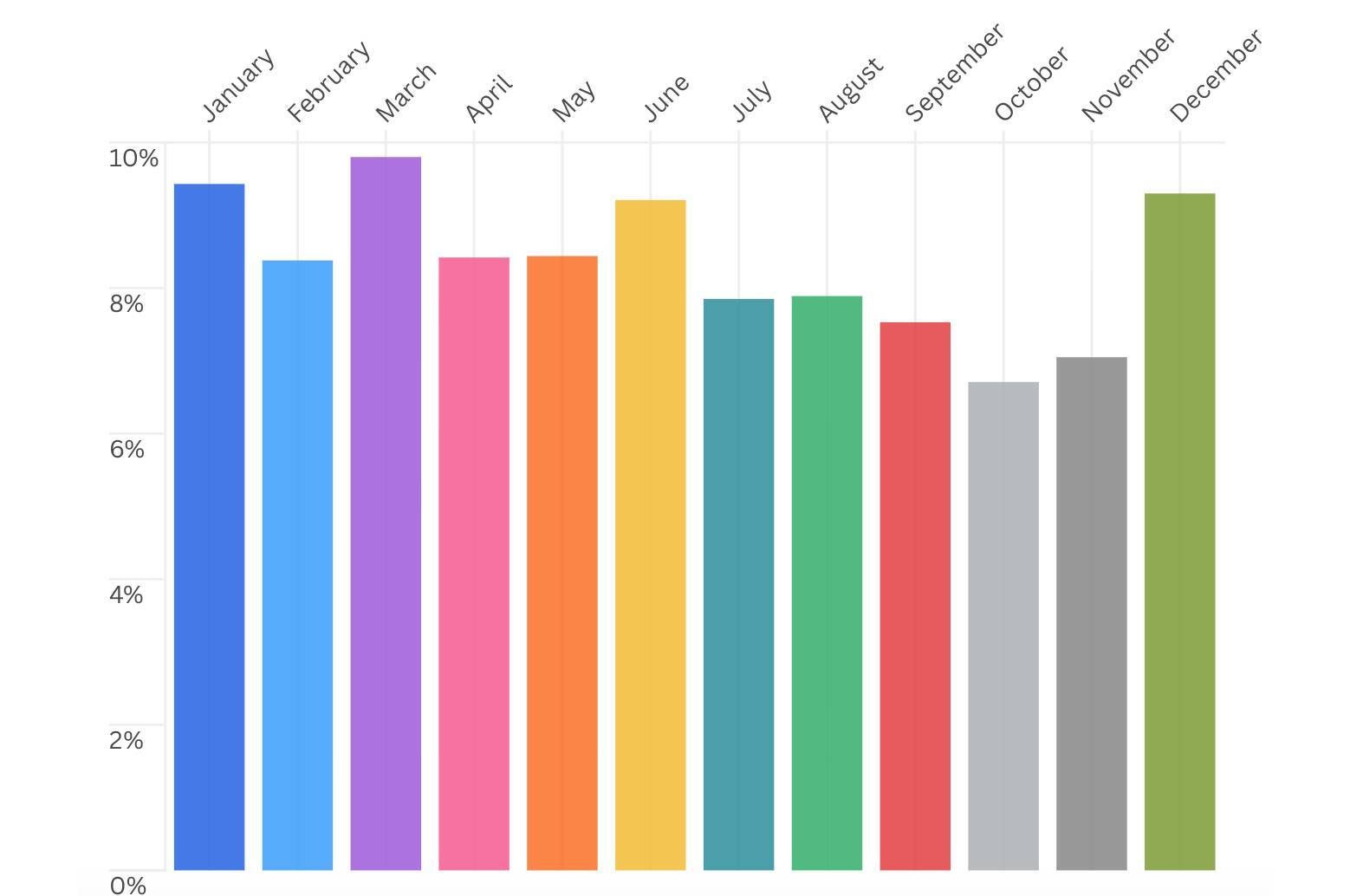
A graph showing churn activity for each of the twelve months based on data from 2018 to 2025. | Image by NumberBarn
Port-in data collected by NumberBarn between August 2018 and August 2025 provides some interesting insights into the switching behaviour. According to the dataset, most customers leave their carriers in March, followed by January and December.
This isn't necessarily due to a dip in service quality during these months. Rather, the timing aligns with moments when customers reassess their finances and plans. There's also a small bump in switching activity in June and midsummer, likely because of device upgrades and mid-year deals.
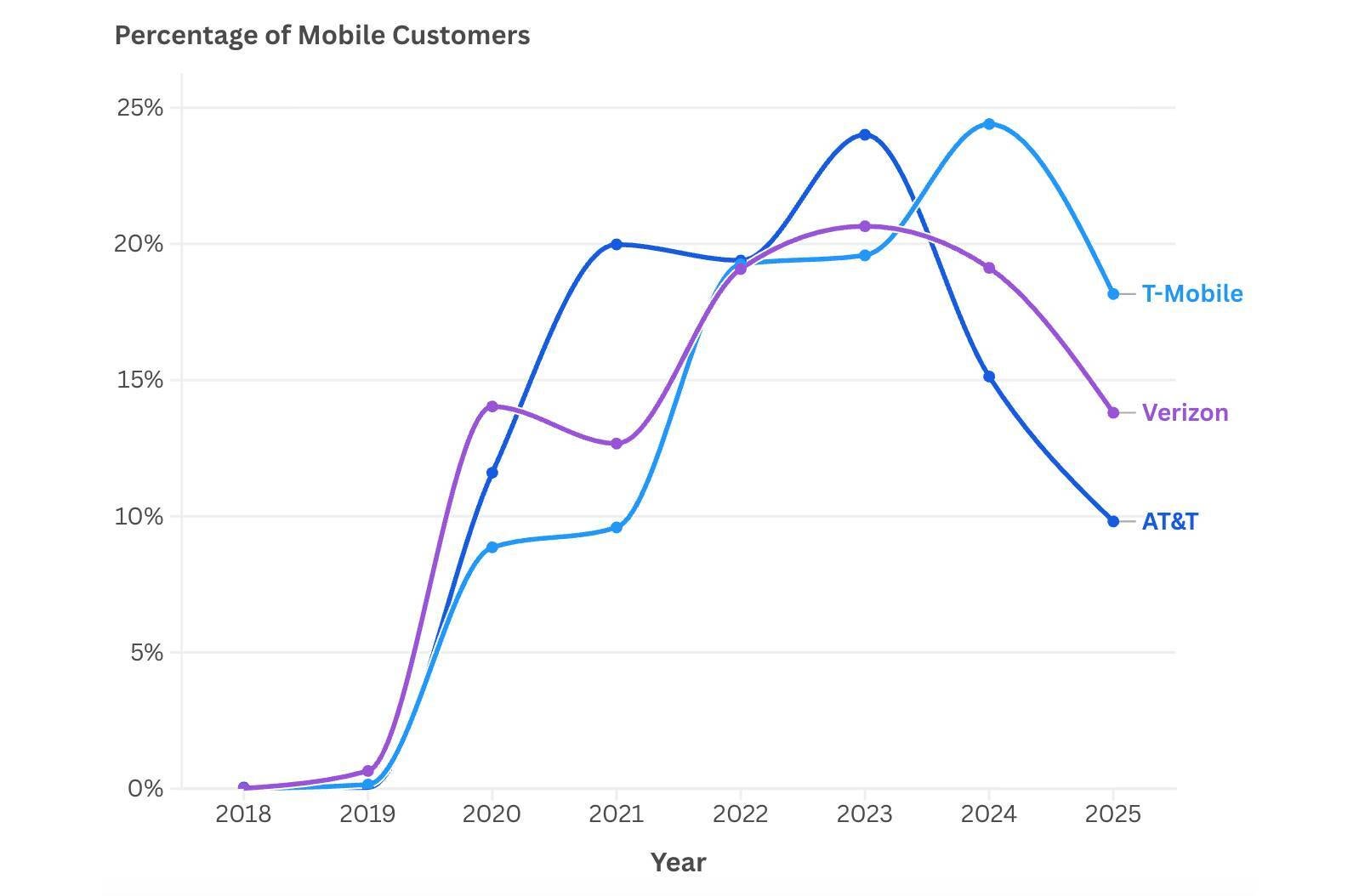
Currently, T-Mobile loses the most customers, followed by Verizon and AT&T. This insight, based on when subscribers port their numbers into NumberBarn, may be attributed to T-Mobile's unique positioning as the only major carrier that eschews long-term contracts and termination fees. This allows customers to migrate without the friction of penalties.
A chart showing churn volume based on port-outs. | Image by NumberBarn
NumberBarn also drills down into carrier-specific trends, noting T-Mobile's churn peaks in Q3, while Verizon tends to lose the most customers in Q4.
While the report doesn't explore the reason behind churn behaviour, it does show that the changes follow predictable patterns related to deals, phone launches, and yearly plan reconsiderations.
What does this behaviour mean?
While the report only gives us a broad overview of the switching timeframe, it does provide seasonal context, suggesting customers don't necessarily leave because of carrier policies. Similarly, it may help us understand why carriers launch aggressive promotions during certain periods.
Recommended For You
Customers can use this data to receive loyalty offers from their provider. Carriers are usually willing to offer discounts to get customers to stay, and displaying an intent to switch during peak switching months could help them secure a nice deal, which might not be offered if they switch at a random time.
Will this data influence your decision on when to switch?
68 Votes
Yeah, I am going to abuse the hell out of it.
29.41%
No, I'll leave when I want to.
64.71%
Maybe.
5.88%
Interesting times
With Verizon regaining its standing to some extent in Q4, the first spot is no longer within striking distance for T-Mobile. Verizon accounts for 36% of mobile subscribers in the US, and T-Mobile follows closely behind with a one-third market share.
With stakes so high, carriers are desperate not to lose customers. Carriers can use this data to improve their retention activities in March, January, and December, while customers can take advantage of it by being strategic about migration.
Anam Hamid is a computer scientist turned tech journalist who has a keen interest in the tech world, with a particular focus on smartphones and tablets. She has previously written for Android Headlines and has also been a ghostwriter for several tech and car publications. Anam is not a tech hoarder and believes in using her gadgets for as long as possible. She is concerned about smartphone addiction and its impact on future generations, but she also appreciates the convenience that phones have brought into our lives. Anam is excited about technological advancements like folding screens and under-display sensors, and she often wonders about the future of technology. She values the overall experience of a device more than its individual specs and admires companies that deliver durable, high-quality products. In her free time, Anam enjoys reading, scrolling through Reddit and Instagram, and occasionally refreshing her programming skills through tutorials.
A discussion is a place, where people can voice their opinion, no matter if it
is positive, neutral or negative. However, when posting, one must stay true to the topic, and not just share some
random thoughts, which are not directly related to the matter.
Things that are NOT allowed:
Off-topic talk - you must stick to the subject of discussion
Offensive, hate speech - if you want to say something, say it politely
Spam/Advertisements - these posts are deleted
Multiple accounts - one person can have only one account
Impersonations and offensive nicknames - these accounts get banned
To help keep our community safe and free from spam, we apply temporary limits to newly created accounts:
New accounts created within the last 24 hours may experience restrictions on how frequently they can
post or comment.
These limits are in place as a precaution and will automatically lift.
Moderation is done by humans. We try to be as objective as possible and moderate with zero bias. If you think a
post should be moderated - please, report it.
Have a question about the rules or why you have been moderated/limited/banned? Please,
contact us.













![Another batch of Galaxy S26 series users in the US are getting a nice surprise today [UPDATED]](https://m-cdn.phonearena.com/images/article/183643-wide-two_350/Another-batch-of-Galaxy-S26-series-users-in-the-US-are-getting-a-nice-surprise-today-UPDATED.webp)
Things that are NOT allowed:
To help keep our community safe and free from spam, we apply temporary limits to newly created accounts: