Deleted AI conversations might linger on Android phones, researchers have found. They even retrieved deleted chats using a custom tool they designed. But you shouldn't panic, as these tools needed for the extraction are forensic-grade.
AI chats stay in Android phones' memory
Be careful what you share with your AI agent. | Image by PhoneArena
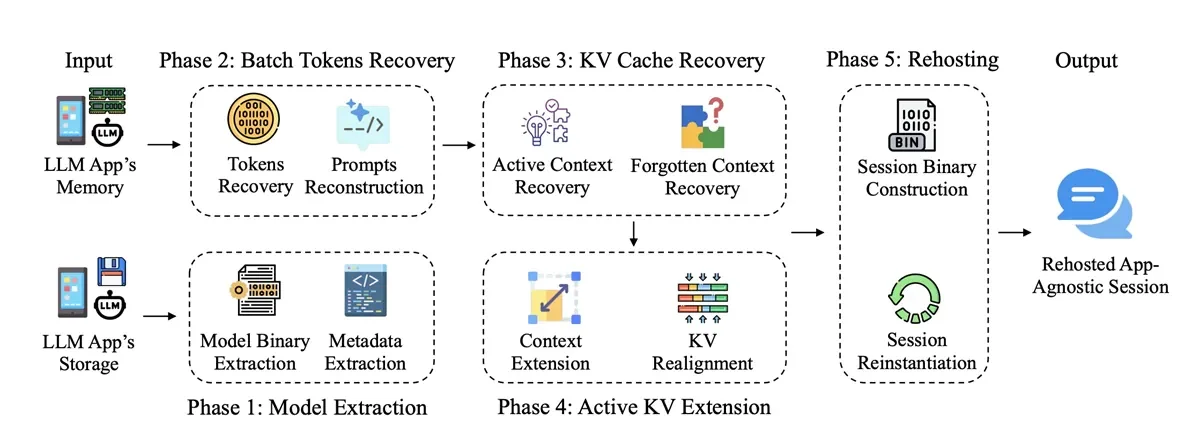
Researchers at Georgia Tech have developed a specialized forensics tool that can retrieve deleted AI chats. The tool is called ORISA, and it pieces together fragmented information left behind in the memory of Android phones.
The team demonstrated ORISA by feeding a custom-made fictional AI assistant 100 facts about a project. After they deleted the conversation, the original assistant was still able to access 14 of these 100 facts, losing the rest due to memory constraints.
However, ORISA was able to recover enough information to reconstruct 26 of the 100 facts. What gives?
Deleted information is not permanently deleted on your phone
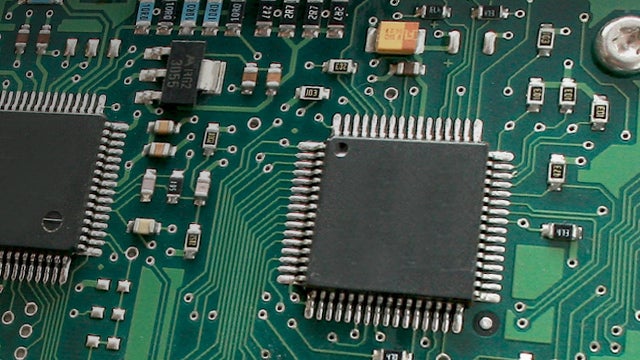
Deleted information stays inside your phone's memory until something else is written over it. | Image by Trusted Reviews
First, we have to talk about how the delete process works on modern phones (and other gadgets with memory, such as tablets, PCs, etc.). When information is stored in your smartphone's RAM or on the onboard storage, the state of the cells holding that information is physically altered (making each cell a 0 or 1, simply speaking).
When you delete something, there's no physical wipe that goes over the information to alter those memory cells again. Rather, the system marks the section as "deleted" and allows new information to be written over it. This is done for efficiency and to conserve time and energy.
Recommended For You
But until you write new information over that physical sector of the memory, the old data is still there. And it can be "extracted" if you have the right kind of tools.
Are you concerned that your AI chats might still be lingering in your phone's memory even after you delete them?
0 Votes
The team tested ORISA across many apps and AI models
ORISA can retrieve and piece together deleted info from your phone's memory. | Image by Georgia Tech
The researchers tested ORISA across 10 Android apps, three AI models, and 60 configurations, and each time they were able to extract "deleted" conversations from the phone's memory, using the specific way digital memory works.
It can help establish what information someone shared with an AI assistant and what assistance they received.
- Ph.D. student Ken Xu, lead author of the study.
This technique is not new - forensic experts have been using it for decades. The news here is that AI chats leave a trace on your device. This goes to show that on-device AI comes with its own security concerns.
Of course, sending private conversations and sensitive data across the internet to data centers is no safer, but there's no reason to panic. Because ORISA will most likely be available only to government agencies.
Nothing to worry about, unless you're one of the bad guys
Should you be worried? No, unless you're a criminal, and your phone could potentially end up in the hands of law enforcement agencies.
Think of a terrorist asking AI for instructions on how to create a bomb, for example. Recovering such data could help the government in court and make things a little harder for the bad guys.
On the other hand, I'm sure that the team that built ORISA is currently talking with agencies such as the FBI, the CIA, and police departments to sell its newly developed tool to them.
This could raise some privacy concerns for the average Joe, like you and me, but if we're following the rules, we should be safe. The research was presented at the 2026 IEEE Symposium on Security and Privacy.
Are you concerned that your AI chats might still be lingering in your phone's memory even after you delete them?
Get a free Galaxy A17 with Straight Talk. To claim this deal, you need to pair the phone with activation on a Silver Unlimited Plan or higher. This tier costs $45 per month. Offer valid through 01/10/27 while supplies last online.
Mariyan, a tech enthusiast with a background in Nuclear Physics and Journalism, brings a unique perspective to PhoneArena. His childhood curiosity for gadgets evolved into a professional passion for technology, leading him to the role of Editor-in-Chief at PCWorld Bulgaria before joining PhoneArena. Mariyan's interests range from mainstream Android and iPhone debates to fringe technologies like graphene batteries and nanotechnology. Off-duty, he enjoys playing his electric guitar, practicing Japanese, and revisiting his love for video games and Haruki Murakami's works.
A discussion is a place, where people can voice their opinion, no matter if it
is positive, neutral or negative. However, when posting, one must stay true to the topic, and not just share some
random thoughts, which are not directly related to the matter.
Things that are NOT allowed:
Off-topic talk - you must stick to the subject of discussion
Offensive, hate speech - if you want to say something, say it politely
Spam/Advertisements - these posts are deleted
Multiple accounts - one person can have only one account
Impersonations and offensive nicknames - these accounts get banned
To help keep our community safe and free from spam, we apply temporary limits to newly created accounts:
New accounts created within the last 24 hours may experience restrictions on how frequently they can
post or comment.
These limits are in place as a precaution and will automatically lift.
Moderation is done by humans. We try to be as objective as possible and moderate with zero bias. If you think a
post should be moderated - please, report it.
Have a question about the rules or why you have been moderated/limited/banned? Please,
contact us.















Things that are NOT allowed:
To help keep our community safe and free from spam, we apply temporary limits to newly created accounts: