5Oppo Find X10 Pro Max review: Android perfection ruined by an eye-watering price tag

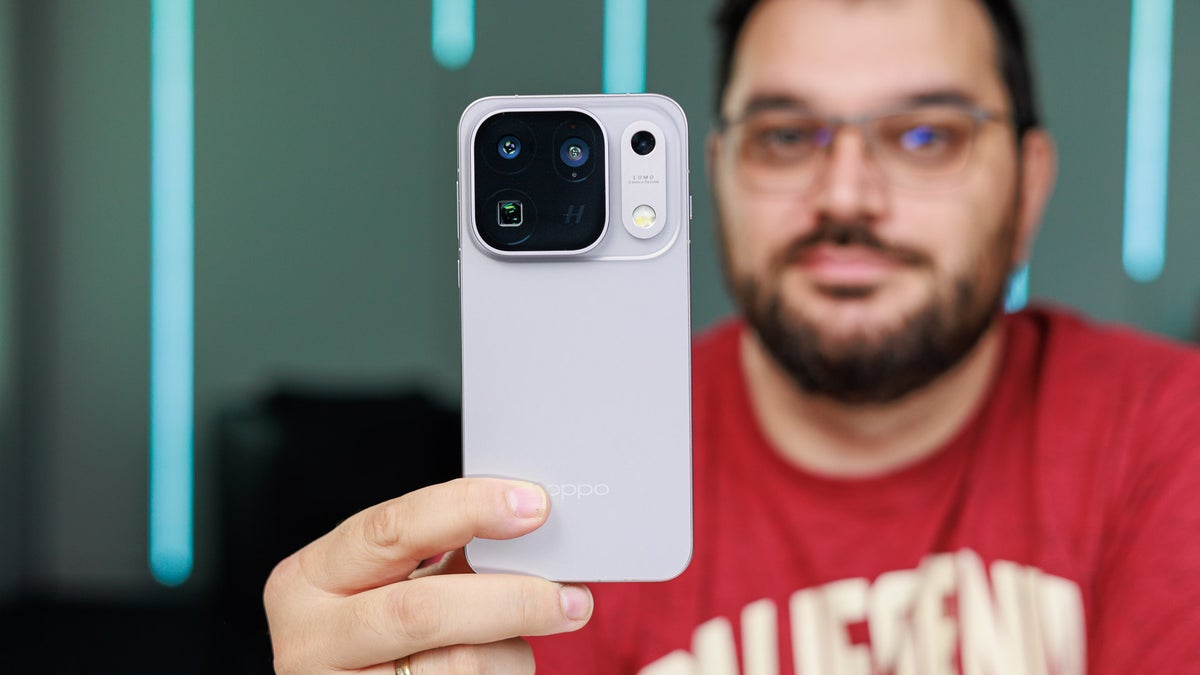
Summary: should you buy the Oppo Find X10 Pro Max
There are two distinct paths on the mobile market: conventional, "general traffic" devices like iPhone, Pixel, and Galaxy, and another, more niche flagship roster populated by exceptional devices from the likes of Oppo, Vivo, Xiaomi, Honor, and others. Wherever any of the latter announces a flagship, it's almost always a celebration of hardware for the niche Android flagship community.
That's precisely what Oppo's newest phone is.
The Oppo Find X10 Pro Max carries on with the perfectly crafted formula behind last year's exceptional Oppo Find X9 Pro. It introduces generational bumps in all core aspects and most notably delivers a significant upgrade in the camera department, where it's the first phone to offer triple 200 MP cameras, rounding up an exceptional Hasselblad-tuned camera. There's also a 2 nm MediaTek processor that pushes the performance envelope, as well as a massive 8,000 mAh battery.
And personally?
I love Oppo's phones. I've been using the Oppo FInd X9 Pro as a personal daily driver ever since reviewed it and after more than 160 battery cycles clocked in by me, the device is as good as new with exceptional. The Find X10 Pro Max feels like an upgrade in a number of ways, but none of them should force Find X9 Pro users to upgrade.
The biggest shock here, however, is the sticker price. In Europe, which gets a smaller 7,150 mAh battery, the phone starts at €1,799. Global import models with the larger 8,000 mAh battery (namely the Hong Kong version which gets all the juicy hardware) can be found between $1,759 and $1,799 depending on the store and not including any shipping or other fees.
As many Oppo enthusiasts point out, that's the foldable phone tax for a standard candy bar device, which is a ridiculous price increase that doesn't really feel justified.
I've been using the Oppo Find X10 Pro Max alongside the Find X9 Pro for the past couple of weeks and I've run all our custom battery and camera tests, as well as all standard performance and display tests needed for a PhoneArena review. All the photography in this review has been produced in our studio.
Table of Contents:
Oppo Find X10 Pro Max Specs
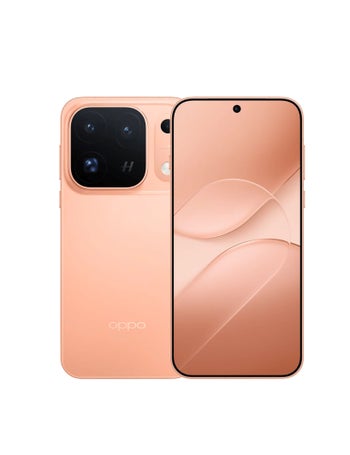
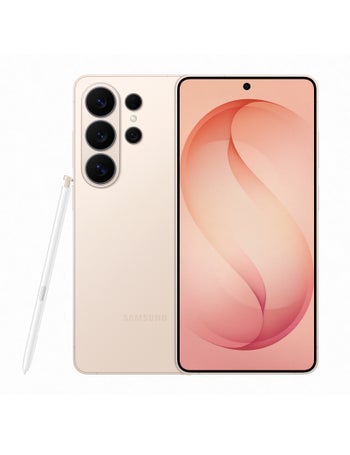
Here's an overview of the Oppo Find X10 Pro Max specs.
|
|
| OPPO Find X10 Pro Max | Samsung Galaxy S26 Ultra |
| Dimensions | |
|---|---|
| 161.3 x 76.6 x 8.4 mm (~12.87 mm with camera bump) | 163.6 x 78.1 x 7.9 mm (~12.33 mm with camera bump) |
| Weight | |
| 233.0 g | 214.0 g |
| Size | |
|---|---|
| 6.8-inch | 6.9-inch |
| Type | |
| AMOLED, 144Hz | Dynamic AMOLED, 120Hz |
| System chip | |
|---|---|
| MediaTek Dimensity 9600 Pro (2 nm) | Snapdragon 8 Elite Gen 5 for Galaxy SM8850-1-AD (3 nm) |
| Memory | |
| 12GB (LPDDR5X)/256GB (UFS 4.1) 12GB/512GB 16GB/512GB 16GB/1TB |
12GB (LPDDR5X)/256GB (UFS 4.0) 12GB/512GB 16GB/1024GB |
| Type | |
|---|---|
| 8000 mAh | 5000 mAh |
| Charge speed | |
| Wired: 80.0W Wireless: 50.0W |
Wired: 60.0W Wireless: 25.0W |
| Main camera | |
|---|---|
| 200 MP (OIS, Laser and PDAF) Sensor name: Samsung ISOCELL HPC Aperture size: F1.5 Focal length: 23 mm Sensor size: 1/1.3" Pixel size: 0.6 μm | 200 MP (OIS, PDAF) Sensor name: Samsung ISOCELL HP2 Aperture size: F1.4 Focal length: 23 mm Sensor size: 1/1.3" Pixel size: 0.6 μm |
| Second camera | |
| 200 MP (Ultra-wide, PDAF) Sensor name: Samsung ISOCELL HP5 Aperture size: F2.2 Focal Length: 14 mm Sensor size: 1/1.56" Pixel size: 0.5 μm |
50 MP (Ultra-wide, PDAF) Sensor name: Samsung ISOCELL JN3 Aperture size: F1.9 Sensor size: 1/2.5" Pixel size: 0.7 μm |
| Third camera | |
| 200 MP (Telephoto, Periscope, OIS, PDAF) Sensor name: Samsung ISOCELL HP5 Optical zoom: 3.0x Aperture size: F2.1 Focal Length: 70 mm Sensor size: 1/1.56" Pixel size: 0.5 μm |
10 MP (Telephoto, OIS, PDAF) Sensor name: Sony IMX754 Optical zoom: 3.0x Aperture size: F2.4 Sensor size: 1/3.94" Pixel size: 1.12 μm |
| Fourth camera | |
| 50 MP (Telephoto, Periscope, OIS, PDAF) Sensor name: Sony IMX854 Optical zoom: 5.0x Aperture size: F2.9 Focal Length: 115 mm Sensor size: 1/2.52" Pixel size: 0.7 μm |
|
| Front | |
| 50 MP (PDAF) | 12 MP (PDAF, HDR) |
See the full
OPPO Find X10 Pro Max vs Samsung Galaxy S26 Ultra specs comparison
or compare them to other phones using our
Phone Comparison tool
Oppo Find X10 Pro Max Design and Display
A standard but smart-looking phone
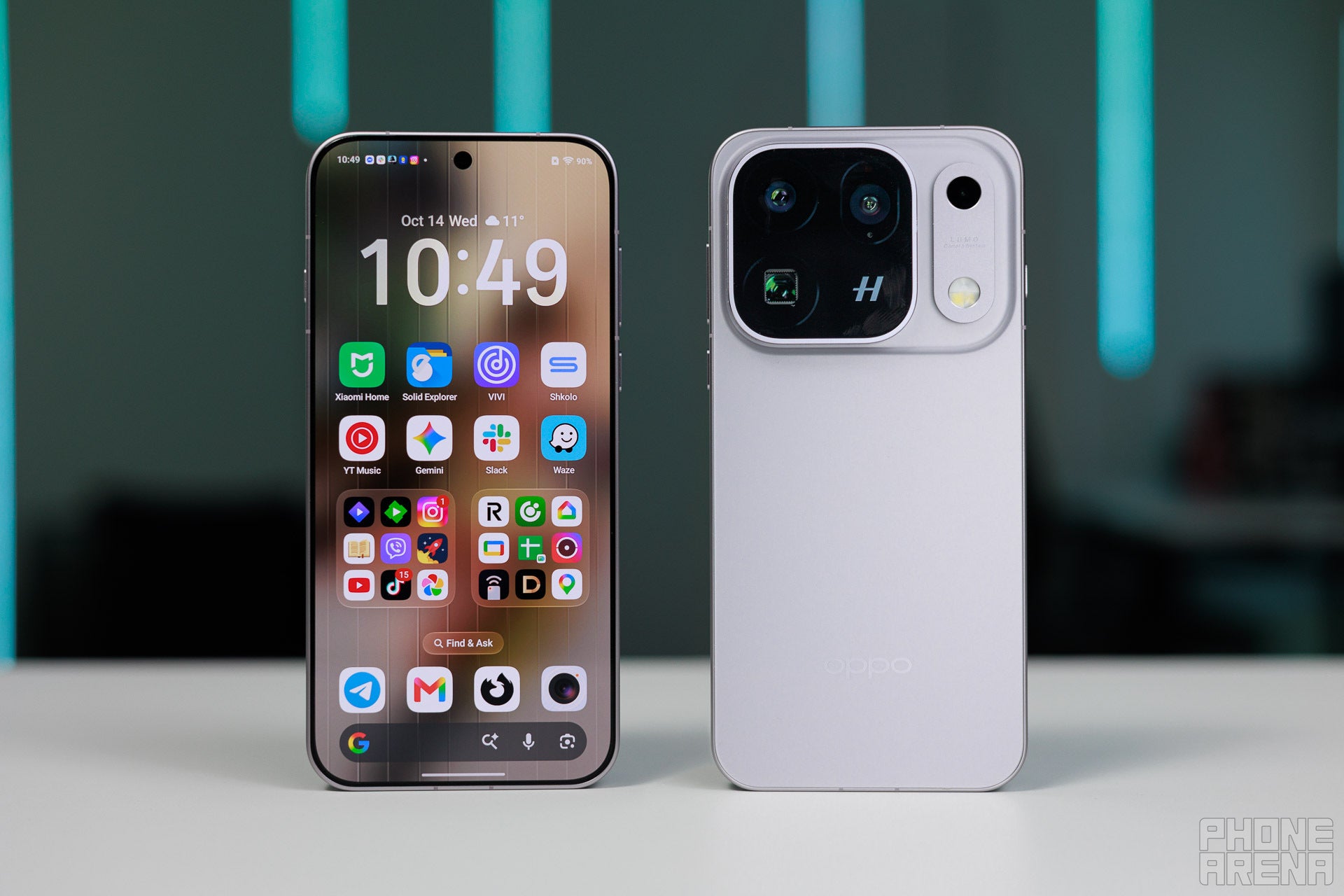
Oppo's iconic squircle camera island scores an underlying camera plateau. | Image by PhoneArena
The Oppo Find X10 Pro Max showcases a design language that has become pretty standard in the industry these days. It has an aluminum frame with curved corners, a completely flat screen and a flat matte glass back.
In the rear, Oppo apes the iPhone 17 Pro/Max design language by unnecessarily adding a short glass plateau around the camera island, with the flash and the color spectrum sensor separated from the main enclosure.
However, there are legitimate reasons to employ such an expansive plateau in the rear as we have three 200 MP camera sensors and a massive battery on the inside, so there might be legitimate reasons for this specific design language.
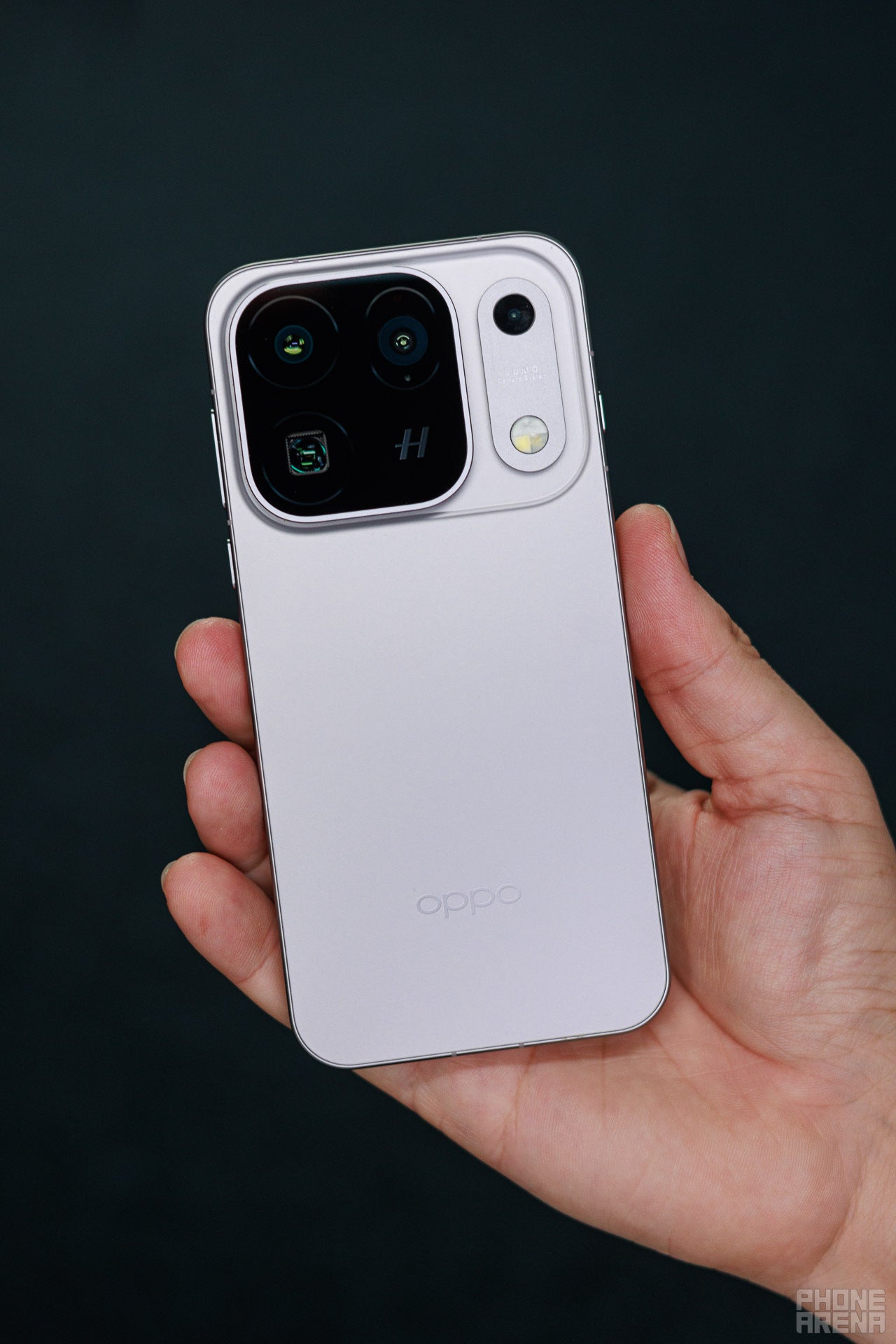
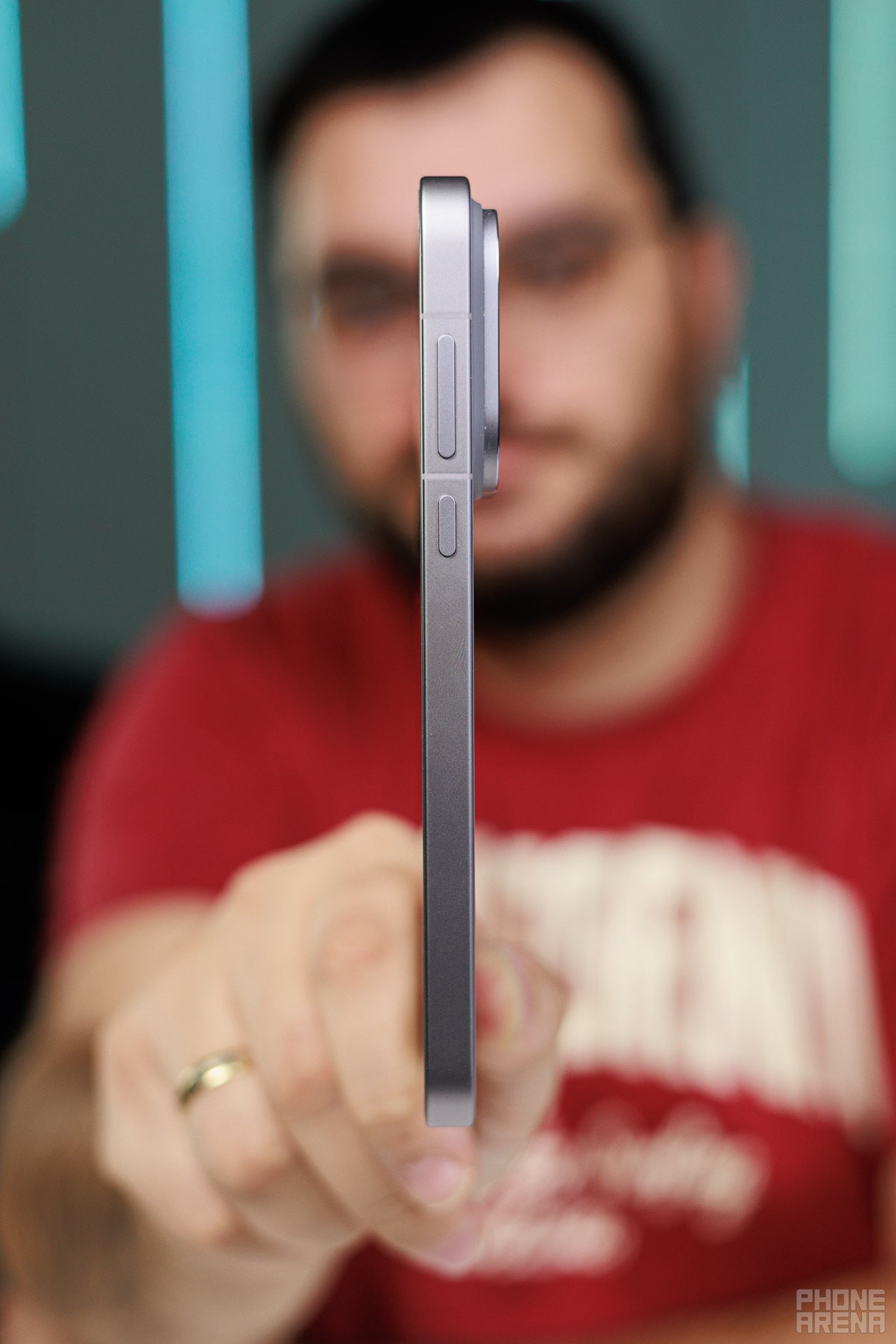
The device sits great in the hand, though it's a smidgen thicker and heavier than Oppo's previous Find X9 Pro.
And while the customizable Snap Key is still here, Oppo has done away with the dedicated camera shutter on the right side of the phone. I have to admit that I am quite used to relying on that specific button on the Find X9 Pro to open the camera, so my muscle memory betrayed me one too many times. I just miss this button on the Find X10 Pro Max.
Other hardware goodies, like the tight IP69 water / dust resistance and the IR blaster remain unchanged.
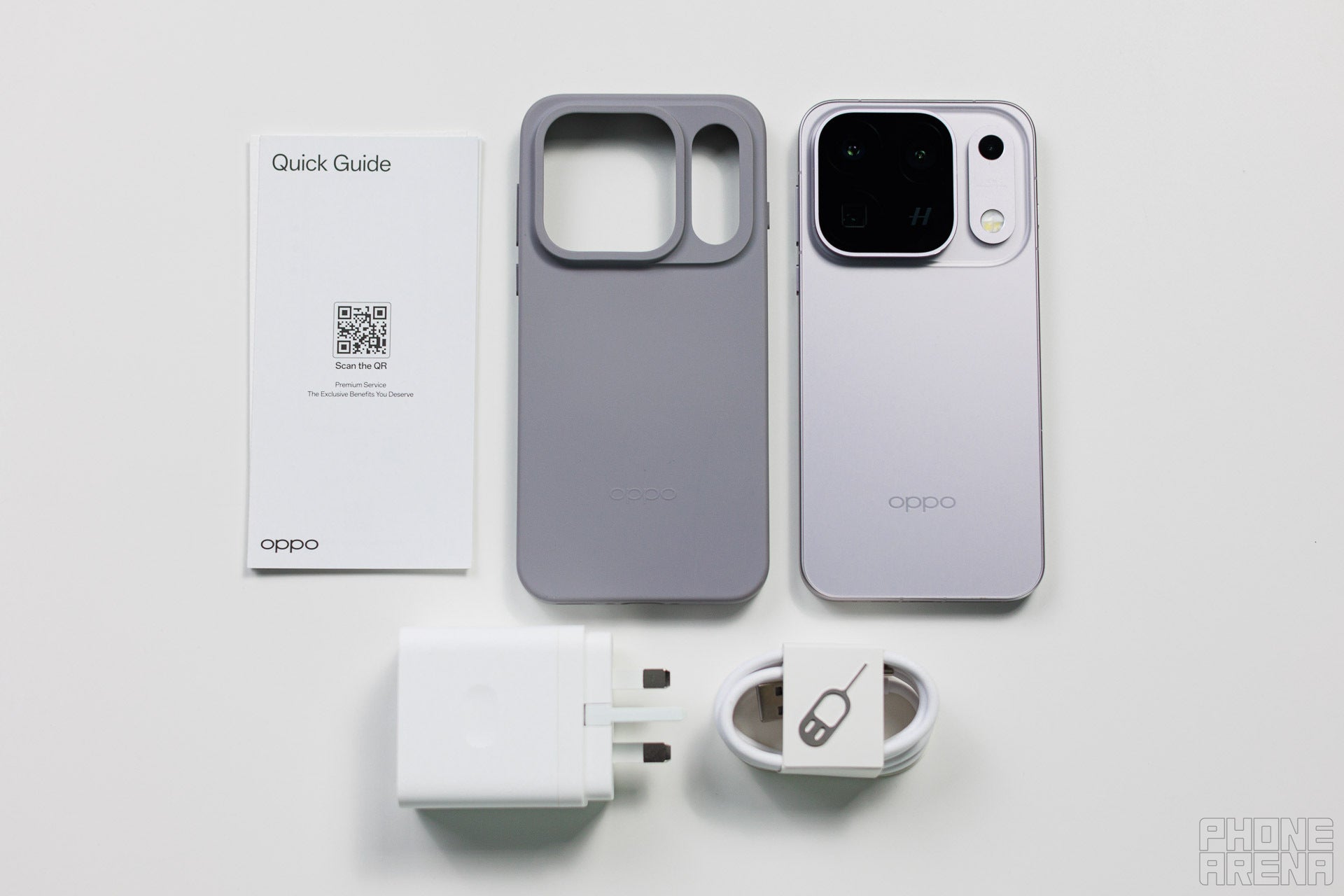
Quite a few accessories in the box for the global version. | Image by PhoneArena
Inside the box of the global model, you will find the phone itself, a wall adapter and a USB-C cable, a basic case, a SIM ejector, and some leaflets and manuals. Be advised that some other versions of the device might skip the case and the wall adapter.
The phone is available in Titanium Gray, Luna White, and Orange colors. We have the Titanium Gray one, and it has a slight purplish hue to it that doesn't show up in pictures.
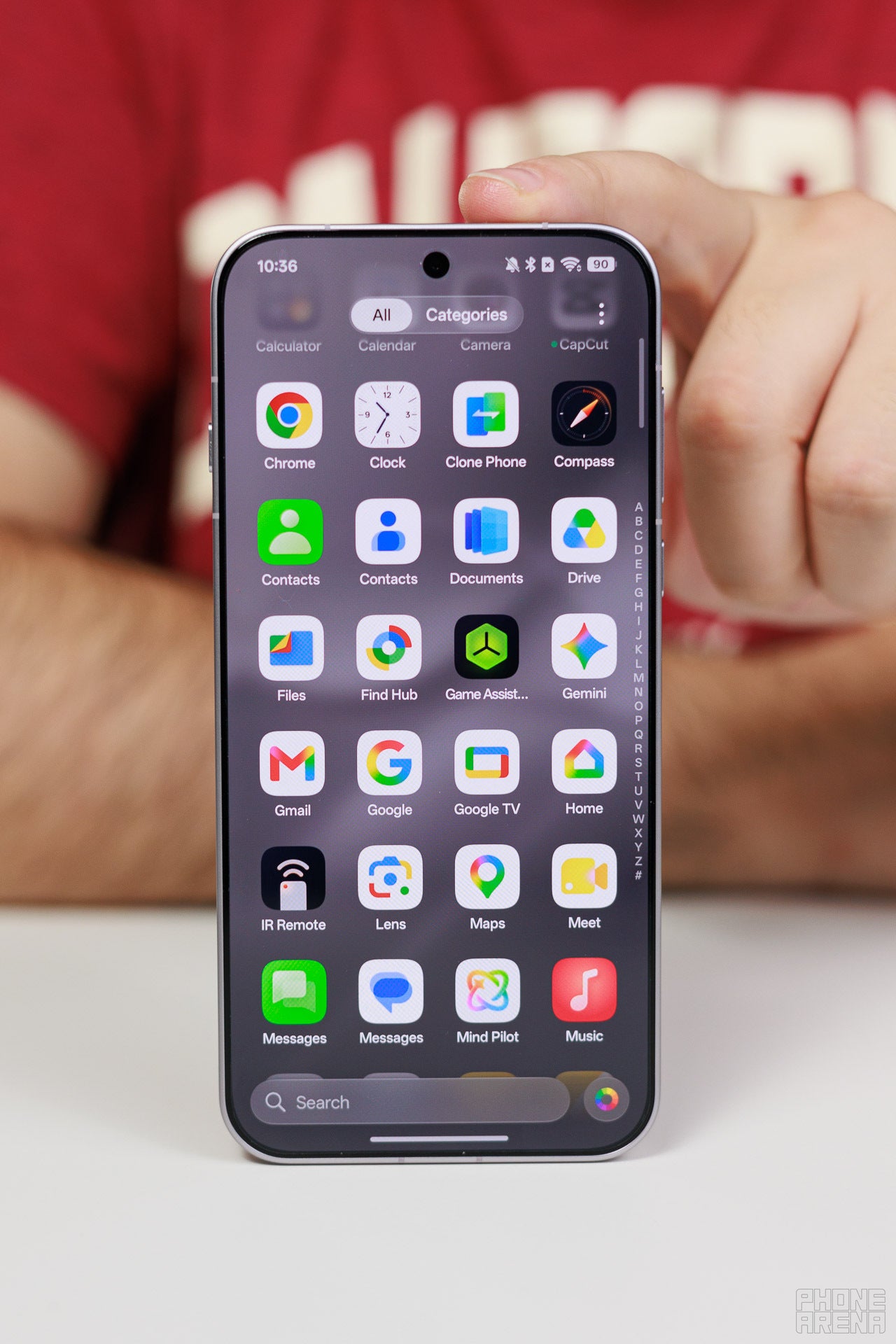
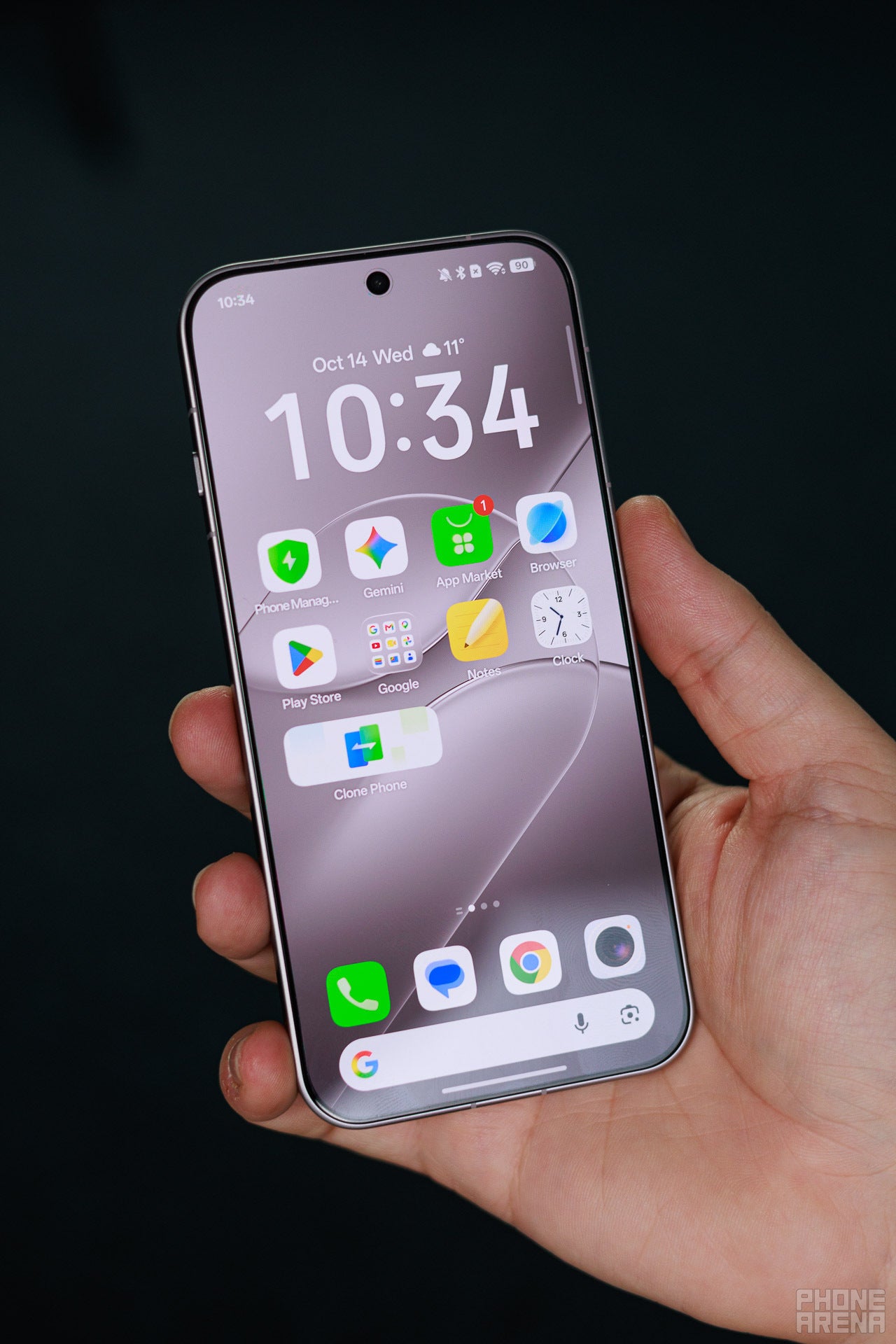
The display up front is a 6.78-inch AMOLED panel that goes up to 144 Hz in certain games but otherwise maxes out at 120 Hz throughout the interface and in regular workflows. It's an exceptionally bright panel that reaches above 3,400 nits of peak brightness in certain conditions, providing excellent legibility even under the bright noon sun. No anti-reflective coating or glare-free features here, though.
It's a fairly accurate screen, but the older Find X9 Pro and the iPhone 18 Pro Max are slightly more color accurate. You can tweak the display color temperature and the screen vividness on the Find X10 Pro Max, as is common on most Android flagships these days.
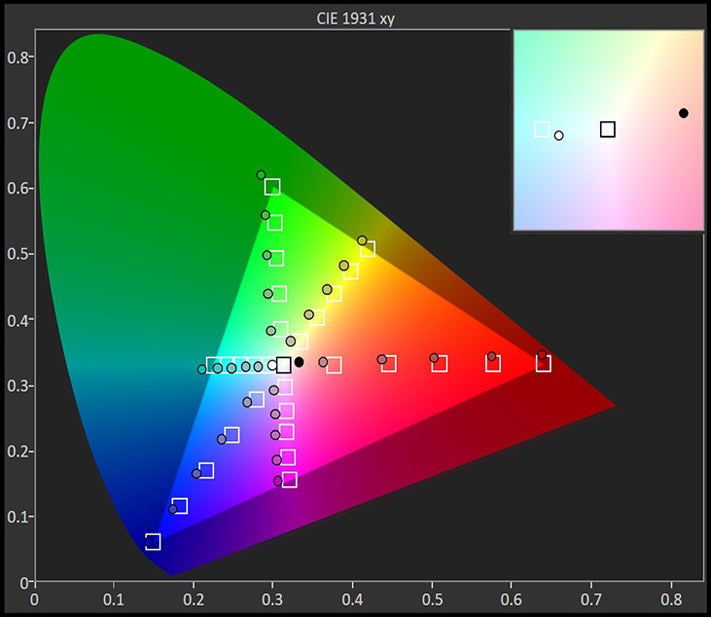

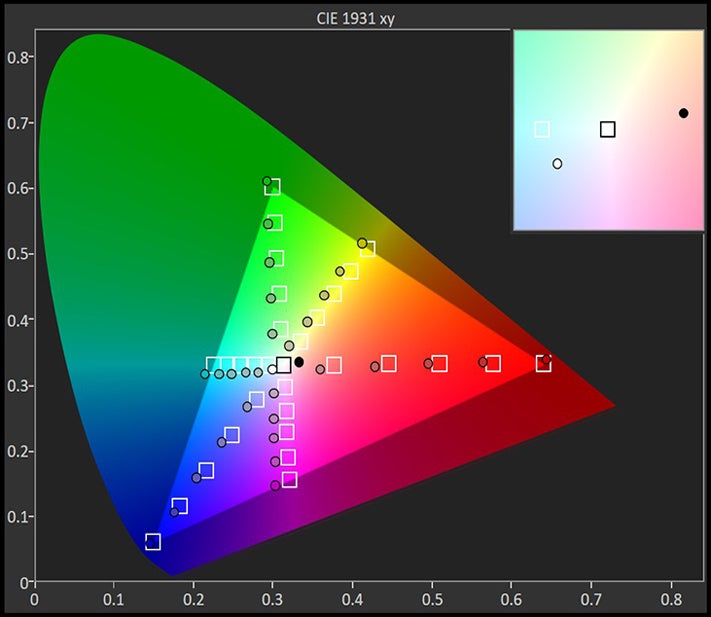
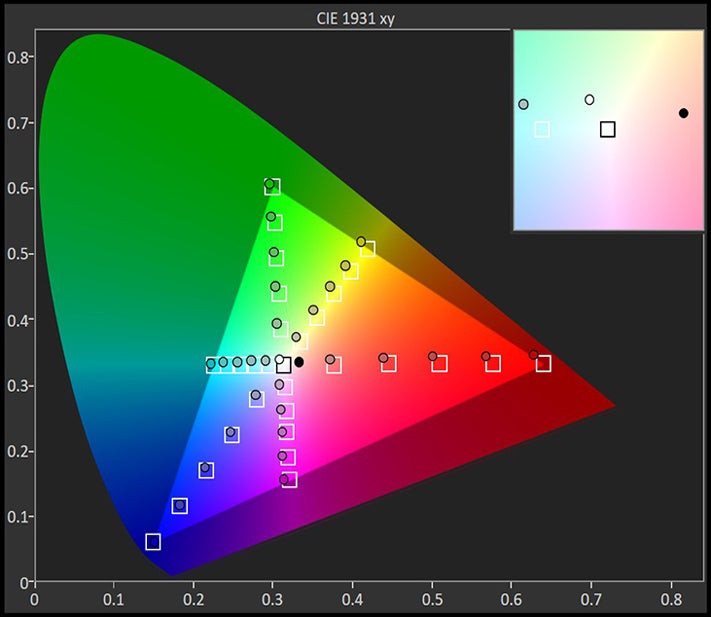
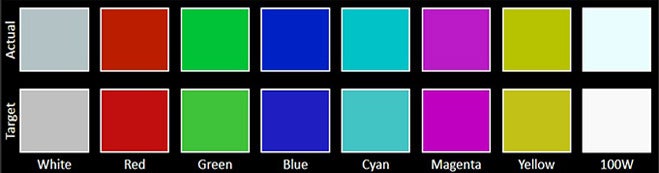

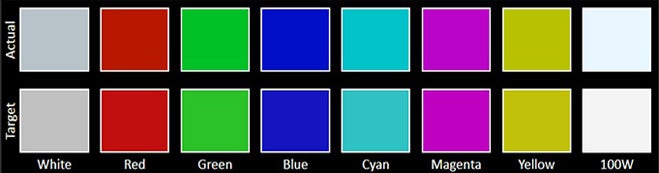
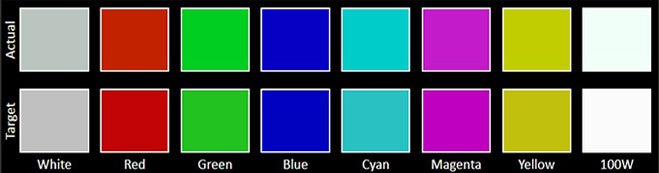




In terms of nice-to-have display features, I am pleased to see the return of high-frequency PWM dimming and an adaptive tone toggle, both of which make the screen particularly easy on the eyes in low-light and mixed-lighting situations.
For biometrics, the phone has an ultrasonic fingerprint scanner built in that is fast and accurate. What's even faster is the 2D face unlock on board, though it trades security for convenience and can only be used to unlock the device, not authorize payments.
Teleconverter Kit
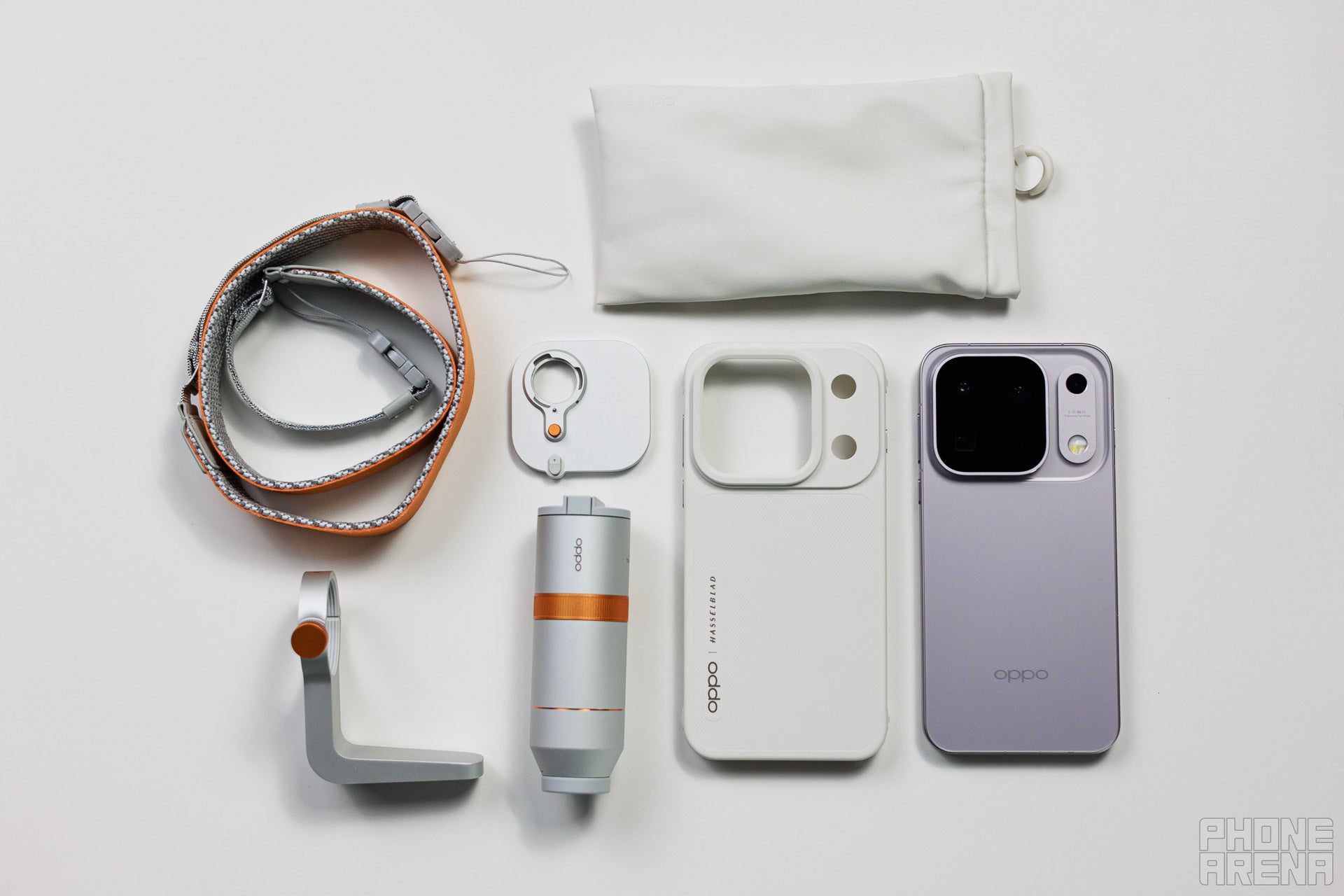
Oppo has outdone itself with the Teleconverter kit for the Find X10 Pro Max this time around. | Image by PhoneArena
Just like many of Oppo's previous flagships, like the Find X9 Pro and the Find X9 Ultra, there's an optional teleconverter kit for the Oppo Find X10 Pro Max as well. Available separately and arriving in a comically large box is a whole set of gear that can turn the phone in a proper enthusiast camera.
And credit where credit is due, everything feels a tad more special and high-quality than before this time around!
First and foremost, there's a high-quality case with a ribbed texture and a MagSafe/Pixelsnap-friendly magnetic ring for the Find X10 Pro Max. An adapter slides on top of the main camera island and allows you to screw in the main star of the show, a 3.28X teleconverter lens that extends the reach of the telephoto camera to 10X optical zoom, or 230 mm.
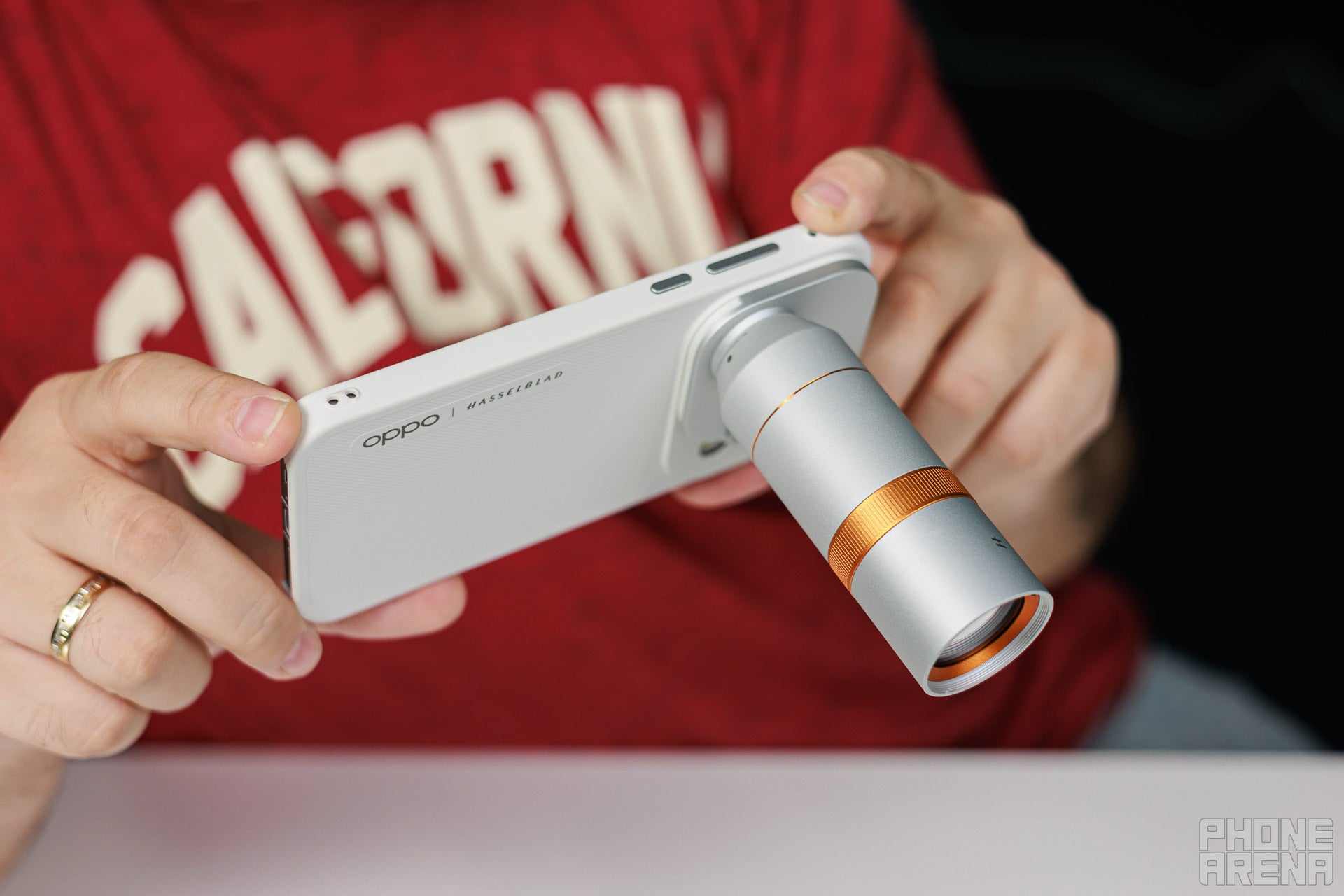
Image by PhoneArena
There's also a neck strap to attach to the phone case, a tripod adapter for the entire setup, and finally, a high-quality vegan leather pouch where you can fit the teleconverter and the lens adapter.
Overall, it's all decent gear, but do you really need it? If you're getting this phone for the camera and plan to capture a ton of zoom shots, it would make sense to consider the teleconverter kit. It would make sense to take this one during travels and vacations, where an even more powerful zoom lens would be indispensable.
Oppo Find X10 Pro Max Camera
650 MP at your fingertips
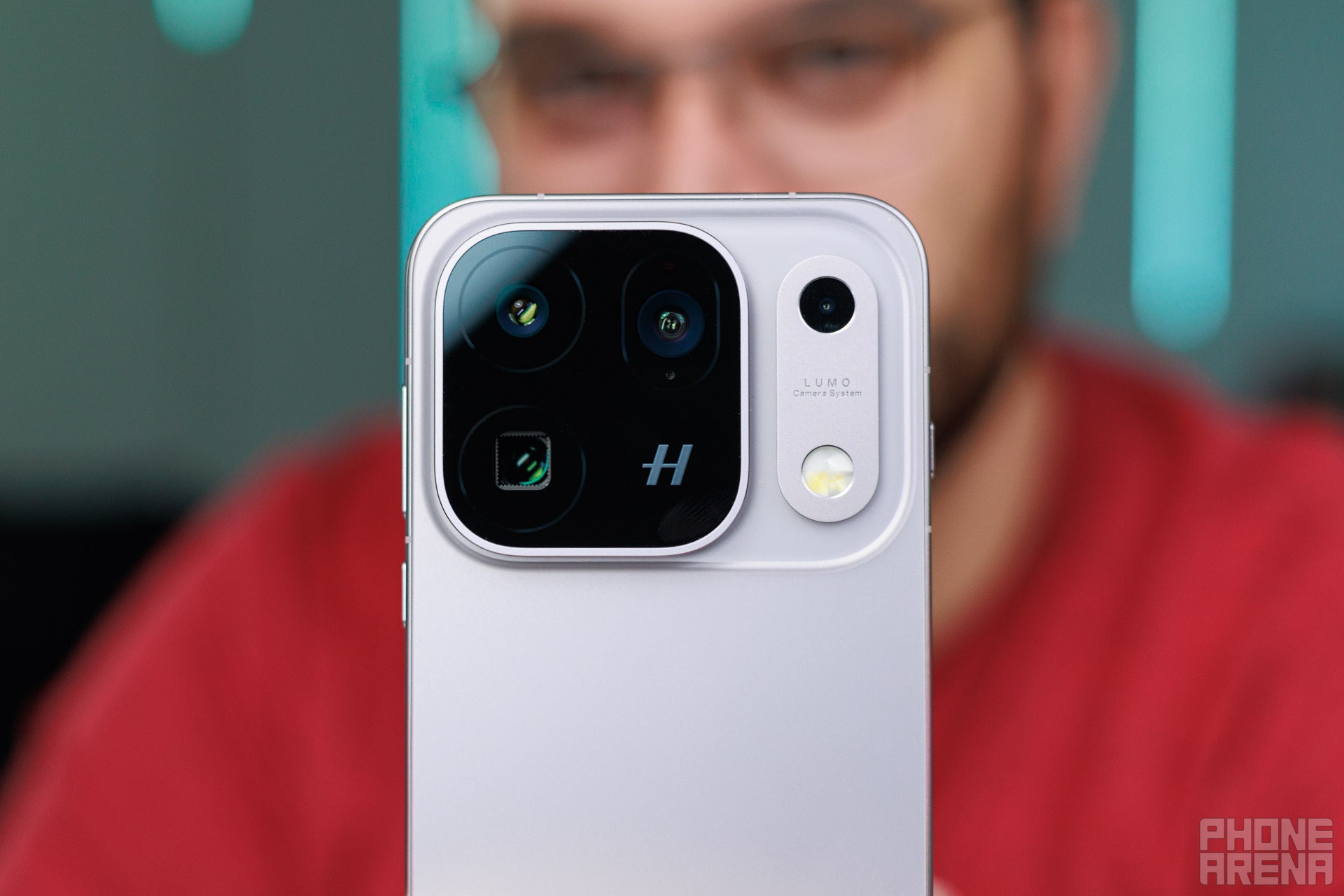
200 MP cameras are now a common sight in the premium Android sector, where most flagships usually boast at least one such sensor. Well, the Find X10 Pro Max sets the record straight and becomes the first phone to combine not one, not two, but three 200 MP Samsung sensors sitting behind each of the cameras in the back. Aside from boasting such high resolution, each sensor is also massive, giving us a pretty impressive camera.
There's also a color sensor in the rear, which is responsible for color science consistency across the camera range. This one actually does make a difference here, just as it did with the Find X9 Pro, making Oppo's flagships some of the most consistent devices when it comes to reproducing color. In my experience, other great camera phones, like the Vivo X300 Ultra, still deliver different colors when you flick between the different cameras.
This phone has more Samsung-made camera sensors than the Galaxy S26 Ultra itself. | Image by PhoneArena
By default, each of Find X10 Pro Max's cameras will capture 12 MP photos, though if you flip the "High resolution" switch in camera settings > formats, 26 MP images will be captured in certain situations where the lighting is good enough. In low-light scenes, images will still default to 12 MP, as more pixels will get binned together to achieve better light sensitivity.
Oppo also flaunts pretty impressive HDR capabilities on its main sensor thanks to the DeepPix technology, co-developed with Samsung. It offers an impressive 17 stops of dynamic range.
The telephoto camera also has excellent stabilization thanks to its CIPA 7.5 rating. The main camera is also pretty impressive with a CIPA rating of 6.5.
In our custom camera rating test, which gauges the performance of different phones in consistent, lab-controlled conditions, the Oppo Find X10 Pro Max delivers a compound camera score of 153.4 points. However, in still photography, it achieves the third-highest result spot in our test at 165 points. It's video-recording that drags the result with a score of 141.7, largely on par with the Find X9 Pro and not any more impressive than that.




















The camera performance of the Find X10 Pro Max is exceptional. We get consistent colors between all three cameras, great dynamics, and lovely details with no oversharpening at all.
And unlike the Find X9 Pro, where AI sharpening and denoise were a bit more prevalent in some cases, the Find X10 Pro Max seems to be going lighter on all that AI enhancement that makes photos look off. Of course, if you zoom past, say, 50X, AI will kick in heavily, but at the native focal lengths, images are more natural than before.
More Oppo Find X10 Pro Max camera samples
Video Quality
All three of the Find X10 Pro Max's cameras in the back can shoot 4K@120fps and 8K@30fps, as well as 4K@60fps, of course. In pro video mode, you can also utilize Open Gate Capture in O-Log2, which is a feature normally reserved for cinema cameras. The phone will also capture log video and allow you to install your own LUTs for real-time preview.


But is any of that pertinent to the regular user? For regular video-recording, the phone delivers excellent results, with excellent dynamic range, vivid but still true-to-life colors, and plenty of sharpness. However, it's not necessarily better in terms of quality than the Find X9 Pro, which performs on par.
Oppo Find X10 Pro Max Performance & Benchmarks
MediaTek enters the 2 nm era
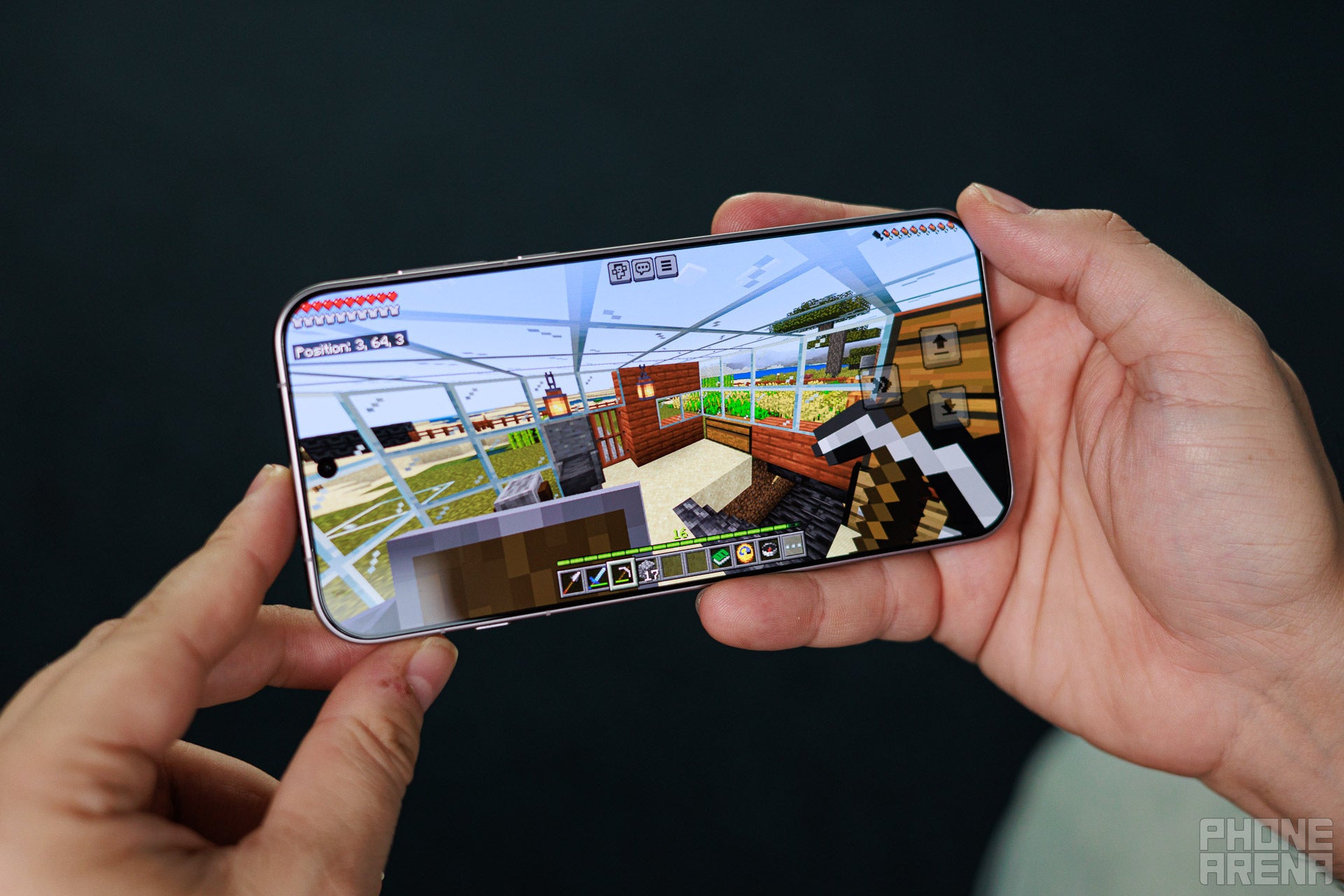
If only Bedrock supported ray-traced textures. | Image by PhoneArena
The Oppo Find X10 Pro Max comes with the MediaTek Dimensity 9600 Pro, a high-performing 2 nm chip.
This phone is a beast when it comes to standard everyday usage, with no lag and very smooth performance that always feels in excess. This extends even to heavier gaming where the device performs flawlessly in titles like CoD: Mobile, Minecraft, and Sifu, which just launched on Android.
The phone comes with 12 GB of RAM in the base 256 GB version. To get 16 GB of RAM, opt for the 512 GB model. There's also a 1 TB version.
The phone comes with 12 GB of RAM in the base 256 GB version. To get 16 GB of RAM, opt for the 512 GB model. There's also a 1 TB version.
CPU Performance Benchmarks:
Sadly, even MediaTek's best chip still can't properly stand up to Apple's or Qualcomm's best chips. Both the Snapdragon Elite Gen 5 for Galaxy and the Apple A20 Pro perform better in synthetic benchmarks. You won't notice much of a difference in real life though.
GPU Performance
When it comes to gaming performance, the MediaTek performs very well. The Arm Mali-G2 Ultra NX GPU mostly beats the Adreno 840 inside the Snapdragon chip of the Galaxy S26 Ultra, though the iPhone is ahead.
Storage speed
The Oppo Find X10 Pro Max comes with either 256 GB, 512 GB, or 1 TB of built-in storage. All versions use UFS 4.1 type storage.
Oppo Find X10 Pro Max Software
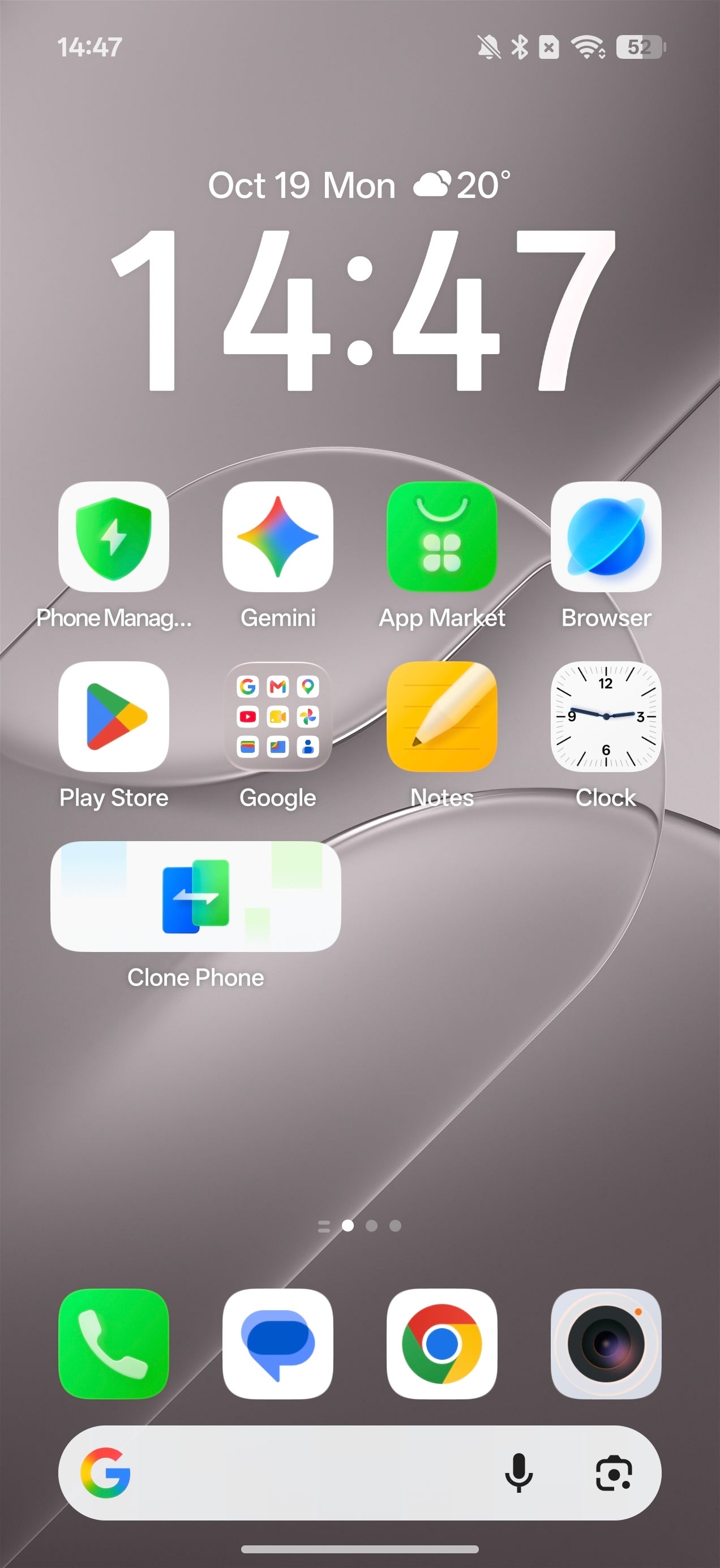
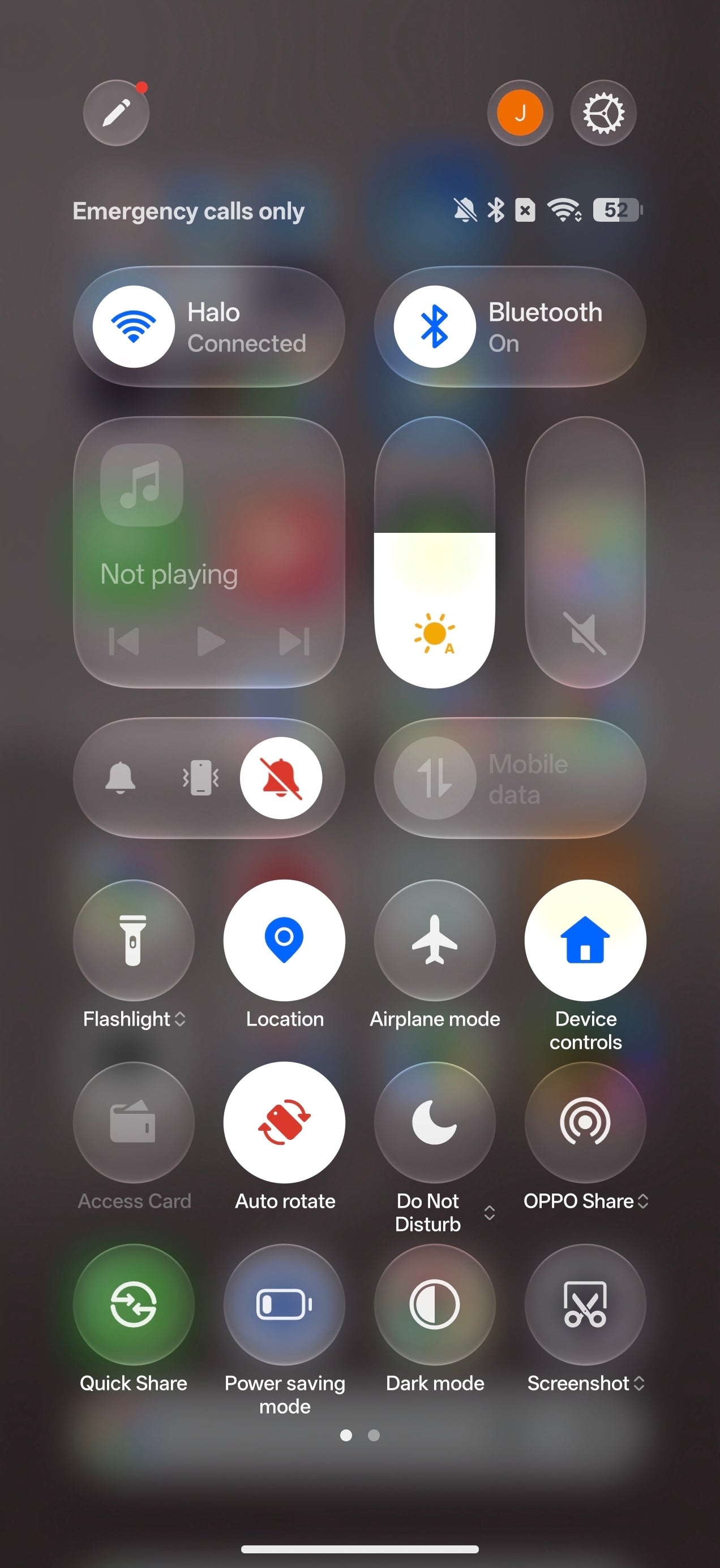
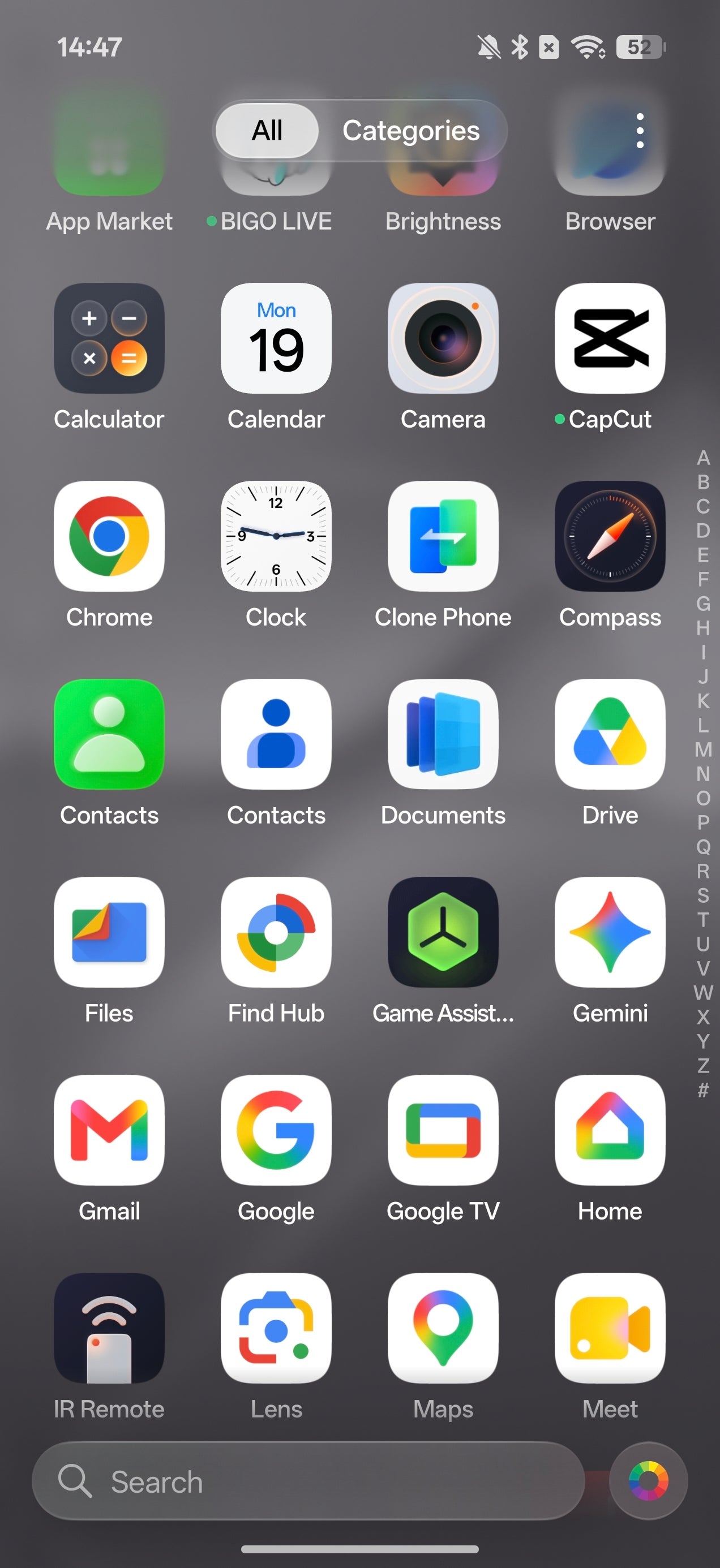

The Oppo Find X10 Pro Max comes with the Color OS 17 based on Android 17.
And I can't dance around it––Color OS has become an unapologetic iOS clone that goes out of its way to substitute Android's visuals for an iPhone appearance. There was no reason to have an interface that's so happy to ape the Liquid Glass design language. Worse off, the implementation is far from perfect, leaving us with a weird amalgamation between a custom Android skin and iOS 27.
To reiterate, I don't really like Color OS 17. If I wanted to use iOS, I'd get an iPhone.
Other than the uninspiring visuals, the Find X10 Pro Max is among the better interfaces when it comes to customizability and personalization. You can go to great lengths to make this phone be completely yours, to the extent of setting a custom emoji as a fingerprint icon on the lock screen. All great, only if it weren't for the unnecessary iOS callbacks all around the interface.
As far as AI goes, the Find X10 Pro Max is fortunately pretty light on AI features. There's Mind Pilot, which offers agentic on-device capabilities powered by ChatGPT and Manus. AI Search, AI Writer, AI Translate, and AI VoiceScribe are also available. You can also view what LLMs are installed on your device and uninstall them to save some space.
Oppo Find X10 Pro Max Battery
Exceptional battery life
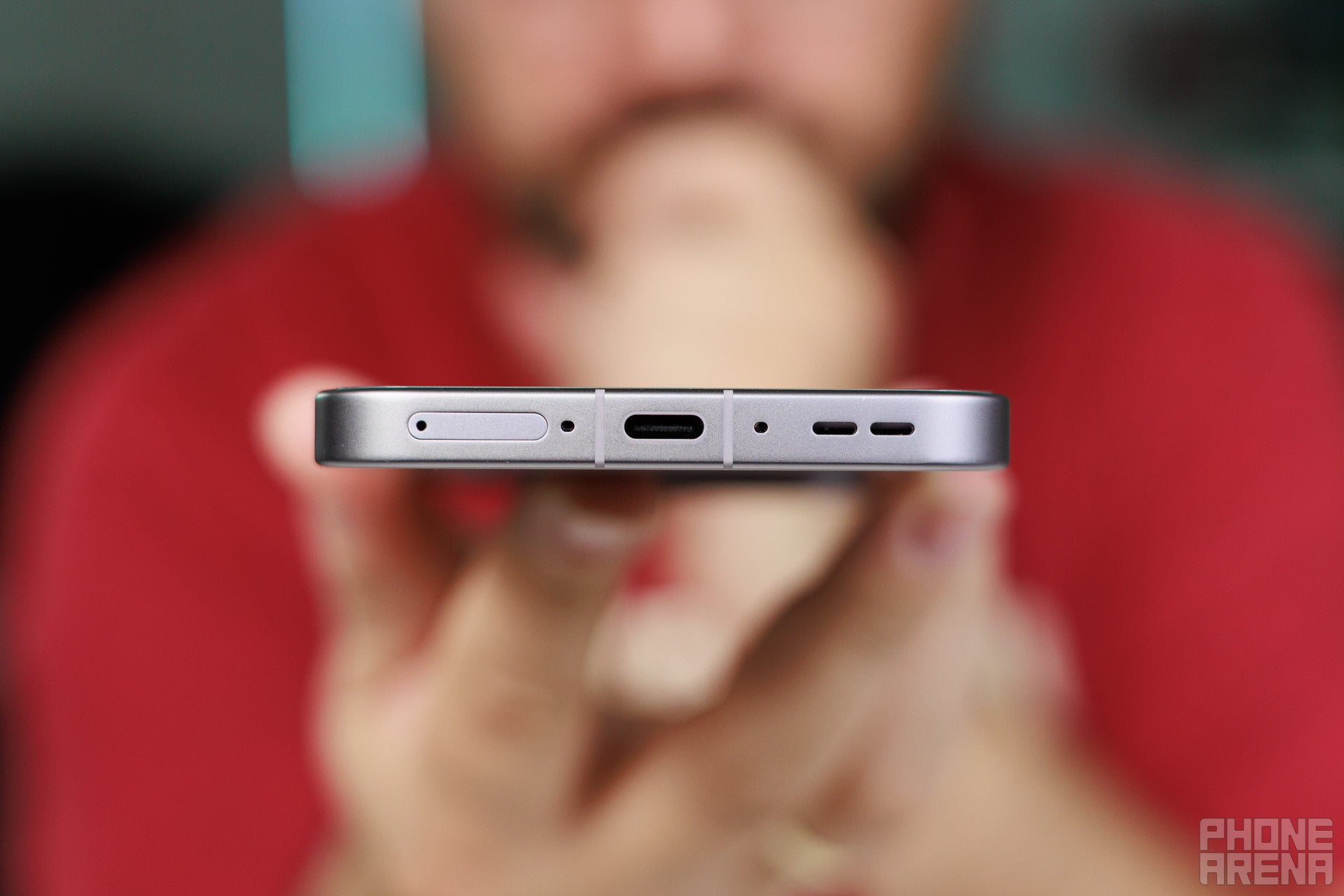
The Find X10 Pro Max has USB 3.2 Gen 1 port at the bottom. | Image by PhoneArena
While the EU version of the phone is cursed with a smaller 7,150 mAh battery, the global model that I do have in my hands is blessed with an 8,000 silicon-carbon mAh battery. That's larger than any of its close rivals, as well as mainstream flagships like the Galaxy S26 Ultra and the iPhone 18 Pro Max. Naturally, with a fast 2 nm chipset, this spells great news for the battery life of the Oppo Find X10 Pro Max.
And the battery life here is absolutely great! This phone can easily last me two days of moderate to heavy usage, with lots of social media, gaming, and general browsing. Even if I don't pamper my usage, averaging ten or more hours of screen-on time on a single charge is easily doable.
The battery tests I ran confirm this. In the PhoneArena browsing test, the Find X10 Pro Max achieves over 21 and a half hours of web browsing, while in both the video playback and 3D gaming tests, the phone achieves around 13 and a half and 14 and a half hours.
Charging on the global model is 80 W via wire or 50 W with Oppo's proprietary 50 W AirVooc wireless charger. The device supports both wired and wireless reverse charging.
Oppo Find X10 Pro Max Audio Quality and Haptics
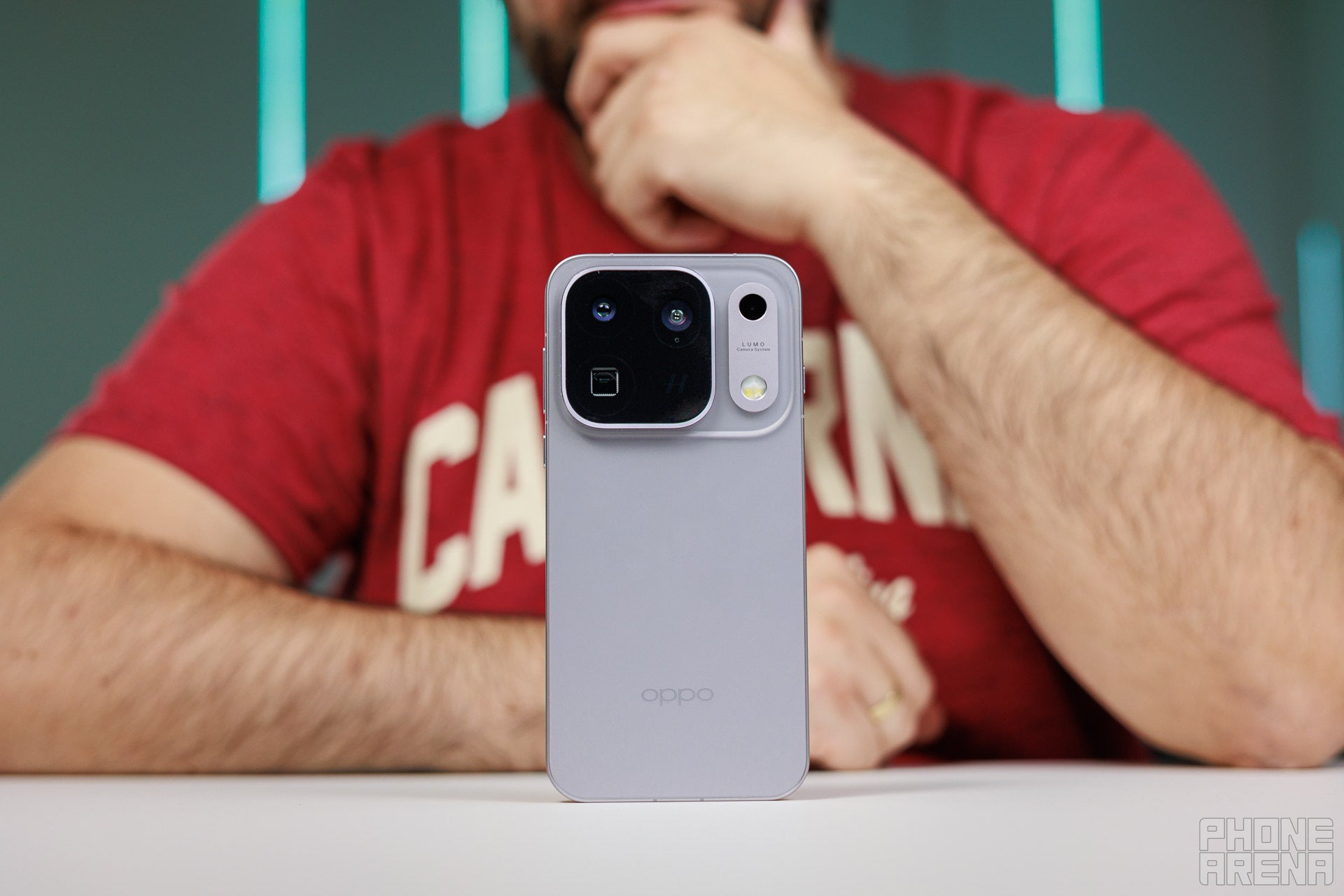
An awesome audio and and haptic experience. | Image by PhoneArena
One of my main issues with the Oppo Find X9 Pro was its imbalanced speakers. Luckily, Oppo has paid attention to one of the more common criticisms of its device and has adorned the Find X10 Pro Max with a new pair of speakers that are now symmetrical and provide proper stereo audio.
The sound stage is wider and the audio is more powerful than before, with decent bass and no distortion at higher volume levels. The phone is now way more suitable for talking heads videos but also for general listening to music and any other type of multimedia.
Haptics are excellent thanks to a large X-axis haptic motor that provides strong and responsive vibration feedback.


Popular stories




Latest News



Things that are NOT allowed:
To help keep our community safe and free from spam, we apply temporary limits to newly created accounts: