T-Mobile moves beyond speed claims to solve a major customer headache
T-Mobile is testing a tech that directs capacity where it's needed most.
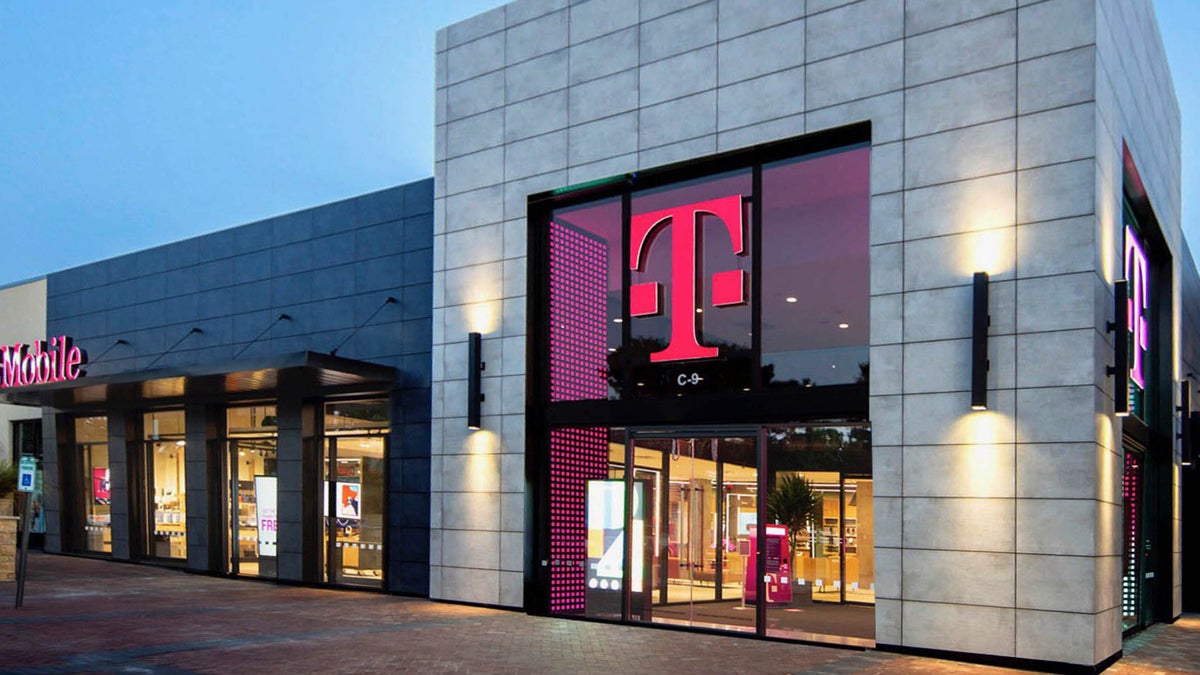
No more struggling for a signal. | Image by Triad Manufacturing
Any network, including mobile virtual network operators (MVNOs) that lease capacity from the Big Three, can provide a satisfactory experience when traffic is low. But the real test comes during peak hours, when millions are trying to access the network. T-Mobile and Ericsson are trialing a new tech called AI-Managed Beamforming to squeeze more out of the network.
Carriers have a finite amount of spectrum, capacity, and sites. While they can expand these resources, T-Mobile is building AI directly into its 5G Advanced network to allow it to make decisions and adapt in real time.
T-Mobile is conducting large-scale commercial trials using customer traffic to test AI-Managed Beamforming. Traditional beamforming allows a cell tower to direct signals toward devices rather than broadcasting them broadly, directing energy where it's needed. AI-Managed Beamforming makes the process more efficient.
Your phone periodically transmits brief signals called Sounding Reference Signals (SRS), which help the network to estimate radio channel conditions and make scheduling and coordination decisions.
The process has traditionally been constrained by limited SRS resources, which is where AI-Managed Beamforming shines. Using models trained on T‑Mobile’s live network data and running on Ericsson's hardware, the tech predicts where demand is rising and reallocates SRS resources to maximize their impact. This could give T-Mobile an edge over carriers whose models haven't been trained and tuned for their networks.
As customer needs evolve, wireless networks are expected to do more than ever. Worldwide mobile traffic grew 22% compared to 2025. Of course, customers don't care about what's happening in the background. They just want the network to work.
T-Mobile's large swath of mid-band Time Division Duplex (TDD) spectrum, which uses the same band for downloads and uploads, will allow it to get better results from AI-Managed Beamforming.
During trials in New York City, T-Mobile observed the most significant improvements during rush hour, when demand was highest. During peak hours, the tech delivered a 50% increase in advanced beamforming using full-band SRS, 16% improvement in download performance, 12% improvement in spectral efficiency, and 10% increase in downlink data volume.
The capabilities improve the network's sensing technology to make smarter decisions, allocating capacity where it's needed. It's also an important step toward 6G, which will be more than just about speed. 6G networks will be more aware of their radio environments, potentially supporting physical AI and autonomous systems.
Per a new Opensignal report, the 5G SA download speed crown belongs to AT&T. However, T-Mobile recorded the biggest gain over NSA, and T-Mobile users have access to 5G SA around 71.2% of the time, compared with 20.2% and 4.4% for Verizon and AT&T users, respectively.
Blazing fast speeds mean little if your device cannot maintain a reliable connection when demand peaks. T-Mobile is taking care of that with AI-powered beamforming.
Directing capacity to customers who need it the most
Your phone periodically transmits brief signals called Sounding Reference Signals (SRS), which help the network to estimate radio channel conditions and make scheduling and coordination decisions.
Building on our work together in AI-Native Link Adaptation, AI-Managed Beamforming marks another important step toward networks that can respond more intelligently to demand, helping deliver stronger performance, greater efficiency and a more consistent experience, especially when demand is at its highest.
Jaco du Plooy, Head of Customer Unit T‑Mobile at Ericsson, October 2026
Why is this exciting?
8 Votes
Not just theory
As customer needs evolve, wireless networks are expected to do more than ever. Worldwide mobile traffic grew 22% compared to 2025. Of course, customers don't care about what's happening in the background. They just want the network to work.
T-Mobile's large swath of mid-band Time Division Duplex (TDD) spectrum, which uses the same band for downloads and uploads, will allow it to get better results from AI-Managed Beamforming.
During trials in New York City, T-Mobile observed the most significant improvements during rush hour, when demand was highest. During peak hours, the tech delivered a 50% increase in advanced beamforming using full-band SRS, 16% improvement in download performance, 12% improvement in spectral efficiency, and 10% increase in downlink data volume.
Why does this matter
The capabilities improve the network's sensing technology to make smarter decisions, allocating capacity where it's needed. It's also an important step toward 6G, which will be more than just about speed. 6G networks will be more aware of their radio environments, potentially supporting physical AI and autonomous systems.
T-Mobile needs the edge
Per a new Opensignal report, the 5G SA download speed crown belongs to AT&T. However, T-Mobile recorded the biggest gain over NSA, and T-Mobile users have access to 5G SA around 71.2% of the time, compared with 20.2% and 4.4% for Verizon and AT&T users, respectively.
How's the industry prepping for the 6G era:


Popular stories


Latest News

Things that are NOT allowed:
To help keep our community safe and free from spam, we apply temporary limits to newly created accounts: