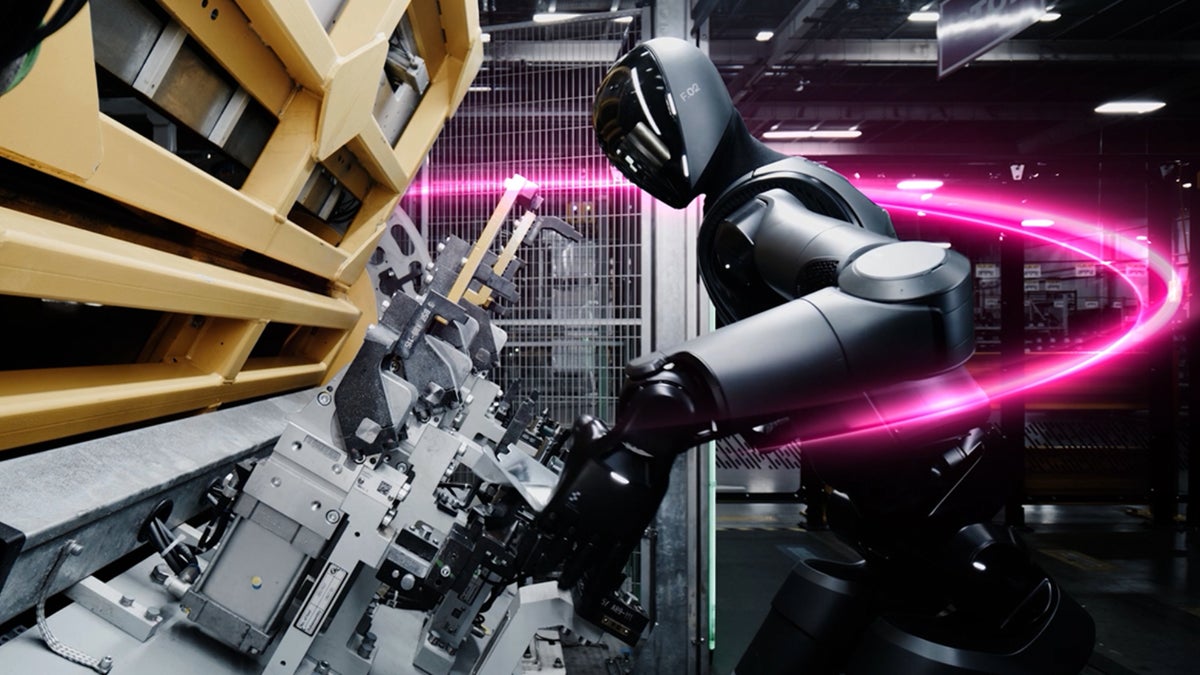
Telcos will have a key role in what's to come. Remember that. | Image by T-Mobile
Mere days ago, at the Lunar New Year festival in China, robots performed impressive kung fu moves and even did backflips – something that many said was more than just "Oh, that's nice". It was a sign that robotics has advanced extremely fast.
We're currently somewhere between "AI is a joke, it's a glorified encyclopedia that'll never turn genius" and "LOL, Skynet is coming, we're done!" and it seems that Physical AI is the next thing on the agenda. You know, that's the moment when AI transitions from the digital, software world to the analog world – possibly in the form of a humanoid-like robot.
And T-Mobile will have a big role in that.
Network is key
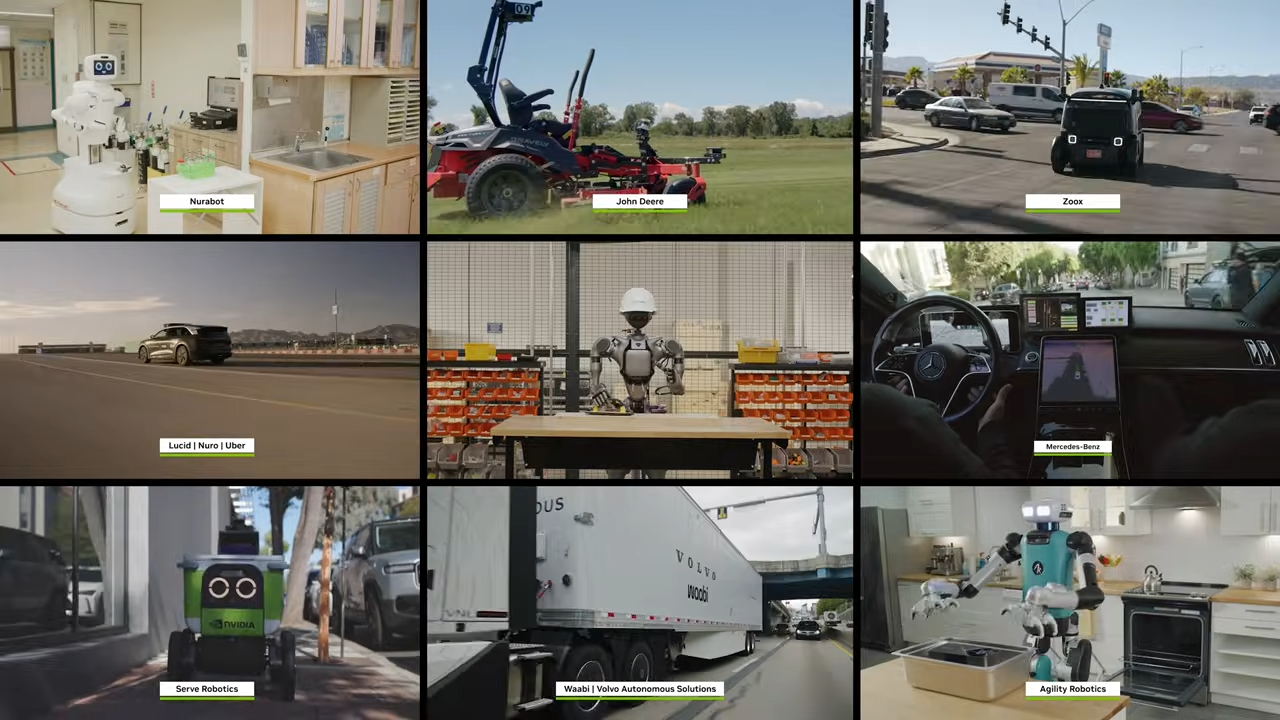
Intelligent machines could be all around us soon. | Image by T-Mobile
Of course, there's so much more than mere humanoid robots who can dance, do the chores or start WWIII: AI will most likely be the heart of autonomous machines and cars, cameras and so much more. This will require not only real-time perception and reasoning, but decision-making and action as well, as T-Mobile's latest blog post (by John Saw, President & CTO) reads.
That's where networks kick in.
Modern AI systems mostly process informational tokens, data units used to describe, predict, or summarize. Physical AI introduces a new class of data: kinetic tokens. Unlike passive information, kinetic tokens trigger real-world outcomes such as movement, coordination, adaptation, or control.
Recommended For You
Because these tokens drive physical actions, networks supporting them must meet far stricter requirements, including deterministic performance, ultra-low latency, precise synchronization, time-space coherency, and continuous edge learning.
Telcos' big role
These demands place telecom networks at the center of Physical AI. Telcos already operate large-scale real-time infrastructure.
Physical AI cannot depend solely on distant cloud data centers; intelligence must increasingly reside at the edge, with devices communicating directly for collaborative tasks. In this model, the network evolves from a transport mechanism into the functional nervous system of intelligent machines.
This shift explains the importance of 6G. Rather than representing only faster speeds, 6G is positioned as an AI-native architectural transition. It integrates connectivity, sensing, localization, and computing into a unified fabric responsive enough for machines to perceive and react in real time.
A key capability, Integrated Sensing and Communications (ISAC), allows networks to simultaneously communicate and interpret environmental conditions, effectively closing the loop between perception and action.
Ultimately, AI is extending beyond cloud environments into the physical world. Networks designed for edge intelligence, real-time responsiveness, and integrated computing will underpin this transformation.
For some reason, The Matrix (1999) soundtrack starts playing in my head at this very moment. But it's just a coincidence.
What should carriers focus on?
17 Votes
AI, of course - it's the future.
17.65%
Better, wider coverage for 4G and 5G.
52.94%
I don't care, as long as my bill doesn't get higher.
29.41%
Six-month unlimited plan is now 57% off
$90
$210
$120 off (57%)
Mint Mobile is now allowing you to get whichever plan you like for either three, six, or 12 months for just $15/mo. If you go for the six-month unlimited service, for instance, you'll now have to pay just $90 upfront instead of $210.
Sebastian is one of PhoneArena’s senior opinionators. A veteran news writer with almost 20 years of experience in media and technology, he not only covers all the hot news about Galaxies and iPhones, but often provides hot takes on industry trends. He’s fascinated with camera-focused flagships from the likes of Oppo and Vivo, as well as foldable phones.
A discussion is a place, where people can voice their opinion, no matter if it
is positive, neutral or negative. However, when posting, one must stay true to the topic, and not just share some
random thoughts, which are not directly related to the matter.
Things that are NOT allowed:
Off-topic talk - you must stick to the subject of discussion
Offensive, hate speech - if you want to say something, say it politely
Spam/Advertisements - these posts are deleted
Multiple accounts - one person can have only one account
Impersonations and offensive nicknames - these accounts get banned
To help keep our community safe and free from spam, we apply temporary limits to newly created accounts:
New accounts created within the last 24 hours may experience restrictions on how frequently they can
post or comment.
These limits are in place as a precaution and will automatically lift.
Moderation is done by humans. We try to be as objective as possible and moderate with zero bias. If you think a
post should be moderated - please, report it.
Have a question about the rules or why you have been moderated/limited/banned? Please,
contact us.











Things that are NOT allowed:
To help keep our community safe and free from spam, we apply temporary limits to newly created accounts: