T-Mobile CTO shrugs off SpaceX's decision to build a network
T-Mobile CTO John Saw explains why SpaceX can't match its network.
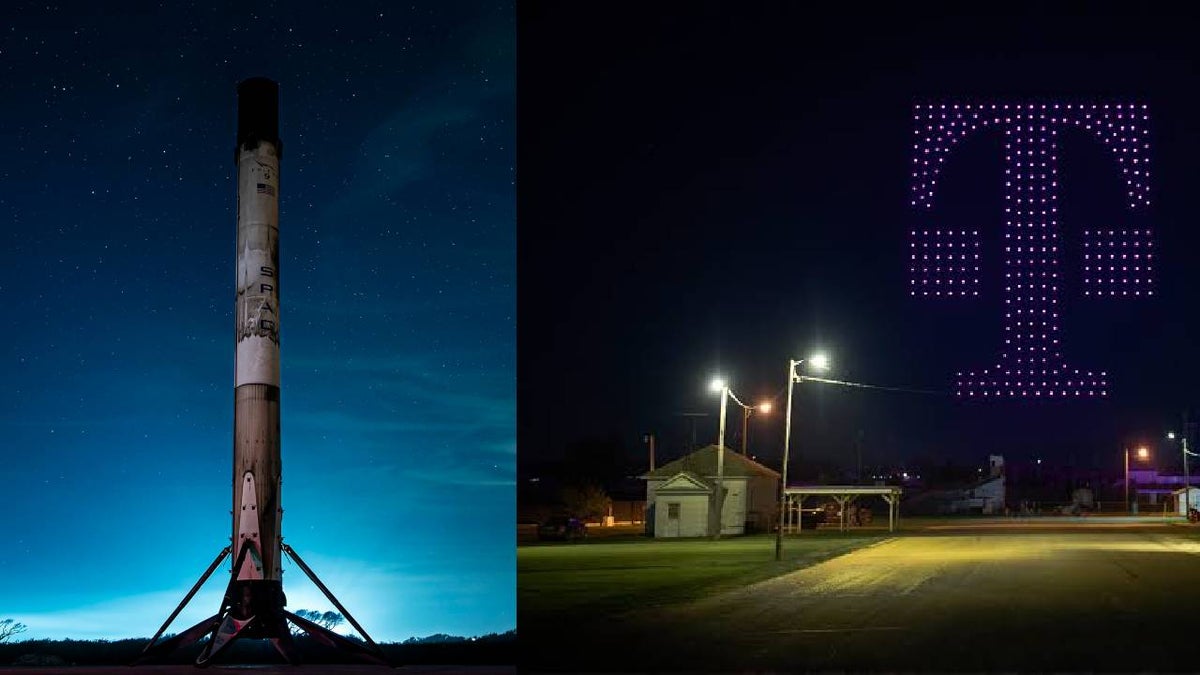
But T-Mobile provided service to 50 million subscribers with just 85 MHz of spectrum in 2016. | Image by PhoneArena
Yesterday was not a good day for AT&T, T-Mobile, and Verizon. After SpaceX announced it was buying the 800 MHz spectrum portfolio T-Mobile previously sold to Grain Management to build a network, the shares of the Big Three tumbled by double-digit percentages, eradicating $50 billion in market value.
Despite Wall Street's panicky reaction, T-Mobile CTO and President of Technology John Saw isn't worried.
SpaceX is acquiring 14 MHz of low-band spectrum in the 800 MHz band, bringing its total holdings to 79 MHz. Saw says that he has "tremendous respect" for SpaceX, but notes that the path from hoarding spectrum to delivering a great mobile experience is long and arduous.
SpaceX's spectrum holdings, some of which are upload-only, are meager compared to T-Mobile's 400 MHz portfolio of mid-band and low-band spectrum.
To show where SpaceX stands, Saw pointed out that T-Mobile used 800 MHz spectrum as a single 5 MHz download channel and a single 5 MHz upload channel during the 4G LTE days. T-Mobile has since launched a 5G Advanced network and is preparing for 6G deployment using wider channels for greater capacity and speed.
A radio signal travelling from a satellite floating hundreds of kilometres above Earth is significantly weaker compared to a signal coming from a cell site that's just a kilometre away.
While radio frequencies around 800 MHz travel over a longer range and penetrate buildings better than 2 GHz signals, these advantages aren't enough to offset the drop in the signal's strength meaningfully.
More than 70% of mobile activity takes place indoors, where signals traveling from space can't reach users reliably. And while Starlink Mobile would cover a large area, it's unlikely to have the capacity of a dense land-based network.
Saw caps off his post with a reminder that T-Mobile has been in the game for years, acquiring spectrum, deploying infrastructure, and building customer relationships.
This isn't a nervous T-Mobile waving off SpaceX. Many industry analysts are still clinging to the view that SpaceX is making these moves to make AT&T, T-Mobile, or Verizon cave and agree to a Mobile Virtual Network Operator (MVNO) deal with it.
SpaceX aims to combine its constellation of satellites and a terrestrial network to provide service. However, this is a costly and time-consuming endeavour. The company currently doesn't have any terrestrial infrastructure, but to build a rival to the Big Three, it would need tower sites, per Morgan Stanley analysts Sean Diffley and William Tackett.
The 800 MHz-band licenses cover the entire US population, and are enough to establish ground-based connections for voice calls. TMT analyst Walter Piecyk pointed out that T-Mobile served more than 50 million customers with around 85 MHz of spectrum in 2016.
Moor Insights & Strategy Principal Analyst Anshel Sag is skeptical of SpaceX's plan, highlighting that the current holdings aren't enough to provide service beyond rural areas. He recalled that T-Mobile rolled out its 600 MHz 5G network in 2019 with 31 MHz of spectrum, which was criticised for slow speeds. He added that 800 MHz doesn't propagate as well as 600 MHz, and SpaceX would need to build or lease cell sites for the AWS spectrum.
While 800 MHz will reach buildings, the signal won't be strong enough for a decent experience.
To build a powerful carrier, SpaceX needs to accumulate more spectrum, have a nationwide terrestrial footprint, redesign its satellites to support low-band spectrum, and pour in billions of dollars, per Analysys Mason Research Director Lluc P.
SpaceX is expected to bid in next year's upper C-band auction. The company is also gearing up to launch the more powerful V2 satellites in mid-2027. By that time, 5G NR-NTN (New Radio Non-Terrestrial Network) will move closer to standardisation. It's all falling into place for SpaceX, even if the path is littered with difficulties.
SpaceX still doesn't have nearly enough spectrum
SpaceX is acquiring 14 MHz of low-band spectrum in the 800 MHz band, bringing its total holdings to 79 MHz. Saw says that he has "tremendous respect" for SpaceX, but notes that the path from hoarding spectrum to delivering a great mobile experience is long and arduous.
Starlink Mobile would have roughly 80 MHz of spectrum, some of it uplink-only. Compare that to T-Mobile's nearly 400 MHz of mid-band and low-band spectrum holdings.
We used 800 MHz spectrum as a single 5 MHz uplink/5 MHz downlink channel for LTE years ago.
John Saw, T-Mobile CTO, October 2026
SpaceX's spectrum holdings, some of which are upload-only, are meager compared to T-Mobile's 400 MHz portfolio of mid-band and low-band spectrum.
To show where SpaceX stands, Saw pointed out that T-Mobile used 800 MHz spectrum as a single 5 MHz download channel and a single 5 MHz upload channel during the 4G LTE days. T-Mobile has since launched a 5G Advanced network and is preparing for 6G deployment using wider channels for greater capacity and speed.
Satellites still no match for terrestrial towers
A radio signal travelling from a satellite floating hundreds of kilometres above Earth is significantly weaker compared to a signal coming from a cell site that's just a kilometre away.
A satellite hundreds of kilometers above Earth faces approximately 50 dB more path loss than a terrestrial cell site just a kilometer away. Moving from 2 GHz to 800 MHz recovers only a few dB of that enormous disadvantage.
John Saw, T-Mobile CTO, October 2026
While radio frequencies around 800 MHz travel over a longer range and penetrate buildings better than 2 GHz signals, these advantages aren't enough to offset the drop in the signal's strength meaningfully.
More than 70% of mobile activity takes place indoors, where signals traveling from space can't reach users reliably. And while Starlink Mobile would cover a large area, it's unlikely to have the capacity of a dense land-based network.
Covering a geographic area is one thing. Delivering the speed, responsiveness, and capacity customers expect from a modern 5G-Advanced network is another.
John Saw, T-Mobile CTO, October 2026
What's SpaceX doing?
8 Votes
Who is bluffing?
This isn't a nervous T-Mobile waving off SpaceX. Many industry analysts are still clinging to the view that SpaceX is making these moves to make AT&T, T-Mobile, or Verizon cave and agree to a Mobile Virtual Network Operator (MVNO) deal with it.
SpaceX aims to combine its constellation of satellites and a terrestrial network to provide service. However, this is a costly and time-consuming endeavour. The company currently doesn't have any terrestrial infrastructure, but to build a rival to the Big Three, it would need tower sites, per Morgan Stanley analysts Sean Diffley and William Tackett.
Don't underestimate Starlink
The 800 MHz-band licenses cover the entire US population, and are enough to establish ground-based connections for voice calls. TMT analyst Walter Piecyk pointed out that T-Mobile served more than 50 million customers with around 85 MHz of spectrum in 2016.
T-Mobile launched its 600 MHz 5G network in 2019 with 31 MHz of spectrum, and it was panned for slow speeds. This is less than half that. I will also add that 800 MHz doesn't propagate as well as 600.
Anshel Sag, Moor Insights & Strategy Principal Analyst, October 2026
The bottom line
While 800 MHz will reach buildings, the signal won't be strong enough for a decent experience.
To build a powerful carrier, SpaceX needs to accumulate more spectrum, have a nationwide terrestrial footprint, redesign its satellites to support low-band spectrum, and pour in billions of dollars, per Analysys Mason Research Director Lluc P.


Popular stories

Latest News


Things that are NOT allowed:
To help keep our community safe and free from spam, we apply temporary limits to newly created accounts: