SpaceX is officially building the fourth US carrier
SpaceX is acquiring low-band spectrum to solve the signal penetration issue.
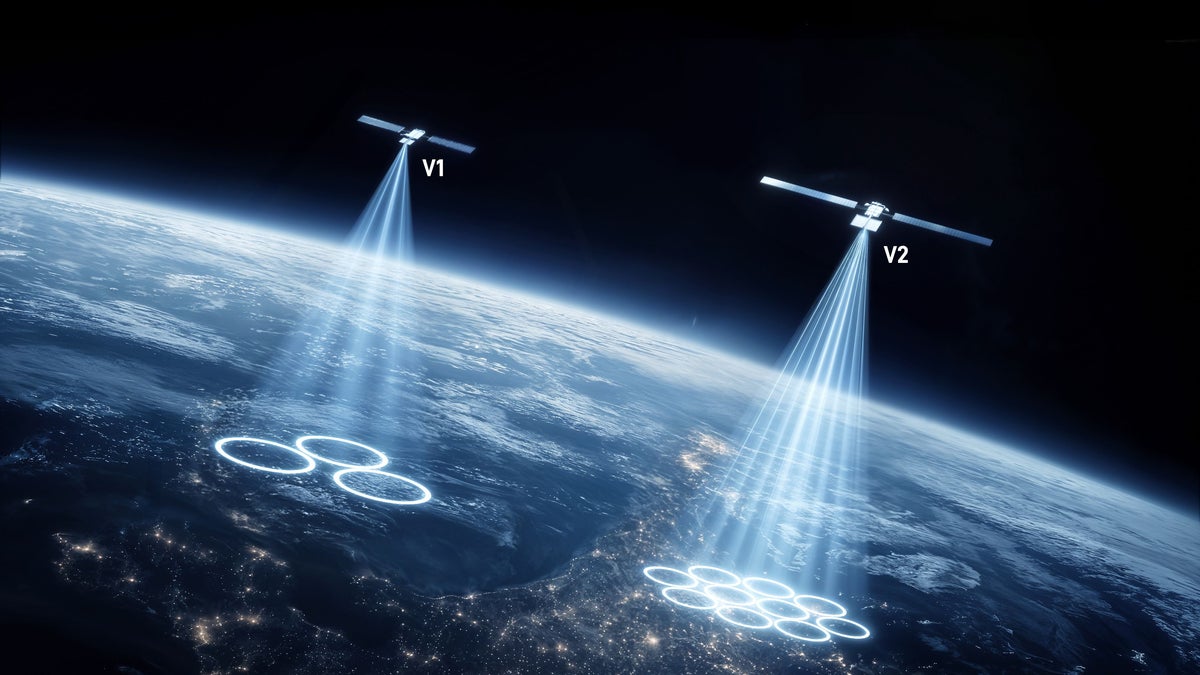
The company will deploy a flexible architecture to provide connectivity indoors and outdoors. | Image by SpaceX
After months of speculation over which path SpaceX will choose to enter the cellular market, the company has formally announced its strategy. It aims to build the world's most advanced network, quite different from how AT&T, T-Mobile, and Verizon operate.
SpaceX is buying more spectrum
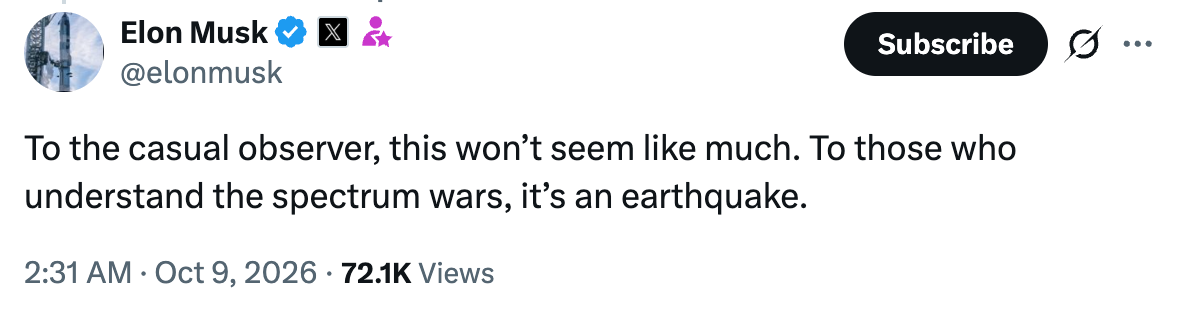
CEO Elon Musk calls the development a major shift.
SpaceX has agreed to buy up to 14 MHz of low-band spectrum in the 800 MHz band, which most smartphones already support. Low-band signals travel far and penetrate deep, and the portfolio should help silence critics like AT&T CEO John Stankey, who recently questioned the viability of SpaceX's plans.
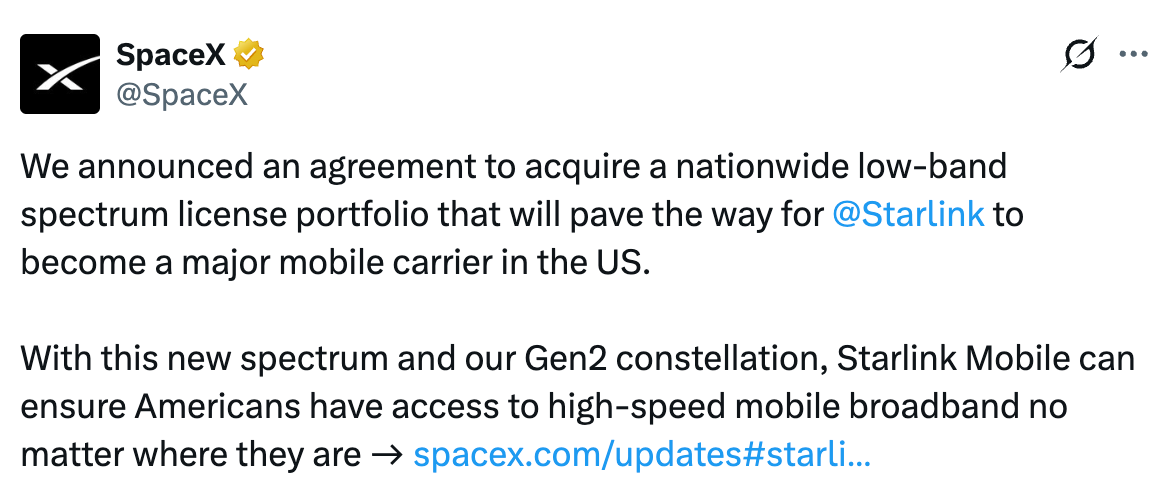
Elon Musk says this is the last critical piece of the spectrum puzzle to provide complete phone coverage in the US. | Image by SpaceX
The low-band spectrum will complement the global 2 GHz mid-band spectrum to ensure the network has both capacity and coverage.
Pending FCC approval, Starlink Mobile aims to roll out a flexible network combining its Direct-to-Device (D2D) satellites with terrestrial infrastructure to provide connectivity everywhere.
SpaceX says that the low-band spectrum and the Gen2 constellation will make it the first US carrier to use both satellites and terrestrial spectrum to envelop the US with connectivity.
This is the last critical piece of the spectrum puzzle needed for SpaceX to provide complete phone coverage in America.
Elon Musk, SpaceX CEO, October 2026
How big a threat would SpaceX be to AT&T, T-Mobile, and Verizon?
11 Votes
Laying the groundwork
The Federal Communications Commission (FCC) recently greenlit the Gen2 constellation, allowing SpaceX to deploy 15,000 satellites. The new V2 satellites will offer 100 times the bandwidth of the current satellites, enabling faster speeds for smartphones.
Everything has been lining up nicely for the company. It purchased 40 MHz of AWS-4, 10 MHz of AWS-H Block, and 15 MHz of unpaired AWS-3 spectrum from EchoStar earlier this year and picked up two licenses during the AWS-3 auction. It began testing the EchoStar spectrum in late June.
SpaceX's 79 MHz of spectrum is no match for the 300 MHz each of the Big Three holds. However, SpaceX doesn't want to imitate them. It previously said it would mount small cellular base stations onto Starlink dishes and deploy some basic terrestrial infrastructure.
The spectrum mystery
SpaceX might have bought 800 MHz from private investment firm Grain Management, which previously acquired it from T-Mobile in return for 600 MHz licenses.
Recon Analytics founder Roger Entner predicted Grain offloading the spectrum to SpaceX back in August. Entner expects SpaceX to use Grain's 800 MHz for coverage and voice call support and EchoStar's AWS and MSS spectrum for coverage. He also expects SpaceX to bid in the upper C-band auction to provide connectivity in urban areas where buildings obstruct satellite signals.
The last few months have been buzzing with speculation about SpaceX:


Popular stories
Latest News

Things that are NOT allowed:
To help keep our community safe and free from spam, we apply temporary limits to newly created accounts: