SpaceX continues to advance toward its goal of universal connectivity. The Federal Communications Commission (FCC) has approved its request to operate 15,000 new satellites for direct-to-device (D2D) service, paving the way for a stand-alone service.
The details
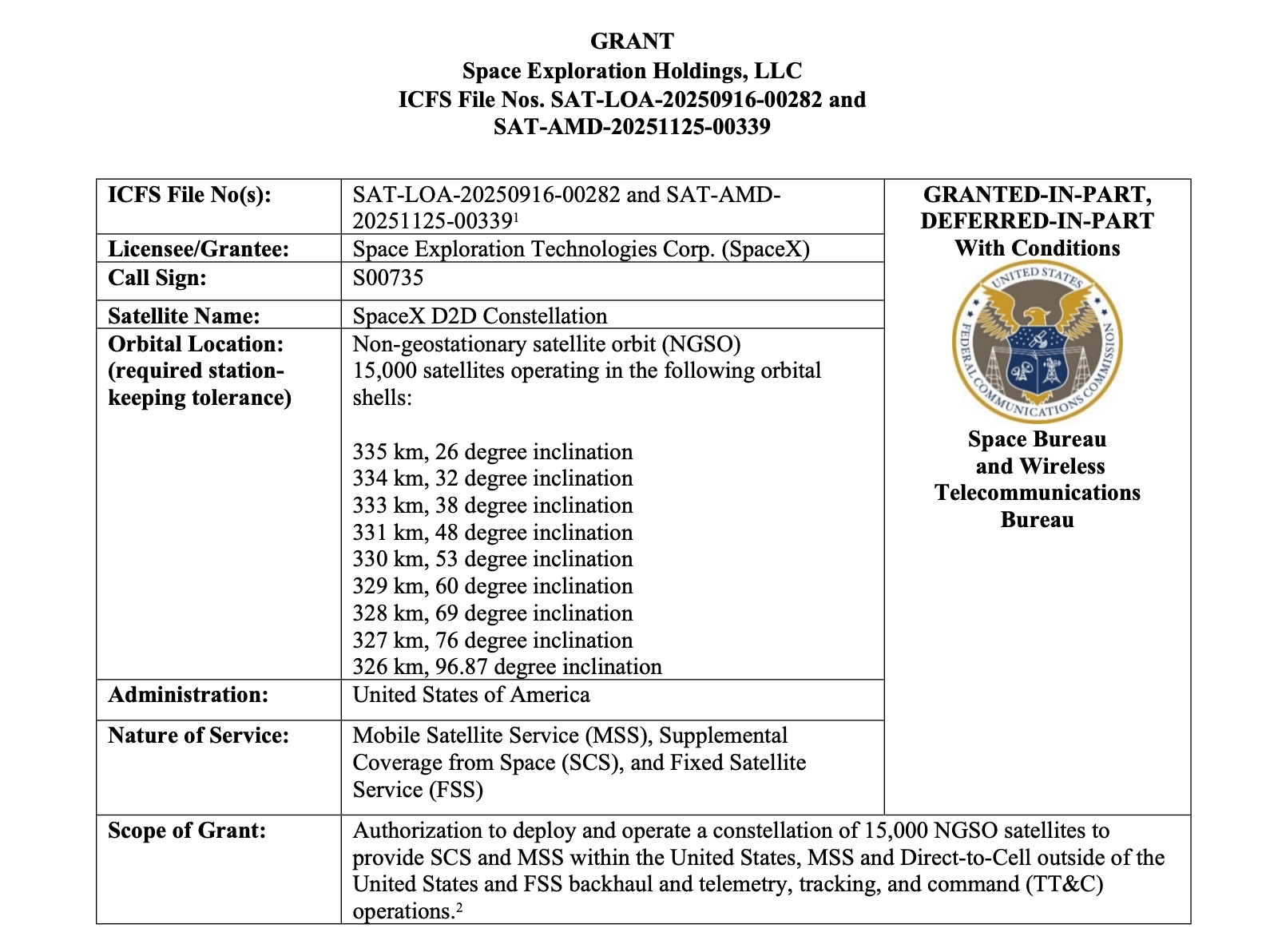
The FCC approves SpaceX's request to use additional spectrum and new satellites for its D2D service. | Image by FCC
SpaceX will leverage AWS-4, AWS-H Block, and unpaired AWS-3 spectrum acquired from EchoStar to link smartphones to satellites. However, until the EchoStar transaction closes, the company is limited to testing across these bands. It will also continue using T-Mobile's PCS G Block spectrum, suggesting the partnership is far from over, despite what recent developments suggested.
The FCC waived the Supplemental Coverage from Space (SCS) leasing requirement because SpaceX will hold both the satellite and terrestrial AWS-3 band and AWS-H Block licenses in the target coverage zones. SpaceX's satellites will perform the same function as terrestrial base stations under 3GPP Non-Terrestrial Networks (NTN) standards. Simply put, SpaceX isn't as dependent on carriers as it once was to reach mobile customers.
In this instance, the same entity, SpaceX, will be both the terrestrial licensee and satellite operator.
FCC, October 2026
How is this going to turn out?
3 Votes
Getting in the weeds
The frequencies that SpaceX will use in the US include AWS-3 Unpaired A1 (1695-1700 MHz) and B1 (1700-1710 MHz), PCS G Block (1910-1915 MHz) and (1990-1995 MHz), AWS-H Block (1915-1920 MHz) and (1995-2000 MHz), and the 2 GHz MSS bands (2000-2020 MHz) and (2180-2200 MHz).
Recommended For You
The satellites will fly between 326 km and 335 km in altitude, a drop from the previous constellation's 350 km shell. The slightly shorter distance from Earth will reduce delay and improve link performance between phones and satellites.
A long way from texting
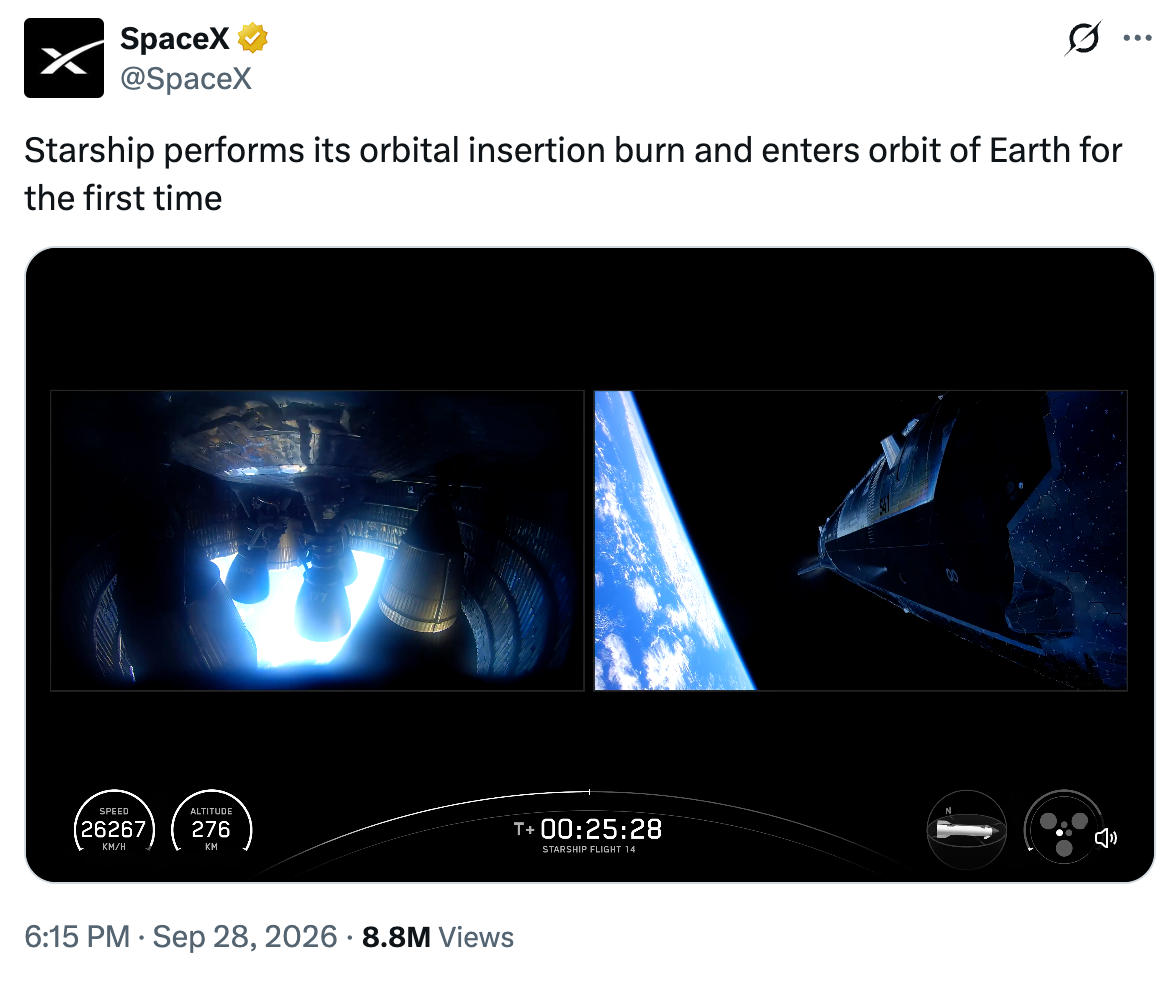
Starship reached orbit for the first time on September 28. | Image by SpaceX
SpaceX launched D2D back in 2024 to plug terrestrial dead zones. The first-gen constellation relies on 650 satellites and can only support texting and light data.
The company plans to deploy V2 satellites aboard Starship in mid-2027.
Tackling lag
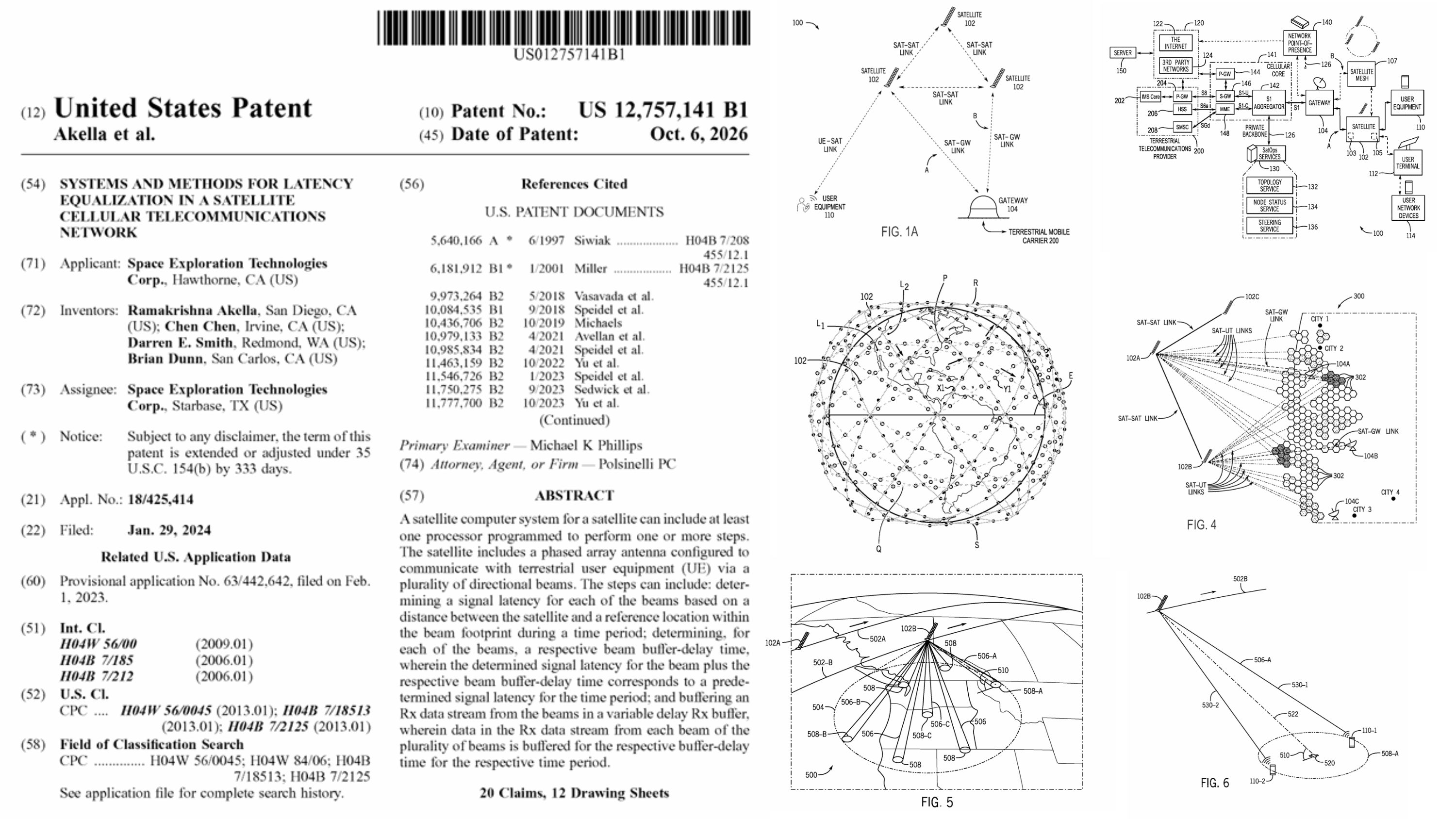
SpaceX's patent application. | Image by S.E. Robinson, Jr.
As highlighted by X user @SERobinsonJr, SpaceX recently patented a fix for D2D delay issues. To achieve synchronization on par with traditional cellular networks, SpaceX will use a buffer to ensure all satellite beams arrive at the same time.
Anam Hamid is a computer scientist turned tech journalist who has a keen interest in the tech world, with a particular focus on smartphones and tablets. She has previously written for Android Headlines and has also been a ghostwriter for several tech and car publications. Anam is not a tech hoarder and believes in using her gadgets for as long as possible. She is concerned about smartphone addiction and its impact on future generations, but she also appreciates the convenience that phones have brought into our lives. Anam is excited about technological advancements like folding screens and under-display sensors, and she often wonders about the future of technology. She values the overall experience of a device more than its individual specs and admires companies that deliver durable, high-quality products. In her free time, Anam enjoys reading, scrolling through Reddit and Instagram, and occasionally refreshing her programming skills through tutorials.
A discussion is a place, where people can voice their opinion, no matter if it
is positive, neutral or negative. However, when posting, one must stay true to the topic, and not just share some
random thoughts, which are not directly related to the matter.
Things that are NOT allowed:
Off-topic talk - you must stick to the subject of discussion
Offensive, hate speech - if you want to say something, say it politely
Spam/Advertisements - these posts are deleted
Multiple accounts - one person can have only one account
Impersonations and offensive nicknames - these accounts get banned
To help keep our community safe and free from spam, we apply temporary limits to newly created accounts:
New accounts created within the last 24 hours may experience restrictions on how frequently they can
post or comment.
These limits are in place as a precaution and will automatically lift.
Moderation is done by humans. We try to be as objective as possible and moderate with zero bias. If you think a
post should be moderated - please, report it.
Have a question about the rules or why you have been moderated/limited/banned? Please,
contact us.





Things that are NOT allowed:
To help keep our community safe and free from spam, we apply temporary limits to newly created accounts: